charlesbyrne
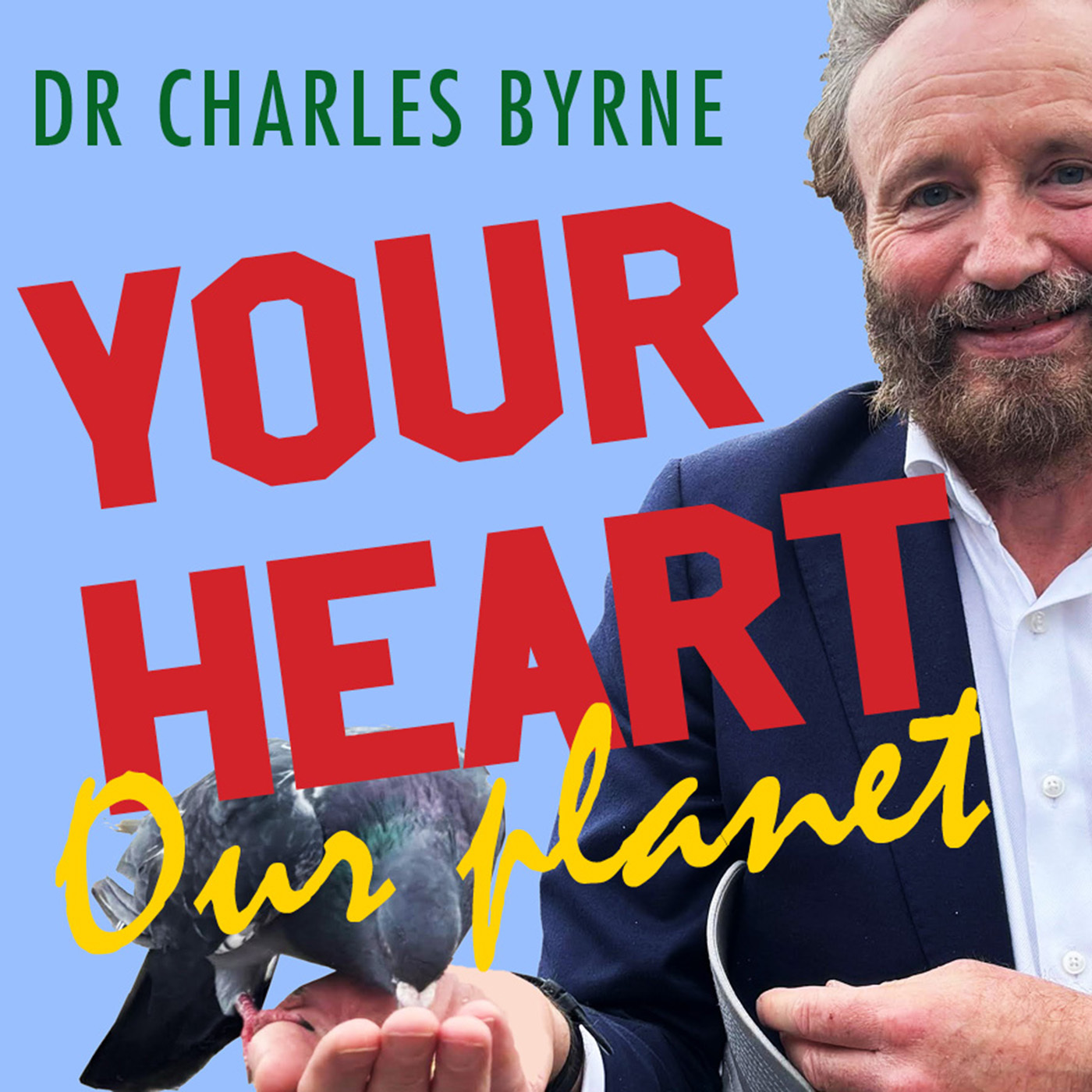
YOUR HEART OUR PLANET
Improve and protect your heart health and general wellness whilst helping to protect the planet from climate change at the same time. Seems impossible? You can do it by adopting the reduced meat or vegetarian, whole-grain, low-fat diets, containing plenty of vegetables and fruit, combined with moderate exercise programs, as they are described in this podcast series. The same diets significantly reduce greenhouse gas emissions and thereby help our endangered planet.
Author
charlesbyrne
Category
Podcast website
Latest episode
Jul 11, 2026
Where to listen?
Podcasts in the app Replaio Radio Coming soonPodcasts are coming to the app soon. Install now and be the first to see a whole new take on podcasts
 Install for free
Android 5M+ downloads · 4.8 rating
iOS soon
Install for free
Android 5M+ downloads · 4.8 rating
iOS soon
Episodes
YOUR HEART OUR PLANET Episode 12 The destructive effects of climate change 11.07.2026 32:36
In this episode we continue to explore the destructive effects of global warming on our planet and the devastating effects that it can have on both human populations and wildlife. We also look at how eating less meat or becoming vegetarian can significantly decreased these destructive effects and it's something that everyone can do, which is very empowering. We also discuss how the destruction of...
YOUR HEART OUR PLANET Episode 11 History of Vegetarianism continued and Climate Change 04.07.2026 34:40
In this episode we finish our history of vegetarianism charting its progress through different countries and cultures. We commence our description of climate change and some of the devastating effects that it is already having on our planet. We describe how 20 per cent of greenhouse gases come from animal agriculture and how reducing meat consumption or going vegetarian can have very beneficial ef...
YOUR HEART OUR PLANET Episode 10 History of vegetarianism and the heart 28.06.2026 37:26
In this episode we explore the history of vegetarianism and how it fits into human history. Also, the mass movements and philosophies that drove it forward, East and West in the past. We discover the enormous impact that excessive meat-eating is having on climate change, damage to the planet and destruction of wildlife, and how eating even a little less meat can produce enormous benefits for your...
Your Heart Our Planet Episode 9 Protein and fat intake for a healthy heart 04.05.2026 35:23
In this episode we discuss how to keep your daily fat intake to the manageable level of 20% or less of daily calorie intake, to keep you healthy and prevent heart disease. Also, how proteins are fully catered for in a vegetarian diet. We finish up with good heart healthy snacks and a healthy form of hot chocolate drink.
Your Heart Our Planet Episode 8 Low fat diets to prevent heart disease 06.04.2026 37:32
We continue to examine how low-fat diets can prevent heart disease and can even reverse heart disease that is already present. We discuss in detail how to keep within the preventive low-fat guidelines of 20% of daily calorie intake coming from fat and also the 10% guideline which can actually reverse heart disease already present. Would you like to make low-fat burger and chips? That's this week's...
Your Heart Our Planet Episode 7 How to take a low-fat diet to combat heart disease 21.03.2026 35:30
In this episode we describe in detail how to reduce your fat and oil consumption to achieve total fat consumption of 20 per cent or less of your daily calories. Also, how to avoid saturated fats. we explain why complex carbohydrates are good for you. Finally, how to make delicious lentil soup. For more details my book is available on Amazon at https://www.amazon.com/dp/B0CY8TJZXC
Your Heart Our Planet Episode 6 Low-fat plant-based diets reversing heart disease 04.03.2026 40:12
In this episode we continue to discuss the research of Dr Dean Ornish and his studies that showed that heart disease can be reduced and reversed using plant-based low-fat diets combined with exercise, relaxation therapy and support. We show you how to prepare these heart-healthy types of dishes.
Your Heart Our Planet Episode 5 Two doctors who pioneered plant-based diets for heart disease 22.02.2026 42:32
In this episode we introduce the two doctors who pioneered plant-based, low-fat diets for heart disease and its prevention. Also, how they helped President Bill Clinton overcome his heart disease. The link to my book on Amazon is: https://www.amazon.com/dp/B0CY8TJZXC
Your Heart Our Planet Episode 4 Why vegetarian and reduced meat diets are good for your heart 14.02.2026 43:24
In this episode we look at the science behind why vegetarian and reduced-meat diets are good for you. How they not only protect your heart, but also reduce cancer rates and improve general health. We also review the basics of the diets. The link to my book on Amazon is: https://www.amazon.com/dp/B0CY8TJZXC
Your Heart Our Planet Episode 3 Exercise and preventing heart disease 09.02.2026 38:57
In this episode, as well as reviewing the dietary recommendations, we talk about the types of exercise that are beneficial for your heart and general health. Also, how to fit exercise into your daily routine. The link for my book on Amazon is: https://www.amazon.com/dp/B0CY8TJZXC
Your Heart Our Planet Episode 2 Experiencing a heart episode and psychological effects 30.01.2026 26:47
In this episode we discuss again the fundamentals of the diet, the importance of exercise and how the dietary options can help prevent and even reverse heart and cardiovascular disorders. We discuss what it feels like to have a heart episode and the psychological consequence that may follow it. We also give our recipe of the week.
Your Heart Our Planet Episode 1 Preventing heart disease and reducing climate change 22.01.2026 30:59
In this podcast we describe the basics of the diets that we are recommending to help prevent, and even reduce, heart and cardiovascular problems, as well as improving general health. The same diets also help prevent climate change because they cause less greenhouse gas emissions.
Similar podcasts







Listen to the YOUR HEART OUR PLANET podcast in Replaio
Radio and podcasts in one app - free, with no sign-up. Install today and do not miss the launch
Replaio is not a podcast publisher; show names, artwork and audio belong to their authors and are distributed through public RSS feeds.