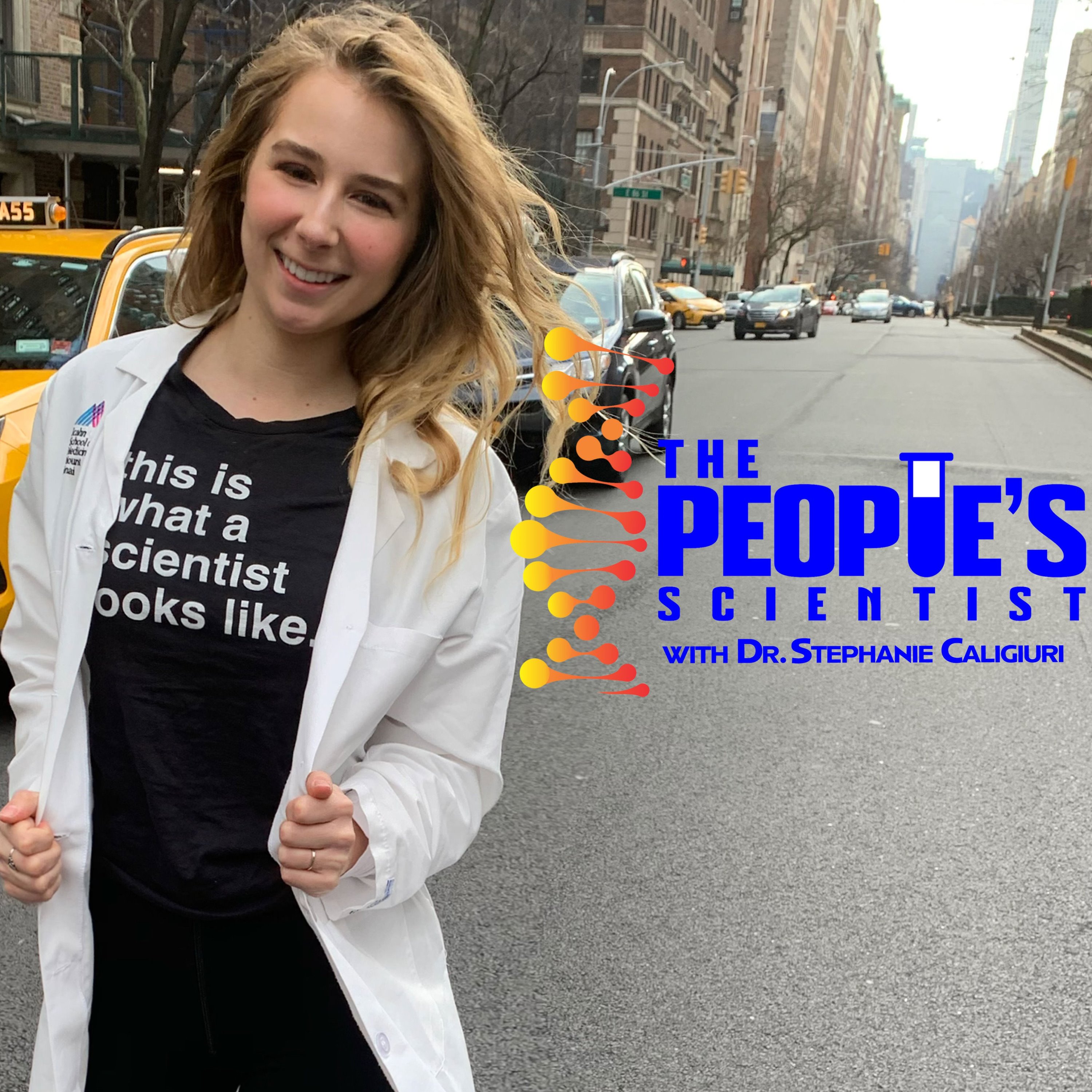
Dr. Stephanie Caligiuri
The People's Scientist
The People's Scientist is a weekly podcast covering the latest scientific findings on Neuroscience, Physiology, and Nutrition. I, your host, Dr. Stephanie Caligiuri, hold a Bachelor and Master degree in Nutritional Science, a PhD in Physiology, and Fellowship in Behavioral Neuroscience. I am currently a Scientist (Research Fellow) at Mount Sinai Hospital in NYC. Every week, I will provide you scientific evidence on important topics pertaining to our brain, body, and nutrition. In the past I have covered intermittent fasting, CRISPR gene editing for cancer therapy, using our own neurobiology to...
Author
Dr. Stephanie Caligiuri
Category
Podcast website
Latest episode
Feb 25, 2024
Where to listen?
Podcasts in the app Replaio Radio Coming soonPodcasts are coming to the app soon. Install now and be the first to see a whole new take on podcasts
 Install for free
Android almost 10M downloads · 4.8 rating
iOS soon
Install for free
Android almost 10M downloads · 4.8 rating
iOS soon
Episodes
Secret Side of Thanksgiving Turkey 22.11.2020 22:35
In Episode 83, I prepared a Happy Thanksgiving episode and dive into the scientific evidence on if turkey can promote sleepiness. Turkey is rich in an amino acid called tryptophan. For decades, scientists have studied tryptophan in the promotion of mental wellbeing and sleep quality. Why? Because in our brain, tryptophan is converted into serotonin and then melatonin; both very important molecules...
Bitter Bodyguards in Our Lungs 15.11.2020 22:32
Today in Episode 82 of The People's Scientist podcast, I share one of my favorite topics and that is taste receptors! It was only about 10 years ago that scientists realized the bitter taste receptors are expressed outside the mouth, and indeed are expressed in the airways and lungs. But, the lungs are not coming into contact with food, so what is their role here? Scientists provide evidence that...
How Understanding the Neuroscience of Chewing Can Help Us Eat Healthier 08.11.2020 19:27
Today in Episode 81, I share some scientific evidence on one gut-brain pathway involved in feeling satisfied and full. There are many ways that eating signals to our brain that we are satisfied, for example, the taste receptors, the volume of food, the macronutrients, and in today's episode, the act of chewing. I go into clinical trial evidence on how longer periods of chewing can increase gut sat...
Update Episode: Apple Cider Vinegar 01.11.2020 14:17
Welcome to Episode 80 where I share the most recent clinical evidence on apple cider vinegar in individuals living with type 2 diabetes. Scientists provide data that suggests 1-3 tablespoons of apple cider vinegar diluted in water may impart some benefits. Tune in to find out more! Want to buy me a coffee to say thanks for the episode? You can do so via Venmo or Patreon below. Venmo ID: Steph-Cal...
The Secret Side of Pumpkins 25.10.2020 26:26
In Episode 79, I continue with the Halloween/October themes and dive into the clinical research on pumpkin fruit, pumpkin seeds, and pumpkin seed oil. Pumpkins offer many nutrients like vitamin A, beta-carotene, iron, magnesium, manganese, and potassium. But interestingly, the pumpkin seeds are very rich in terpenes, phytosterols, and lignans. It is these less recognized components that seem to of...
The Scientific Analysis of Serial Killers 18.10.2020 23:38
Today in episode 78 of The People's Scientist podcast, I continue our October Halloween topics. I discuss the scientific analysis of psychopathy and serial killers. This information is important to determine who may be at risk for enacting serious crimes and to intervene early for prevention. I discuss exams that are provided to people for diagnosis of psychopathy, the difference between male and...
Fear in Our Bones 11.10.2020 18:55
Today in Episode 77, I stay on topic with some October/Halloween themes and talk about some new research on how our fear/stress response originates from our skeleton. For many years we thought our fear/stress response originated from our adrenal glands, noradrenaline, and the locus coeruleus of our brain. In this study for the first time, scientists show that our bones respond to stress by releasi...
Cinnamon for Type 2 Diabetes & Heart Disease? 04.10.2020 19:07
Today on The People's Scientist podcast, I am starting off the month of October with some Fall themes. A commonly consumed spice during the Fall? Cinnamon! Many clinical trials have been conducted investigating the potential effects of cinnamon on human health; the majority of clinical trials in participants with type 2 diabetes. Tune in to find out the details! Want to buy me a coffee to say than...
The Potent Potential of Flaxseed 27.09.2020 22:04
Today in Episode 75 of the People's Scientist podcast, I decided to share some of my own research on the health benefits of a tiny seed, flaxseed. Flaxseed has an usually high content of omega 3 fatty acids, antioxidant ligans, and fiber. We conducted a few clinical trials that indicate flaxseed may have benefit for heart health, brain health, inflammation, breast cancer risk, skin health, and mor...
Advanced Glycation End Products - What Are They & How Can We Avoid Them? 22.09.2020 21:53
In Episode 74 of The People's Scientist podcast, I discuss a recent clinical trial published in the American Journal of Clinical Nutrition in which dietary advanced glycation end products (AGEs) in the diet were correlated with glycation build up in the skin, an indication of overall body glycation accumulation. AGEs have been implicated in inflammation and therefore arthritis, diabetes, skin agin...
Can We Smell Our Way to Better Memory? 13.09.2020 22:45
In episode 73 of The People's Scientist podcast, I cover some very recent clinical evidence that connects our sense of smell with our memory and emotion. Have you ever smelled a scent of your past and been transported back in time to an emotional memory? I bet it is a memory from when you were in childhood. The reason for that is rooted in neuroscience. The regions in our brain that are activated...
Flavonoids and Our Brain 30.08.2020 16:17
In episode 72 of The People's Scientist podcast, I cover the evidence from a large observational study published this month in the American Journal of Clinical Nutrition on flavonoid rich foods and the risk for Alzheimer's and Related Dementia. Both observational studies and intervention clinical trials indicate improvements in cognition, blood vessel health, and reduced risk of dementia with flav...
The Neuroscience of Meditation 23.08.2020 27:47
In the last year, many clinical trials have been published on the neuroscience and health effects of meditation. It appears that meditation recruits the higher order brain regions in order to aid in attention control, emotion regulation, memory, and thought processing. As a result, meditation has the potential to benefit anxiety, depression, ADHD, sleep quality, stress, blood pressure, and more. T...
The Science of Pain Killers 09.08.2020 24:46
Aspirin and Advil are like the fire trucks that put out the fire of inflammation, GABApentin is the librarian quieting down the pain, and the opioids are like our pain being on a see-saw. These are my analogies to help explain the effect of certain classes of pain medications on us. I get into the science on opioid withdrawal, risk for dependence, and addiction to which we may unknowingly be at ri...
Milk Thistle for Diabetes & Liver Health? 02.08.2020 19:36
In episode 69, I dive into the scientific evidence on milk thistle and its active compound, silymarin. Supplementation with milk thistle/silymarin may improve liver health, blood sugar levels, blood insulin level, inflammation, antioxidant enzyme levels, and more. However, the results were often variable. Tune in to find out why. IG: Dr. SCaligiuri FB: ThePeoplesScientist Twitter: DrSCaligiuri Lin...
The Neuroscience of Spicy Food 26.07.2020 23:05
In today's episode of The People's Scientist podcast, I cover the scientific evidence of why some people enjoy spicy food and others do not. In addition, I go into some fascinating cutting edge research on how capsaicin found in spicy food may be a treatment for pain, migraines, depression, anxiety, drug withdrawal, and dementia. The results are surprising! Follow me on social media to see some of...
Vitamin Miniseries - Vitamin B12 19.07.2020 29:33
In continuation with the Vitamin Miniseries, I share some scientific evidence on Vitamin B12: cobalamin. Vitamin B12 deficiency is hallmarked by fatigue, shortness of breath, feelings of depression, poor sleep, tingling of the hands and feet, a sore tongue, yellowing of the skin (jaundice), and if progressed, difficulty walking, using limbs, or paralysis. On average, 15% of us are vitamin B12 defi...
Arthritis, Pain, and Omega 3 Fatty Acids 12.07.2020 30:52
Pain unfortunately can have a large impact on our health and well-being. One of the most common causes of chronic pain is arthritis. In today's episode, I cover the clinical evidence to determine if omega 3 fatty acids can improve pain and arthritis symptoms. Omega 6 fatty acids and Omega 3 fatty acids are both essential. We need them in our diet to stay healthy. But a common issue is we get too m...
The Most Important Nutrient in Our Diet? 28.06.2020 36:11
In Episode 65, I go into the physiology of hydration. Water is thought to be the most important nutrient in our diet. Some reports show that up to 71% of people are mildly dehydrated. This can have huge effects on our mental acuity, performance, and long term risk for chronic disease. So what puts us at risk for dehydration? How much water do we actually need? How does dehydration impact our healt...
5 Ways To Promote Healthy Eating When We Don't Sleep Well 21.06.2020 23:48
In today's episode of The People's Scientist podcast, I answer the following questions: 1. Is poor sleep a cause of obesity? 2. How does our brain change when we don't sleep well? 3. What can we do to reduce food cravings when we don't sleep well? I dive into the neuroscience and clinical trials to give you some unique ideas on how we can "brain hack" our way out of unhealthy junk food cravings. T...
Heat to Reduce Food Cravings & Appetite? 14.06.2020 22:25
Today on The People's Scientist podcast, I share a fun hypothesis that heat may be able to reduce our appetite and food cravings. The hypothalamus of our brain regulates both our body temperature and our appetite/eating behavior. When we are hot, our hypothalamus may become inhibited to reduce our appetite. The reason being? When we eat, we produce heat. So we don't want to produce more heat by ea...
The Hot Summer Topic of Sunscreen 31.05.2020 36:14
This week on The People's Scientist podcast, I cover the scientific evidence on sunscreen. I cover the protective effects of different sunscreens against UV damage. I will go into details on exposure to UV indoors, use of antioxidants on the skin, synthetic vs mineral sunscreens, safety of sunscreen, other means of sun protection and more. Tune in for all the details! Follow me on social media for...
How Can We Enhance Learning & Make Our Brain More Neuroplastic? 17.05.2020 26:27
Today on the People's Scientist podcast, I cover the findings of the study by Eichenlaub et al. Replay of Learned Neural Firing Sequences during Rest in Human Motor Cortex. Cell Reports. 2020; 31, 107581. I discuss how neuroplasticity is an important process by the neurons of our brain. Neuroplasticity involves learning and adapting to new situations and environments. Our brain is very neuroplasti...
Vitamin Miniseries - Vitamin B6 10.05.2020 32:36
In episode 60, I continue the Vitamin Miniseries and talk about the functions of Vitamin B6. Deficiency of this vitamin may be a lot more common than you think. In some populations, 50% have had detected deficiency levels. This vitamin plays a very important role in mental health, heart health, energy levels, and skin health. I will give you information on signs of deficiency and how to obtain opt...
Food Cravings Out of Control? Here are Some Neuroscience Based Strategies 03.05.2020 31:38
Today on The People's Scientist podcast, I answer your questions on the neuroscience of food craving. I think there is a lot of power in understanding why we may feel the way we do. Understanding which brain regions are involved in food craving gives us a target to which we can generate healthy strategies. In this episode I talk the neurobiological impact of junk food, exercise, bitter tasting foo...
Similar podcasts






Listen to the The People's Scientist podcast in Replaio
Radio and podcasts in one app - free, with no sign-up. Install today and do not miss the launch
Replaio is not a podcast publisher; show names, artwork and audio belong to their authors and are distributed through public RSS feeds.