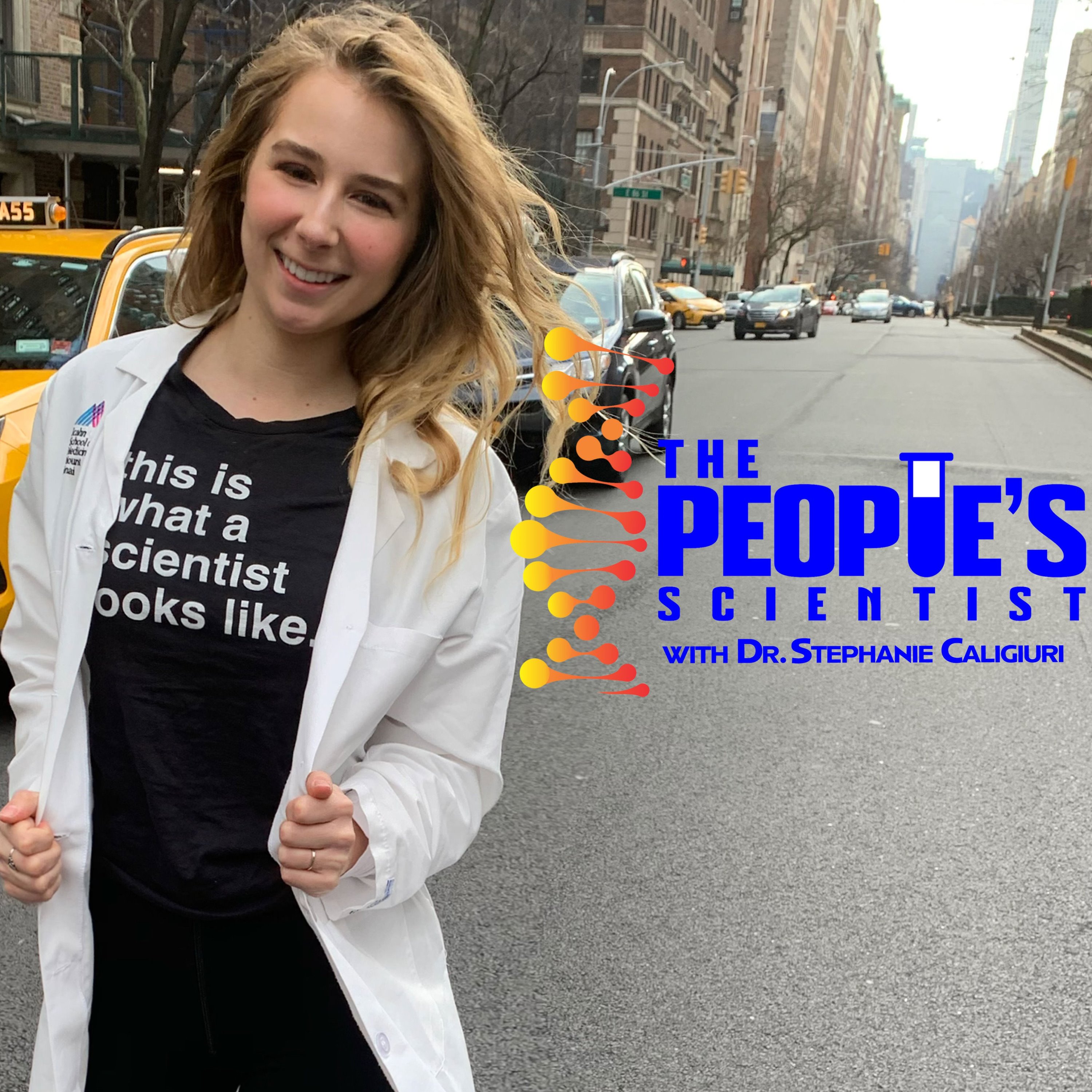
Dr. Stephanie Caligiuri
The People's Scientist
The People's Scientist is a weekly podcast covering the latest scientific findings on Neuroscience, Physiology, and Nutrition. I, your host, Dr. Stephanie Caligiuri, hold a Bachelor and Master degree in Nutritional Science, a PhD in Physiology, and Fellowship in Behavioral Neuroscience. I am currently a Scientist (Research Fellow) at Mount Sinai Hospital in NYC. Every week, I will provide you scientific evidence on important topics pertaining to our brain, body, and nutrition. In the past I have covered intermittent fasting, CRISPR gene editing for cancer therapy, using our own neurobiology to...
Author
Dr. Stephanie Caligiuri
Category
Podcast website
Latest episode
Feb 25, 2024
Where to listen?
Podcasts in the app Replaio Radio Coming soonPodcasts are coming to the app soon. Install now and be the first to see a whole new take on podcasts
 Install for free
Android almost 10M downloads · 4.8 rating
iOS soon
Install for free
Android almost 10M downloads · 4.8 rating
iOS soon
Episodes
Weight Loss & Our Gut Microbiome 25.07.2021 26:10
Today in Episode 108, I dive into the details of a paper published this month in Nature that details how the gut microbiome may assist with weight loss. Stools samples taken from women who recently lost weight were transplanted into mice, and guess what? The mice lost weight. Tune in to find out how this happened and what this might mean for those of us trying to maintain a healthy body weight. Wa...
A Rare Brick - Gamma Linolenic Acid 18.07.2021 24:35
Today in Episode 107 I nerd out all about lipid metabolism, in other words the fats we eat. I provide a ton of analogies to help explain how a rare fatty acid called gamma linolenic acid found in evening primrose oil and borage oil, may be of benefit in conditions like menopause, pre-menstrual syndrome, arthritis, psoriasis, and eczema. Make sure to tune in for these fun details! Want to buy me a...
Insight Into What Our Eyes Say About Us 11.07.2021 17:46
Today in Episode 106 of The People's Scientist podcast, I share some scientific evidence on what our eyes can say about us. Eye contact isa powerful non-verbal communication tool that appears to be regulated by our limbic mirroring system. So eye contact seems to induce empathy and mirroring of someone else. Scientists have also dedicated their careers to understand the size of the inner dark circ...
The Neuroscience of Jealousy 23.05.2021 23:10
Today in Episode 105, I talk about the Neuroscience of Jealousy. Jealousy is the least understood and studied human emotion. It is thought that jealousy is the result of a threat to our self-esteem and social bonds. Often the secondary emotions related to jealousy include physical aggression, social aggression, anger, sadness and reduced self-esteem. But I offer a more positive outlook on jealousy...
Update Episode - Intermittent Fasting 16.05.2021 21:43
Today in Episode 104 of The People's Scientist podcast, I share the most recent data on intermittent fasting. For decades, we were taught to eat every few hours to keep our metabolism "going". However, data in the last 5-10 has challenged this notion. Rather, the data supports extended periods of fasting so that the body may go into a "recycling mode". Tune in to hear all the recent details. Want...
All About Creatine 09.05.2021 26:51
Today in Episode 103, I cover some scientific evidence on a highly requested topic, creatine. We make creatine in our body from a few amino acids, and creatine plays an essential role in energy production, via the ATP pathway. Hundreds of clinical trials have investigated if supplementing with creatine could enhance energy, exercise performance, mental functioning, and mental health. Tune in for a...
The Comeback of Psychedelics for the Treatment of Depression? 02.05.2021 20:04
Today in Episode 102, I share some scientific evidence on psychedelics or hallucinogens in the context of mood disorders and mental health. In the 1960s and 1970s, a psychedelic, LSD, was studied for its ability to improve mood in patients diagnosed with a terminal illness. However, regulatory laws stopped this type of research until recently when it was granted a status of Breakthrough Therapy De...
The Neuroscience of ASMR 25.04.2021 18:08
In Episode 101, I share some scientific evidence on ASMR, Autonomous Sensory Meridian Response. This entails a tingling like sensation starting at the scalp and perhaps moving down the spine towards other body parts, a positive mood and relaxation. This may be brought on by listening to whispering, a low voice, tapping sounds, or tactile stimuli like having our hair brushed. What is the neuroscien...
Traits of Centenarians 18.04.2021 24:52
Today on The People's Scientist podcast, in honor of Episode 100, I am dedicating today's topic to Centenarians, those who have reached the age of 100. Scientists have investigated the lifestyle choices of centenarians in order to gain an insight into longevity and successful aging. Make sure to tune in to find what those traits are! Want to buy me a coffee to say thanks for the episode? You can d...
Antioxidant Potential of Matcha Green Tea 11.04.2021 26:53
Today in Episode 99, I discuss the content of antioxidant compounds in matcha green tea and the potential effect on cancer, heart disease, dementia, inflammation, symptoms of inflammatory conditions, skin health, weight loss, and more. Tune in for details! Want to buy me a coffee to say thanks for the episode? You can do so via Venmo or Patreon below. Venmo ID: Steph-Cal Patreon: https://www.patre...
The Neuroscience of Cute to Monstrous 28.03.2021 14:23
Today in Episode 98, I talk about the neuroscience of cuteness. Cuteness seems to be defined by the baby schema: large eyes, round small face, and a sense of vulnerability. Cuteness seems to recruit the nucleus accumbens of the brain to reinforce caregiving and protective actions. But, on the spectrum of cuteness, to the far right, it can lead to monstrous aesthetics and ethics. Think of violence...
NAD+ in Longevity & Successful Aging 21.03.2021 26:16
Today in Epsidoe 97 on The People's Scientist podcast I cover some scientific evidence on a rapidly emerging topic in longevity and successful aging, Nicotinamide Adenine Dinucleotide (NAD+). NAD+ plays a role in nearly 500 reactions in our body; levels decline in obesity and aging and are thought to contribute to reduced energy and increased risk of chronic disease. So can we raise NAD+? Yes we c...
Mediterranean Diet To Reduce Inflammation? 14.03.2021 18:38
In Episode 96, I answer a listener request and share some scientific evidence on the most studied diet, the Mediterranean diet, in the context of inflammation. The Mediterranean Diet is characterized by being mostly plant based, rich in vegetables, beans, seeds, nuts, olives, olive oil, fish, and a moderate amount of whole grains, fruits, and red wine. What benefits might this way of eating have o...
Fasting to Reduce Inflammation & Promote Gut Health? 07.03.2021 20:33
Today in Episode 95 of The People's Scientist podcast, I cover a listener request and discuss some scientific evidence on fasting to reduce inflammation and promote intestinal health. There are many protocols of fasting, do you think all are of benefit? Tune in to find out all those details! Want to buy me a coffee to say thanks for the episode? You can do so via Venmo or Patreon below. Venmo ID:...
Neuroscience of Scrolling & Swiping 28.02.2021 20:57
Today in Episode 94, I talk about us scrolling and swiping through social media content. What impact does social media have on our brain? Does it impact our attention control, our mental well-being? Is social media addiction a valid disorder? Tune in to find out all these details. Want to buy me a coffee to say thanks for the episode? You can do so via Venmo or Patreon below. Venmo ID: Steph-Cal P...
Vitamin Miniseries - Vitamin A 21.02.2021 26:01
For Episode 93, I bring back the Vitamin Miniseries! Today, I talk about the fat-soluble vitamin A. Vitamin A has a narrow therapeutic range; but has a very important role in our night vision, immune system and ability to fight infections, skin health, wound healing, and more. Tune in to find out the highest food sources of vitamin A, the health effects of taking too much, and so much more! Want t...
Sleep Deprivation as a Treatment for Depression? 14.02.2021 18:46
In Episode 92, I dive into some clinical trials that investigate if one night of sleep deprivation can reduce symptoms of depression in major depressive disorder or biopolar depression. I give an example of a sleep deprivation protocol that scientists used that resulted in 7 weeks of lasting benefit in individuals. How does sleep deprivation have these benefits? Tune in to find out! The evidence I...
Have Scientists Figured Out the Neuroscience of Love? 07.02.2021 20:07
Today in Episode 91 of The People's Scientist podcast, I do a special Valentine's Day episode and talk about the neuroscience of love. Love is a complex phenomenon that can be our greatest muse and motivation. Can something this complex be characterized scientifically? Well in today's episode I talk about the role of different brain regions, molecules, and clinical trials involving oxytocin nasal...
Intestinal Health for Our Mental Health 31.01.2021 25:21
In Episode 90 on The People's Scientist podcast, I talk about how mental health is no longer viewed as involving just our brain, but now our whole body. In particular, the influence of our intestines on our brain is discussed. I speak about the concept of "leaky gut", what it means, who is at risk, and what we can do to promote our intestinal health and therefore mental health. Tune in for all the...
A Bubbly Episode - The Taste of Carbonation 25.01.2021 16:27
Today in Episode 89 of The People's Scientist podcast, I share some scientific evidence on carbonated water. When we drink carbonated water, it acts on certain taste receptors to signal to regions of our brain that are involved in satisfaction and fullness. So can carbonated water help us feel satisfied, can it hydrate us just as regular still water, is it safe for our bone health? Tune in for all...
The Brain Hormone - Melatonin 17.01.2021 27:58
Today in Episode 88 I share some scientific evidence on a listener request, Melatonin. Melatonin is a hormone produced by the pineal gland in our brain from serotonin. Melatonin production is inhibited in bright light and is highest during the night at dark. It is an important hormone involved in sleep onset and sleep quality. Some individuals are at risk for low melatonin levels. Can supplemental...
Neuroscience Based Strategies to Help Us Achieve Our Goals 10.01.2021 27:38
Today in Episode 87, I share some neuroscience based strategies to help us achieve our New Year's goals. Whether that be to break an old habit like smoking, eating junk food, or forming a new habit like exercising or meditating, I give suggestions for all of these. Tune in for all the details! Want to buy me a coffee to say thanks for the episode? You can do so via Venmo or Patreon below. Venmo ID...
The Best of 2020 on The People's Scientist 20.12.2020 26:04
In today's year end episode, I talk about my favorite topics of 2020 and the top 5 most listened episodes on The People's Scientist podcast. Can you guess the top 5? As with last year, this year's most listened to episode was a big surprise to me! Tune in to hear all the highlights. Want to buy me a coffee to say thanks for the episode? You can do so via Venmo or Patreon below. Venmo ID: St...
Ginger & Peppermint: Two Flavors, Many Health Effects 13.12.2020 20:50
Today in Episode 85 of The People's Scientist podcast, I do a timely topic on holiday flavors! Peppermint and Ginger! Peppermint oil and ginger may exert positive effects on irritable bowel syndrome, nausea, inflammation, arthritis, and blood glucose. So there may be some extra reason to enjoy these flavors this holiday season or any day in fact! Tune in to find out all the details. Want to buy me...
Sound Waves, Brain Waves, & Hidden Frequencies 06.12.2020 21:22
Today in Episode 84 of The People's Scientist podcast, I talk about how sounds may impact our brain frequencies and therefore mood, sleep, and memory. In particular, oscillating sinus wave sounds like the OM chant during yoga or meditative practice, or the sound of waves crashing on the ocean shore, may indeed mimic our slow delta waves that are important during deep sleep and relaxation. I also t...
Similar podcasts



Listen to the The People's Scientist podcast in Replaio
Radio and podcasts in one app - free, with no sign-up. Install today and do not miss the launch
Replaio is not a podcast publisher; show names, artwork and audio belong to their authors and are distributed through public RSS feeds.