E KING
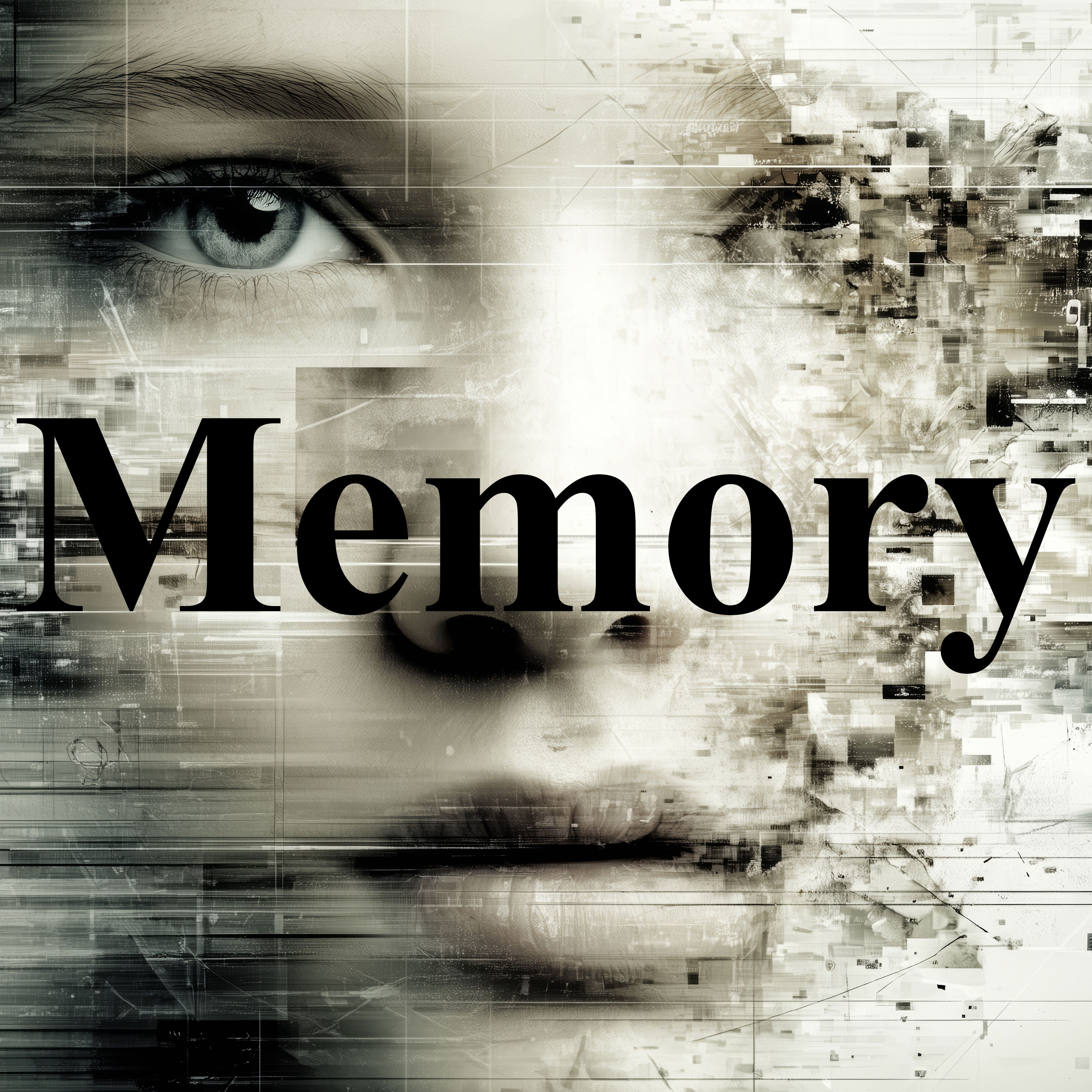
Memory - The Shape of Memory
Memory is not a recording. It shifts, fades, rebuilds, and defines who we are. The Shape of Memory explores how human memory works, why it changes over time, and what it means for identity, aging, and love. Drawing from neuroscience, psychology, lived experience, and quiet reflection, this podcast speaks to those who want to preserve their minds, care for others, or understand what remains when memories begin to fade.
Be sure to visit the podcast's website and support the creator: www.amazon.com
Where to listen?
Podcasts in the app Replaio Radio Coming soonPodcasts are coming to the app soon. Install now and be the first to see a whole new take on podcasts
 Install for free
Android almost 10M downloads · 4.8 rating
iOS soon
Install for free
Android almost 10M downloads · 4.8 rating
iOS soon
Episodes
20. The Future of Memory: Neuroscience, Ethics, and Artificial Intelligence 22.02.2026 36:54
Chapter 20 — The Future of Memory In this final chapter, we look forward. Advances in neuroscience, medicine, and technology are beginning to reshape how we understand — and potentially influence — memory itself. The goal of “memory repair” is evolving. Rather than attempting to retrieve a lost recording, researchers are increasingly focused on restoring the brain’s capacity to encode, integrate,...
19. The Social Mind: How We Remember Together 22.02.2026 29:53
Chapter 19 — Collective and Shared Memory In this episode, we move beyond the individual brain and into the social world. Memory does not exist in isolation. It is distributed across relationships, families, communities, and cultures. Long before writing — and long before neuroscience — human beings preserved the past together. We explore cultural and social memory : the ways rituals, monuments, t...
18. The Persistence of Self: Who Are We When We Forget? 12.02.2026 37:04
Chapter 18 — Memory and Identity In this episode, we confront one of the most profound questions about the human mind: If I lose my memory, do I lose myself? The fear behind this question assumes that identity is nothing more than a stored archive of past events. This chapter challenges that assumption. We introduce a crucial distinction between narrative identity and enacted identity . Narrative...
17. The External Brain: Surviving the Age of Digital Amnesia 10.02.2026 26:35
Chapter 17 — Technology and Memory In this episode, we examine one of the most significant cognitive shifts of our time: the move from internal memory to digital reliance. Smartphones, search engines, and artificial intelligence have become extensions of our minds. But what happens to biological memory when external storage is always within reach? We begin with the “Google Effect” — sometimes call...
16. The Gym for Your Mind: Why Curiosity Beats Brain Games 09.02.2026 34:52
In this episode, we investigate the multi-billion dollar industry of brain training to separate hope from reality. You will learn why most "memory games" fail to deliver on their promises due to the "transfer problem" —the frustrating reality that getting better at a digital puzzle rarely makes you better at remembering names or managing your schedule. We contrast these isolated drills with the po...
15. The Architecture of Thought: Why Structure Beats Effort 28.01.2026 37:13
Chapter 15 — How Humans Have Remembered for Thousands of Years In this episode, we step back centuries — long before notebooks, search engines, or cloud storage — to uncover how human beings once memorized speeches, laws, poetry, and entire bodies of knowledge. The secret was not extraordinary intelligence. It was structure . We explore the ancient technique known as the Memory Palace , or Method...
14. The Daily Architecture: How Sleep, Stress, and Attention Build Memory 28.01.2026 32:13
Chapter 14 — Lifestyle and Memory In this episode, we shift from theory to daily life. Memory is not only a mental faculty. It is a biological process sustained — or undermined — by the rhythms of how we live. Protecting memory requires more than puzzles and brain games. It requires supporting the physiological conditions under which the brain can encode, consolidate, and retrieve effectively. We...
13. Survival Mode: When Memory Hides to Protect Us 27.01.2026 37:45
Chapter 13 — Trauma and Memory In this episode, we explore what happens when the brain shifts from recording life to surviving it. Trauma does not simply create painful memories. It alters the very way memory is encoded, stored, and retrieved. Under extreme stress, the brain prioritizes immediate survival over narrative coherence. Instead of forming a structured story with a clear beginning, middl...
12. The Illusion of Certainty: Why False Memories Feel Real 27.01.2026 31:39
Chapter 12 — False Memories and Distortion In this episode, we confront an unsettling but essential truth: certainty is not proof. The vividness of a memory — and the confidence we feel in it — does not guarantee that it is accurate. False memories are not rare defects in broken minds. They are natural byproducts of a healthy, reconstructive system. Because memory is rebuilt each time it is recall...
11. What Remains: The Resilience of the Unspoken 26.01.2026 25:57
Chapter 11 — What Is Lost, and What Remains In this episode, we address one of the deepest fears surrounding memory loss: the fear of total erasure. The image many people hold is stark — that identity disappears all at once. The biological reality is more complex, and more hopeful. Memory does not collapse uniformly. It breaks down unevenly. We explore the essential distinction between declarative...
10. When the System Breaks: Demystifying Dementia, Alzheimer’s, and the Gray Zone 22.01.2026 28:32
Chapter 10 — When Memory Breaks In this episode, we move beyond normal aging and into the territory of medical concern. What happens when memory loss is no longer an occasional frustration, but a pattern that disrupts daily life? Understanding this boundary requires clarity — and language matters. We begin by untangling a common confusion: the difference between dementia and Alzheimer’s disease ....
9. The Hidden Reserve: Why Biology Is Not Destiny 21.01.2026 21:25
Chapter 9 — Brain Aging vs. Memory Aging In this episode, we draw a distinction that changes the narrative of aging: the difference between brain aging and memory aging . The physical brain inevitably changes over time — but functional memory does not decline in a simple, linear way. Structure and performance are related, but they are not identical. We introduce the concept of Cognitive Reserve —...
8. Slower, Not Gone: The Truth About Aging Memory 21.01.2026 21:25
Chapter 8 — Why Memory Changes with Age In this episode, we address one of the most common fears about the mind: the so-called “senior moment.” Is every forgotten name a warning sign? Does aging inevitably mean cognitive decline? The science tells a more nuanced story. Normal cognitive aging is not a collapse. It is a rebalancing of resources . As the brain ages, it often shifts from speed toward...
7. The Art of Deleting: Why Forgetting Is Not Failure 21.01.2026 25:41
Chapter 7 — Forgetting Is Not Failure In this episode, we confront one of the most persistent anxieties about the mind: the fear that forgetting signals weakness or decline. What if forgetting is not a defect — but a design feature? This chapter reframes forgetting as a form of biological optimization . The brain cannot — and should not — retain every detail. To remain adaptive, it must continuous...
6. The Elastic Clock: Why Time Speeds Up as We Age 20.01.2026 26:39
Chapter 6 — Memory and the Experience of Time In this episode, we explore a question nearly everyone has asked: Why did childhood summers feel endless, while adult years seem to disappear in a blur? The answer lies not in the clock, but in memory. The brain does not measure time in minutes or hours. It constructs the feeling of time through memory density and novelty . Periods filled with new expe...
5. The Chemical Spark: How Emotion and Dopamine Decide What We Keep 19.01.2026 15:12
Chapter 5 — The Chemistry of Memory In this episode, we move beyond neural wiring and into the invisible chemistry that determines what the brain preserves and what it allows to fade. Memory is not only electrical. It is chemical. Beneath every strengthened synapse lies a cascade of neurotransmitters translating experience into biological priority. This chapter explores how the brain decides what...
4. The Living Web: Mapping the Memory Networks of the Brain 18.01.2026 28:03
Chapter 4 — The Memory Networks of the Brain In this episode, we shift from the stages of remembering to the architecture that makes remembering possible. If memory is not a file, and not a single structure, then where is it? The answer is both simple and profound: it is everywhere — and nowhere in isolation. We dismantle the idea of a single “memory vault” and instead explore memory as a distribu...
3. Making a Mark: The Living Architecture of Remembering 17.01.2026 35:18
Chapter 3 — How the Brain Builds Memory In this episode, we go under the hood. We move from the experience of remembering to the biology that makes it possible. How does a fleeting moment — a sunset, a difficult conversation, a new skill practiced once — leave a lasting trace in the physical structure of the brain? The answer begins with neural plasticity : the brain’s ability to reorganize itself...
2. The Layered Mind: Why We Remember Songs but Forget Names 16.01.2026 19:43
Chapter 2 — The Many Systems of Memory In this episode, we move beyond the idea of memory as a single “good” or “bad” ability and begin to see it for what it truly is: a network of specialized, interacting systems. Memory is not one thing. It is a constellation of processes working together — sometimes seamlessly, sometimes unevenly. Why can someone vividly relive a childhood summer yet struggle t...
1. Memory Is Not a File: The Myth of the Mental Hard Drive 15.01.2026 31:18
Chapter 1 — Memory Is Not a File In this episode, we begin with a simple but radical idea: your memory is not a hard drive. We use computer language to describe the mind — “store,” “save,” “retrieve.” But biologically, memory doesn’t work that way. There is no untouched archive in the brain. There is no single location labeled “your childhood.” What we call memory is a dynamic, living process — on...
Similar podcasts




Listen to the Memory - The Shape of Memory podcast in Replaio
Radio and podcasts in one app - free, with no sign-up. Install today and do not miss the launch
Replaio is not a podcast publisher; show names, artwork and audio belong to their authors and are distributed through public RSS feeds.