
Brian Granneman, LMHC, CAP, CCTP
Doing The Work from Naples Integrated Recovery
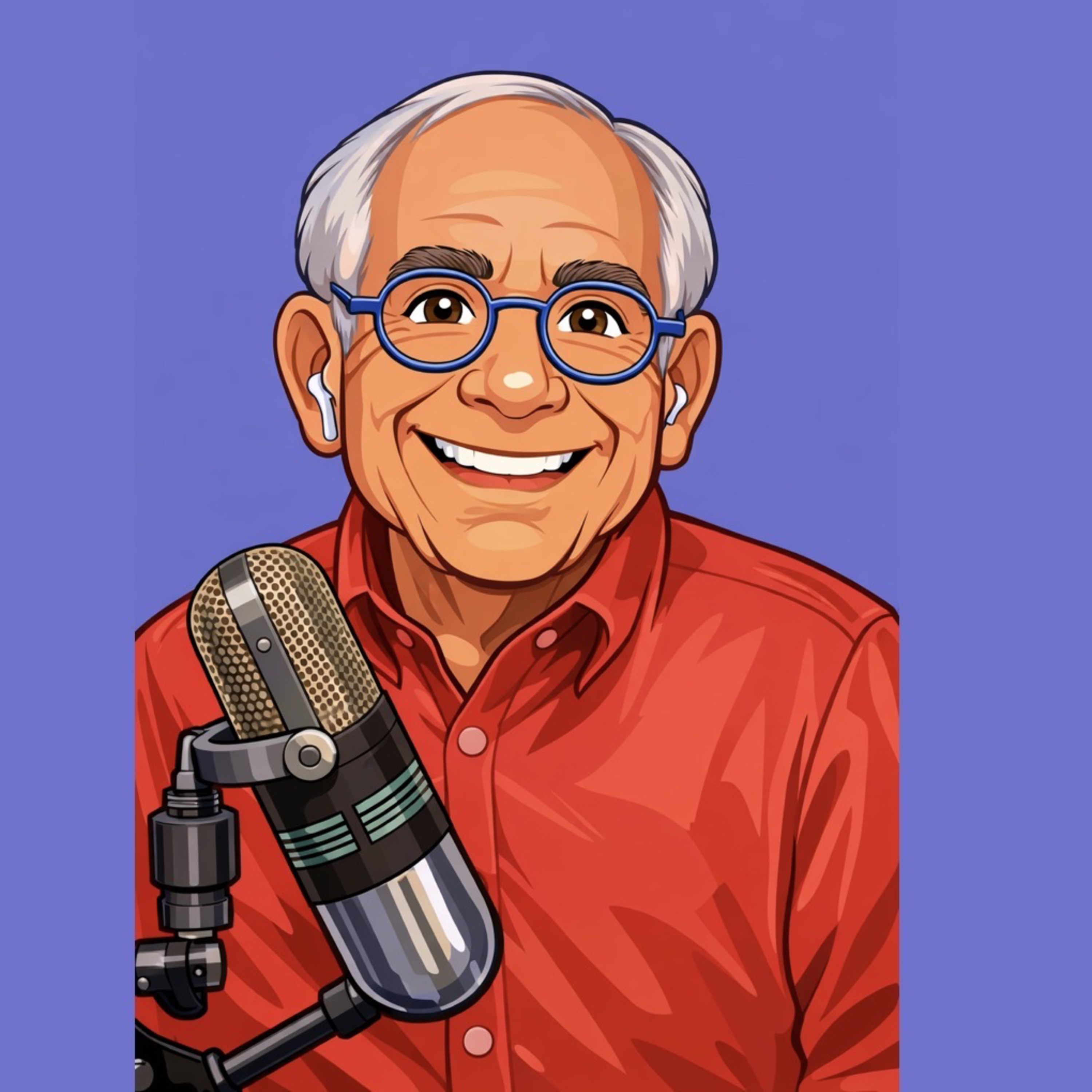
Doing The Work: A Naples Integrated Recovery Podcast focuses on the patterns that keep people stuck — the ones that show up in conversations, relationships, habits, and everyday decisions. This isn’t theory and it isn’t motivation. Each episode breaks down what’s actually happening underneath the surface: avoidance, control, people-pleasing, resentment, emotional shutdown, and the ways people stay busy instead of changing anything. Hosted by Brian Granneman, LMHC, CAP, CCTP, the show pulls from real clinical experience to track how these patterns form, how they get reinforced, and what it look...
Be sure to visit the podcast's website and support the creator: podcast.naplesintegratedrecovery.com
Author
Brian Granneman, LMHC, CAP, CCTP
Category
Podcast website
Latest episode
Jul 10, 2026
Where to listen?
Podcasts in the app Replaio Radio Coming soonPodcasts are coming to the app soon. Install now and be the first to see a whole new take on podcasts
 Install for free
Android almost 10M downloads · 4.8 rating
iOS soon
Install for free
Android almost 10M downloads · 4.8 rating
iOS soon
Episodes
Watering Dead Soil is Not Patience: When Waiting is a Waste of Time 10.07.2026 27:11
Patience can become a way to stay stuck. This episode breaks down the difference between slow growth that is actually building capacity and waiting that keeps the same loop alive. Brian looks at relationships, recovery, career frustration, personal development, and the nervous system’s need for closure when the outcome is uncertain. You’ll learn how to assess whether time is increasing honesty, di...
Why Inconsiderate People Hit Such a Nerve 07.07.2026 45:31
Why do other people feel so exhausting sometimes? This episode uses Buddhist psychology to break down the aversive temperament: the part of the mind that sees flaws quickly, gets irritated by disorder, and can confuse clear perception with contempt. Using examples from beach crowds, Walmart, airports, AA, and public life, Brian explores why some people experience inconsiderate behavior as almost p...
You Knew You’d Regret It. You Did It Anyway. 05.07.2026 38:08
Why do people keep repeating behaviors they already decided to stop? This episode breaks down the neuroscience behind addictive loops, impulsive behavior, craving, dopamine, the orbitofrontal cortex, salience, tolerance, withdrawal, and why insight alone often does not change behavior. Using a simple cereal aisle example, Brian explains how the brain assigns value before conscious reasoning catche...
How Your Phone Has Rewired Your Nervous System 02.07.2026 42:21
Phones have become more than tools. They sit on the dinner table, beside the bed, in the bathroom, in the car, in the waiting room, and in the hand before most people even realize they reached for them. This episode looks at how phones became pocket-sized dopamine dispensers, training both kids and adults to escape boredom, silence, discomfort, loneliness, and ordinary waiting. The conversation mo...
Can You Be Honest With a Therapist Who Secretly Judges You? 28.06.2026 33:35
When therapy becomes filtered through politics, ideology, and online moral performance, clinical curiosity can disappear. This episode looks at how therapists can become too quick to sort clients into moral categories instead of understanding the biography, fear, attachment patterns, trauma, identity, and lived experience beneath their beliefs. The conversation challenges the trend of therapists p...
You Don’t Keep Picking the Wrong People. You Keep Working Around the Wrong Things 25.06.2026 38:42
Most people ask why they keep picking the same kind of person after the pattern has already taken over. The deeper problem usually shows up earlier: what gets minimized, explained away, tolerated, and slowly built around because the chemistry feels strong enough to override judgment. Dating patterns often repeat when attraction, familiarity, and the need to be chosen start replacing clear evaluati...
My Dad Was Complicated: Sometimes Hard to Love and Harder to Lose 20.06.2026 31:56
Father’s Day can bring up grief, anger, resentment, guilt, longing, love, and the old ache of wanting something from a father that never fully came. For people with complicated fathers, the story often carries both gratitude and pain: a dad who provided, sacrificed, worked constantly, paid bills, and created stability, while also feeling emotionally distant, critical, unavailable, or hard to reach...
Curiosity, Certainty, and the Stories We Decide Too Early 18.06.2026 36:40
Curiosity is often treated like a personality trait, but here it is something much more practical: the ability to pause before the mind turns a reaction into a conclusion. Old experiences, familiar labels, and strong emotions can make a situation feel obvious before it has actually been understood. Certainty feels stabilizing, especially under pressure, but it can also close perception too early....
Why Smart People Fight the Simple Things That Help Them 14.06.2026 31:20
There is a special kind of rage that happens when you are already activated and someone tells you to breathe. This episode looks at why intelligent, insightful people often resist the simple tools that would actually help them regulate: breathing, pausing, naming the emotion, walking away, sleeping, eating, calling someone grounded, and letting another person be wrong without launching a full cour...
Why Your Dog Is Happier Than You 11.06.2026 19:38
Humans spend most of their time inside thought loops—replaying the past, predicting the future, and constantly evaluating themselves—while dogs stay anchored to what’s actually happening. This episode breaks down the neuroscience behind that difference, focusing on the default mode network (the brain system responsible for rumination, identity, and mental simulation) and why it keeps people stuck...
You’re Not Reacting to This — You’re Reacting to Something Else 07.06.2026 34:42
Most reactions don’t start in the moment—they follow patterns built years earlier. This episode breaks down how certain emotional responses fire instantly when something feels like criticism, control, or threat, even when the current situation doesn’t fully justify the intensity. What feels like a justified reaction is often a familiar template the nervous system has learned to apply quickly. The...
“Sorry You Felt That Way” — When They Won't Take Responsibility 04.06.2026 26:45
Apologies often break down when people focus on protecting their self-image instead of acknowledging the impact of their behavior. This episode examines why phrases like “sorry you felt that way” or scripted apologies that sound performative fail to repair relationships, and how those moments often reveal whether someone is capable of emotional accountability. The discussion explores why apologizi...
You’re Not Chasing Sex or Relationships — You’re Chasing Being Chosen 31.05.2026 25:09
Sexual attraction, novelty, and validation are often treated as chemistry or preference, but this episode breaks down the mechanism underneath. It examines how early social ranking, rejection, and father dynamics shape the nervous system’s response to being chosen later in life. Moments of attraction are framed as status signals tied to identity, and the role of dopamine is laid out clearly—especi...
Human First, Cop Second: Police, Alcohol, and Asking for Help 28.05.2026 1:27:43
Retired law enforcement officer Mike Clark joins Brian for a raw conversation about police culture, alcoholism, sobriety, trauma, suicide, and the fear that keeps many officers from asking for help. Mike spent nearly three decades in law enforcement and speaks directly about the identity trap that can come with the job: being trained to handle everyone else’s crisis while feeling unable to admit w...
When You’re Right and Still the Problem 24.05.2026 45:52
People with addiction histories, trauma adaptation, and high-functioning nervous systems often experience intense anger toward inefficiency, passivity, and incompetence in modern systems. This episode explores contempt, hypervigilance, recovery culture, AA “character defects,” nervous system activation, and why some highly capable people feel constantly enraged by low ownership and bureaucratic ab...
You Are Not Entitled to More Time. You're Going to Die. Now What? 21.05.2026 24:06
This episode examines death without cushioning it in belief systems or abstract philosophy, and tracks what happens when the mind stops trying to solve mortality. It moves through a Christian upbringing, the collapse of certainty, and the shift toward direct confrontation with nonexistence—where fear shows up physically, not intellectually. The focus stays on what drives avoidance, how belief syst...
Why You Can’t Stop Replaying It in Your Head and Why Zebra's Don't Get Ulcers 17.05.2026 27:22
Why do you keep replaying conversations in your head long after they’re over? This episode breaks down the real mechanism behind it—how one comment, tone, or moment activates your system and keeps it running even when nothing is happening anymore. It walks through how your brain tags certain moments as unfinished, why you keep mentally rehearsing what you should have said, and how that loop keeps...
The Scoreboard Never Ends: Why More Money Doesn’t Settle Anything 14.05.2026 34:52
Money becomes a scoreboard long before it becomes security, and that shift quietly drives how people live, spend, and evaluate themselves. This episode breaks down how comparison, identity, and early life experiences shape financial behavior, why “just a little more” never resolves internal tension, and how status-driven spending keeps people locked in an unwinnable game. The conversation moves pa...
I Am Not Better Than My Clients: Compassion Without Cosigning Bullshit 10.05.2026 33:00
Addiction can make decent people lie, hide, manipulate, and manage the truth while still carrying real pain underneath the behavior. In this episode, Brian uses Gabor Maté’s five levels of compassion to examine addiction without sentimentality: ordinary human compassion, curiosity and understanding, recognition, truth, and possibility. Brian reflects on his own recovery, including the uncomfortabl...
Broken Mirror Syndrome: When Trauma Warps Self-Evaluation in Real Time 07.05.2026 30:13
Why do some people turn a simple complaint into proof that they’re fundamentally flawed? In this episode, we break down “broken mirror syndrome” — how trauma distorts self-perception so that feedback feels like condemnation, imperfection feels dangerous, and self-criticism becomes identity-level attack. Using a real clinical example, we walk through how attachment wounds, shame conditioning, and n...
What Actually Slows Emotional Reactions and Radical "okay-ness" 03.05.2026 15:37
Most emotional suffering isn’t caused by pain itself, but by resistance to reality. This episode explores why reactivity escalates when life doesn’t match what the mind wants, and how suffering arises from that gap. Rather than treating emotions as random or overwhelming events, we look at suffering as something patterned—shaped by causes, conditions, and narrowed attention. Awareness reduces reac...
Why “That’s Just Who I Am” Keeps You Stuck 30.04.2026 35:35
Most people think their personality is fixed. “I’m anxious," “I’m avoidant,” "I'm sassy," "I'm just honest," “I’ve always been this way.” In this episode, we break down how many of the traits you call identity started as survival strategies. Behaviors that once lowered stress or protected you slowly stabilized into something that feels like who you are. When coping turns into personality, change s...
Why Forgiveness Doesn’t Respond to Force 26.04.2026 29:15
When forgiveness is pushed before the nervous system has processed what happened, it turns into compliance rather than resolution. This episode looks at why saying the words doesn’t calm the body, why resentment resurfaces after you thought it was handled, and how pressure to forgive often deepens activation instead of relieving it. The focus stays on what actually keeps reactions alive and why fo...
Why You Get Defensive the Second Someone Criticizes You 23.04.2026 32:19
Why do otherwise thoughtful, self-aware people become instantly defensive when they receive real feedback? This episode breaks down defensiveness as an identity threat rather than a maturity problem, showing how the brain protects coherence before it allows learning. We look at why people who talk about growth often struggle most with change, how behavior gets fused to self-worth, and why feedback...
Why Your System Won’t Let You Change (Yet) 19.04.2026 25:38
You can understand your patterns and still feel your body tighten when something real comes up. You can know why you shut down in relationships, get anxious, or pull away — and still watch it happen. This episode breaks down why awareness doesn’t automatically change your behavior and why your nervous system doesn’t shift just because your thinking does. We get into what actually creates change. W...
Similar podcasts





Listen to the Doing The Work from Naples Integrated Recovery podcast in Replaio
Radio and podcasts in one app - free, with no sign-up. Install today and do not miss the launch
Replaio is not a podcast publisher; show names, artwork and audio belong to their authors and are distributed through public RSS feeds.
