Gareth Lock at The Human Diver
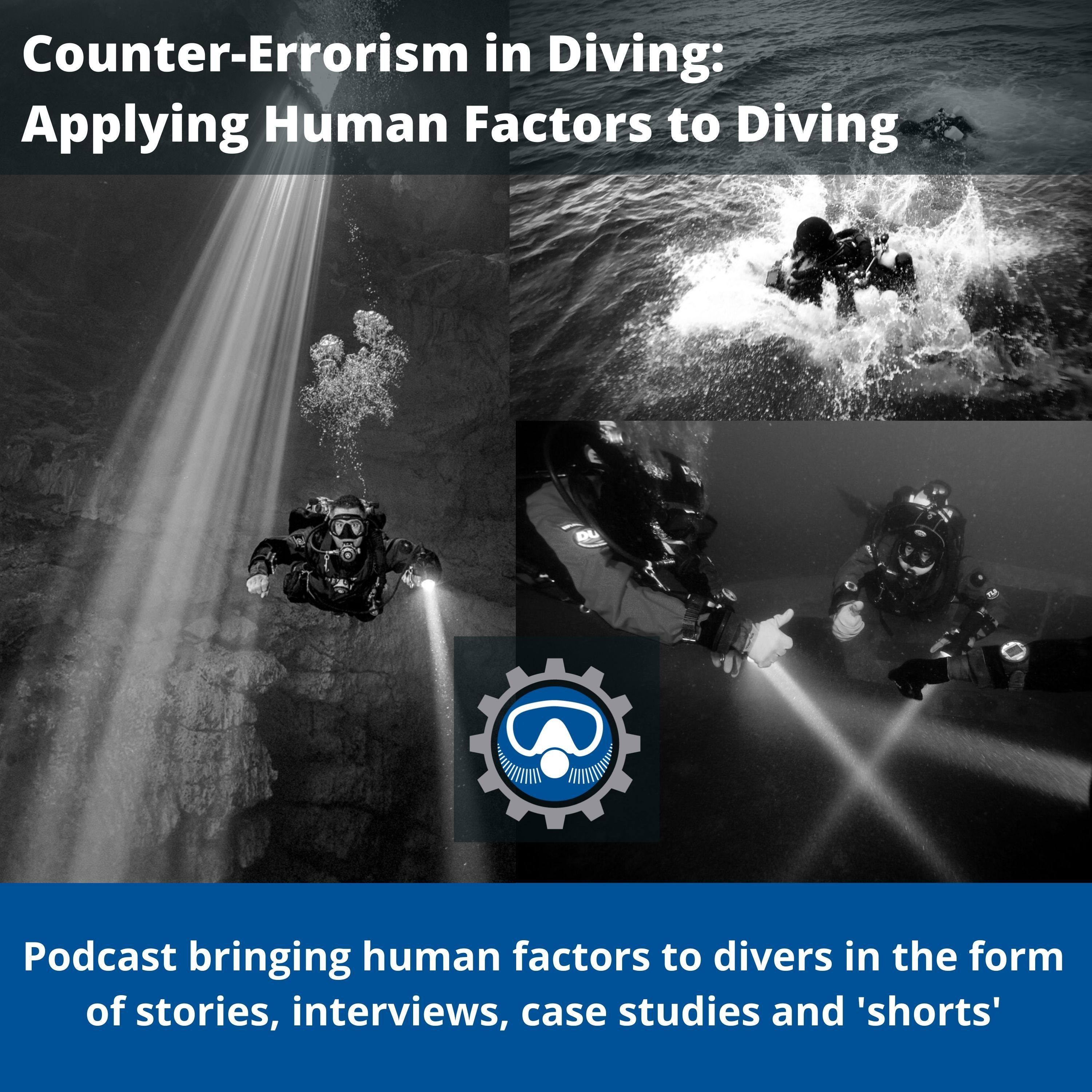
Counter-Errorism in Diving: Applying Human Factors to Diving
Human factors is a critical topic within the world of SCUBA diving, scientific diving, military diving, and commercial diving. This podcast is a mixture of interviews and 'shorts' which are audio versions of the weekly blog from The Human Diver. Each month we will look to have at least one interview and one case study discussion where we look at an event in detail and how human factors and non-technical skills contributed (or prevented) it from happening in the manner it did.
Author
Gareth Lock at The Human Diver
Category
Podcast website
Latest episode
Jul 11, 2026
Where to listen?
Podcasts in the app Replaio Radio Coming soonPodcasts are coming to the app soon. Install now and be the first to see a whole new take on podcasts
 Install for free
Android 5M+ downloads · 4.8 rating
iOS soon
Install for free
Android 5M+ downloads · 4.8 rating
iOS soon
Episodes
SH195: Murphy was wrong! 30.07.2025 8:17
Murphy’s Law suggests that if something can go wrong, it will, but this oversimplifies reality. Most of the time, things go right, even when procedures are ignored or actions are flawed, which can create a false sense of safety. Instead of focusing on outcomes alone, we need to examine the processes that led to success or failure, using tools like structured debriefs. By asking questions like “Wer...
SH194: Surely if we blame and punish, things will be safer? 26.07.2025 12:30
In this episode, we discuss a controversial Facebook post about a novice diver being taken beyond their certification limits to 45 meters by an instructor, sparking a heated debate on blame, punishment, and safety in the diving community. We explore key issues like authority gradients, risk-reward perceptions, and the normalization of deviant behaviors that lead to unsafe practices. Instead of foc...
SH193: The problem with bringing Human Factors into Diving is... 23.07.2025 13:06
This blog explores the challenges of integrating Human Factors into diving, starting with the very nature of human factors themselves. Diving incidents often get oversimplified as “diver error,” ignoring the broader system and context influencing decisions. From cognitive shortcuts to commercial pressures, Gareth Lock unpacks how biases, complacency, and industry practices affect safety. The blog...
SH192: Quarks and Meows - the state of diving safety! 19.07.2025 8:15
In this episode, we dive into the complex nature of safety in diving and explore why it’s not as simple as just following rules or avoiding accidents. Safety is shaped by people, technology, processes, and culture, creating a socio-technical system where risks must be managed dynamically. We discuss how perceptions of safety differ among individuals and organisations, the influence of rewards and...
SH191: Are there Cobras in diving? 16.07.2025 10:07
In this episode, we explore the unintended consequences of rewarding specific behaviors and metrics in both high-risk industries and diving. From the infamous Cobra Effect in colonial India to modern-day challenges in reporting safety metrics, we examine how well-intentioned systems can backfire when rewards drive undesirable behaviors. In the diving world, certifications, dive counts, and reporti...
SH190: You can't learn from adverse events if you are going to blame 12.07.2025 12:54
In this episode, we explore the role of punishment in learning and accident investigations, challenging the idea that punishment fosters accountability or safety. Drawing from research by Heraghty, Dekker, and Rae, we discuss how punishment often stifles honesty, trust, and meaningful learning by creating a culture of fear. Using real-world examples, like a tragic drysuit diving accident and the g...
SH189: ‘Pilot error’. Don't 'fix' the Pilot. ‘Diver error’. 'Fix' the diver. 09.07.2025 13:05
In this episode, we explore how systems, not just individuals, shape safety outcomes in aviation, diving, and daily life. We discuss historical lessons, such as redesigning cockpit controls in WWII B-17 bombers to prevent pilot errors, and modern examples like changes to ATM processes to reduce card loss. Diving safety is also examined, highlighting the recurring nature of incidents and the limita...
SH188: The Status Quo Bias. We don’t like to change 05.07.2025 5:16
Status Quo Bias is the tendency to stick with familiar choices, even when better options exist, and it impacts decisions in many areas, including diving. From Coca-Cola's "New Coke" failure to nitrox's initial resistance in the diving world, this bias highlights our preference for the familiar and reluctance to embrace change. It shows up in dive site routes we repeat, equipment setups we hesitate...
SH187: The risks we take. The decisions we make. The lessons we MIGHT learn. 02.07.2025 15:47
This episode dives into the complexities of risk, decision-making, and resilience, blending personal experience with critical lessons for divers and beyond. Host Gareth Lock recounts his journey from peak physical fitness to surviving a near-fatal cardiac event, emphasizing the importance of recognizing weak signals, confronting cognitive biases, and understanding that safety isn’t just about trai...
SH186: Being Efficient? Being Thorough? Which One Did You Choose? 28.06.2025 6:34
This episode explores the Efficiency Thoroughness Trade-Off (ETTO), a concept by Erik Hollnagel that explains how we balance being thorough and efficient in everyday tasks, including diving. Using relatable examples like incomplete checks and forgotten tasks, we discuss how time pressures and biases often lead us to prioritize productivity over safety—usually with successful outcomes, but occasion...
SH185: “Whenever there is any doubt, there is no doubt.” 25.06.2025 9:35
This episode dives into a powerful, real-life story of a cave diving incident that highlights the importance of psychological safety, trust, and clear communication in high-stakes environments. The narrative explores how a seemingly small misunderstanding about gas pressure spiraled into a stressful situation, showcasing the impact of doubt and unspoken concerns within a team. Lessons learned incl...
SH184: Why change is hard in diving 21.06.2025 4:19
Why do we do things the way we do? This question is at the heart of a story about a family’s tradition of cutting the ends off meat before cooking—a habit traced back to a Great Grandmother’s small tray. The tale highlights how unexamined habits can persist long after their original purpose is gone. In diving, the same applies to the debate over teaching students on their knees versus neutrally bu...
SH182: Joining Dots is Easy, Especially If You Know the Outcome 18.06.2025 10:39
In this episode, we discuss the complexities of learning from mistakes and adverse events in diving and beyond. Using real-world examples, including a technical diving error and a high-profile medical case, we explore how systemic pressures, biases like hindsight and confirmation bias, and the gap between "work as imagined" and "work as done" influence decisions. We highlight the importance of Jus...
SH182: My Biggest Mistake: Context Driving Behaviour 14.06.2025 6:23
In this episode, we explore how context drives behavior and how mistakes can happen even to experienced professionals. Sharing a personal story about a diving oversight, we examine how time pressures, language barriers, and assumptions led to a dangerous error—and the lessons learned from it. Highlighting the importance of psychological safety and robust pre-dive checks, we discuss why understandi...
SH181: “Blame is the enemy of safety” - moving from blaming to learning 11.06.2025 11:40
Mistakes, slips, and lapses are a natural part of human performance, influenced by factors like training, time pressures, and equipment design. While rule-breaking may seem deliberate, it's often shaped by context, social pressures, and the perceived benefits of deviation. Biases like hindsight, outcome, and severity distort how we interpret incidents, leading to blame rather than understanding. E...
SH180: Challenger Safety: As an Instructor, don't I lose control? 07.06.2025 16:38
In this episode, we explore how instructors can balance leadership with fostering psychological safety in diving education. Psychological safety, defined as a "rewarded vulnerability," is crucial for creating environments where mistakes, questions, and challenges to the status quo are welcomed without fear of ridicule or blame. By understanding and implementing the four stages of psychological saf...
SH179: How and Why Checklists Work 04.06.2025 7:49
In this episode, we explore the importance of checklists in diving, inspired by lessons from aviation and medicine. After a tragic 1935 plane crash, pilots introduced simple checklists to reduce human error—an approach now standard in high-risk industries. Checklists help compensate for our natural forgetfulness and distractions by providing quick prompts for essential tasks. For divers, effective...
SH178: The Importance of Experience: Expertise is different to Experience 31.05.2025 8:25
Experience and practice are crucial for making better decisions, especially in uncertain situations, but they aren’t the same. Perfect practice builds expertise, while varied experiences across different environments enhance decision-making by expanding mental patterns. Decision-making relies on situational awareness, which involves sensing, understanding, and projecting future outcomes, all influ...
SH177: We see what we think we’re looking for 28.05.2025 14:36
In this episode, we explore how human perception and assumptions can lead to critical errors, using real-world examples like the tragic 1994 friendly fire incident where two US helicopters were mistaken for enemy aircraft. These events highlight the dangers of "believing is seeing" and how expectations can shape our decisions under pressure. We connect these lessons to diving, where incomplete inf...
SH176: How to Integrate Human Factors Education into a New Diving Class: A Real World Example 24.05.2025 5:16
In this episode, we discuss integrating Human Factors training into technical diving courses, inspired by a new program blending eLearning, hands-on skills, and real-world exploration. The program emphasized teamwork, leadership, and psychological safety, with the DEBRIEF model becoming a standout tool for improving feedback and team efficiency. Students embraced these concepts, leading to more ef...
SH175: You can't pay MORE attention: the myth of 'loss of situation awareness' 21.05.2025 4:41
In this episode, we explore the complexities of situational awareness (SA) in diving and why it's often only recognized as missing after an event has occurred. SA involves interpreting sensory data and predicting future outcomes based on experience. Experienced divers may notice subtle signs of danger, like coral movements indicating currents or rust falling in a wreck, while novices lack the know...
SH174: When The Rescuer Nearly Needs Rescuing! - Task Fixation 17.05.2025 7:59
In this blog, a diver reflects on a simulated rescue scenario during a PADI Rescue Course, highlighting critical lessons about human factors in diving. The incident underscores the impact of high task focus, reduced situational awareness, and psychological stress, which led a student to run critically low on gas without asking for help. The writer explores contributing factors, including the chall...
SH173: How to conduct effective pre-dive checks on a busy dive boat 14.05.2025 6:01
Pre-dive checks are essential for diving safety, but they’re often rushed or overlooked, especially on busy dive boats. Factors like time pressure, peer pressure, distractions, and overconfidence can lead divers to skip thorough checks, relying instead on past outcomes. However, regardless of experience, using a familiar checklist with your buddy is key to ensuring equipment works and everyone kno...
SH172: Making sense now to see what the future might bring 09.05.2025 5:06
In this episode, Gareth Lock explores the critical role of situation awareness and risk management in diving, emphasizing the importance of building accurate mental models to anticipate and manage potential hazards. He discusses how assumptions, experience, and training shape decision-making, and highlights the distinction between managing risks logically and addressing uncertainty through mental...
SH171: If A=B and B=C, then why A≠C? 07.05.2025 7:45
In this blog, Bart Den Ouden shares a personal experience highlighting the importance of psychological safety, vulnerability, and human factors in diving. While teaching a rebreather instructor course, Bart forgot a critical piece of equipment, turning the oversight into a teachable moment. He emphasizes that instructors, as humans, can make mistakes, and fostering open communication and trust amo...
Similar podcasts







Listen to the Counter-Errorism in Diving: Applying Human Factors to Diving podcast in Replaio
Radio and podcasts in one app - free, with no sign-up. Install today and do not miss the launch
Replaio is not a podcast publisher; show names, artwork and audio belong to their authors and are distributed through public RSS feeds.