Gareth Lock at The Human Diver
Counter-Errorism in Diving: Applying Human Factors to Diving
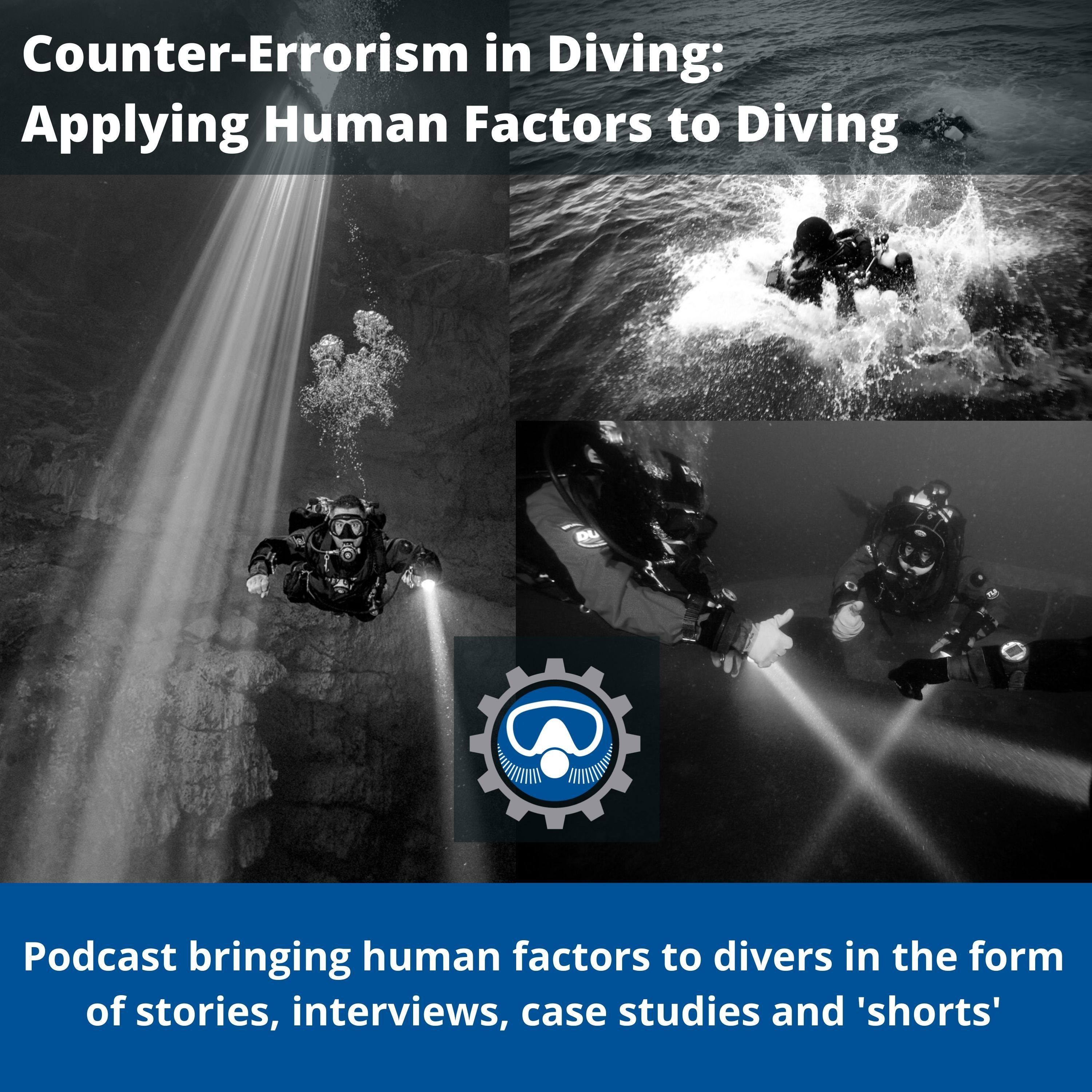
Human factors is a critical topic within the world of SCUBA diving, scientific diving, military diving, and commercial diving. This podcast is a mixture of interviews and 'shorts' which are audio versions of the weekly blog from The Human Diver. Each month we will look to have at least one interview and one case study discussion where we look at an event in detail and how human factors and non-technical skills contributed (or prevented) it from happening in the manner it did.
Be sure to visit the podcast's website and support the creator: www.thehumandiver.com
Author
Gareth Lock at The Human Diver
Category
Podcast website
Latest episode
Oct 21, 2026
Where to listen?
Podcasts in the app Replaio Radio Coming soonPodcasts are coming to the app soon. Install now and be the first to see a whole new take on podcasts
 Install for free
Android almost 10M downloads · 4.8 rating
iOS soon
Install for free
Android almost 10M downloads · 4.8 rating
iOS soon
Episodes
SH316: Quit while you still can 21.10.2026 19:50
When should a diver call off a dive, even when everything seems to be going well? Using the 1996 Everest disaster as a starting point, this episode explores why we often celebrate people who reach their goals while overlooking those who make the difficult decision to turn back. In diving, fatigue, minor equipment problems, rushed briefings and tension within a team can seem manageable on their own...
SH315: The Insurance Illusion 17.10.2026 10:41
This episode explores what diving insurance can—and cannot—do, drawing on insights from two highly experienced dive insurance underwriters. Insurance can help cover the financial consequences of an incident, but it does not make diving safer or prevent harm, and policies may have conditions that limit when they will respond. The discussion also highlights how difficult it is for the diving industr...
SH314: 5. Human Factors as an Operating System 14.10.2026 7:55
In this episode, Brent Webb explores the idea that Human Factors should be more than a collection of concepts or courses—it can become the “operating system” of an organisation. Drawing on his experience running Scuba Adventures in Plano, Brent explains how psychological safety, Just Culture, systems thinking, debriefing and curiosity have become part of the way the business operates, influencing...
SH313: 4. Am I Enough? 10.10.2026 9:13
In this episode, Connor Tate shares her experience of attending the Human Factors in Diving Conference while struggling with imposter syndrome as a researcher with limited diving experience. Despite understanding the science behind stress and decision-making, Connor discovers the difference between studying these concepts and experiencing them first-hand when a mask-clearing problem at depth trigg...
SH312: Your Body Can't Cash the Cheque Your Ego Is Writing 07.10.2026 16:40
We explore how capable, motivated divers can gradually push beyond safe limits when their environment rewards risk-taking and treats near misses as successes. Using the story of a young technical diver who died after entering a strong current, alongside examples from aviation, we examine how normalisation of deviance, practical drift, peer pressure and the need for recognition can erode safety mar...
SH311: 3. Don’t Wait - Learn From Everyday Work Using HOP Principles 03.10.2026 6:55
This episode explores Human and Organizational Performance (HOP), an approach to safety that starts with the idea that people will always make mistakes, so we should focus on understanding why decisions made sense at the time rather than simply blaming individuals. Drawing on a workshop from the Human Factors in Diving Conference in Vis, Croatia, we look at how HOP can be applied to diving by cons...
SH310: 2. More Than a Deep Dive: What a WWII Bomber Recovery Can Teach Us About Human Factors 30.09.2026 8:01
This episode explores what really makes complex technical diving successful: not just helium, decompression and equipment, but the people using them. Using the recovery of the WWII B-24 Liberator Tulsamerican off the island of Vis as a case study, we look at how communication, teamwork, workload management, clear goals and psychological safety can make the difference between a team that simply com...
SH309: Change around Safety Culture is Really Hard 23.09.2026 14:12
In this episode, Gareth Lock reflects on why improving diving safety requires more than telling people to follow the rules. Drawing on his experience in aviation, diving, and safety science, he explains why incidents are often blamed on individuals while the wider system escapes scrutiny. The discussion explores how culture, reporting systems, commercial pressures, and training standards shape div...
SH308: We Know, and We Say Nothing 16.09.2026 17:55
This episode explores why experienced divers still die in situations that seem predictable, using the tragic 2026 Maldives cave accident as a starting point. It looks at how outcome bias, the normalisation of deviance, nitrogen narcosis, group dynamics, and silent drift can gradually erode safety margins without divers realising it. Rather than focusing on individual mistakes, the discussion expla...
SH307: 1. The 2026 HF in Diving Conference - What Did You Miss? 09.09.2026 15:22
This episode explores how a restorative just culture can help the diving community respond to incidents in a way that promotes learning rather than blame. Instead of focusing only on who broke the rules, it looks at who was harmed, what they need, and how trust can be rebuilt while addressing the wider conditions that contributed to the event. The discussion covers the impact on everyone involved,...
SH306: Restorative Just Culture: Repairing Trust After an Event 02.09.2026 4:03
This episode explores the difference between a retributive approach to diving incidents, which focuses on blame and punishment, and a restorative just culture, which focuses on learning, repair, and preventing future harm. It explains how incidents affect not only those directly involved but also instructors, organisations, and the wider diving community, and argues that real accountability means...
SH305: Cause Reason. Excuse. Three Words Doing Three Very Different Things. 26.08.2026 9:32
This episode explores an important distinction that is often missed when discussing diving incidents: the difference between a cause, a reason, and an excuse. A cause explains what contributed to an event, a reason explains why a person's actions made sense to them at the time, and an excuse uses those reasons to avoid accountability. Understanding these differences helps us learn from accidents w...
SH304: Why Investigations Stop Where They Stop 19.08.2026 17:36
This episode explores why accident investigations often stop long before they uncover the full picture. Drawing on research from safety science, it argues that the “cause” of an incident is not simply discovered—it is shaped by who is investigating, what they are able to change, and what explanations their community accepts. In diving, investigations often focus on the actions of individual divers...
SH303: The Structure of This Diving Tragedy Was Not Abnormal. The Scale Was. 12.08.2026 13:05
This episode explores why diving accidents are so often explained by individual mistakes instead of the wider conditions that made those mistakes possible. Using the case of a fatal medication error in healthcare alongside the recent Maldives cave diving tragedy, it examines how hindsight, blame, and our natural tendency to focus on people rather than systems can prevent meaningful learning. The d...
SH302: Why Rules Get Broken. Does It Matter Who Is Breaking Them? 05.08.2026 17:25
This episode explores why rule-breaking in diving is often more complicated than simply “breaking the rules.” It looks at the difference between shortcuts that organisations quietly depend on to keep operating and personal shortcuts taken for convenience or ego. Through real-world examples, the discussion explains how hindsight can unfairly turn system-wide problems into individual blame after an...
SH301: Eight Questions About the Maldives Dive Accident 01.08.2026 33:11
This episode examines the deaths of five Italian divers in the Maldives and a Maldivian military diver who later died during the recovery operation, using the tragedy to explore how Just Culture approaches accidents in high-risk environments. Rather than rushing to blame individuals, the discussion walks through the Eight-Question Review framework, which looks first at the wider system: authority,...
SH300: "We want accountability." 29.07.2026 5:40
This episode reflects on the tragic deaths of five Italian divers in the Maldives and a Maldivian military diver who died while trying to recover them, using the event to explore what real accountability should look like after a diving accident. Rather than rushing to blame or making assumptions based on limited information, the discussion challenges the diving community to resist quick judgement...
SH299: When we ask 'What conditions made this more likely?' perspectives (should) change 25.07.2026 8:43
This episode challenges the instinct to explain diving accidents by focusing only on individual mistakes or broken rules. Instead, it explores how social, cultural, organisational, and environmental conditions shape the decisions divers make, even when those decisions seem irrational in hindsight. Using recent diving incidents as examples, the discussion highlights how behaviour that appears risky...
SH298: Beyond the Floor: Why Meeting the Standard Isn't the Same as Being Safe 22.07.2026 17:22
This episode challenges the common belief that following diving standards automatically makes diving safe. It explores how industry standards, while important, can create an illusion of safety when compliance becomes the main goal rather than improving real-world performance. The discussion examines how many diving standards are written and assessed by the same organisations they are meant to guid...
SH297: CRM, ISO 8804, and Scientific Diving: Opportunities and Existing Materials 18.07.2026 17:02
This episode explores the growing recognition that safe and effective scientific diving depends on more than technical skill, equipment, and certification. Prompted by new research into applying Crew Resource Management (CRM) to scientific diver training, it examines why communication, leadership, teamwork, and decision-making are essential in complex underwater operations where divers must manage...
SH296: When 'I'm Fine' Isn't True: Speaking Up and Ending the Dive 15.07.2026 13:17
This episode explores a diving incident where nothing officially “went wrong,” yet a series of small decisions and social pressures nearly led to tragedy. A newer CCR diver and his wife joined more experienced divers on an unfamiliar shore dive, and although they surfaced safely, the dive revealed how easily people can ignore warning signs when they feel pressure to fit in, avoid disappointing oth...
SH295: Four Ways We Talk About 'Human Factors' in Diving 11.07.2026 11:41
This episode explores what people really mean when they talk about “human factors” in diving—and why the term can sometimes create more confusion than clarity. It looks at four different ways the phrase is commonly used: blaming “the human factor” when something goes wrong, focusing on what is happening inside the diver such as stress or decision-making, examining the external conditions that shap...
SH294: Clickbait, trolls and comments. How dive incident posts can teach us — if we let them 08.07.2026 13:09
Discussions about diving incidents on social media often follow a predictable pattern: a short, simplified post describes what happened, and comments quickly focus on blaming the individual involved, creating a sense of clear-cut failure and easy lessons. This happens not because people have bad intentions, but because simple, linear stories and knowing the outcome push our brains toward hindsight...
SH293: Why does nothing change? Why do the same failures keep happening? 04.07.2026 22:19
Over the past decade, diving fatalities have remained stubbornly consistent despite better equipment, more training, and growing participation, suggesting the problem isn’t just technical or individual error. Current safety approaches focus on equipment, skills, and counting deaths, but often ignore deeper issues like communication, teamwork, decision-making, and the wider system divers operate in...
SH292: Learning or Blaming: The Choice the Diving Industry Needs to Make. Part 3 of 3. 01.07.2026 14:45
This final blog explores what the research means and how the diving community can realistically improve learning and safety. It argues that the problem is not broken individuals but a system that quietly encourages blame and silence, making it hard for divers to share honest stories about mistakes and near-misses. Fear—of legal action, criticism, or damage to reputation—plays a big role, even when...
Similar podcasts







Listen to the Counter-Errorism in Diving: Applying Human Factors to Diving podcast in Replaio
Radio and podcasts in one app - free, with no sign-up. Install today and do not miss the launch
Replaio is not a podcast publisher; show names, artwork and audio belong to their authors and are distributed through public RSS feeds.