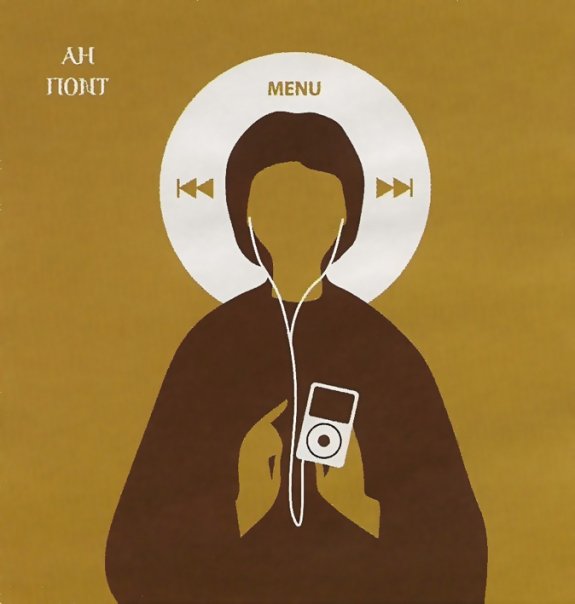
Byzantium & Friends
Byzantium & Friends
Conversations with experts in the history of Byzantium, hosted by Anthony Kaldellis.
Author
Byzantium & Friends
Category
Podcast website
Latest episode
Jun 4, 2026
Where to listen?
Podcasts in the app Replaio Radio Coming soonPodcasts are coming to the app soon. Install now and be the first to see a whole new take on podcasts
 Install for free
Android 5M+ downloads · 4.8 rating
iOS soon
Install for free
Android 5M+ downloads · 4.8 rating
iOS soon
Episodes
58. The column and equestrian statue of Justinian, a landmark monument of Constantinople, with Elena Boeck 11.11.2021 1:00:29
A conversation with Elena Boeck (DePaul University) about her recent book The Bronze Horseman of Justinian in Constantinople: The Cross-Cultural Biography of a Mediterranean Monument (Cambridge University Press 2021). Though it is often overlooked today, Justinian's column and colossal statue, which stood for a thousand years next to Hagia Sophia, defined the City almost as much as the Great Churc...
57. A global history of the Greeks, with Roderick Beaton 28.10.2021 1:13:04
A conversation with Roderick Beaton (King's College London, emeritus) on his new book The Greeks: A Global History (Basic Books 2021). We discuss different ways to define who "the Greeks" were and are (in Byzantium Graikos meant a "Greek-speaker"); the diversity of groups that make up this story; how Byzantium can be featured in a diachronic history of Greek-speakers without being overlooked in fa...
56. Cyril, Methodios, and the conversion of the Slavs, with Mirela Ivanova 14.10.2021 1:02:55
A conversation with Mirela Ivanova (University of Sheffield) on the creation of the Slavonic alphabet and the lives of its creators, the Byzantine missionaries Constantine-Cyril and Methodios. Despite the huge importance attributed to these men and their activities in modern scholarship, national narratives, and Slavic Orthodox identity, our knowledge about them rests largely on two texts whose in...
55. If you could meet and interview one person from Byzantine history, who would it be and why? (Part II), with Paroma Chatterjee and Merle Eisenberg 29.07.2021 1:15:30
We know so much about the Byzantines, and yet really so little. If we had the chance to meet and debrief one person from that world, who would it be? Join me in conversation with Paroma Chatterjee (University of Michigan) and Merle Eisenberg (National Socio-Environmental Synthesis Center, University of Maryland), as we wrestle with that question. Who might answer the burning questions that we have...
54. The power and journeys of the True Cross and other holy relics, with Lynn Jones 15.07.2021 1:00:44
A conversation with Lynn Jones (Florida State University) on how fragments of the True Cross were requested, gifted, traveled, repatriated, abducted, and returned in the early Byzantine period; how they were used to validate rival claims to power; and the anxiety caused by doubts over their authenticity. The conversation is based on a number of Lynn's publications, especially 'Perceptions of Byzan...
53. What can we know about the life of the Prophet Muhammad?, with Sean Anthony 01.07.2021 1:12:45
A conversation with Sean Anthony (Ohio State University) about the earliest sources for the life of the Prophet Muhammad, including the Quran, papyri, inscriptions, and Christian sources of the seventh century, and how Muslims were initially perceived by the Romans of the eastern provinces. The conversation is based on Sean's book Muhammad and the Empires of Faith: The Making of the Prophet of Isl...
52. Crowd behavior in imperial Rome and Constantinople, with Daniëlle Slootjes 17.06.2021 1:02:14
A conversation with Daniëlle Slootjes (University of Amsterdam) on the behavior of crowds in late antique Rome and Constantinople, based on her chapter "Crowd Behavior in Late Antique Rome," in the edited volume Pagans and Christians in Late Antique Rome: Conflict, Competition, and Coexistence in the Fourth Century (Cambridge 2015) 178-194. As our own political world is increasingly revolving arou...
51. Byzantine poetry on its own terms, with Marc Lauxtermann 03.06.2021 58:39
A conversation with Marc Lauxtermann (University of Oxford) on how to read Byzantine poetry on its own terms and in its own context. We talk about how modern Romantic notions of poetry as well as the ancient meters of classical Greek have distorted the expectations that we place on Byzantine poetry, and then discuss the specific contexts that gave rise to poetry in Byzantine society. Who were the...
50. If you could meet and interview one person from Byzantine history, who would it be and why?, with Fotini Kondyli and Alexander Sarantis 20.05.2021 1:10:59
We know so much about Byzantium, and yet really so little. If we had the chance to meet and debrief one person who had experienced some part of it first-hand, who would it be? Join me in a conversation with Fotini Kondyli (University of Virginia) and Alexander Sarantis (University of Warsaw), which wrestles with that question. What person would answer the burning questions that we have? Who would...
49. Why is there an Egyptian obelisk in the hippodrome of Constantinople?, with Cecily Hilsdale 06.05.2021 57:32
A conversation with Cecily Hilsdale (McGill University) about the history and ritual functions of Egyptian obelisks, from ancient Egypt down to Rome, Constantinople, and beyond. What do obelisks mean to say and how do they function in their architectural settings, especially in the hippodrome of Constantinople? How do they project imperial ideologies? The discussion is based on Cecily's study of '...
48. What did Byzantine music sound like? (The answer is more political than you’d expect), with Alexander Lingas 22.04.2021 1:00:11
A conversation with Alexander Lingas (City University of London) on the debates surrounding the reconstruction of Byzantine music. We discuss the common origins of western and eastern Christian traditions, when they parted ways, and how both traditions passed through phases of reinvention. Why does the modern performance of Gregorian Chant sound so different from Byzantine chant? As the director o...
47. The materiality of Byzantine objects, with Elizabeth Dospěl Williams 08.04.2021 1:03:46
A conversation with Elizabeth Dospěl Williams (Dumbarton Oaks, Museum Department) on how people in Byzantium experienced the materiality of the objects they used, especially jewelry and textiles. We look at some of those objects together, discuss their qualities, and situate our engagement with material culture in broader discussions of historical theory. You can see the objects that we discuss fo...
46. Raiders, marauders, ravagers, and pirates: their impact on Byzantine life, with Alexander Sarantis 25.03.2021 1:05:36
A conversation with Alexander Sarantis (Römisch-Germanisches Zentralmuseum Mainz) on the socio-economic impact of raiding on the lives of provincials as well as the military history of the empire and its finances. Who were these raiders? What did they want? How did provincials and the empire as a whole respond to them? A fear of marauders probably doesn't keep you up at night today, but this was a...
45. Neoliberalism in academia and its impact on the humanities, with Tamar Hodos 11.03.2021 1:08:04
A conversation with Tamar Hodos (University of Bristol) on how the application of market logic to humanities research and teaching is driving up tuition costs for students and their families, making good academic positions scarcer, and eroding the institution of tenure, which protects the integrity of research and teaching. In this environment, smaller academic fields face the prospect of extincti...
44. How can historians use new media to disseminate ideas?, with Merle Eisenberg 25.02.2021 1:07:22
A wide-ranging conversation with Merle Eisenberg (National Socio-Environmental Synthesis Center, University of Maryland) on the opportunities created for historians by media, old and new, to disseminate our ideas to the public. Among other things, I learned what a "press release" is and how it works, as well as how historians and scientists work differently with the press. Should we bring scholarl...
43. Is it time to abandon the rubric “Byzantium”?, with Leonora Neville 11.02.2021 1:13:14
A conversation with Leonora Neville (University of Wisconsin) on whether the scholarly rubric "Byzantium" does more harm than good. How did it come into being? What biases and ideologies, especially in the domain of gender, does it encode? What blind-spots and distortions does it create? We discuss whether "Byzantium" enables a Eurocentric western-oriented narrative about Greece, Rome, Europe, and...
42. Byzantium in video games, with Troy Goodfellow 28.01.2021 1:17:35
A conversation with Troy Goodfellow (Paradox Interactive) on how Byzantium and other premodern civilizations are represented in video games, and how the mechanics of the games structure those representations, player's goals, and the dynamics of historical change. Thanks to Marion Kruse for joining the conversation and to all of you listeners who sent advice and helpful links. Your comments indicat...
41. Ravenna, capital of empire between east and west, with Judith Herrin 14.01.2021 1:08:14
A conversation with Judith Herrin (King's College London) about the fascinating history of Ravenna between 400 and 800 AD. In this period, the city functioned first as a court of the western emperor, then as the seat of a Gothic kingdom loosely subordinate to Constantinople, and as the capital of the exarchate, the Italian province of the eastern empire. This made Ravenna a place of remarkable cul...
40. Byzantine tales of horror and the macabre 31.12.2020 1:28:21
Not an interview this time, but an anthology of Byzantine tales of horror. Learn about foul murders, demonic visitations, the undead, and the criminally insane; also, the Byzantine science of demonology and the spirit world. Many thanks to all the colleagues and friends who read the stories, in tones spooky, clinical, or ironic! The stories are: "Questions for a woman who killed and ate her mother...
39. The monastic experience, with Alice-Mary Talbot 17.12.2020 1:06:28
A conversation with Alice-Mary Talbot (Dumbarton Oaks) on the experience of communal monastic life in Byzantium, ranging from its organization and rules to its religious goals, engagement with society, and differences between monasteries for men and women. It is based on Alice-Mary's recent book Varieties of Monastic Experience in Byzantium, 800-1453 (University of Notre Dame Press 2019), which di...
38. Manuscripts, databases, and the joys of Byzantine literature, with Dave Jenkins 03.12.2020 1:07:27
A conversation with Dave Jenkins (Princeton University Library) about how we read (and how to enjoy) Byzantine literature, from digitized manuscripts and online databases to the pleasures of Byzantine prose. Dave is a philosopher, a philologist, and a librarian. You may also know him as the creator of a database of translations of Byzantine texts in modern languages and a database of digitized ma...
37. The study of Byzantine skeletons, with Chryssa Bourbou 19.11.2020 1:00:28
A conversation with Chryssa Bourbou (Hellenic Ministry of Culture) on what we learn from health and society in Byzantium from the study of skeletal remains. What infectious conditions or effects of accidents can we detect? What can we learn about the lives of children (apart, grimly, from the fact that they were all too often short)? How are human remains handled? The conversation is based on Chry...
36. Slavery in late antiquity and Byzantium, with Noel Lenski 05.11.2020 1:11:23
A conversation with Noel Lenski (Yale University) on "slave societies" and how the institution of slavery changed in late antiquity and Byzantium. Were tasks performed by slaves in antiquity carried out by free people in late antiquity? What were the experiences of Byzantines who were themselves captured in raids and taken outside the empire? The conversation draws on many of Noel's publications,...
35. Theophano: A Byzantine Tale, with Spyros Theocharis and Chrysa Sakel 22.10.2020 47:31
A conversation with Spyros Theocharis and Chrysa Sakel, artists and creators of a graphic novel about a tenth-century Byzantine empress, Theophano: A Byzantine Tale . We talk about the period, characters, and creative choices, and how works in popular media can help to foster a new and richer image of Byzantium.
34. An antidote to toxic medievalism, with Amy Kaufman and Paul Sturtevant 08.10.2020 1:05:14
A conversation with Amy Kaufman and Paul Sturtevant about their book The Devil's Historians: How Modern Extremists Abuse the Medieval Past (University of Toronto Press 2020). Extremists groups such as white supremacists and ISIS use the Middle Ages to advocate for specific racial, religious, or gender orders, and promote violence as a means for attaining them. We talk about the contours and goals...
Similar podcasts





Listen to the Byzantium & Friends podcast in Replaio
Radio and podcasts in one app - free, with no sign-up. Install today and do not miss the launch
Replaio is not a podcast publisher; show names, artwork and audio belong to their authors and are distributed through public RSS feeds.