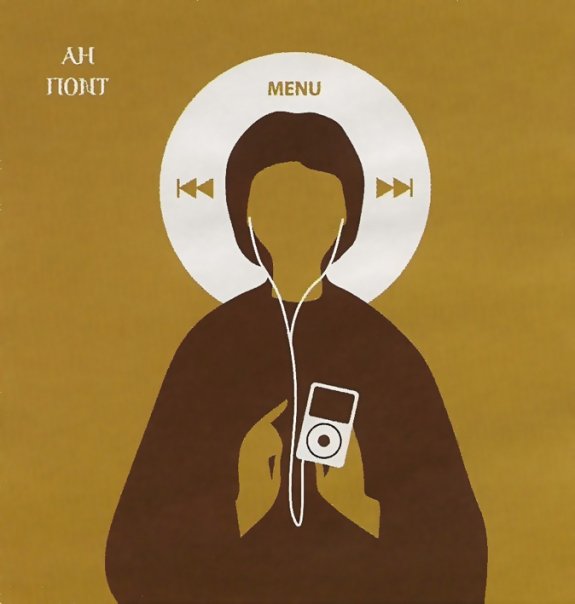
Byzantium & Friends
Byzantium & Friends
Conversations with experts in the history of Byzantium, hosted by Anthony Kaldellis.
Author
Byzantium & Friends
Category
Podcast website
Latest episode
Jun 4, 2026
Where to listen?
Podcasts in the app Replaio Radio Coming soonPodcasts are coming to the app soon. Install now and be the first to see a whole new take on podcasts
 Install for free
Android 5M+ downloads · 4.8 rating
iOS soon
Install for free
Android 5M+ downloads · 4.8 rating
iOS soon
Episodes
33. The study of ethnic identities in Byzantium and beyond (Listener Questions II), with Brian Swain 24.09.2020 1:45:08
This conversation with Brian Swain (Kennesaw State University) takes on listener questions about Byzantine identities. We start with the history of scholarly discussions of identity, especially ethnicity, comparing the study of barbarian (i.e., Germanic) ethnic groups with those in the Byzantine empire. How do groups change their identities? How are new identities born and old ones lost? How did t...
32. Anastasius the Librarian, the greatest enemy of Byzantium you probably haven't heard of, with Réka Forrai 10.09.2020 59:01
Meet Anastasius the Librarian, one of the most fascinating controversialists of the ninth century. A native of Rome, scholar of Greek, and (probably) anti-pope for all of three days, he was no friend of Byzantium. He disliked and mistrusted "the Greeks" and argued that they were not Romans as they thought. His arguments have held sway in the west ever since. My guest is Réka Forrai (University of...
31. Ethnicity and empire in China and Byzantium, with Shao-yun Yang and Ying Zhang 27.08.2020 1:25:36
China and Byzantium both saw themselves as civilizations menaced by "barbarians," and periodically established empires that ruled over them. In this episode, Ying Zhang (Ohio State, an expert on Ming China) moderates a discussion between myself and Shao-yun Yang (Denison University), author of The Way of the Barbarians: Redrawing Ethnic Boundaries in Tang and Song China (University of Washington P...
30. Byzantium in modern Greek life (Listener Questions I), with Dimitris Krallis 13.08.2020 1:14:57
Where and how does one experience Byzantium in modern Greece today? This conversation with Dimitris Krallis (Simon Fraser University: see episode 10) ranges widely, from statues and streets to politics and Church politics in particular, drawing on our own experiences and training as Byzantinists. There is a lot more that we could say about this fascinating topic, but we explore various domains whe...
29. The many identities of Hagia Sophia, past and present, with Bob Ousterhout 30.07.2020 1:06:29
Hagia Sophia is back in the news. To understand what is happening, we need to know the complex history of this building as a church, mosque, and museum, and the many parties that have sought to claim it. In this episode, Bob Ousterhout (University of Pennsylvania) illuminates this rich history, with a focus on the last century and a half, the current political forces, and the priority to preserve...
28. How we choose our research topics, with Tia Kolbaba 16.07.2020 1:11:01
A conversation with Tia Kolbaba (Rutgers University) about how we decide what questions need to be studied, how we identify blind-spots and misconceptions, reframe a problem, and navigate the shallows and the deep in order to bring a project to conclusion. Are there politics within a field that shape these decisions, sensitive areas that we need to avoid, or responsibilities toward non-academic co...
27. The hidden treasures of sigillography, with Jonathan Shea 02.07.2020 57:37
A conversation with Jonathan Shea (Dumbarton Oaks) about Byzantine lead seals, of which we have some 70,000, and about the work and careers of Byzantine civilian bureaucrats. Seals are the hidden treasury of research on Byzantium: so small and yet, in large numbers, they allow us to do so much, and they bring us closer to the individuals who used them. The conversation is based on his recent book...
26. Homer in Byzantium, with Baukje van den Berg 18.06.2020 1:05:41
How did the Byzantines read Homer? How did classical studies work in Byzantium? A conversation with Baukje van den Berg (Central European University) on where, why, and how the Byzantines approached the Iliad and the Odyssey; what scholarly tools they had and developed for that purpose; and on one of the great Homerists of all time, Eustathios of Thessalonike. The conversation is based on Baukje's...
25. Disability in Byzantium, with Christian Laes 04.06.2020 1:03:11
A conversation with Christian Laes (University of Manchester) on how to study disability in Byzantium. What might count as a disability in a Byzantine context? What social consequences did it have? How was it represented in texts? How did people try to cope with their disabilities? The conversation is based on a number of his publications, including 'Power, Infirmity, and "Disability": Five Case-S...
24. Social class in Byzantium, with Efi Ragia 21.05.2020 1:10:45
A conversation with Efi Ragia (Hellenic Open University) on coming to grips with social class in Byzantium, a society without a fixed social hierarchy, at least not fixed in terms of hereditary groups. Claims to high (or low) social standing were often rhetorical and fluid. Who were "the powerful"? By what criteria could they be recognized, and how might others aspire to that position? The convers...
23. Digital humanities and Byzantium, with Kuba Kabala 07.05.2020 1:05:03
A conversation about digital humanities in Byzantine research, with Kuba Kabala (Davidson College). How did digital humanities emerge from traditional (analog) modes of research? What new approaches do they enable? What new findings do they make possible?
22. Social distancing in early Byzantium, with Ellen Muehlberger and David Brakke 23.04.2020 1:08:10
What did it take, and what did it do to you, to avoid the company of others in Byzantium? How far did you have to pare your life down, and how reliant were you still on networks of support and supply? A conversation with Ellen Muehlberger (University of Michigan: see episode 2) and David Brakke (Ohio State University: see episode 13) about trying to live alone in early Byzantium. We focus on ascet...
21. Coping with pandemics, with Tina Sessa and Kyle Harper 09.04.2020 1:11:17
A conversation with Tina Sessa (Ohio State University: see episode 4) and Kyle Harper (University of Oklahoma, author of The Fate of Rome: Climate, Disease, and the End of an Empire, Princeton University Press 2017) on the Byzantine reactions to pandemics. What was the threshold of social visibility for a pandemic anyway? What could the government do to help? What imaginative and social resources...
20. Carolingian and Byzantine practices of empire compared, with Jennifer Davis 26.03.2020 1:17:37
A conversation with Jennifer Davis (Catholic University of America) on the study of empire in a medieval context, contrasting the different ways in which Charlemagne and the Byzantine emperors ran theirs. What do we mean by empire after all? The discussion is based on her book Charlemagne's Practice of Empire (Cambridge 2015).
19. ”Get out of the way, Battal Gazi is Coming!”: Turkish films on Byzantium, with Buket Kitapçı Bayrı 12.03.2020 1:02:07
A conversation with Buket Kitapçı Bayrı (Koç University) about Turkish films that prominently feature Byzantine characters and settings, especially the films about Battal Gazi. For links to these films, see the Textual Appendices to the podcast's host platform: https://byzantiumandfriends.podbean.com (on the right). For Buket's work in this area, see her articles 'Contemporary Perception of Byza...
18. Byzantine soft power in an age of decline, with Cecily Hilsdale 27.02.2020 1:09:05
A conversation with Cecily Hilsdale (McGill University) about the coping strategies that late Byzantium used to counter, ameliorate, and reverse its imperial decline. We talk about the concepts of decline and soft power, and how art, literature, scholarship, and religious identity were deployed strategically to win over potential allies and disseminate a prestige Byzantine "brand." The conversatio...
17. The peoples of the Caucasus between Rome, Iran, and the steppe, with Garth Fowden 13.02.2020 1:07:10
A conversation with Garth Fowden (University of Cambridge) about how the peoples of the Caucasus (Armenians, Georgians, and Albanians) coped with living between two empires, how those empires sought to intervene in their region, and the cultural and religious changes that took place there during the first half of the first millennium. This episode demonstrates the illuminating ways in which global...
16. The Parthenon mosque, with Elizabeth Key Fowden 30.01.2020 1:06:20
A conversation with Elizabeth Key Fowden (University of Cambridge) on the Parthenon mosque and Athens under the Ottomans. When the Parthenon was done being a Christian church (which lasted from the fifth to the fifteenth century), it became a mosque, but little has been written about that phase of its history. Fascinating new sources are now coming to light. Elizabeth is writing a book on the topi...
15. When does Roman history end and Byzantine begin?, with Marion Kruse 16.01.2020 1:17:18
A conversation with Marion Kruse (University of Cincinnati) about his book The Politics of Roman Memory: From the Fall of the Western Empire to the Age of Justinian (University of Pennsylvania Press 2019). By what standards can anyone say that Roman history ends at some point and Byzantine history begins? Or is Byzantine history rather a phase of Roman history (namely, by far the longest one)? How...
14. Byzantine Orthodoxy and homosexuality, with Stephen Morris 02.01.2020 1:01:46
A conversation with Stephen Morris (independent scholar) about the attitudes toward (male) homosexuality in different sites of Byzantine culture and the prospects for an orthodox recognition of same-sex marriages, based on his book “When Brothers Dwell in Unity”: Byzantine Christianity and Homosexuality (McFarland & Company 2016).
13. The case for Shenute the Great and the Coptic tradition, with Sofia Torallas Tovar and David Brakke 19.12.2019 59:14
A conversation with Sofia Torallas Tovar (University of Chicago) and David Brakke (The Ohio State University) about Coptic Egypt, the life and works of Shenute the Great, and how Coptic and Byzantine Studies can talk more with each other, just as the people they study talked to each other in the fourth-seventh centuries. For some of Shenute's works, see the Selected Discourses of Shenoute the Grea...
12. Byzantine Studies in Turkey 2.0, with Siren Çelik 05.12.2019 1:00:29
A conversation with Siren Çelik (Center for Middle Eastern Studies, Harvard University) about the new generation of Turkish Byzantine scholars, and the paths by which one might come to study Byzantium in Turkey and beyond.
11. Byzantine erotic epigrams, with Steven Smith 22.11.2019 55:09
A conversation with Steven Smith (Hofstra University) about worldly and sinful epigrams from the sixth century that talk about love, sex, food, and other pleasures, based on his book Greek Epigram and Byzantine Culture: Gender, Desire, and Denial in the Age of Justinian (Cambridge University Press 2019). For a translation of a sample of these epigrams, see https://byzantiumandfriends.podbean.com/p...
10. A Byzantine man of affairs, with Dimitris Krallis 07.11.2019 1:07:17
Could one rise from a provincial town to a position of power and wealth in the capital without having a military career? How did Byzantine men of affairs in the eleventh century invest their new-found wealth and create networks of exchange internal to their estates? What was the role of the state in buttressing these "self-made" men? A conversation with Dimitris Krallis (Simon Fraser University),...
9. From India to Byzantium, with Paroma Chatterjee 31.10.2019 50:07
A conversation with Paroma Chatterjee (University of Michigan) on Indian perspectives and approaches to Byzantium. What we might be taking for granted in a field whose appeal has been traditionally limited to Europe and its offshoots? What might a global (as opposed to "ecumenical") Byzantium look like? This is the first in what I hope will be a number of conversations.
Similar podcasts






Listen to the Byzantium & Friends podcast in Replaio
Radio and podcasts in one app - free, with no sign-up. Install today and do not miss the launch
Replaio is not a podcast publisher; show names, artwork and audio belong to their authors and are distributed through public RSS feeds.