Byzantium & Friends
Byzantium & Friends
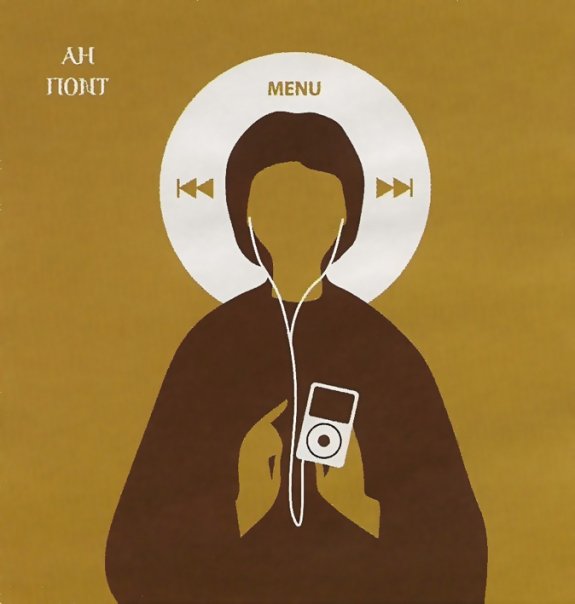
Conversations with experts in the history of Byzantium, hosted by Anthony Kaldellis.
Be sure to visit the podcast's website and support the creator: byzantiumandfriends.podbean.com
Author
Byzantium & Friends
Category
Podcast website
Latest episode
Oct 8, 2026
Where to listen?
Podcasts in the app Replaio Radio Coming soonPodcasts are coming to the app soon. Install now and be the first to see a whole new take on podcasts
 Install for free
Android almost 10M downloads · 4.8 rating
iOS soon
Install for free
Android almost 10M downloads · 4.8 rating
iOS soon
Episodes
160. Symeon the New Theologian: Queer desire in devotional poetry, with Derek Krueger 08.10.2026 1:02:06
A conversation with Derek Krueger (University of North Carolina at Greensboro) on homoerotic language and imagery in the works of Symeon the New Theologian (eleventh century). These passages are unusual enough that earlier editors and scholars were made uncomfortable about them. We discuss their devotional context but also the broader context of homoeroticism and homophobia in the monastic world o...
159. The art of the empire of Nicaea, with Naomi Pitamber 24.09.2026 1:03:12
A conversation with Naomi Pitamber (Clark University) about the art and architecture of the empire of Nicaea (Nikaia), the convention name of the Roman state that emerged in Asia Minor after the disaster of 1204. This art is often overlooked by scholars and overshadowed by the Palaiologan "Renaissance" that supposedly kicked in after the return to Constantinople in 1261. Naomi casts that developme...
158. The Book of Daniel, the Four Kingdoms, and imperial eschatology, with Chris Bonura 04.06.2026 1:09:19
A conversation with Christopher Bonura (Mount St. Mary's University) about the apocalyptic tradition of identifying the Four Kingdoms prophesied in the Book of Daniel. Which one was the Roman empire? The fourth, scheduled to fall with the others, or something that came afterward (a tradition sometimes called imperial eschatology)? Among other topics we discuss Eusebios of Caesarea and the reign of...
157. Julian Augustus and the dream of a Platonic Roman empire, with Jeremy Swist 21.05.2026 1:11:49
A conversation with Jeremy Swist (Michigan State University) on the emperor Julian (361-363 AD) and how he tried to combine his love of philosophy with ruling the Roman empire. We talk about why Julian continues to excite such passions, how in some ways he may have been more Roman than Greek, and how he read Roman history in light of the theurgical Neoplatonism that he espoused. The conversation i...
156. The Menologion of Basil II, with Charlie Kuper 07.05.2026 1:04:29
A conversation with Charlie Kuper (University of Tennessee, Knoxville) about the Menologion of Basil II, a lavishly illustrated manuscript pairing brief notices about the saints with images of them and their ordeals, arranged according to the liturgical calendar. We talk about how this manuscript was made and how it can be read, specifically the texts in relation to the images. Charlie has just re...
155. The Dumbarton Oaks Medieval Library, with Nicole Eddy 23.04.2026 1:05:32
A conversation with Nicole Eddy (Dumbarton Oaks) about the Dumbarton Oaks Medieval Library, one of the most important publishing ventures of recent times when it comes to medieval texts and literature. DOML (as we call it) makes accessible a wide range of medieval texts in different genres and from different periods, translated into English from Greek, Latin, Old English, and the Iberian romance l...
154. How and why we teach Roman history, with Beth Digeser 09.04.2026 1:04:04
A conversation with Beth Digeser (University of California, Santa Barbara) about pedagogy, specifically about what we are hoping to accomplish by teaching Roman history. We talk about the limits of "influence" as a justification for it and the various ways that Rome is continually reinvented and made to speak to present concerns, from "Global Rome" to the special challenges posed by the world of l...
153. Three heresiologists of the twelfth century: Zigabenos, Kamateros, and Choniates, with Alessandra Buccosi, Niccolò Zorzi, Marco Fanelli, and Ottavia Mazzon 26.03.2026 1:34:47
A conversation with Alessandra Bucossi (Ca' Foscari University of Venice) and Niccolò Zorzi (University of Padua) on three heresiological texts of the twelfth century, the challenges of publishing and studying them, and how their main concerns can be presented in a museum exhibition. Our discussion is followed by dedicated presentations on each of the three authors by Marco Fanelli (Ca’ Foscari Un...
152. Heresiology in the twelfth century, with Alessandra Bucossi 12.03.2026 56:26
A conversation with Alessandra Bucossi (Ca' Foscari University) on the preoccupation with heresy in the twelfth century, which resulted in the production of a number of massive anti-heretical treatises. We discuss the historical context of their production, the empire's increasing engagement with the Latins and Armenians, whose Churches deviated from that of Constantinople in certain points, and t...
151. East Roman archaeology: goals and challenges, with Marica Cassis 26.02.2026 1:07:04
A conversation with Marica Cassis (University of Calgary) about the archaeological study of the east Roman world and how it interfaces with traditional, text-based historiography. What can archaeology see and what not? What challenges has it faced to emerge as a field and what are the prospects that it faces today? The conversation was inspired by Marica's introduction to Medieval Archaeology in t...
150. Why were pseudo-Arabic inscriptions placed on churches in Greece?, with Alicia Walker 12.02.2026 1:02:28
A conversation with Alicia Walker (Bryn Mawr College) on the pseudo-Arabic inscriptions (or pseudo-kufic) that appear on a number of tenth- and eleventh-century churches in Greece, most notably at the monastery of Hosios Loukas. What did the Arabic script signify in Orthodox culture at the time if not tension with Islam? The conversation is based on Alicia's essay 'Letters from the Edge: Mapping P...
149. The Classical Near East, with Kevin van Bladel 29.01.2026 1:05:07
A conversation with Kevin van Bladel (Yale University) on his proposal regarding "The Classical Near East," a constellation of fields defined by the classical literary traditions of medieval Near Eastern cultures, including Byzantium. We talk about languages, fields, classical traditions, translations, and more. The conversation is based on Kevin's chapter 'The Classical Near East' in E. S. Bolman...
148. The survival of esoteric academic fields, with Jana Matuszak and Petra Goedegebuure 15.01.2026 1:18:46
A conversation with Jana Matuszak, a Sumerologist, and Petra Goedegebuure, a Hittitologist (both University of Chicago) about the prospects for the survival of smaller academic disciplines that require specialized language skills. What critical mass of experts is needed? How can these fields be combined with others? Byzantine Studies is still larger than Sumerology and Hittitology, but the numbers...
147. How the ninety percent experienced the Roman economy, with Kim Bowes 01.01.2026 59:07
A conversation with Kim Bowes (University of Pennsylvania) about her recent book, Surviving Rome: The Economic Lives of the Ninety Percent (Princeton University Press 2025), which presents a brilliant new model of the Roman imperial economy, specifically for how the majority of the population experienced it. We talk about the skeletal evidence, monetization, affluence and precariousness, and level...
146. Ezana of Aksum, the first Christian king in Africa, with Aaron Butts 18.12.2025 1:00:55
A conversation with Aaron Butts (University of Hamburg) on the conversion to Christianity of Ezana, the fourth-century king of Aksum (in modern Ethiopia and Eritrea). "Conversion" is a conventional term, but what Ezana's inscriptions and coins reveals is a complicated process of appealing to different groups and the coexistence of religions in his realm and the royal monuments. The conversation is...
145. Seeing into the minds of others, with Ellen Muehlberger 04.12.2025 1:02:41
A conversation with Ellen Muehlberger (University of Michigan) about how some people in late antiquity tried to model, confirm, or interpret what they thought was going on in the minds of others. We briefly talk about the genre of the lecture book, and then about classroom exercises in impersonation (were they exercises in empathy or not?) and breaking into houses to see what people had in their p...
144. The two millennia of Roman history, with Ed Watts 20.11.2025 1:07:37
A conversation with Ed Watts (University of California, San Diego) about his recent book, The Romans: A 2,000 Year History (Basic Books 2025), which covers two millennia of Roman history, down to 1204 AD. We talk about questions of scale in writing history, of continuity and discontinuity in the Roman experience, and what enabled this polity to last for so long. What insights does studying its sec...
143. Coping with earthquakes in the churches of Constantinople, with Mark Roosien 06.11.2025 57:16
A conversation with Mark Roosien (Yale University) about the earthquakes that struck Constantinople in late antiquity and about how emperors and the people of the City reacted to them in the moment. We focus on the church liturgies that commemorated and tried to make sense of them. The conversation is based on Mark's book Ritual and Earthquakes in Constantinople: Liturgy, Ecology, and Empire (Camb...
142. The decline of animal sacrifice in the late Roman world, with James Rives 24.10.2025 1:02:08
A conversation with James Rives (University of North Carolina at Chapel Hill) on the history of ancient animal sacrifice in the Roman world. We focus on its decline and eventual demise in the third and fourth centuries. Animal sacrifice was caught up in the conflicts between the Roman emperors and the Christian Church, which endowed it with an importance it had not had before. The conversation is...
141. The Renaissance and Byzantium are characters in the same play, with Ada Palmer 24.07.2025 1:19:08
A conversation with Ada Palmer (University of Chicago) about the invention of the idea of the Italian Renaissance and the functions that it serves in the western historical imagination. "Byzantium" is a similarly invented category that often works in tandem with "the Renaissance" to mark good and bad moments in the history of culture. The conversation is based on Ada's recent book, Inventing the R...
140. A newly identified portrait of Konstantinos XI Palaiologos (1448-1453), with Anastasia Koumousi 10.07.2025 54:32
A conversation with Anastasia Koumousi (Director of the Ephorate of Antiquities of Achaea, Greek Ministry of Culture) about the recently identified portrait of the last emperor of the Romans in Constantinople, Konstantinos XI Palaiologos, in a monastery church in the northern Peloponnese. The discussion is based on her article ‘Παλαιά Μονή Ταξιαρχών Αιγιαλείας: η αναχρονολόγηση της ίδρυσης στους μ...
139. Captivity and enslavement in the late medieval Aegean, with Alasdair Grant 26.06.2025 1:04:26
A conversation with Alasdair Grant (University of Hamburg) about the captivity and enslavement that many Greeks (Romaioi) experienced in the late medieval period, a period of state collapse during which they were subject to Italian and Turkish raids and attacks. We talk about the differences between captivity and enslavement, the prospects for being ransomed, and the religious basis of one's legal...
138. Romeyka, a parallel branch of Greek surviving in northeastern Turkey, with Ioanna Sitaridou 12.06.2025 1:01:56
A conversation with Ioanna Sitaridou (University of Cambridge) about a Greek language (Romeyka) still spoken in northwestern Turkey, though now endangered, whose grammar retains interesting archaic features. The ancestors of its current speakers were not exchanged in 1923 because they were Muslim; the primary language in their communities today is Turkish. We talk about Romeyka itself, why it was...
137. Conspiracy theories and the deep state, now and then, with Winston Berg 29.05.2025 1:15:56
Winston Berg is a political scientist (University of Chicago) who studies modern American conspiracy theories about politics and the deep state; his dissertation studied the movement known as QAnon. Given our political moment, I thought it would be interesting to discuss with him the different contours and valences that conspiracy theories and deep state notions took in the east Roman polity and i...
136. The federal assault on American research universities, with Clifford Ando 15.05.2025 1:03:54
A conversation with Cliff Ando (University of Chicago) about the revenue models of American research universities and the dangers to advanced research posed by the freezes recently placed on federal funding. While the biggest cuts are to scientific and medical research, the humanities will also be significantly impacted. Cliff has published a number of op-ed articles on what is happening and how u...
Similar podcasts







Listen to the Byzantium & Friends podcast in Replaio
Radio and podcasts in one app - free, with no sign-up. Install today and do not miss the launch
Replaio is not a podcast publisher; show names, artwork and audio belong to their authors and are distributed through public RSS feeds.