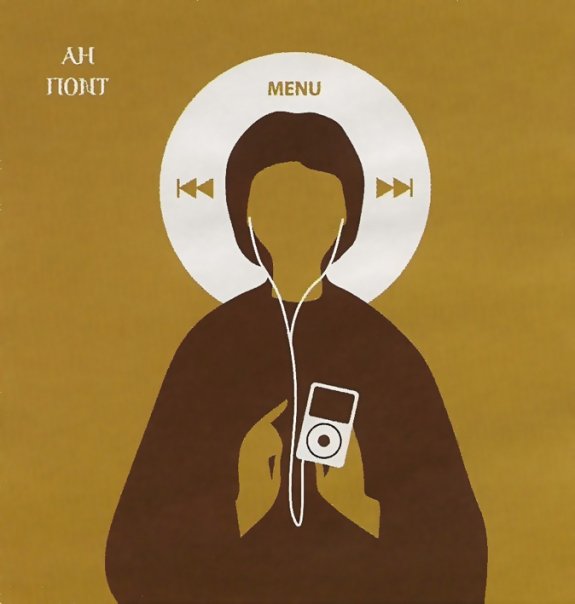
Byzantium & Friends
Byzantium & Friends
Conversations with experts in the history of Byzantium, hosted by Anthony Kaldellis.
Author
Byzantium & Friends
Category
Podcast website
Latest episode
Jun 4, 2026
Where to listen?
Podcasts in the app Replaio Radio Coming soonPodcasts are coming to the app soon. Install now and be the first to see a whole new take on podcasts
 Install for free
Android 5M+ downloads · 4.8 rating
iOS soon
Install for free
Android 5M+ downloads · 4.8 rating
iOS soon
Episodes
83. Blinding as punishment and enforced disability, with Jake Ransohoff 15.12.2022 1:06:14
A conversation with Jake Ransohoff (Simon Fraser University) on the practice of blinding in Byzantium. Why and how was it done? Why was it more prominent in some periods rather than in others? And how did its victims cope with this disability that the state had imposed on them for (usually) crimes of treason? The conversation is based on Jake's dissertation (Sightless Eyes, Broken Bodies: Blinding...
82. What was First Iconoclasm about?, with Leslie Brubaker 01.12.2022 1:03:10
A conversation with Leslie Brubaker (University of Birmingham) on the first period of Byzantine iconoclasm (ca. 730 to 787 AD). What was the problem with religious icons? What did the "Isaurian" emperors Leon III and Konstantinos V try to do about it, and why? A great deal of what we used to know, largely by following pro-icon sources, has come undone in the latest research. Where we stand now has...
81. Surviving the Mongol storm, with Nicholas Morton 17.11.2022 54:35
A conversation with Nicholas Morton (Nottingham Trent University) about the Mongol conquests of the thirteenth century, the terror that they inspired, and the strategies by which its targets tried to survive them. What did the Mongols think they were doing and how did the Byzantines use diplomacy to deflect the danger and even use it to their advantage? The conversation is based on Nic's just-rele...
80. Diagrams: from sundials to the schematics of the Trinity, with Linda Safran 03.11.2022 1:03:49
A conversation with Linda Safran (Pontifical Institute of Mediaeval Studies, Toronto) on the hitherto-unexplored world of Byzantine diagrams. We talk about maps, sundials, and more abstract representations of the world and even God. The conversation is based on Linda's papers in a volume she co-edited, The Diagram as Paradigm: Cross-Cultural Approaches (Dumbarton Oaks 2022), as well as "A Prolegom...
79. The enduring power of ancient statues in Constantinople, with Paroma Chatterjee 21.10.2022 51:51
A conversation with Paroma Chatterjee (University of Michigan) on the power that ancient statues still had in Orthodox Constantinople. In many contexts, they were more prominent than icons. We talk about some of their functions, but also why Byzantine art history is so focused on icons, which were secluded objects, in comparison. The conversation is based on Paroma's recent book Between the Pagan...
78. How to be philanthropic in early Byzantine Christianity, with Dan Caner 18.08.2022 1:15:42
A conversation with Dan Caner (Indiana University) about the different kinds of charitable giving in early Byzantium. We talk about the pre-Christian background, the role of institutions, and views about wealth. Was giving primarily good for the soul of the giver, and under what conditions, or for the material assistance of the needy? How could one give to ascetics, who had renounced such needs?...
77. How did most people in the Roman empire get by? with Kim Bowes 04.08.2022 1:10:20
A conversation with Kim Bowes (University of Pennsylvania) about production and consumption in the Roman world, especially by the 90% of the population who are less represented in our literary sources. How did they get by from day to day? What alternatives does the evidence suggest to the "subsistence" model that many ancient historians have used? The conversation is based on a paper on "Household...
76. Exploring the monuments of Byzantine Constantinople, with Sergey Ivanov 21.07.2022 1:05:52
A conversation with Sergey Ivanov (Alexander von Humboldt fellow at the University of Munich; corresponding member of the British Academy) on the monuments, buildings, and ruins of the Byzantine phase of the City's history. We talk about how to explore them, how to access their history, and even get a feel for the lingering presence of the events that took place in them. We ponder what has been lo...
75. The politics of archaeological heritage and reclamation, with Jonathan Hall 07.07.2022 1:05:06
A conversation with Jonathan Hall (University of Chicago) about how the archaeological past of the city of Argos was reclaimed in the long nineteenth century. What institutions and political debates took shape around the heritage of the past? What role did the ancient travel writer Pausanias play in defining what the past was? What was the interplay between local, national, international, and impe...
74. Laments for the Fall: Constantinople and Tenochtitlan in counterpoint, with Eleni Kefala 23.06.2022 1:05:46
A conversation with Eleni Kefala (University of St. Andrews) on the fall of two empires, the Byzantine and the Aztec. What role did these momentous events play in the emerging identity of western Europe? And how were they experienced by the Romaioi and the native Mexica, especially through the laments that they wrote and sang about these events? The conversation is based on Eleni's book The Conque...
73. When did women “bind up” their hair, and why?, with Gabriel Radle 09.06.2022 51:30
A conversation with Gabriel Radle (University of Notre Dame) on the question of why and when adolescent girls or women "bound up" their hair. Which women did so, and under what circumstances? What kind of headgear was involved? And how did the Byzantine practice compare with that in other societies, ancient and medieval? Our discussion is based on Gabriel's article 'The Veiling of Women in Byzanti...
72. What do we mean by “Byzantine literature”?, with Stratis Papaioannou 26.05.2022 1:00:38
A conversation with Stratis Papaioannou (University of Crete) about the mismatch between modern ideas of literature (on the one hand) and the texts, conventions, and goals of Byzantine authors (on the other). In what sense are those texts "literature"? Should they be compared to classical texts, modern literature, neither, or both? We talk also about how much of it has survived, and how much might...
71. Manuel II Palaiologos (1350-1425) had a lot to say, with Siren Çelik 12.05.2022 59:24
A conversation with Siren Çelik (Marmara University) about the many personas that the emperor Manuel II Palaiologos crafted for himself in his surviving works. In fact, we have more writings from him -- in many genres, and many of a personal nature -- than from any prior Roman emperor. What was he hoping to accomplish and why is he worth reading? The conversation is based on Siren's recent book, M...
70. Trees have histories too, with Alexander Olson 28.04.2022 1:01:24
A conversation with Alexander Olson (independent scholar, British Columbia, Canada) about the secret lives of olive trees and oak trees in Byzantium. Contrary to what you may think, these were not cultivated consistently in the Mediterranean ecosystem of the Middle Ages; their uses to the human population fluctuated over time, giving the trees a history of their own, albeit one shaped by that of t...
69. The experiences of Byzantine children, with Oana-Maria Cojocaru 14.04.2022 51:30
A conversation with Oana-Maria Cojocaru (Tempere University, Finland) about the images of Byzantine children in our sources, and the experiences that they would have had, once they made it past infancy. Our discussion forms a nice sequel to that with Christian Laes on childbirth (episode 66), and is based on Oana's recent book Byzantine Childhood: Representations and Experiences of Children in Mid...
68. Classical scholarship and philology in Byzantium, with Filippomaria Pontani 31.03.2022 1:05:40
A conversation with Filippomaria Pontani (Ca' Foscari University of Venice) on the ways that Byzantine scholars engaged with classical texts, and their place in the transmission and study of classical literature from antiquity to the present. In addition to manuscripts, we talk about commentaries, lexika, and encyclopedias. The conversation is based on the magisterial survey that Filippomaria publ...
67. Wherein Tina and I take bad scholarly habits to task, with Tina Sessa 17.03.2022 1:06:14
In a fun romp through some of the foibles, evasions, pretensions, and generally bad habits of scholarship, Tina and I take our fields to task for practices that make our eyes roll. Sure, we've probably been guilty of most of these too! But what better place to vent a bit than a podcast? Dedicated listeners will know Tina (Ohio State University) from episodes 4 and 21; she is a veritable co-host of...
66. The perils of childbirth, with Christian Laes 03.03.2022 1:03:06
A conversation with Christian Laes about one of the most joyous, dangerous, and often tragic, moments of life in antiquity and the Middle Ages: childbirth. We discuss the sad fact of infant mortality, the first days of children who survived, and the difficult choices that families had to make if the mother did not survive, but the child did. What was the emotional and demographic impact of the per...
65. Who was Hypatia of Alexandria and what does she stand for? with Silvia Ronchey 17.02.2022 1:01:49
A conversation with Silvia Ronchey (University of Roma Tre) about the famous philosopher Hypatia of Alexandria, who was murdered in the early fifth century by goons working for Cyril, the bishop of the city. Who was she? What traditions gave her a position of social prominence? To what degree may she be considered a feminist icon? The conversation is based on Silvia's book Hypatia: The True Story,...
64. How did emperors make decisions?, with Michael Grünbart 03.02.2022 1:02:13
A conversation with Michael Grünbart (University of Münster) about the problem of imperial decision-making. Byzantine emperors are often presented to us as perfectly virtuous monarchs favored by God, but can we pull the veil away from this image and understand the difficult conditions under which they had to make decisions that could potentially cost them their throne? Whom did they consult? How a...
63. The religion of simple believers, with Jack Tannous 20.01.2022 1:05:28
A conversation with Jack Tannous (Princeton University) about the "simple believers" who made up the majority of the population of Byzantium (as well as the caliphate and just about any premodern monotheistic society). They probably knew little about the minutiae of theology, but what did they know about their faith, and how important was theology for their religious identity? The discussion is ba...
62. Byzantine dress and fashion, with Jennifer Ball and Elizabeth Dospěl Williams 06.01.2022 58:22
A conversation with Jen Ball (City University of New York) and Betsy Williams (Dumbarton Oaks, also episode 47) on the study of Byzantine dress and fashion. How do we know what people wore? Was clothing gendered? Why are dress and jewelry studied separately? And can we talk about fashion in Byzantium, or was fashion, as some believe, a modern development? For an excellent introduction to these pro...
61. Being Roman in Syriac, with Hartmut Leppin 23.12.2021 1:00:43
A conversation with Hartmut Leppin (Johann Wolfgang Goethe-Universität, Frankfurt am Main) about how one could be a Roman in Syriac, focusing on the sixth-century author John of Ephesos, otherwise known as Yuhannan from Amida. If one could be Roman in Greek (which is what we call "Byzantium"), why not also in Syriac? The discussion is based on Hartmut's study of "The Roman Empire in John of Ephesu...
60. Representing the trauma of captivity, enslavement, and degradation, with Adam Goldwyn 09.12.2021 1:04:34
A conversation with Adam Goldwyn (North Dakota State University) about first-person narratives whose protagonists experience foreign conquest, captivity, enslavement, degradation, humiliation, and loss of rights. It is based on his recent book Witness Literature in Byzantium: Narrating Slaves, Prisoners, and Refugees (Palgrave MacMillan 2021), which uses comparisons to the literature of the Holoca...
59. What exactly ended in Late Antiquity?, with Polymnia Athanassiadi 25.11.2021 1:03:51
A conversation with Polymnia Athanassiadi (University of Athens) about the way of life that ended in late antiquity. Scholars of Byzantium and the Middle Ages may see this as a period of new beginnings, but Polymnia doesn't want us to forget the practices and urban values that came to an end during it. The conversation touches on issues raised throughout her papers collected in Mutations of Hellen...
Similar podcasts





Listen to the Byzantium & Friends podcast in Replaio
Radio and podcasts in one app - free, with no sign-up. Install today and do not miss the launch
Replaio is not a podcast publisher; show names, artwork and audio belong to their authors and are distributed through public RSS feeds.