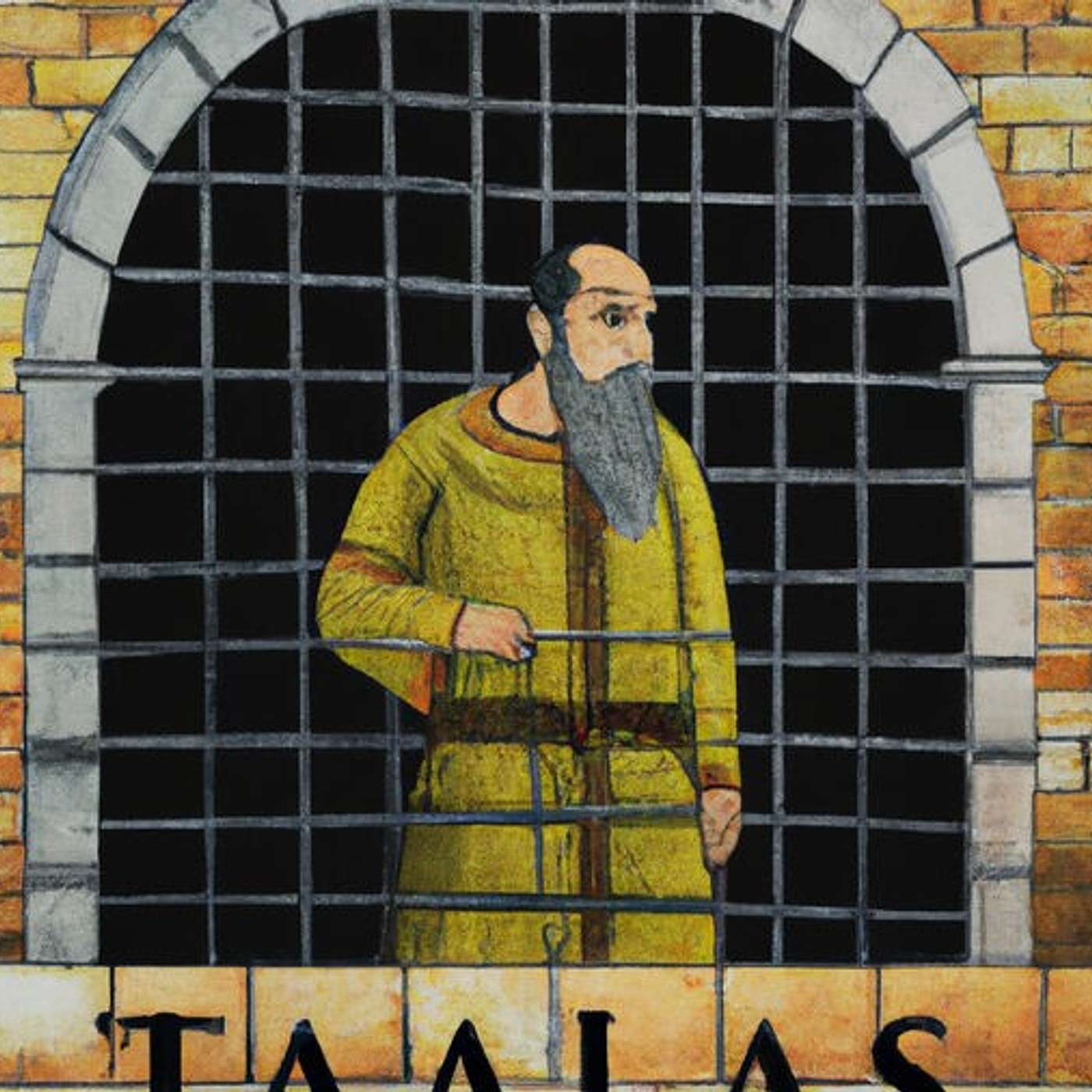
Dr. Thomas Constable, Plano Bible Chapel SonicLight.com
Bible Study with Dr. Thomas Constable
These are extremely informative and entertaining bible study lectures that have blessed many seekers of knowledge and faith over the last 20 years or more. Dr. Thomas L. Constable is a prominent theologian and former professor of Bible Exposition at Dallas Theological Seminary. He is also a pastor at Plano Bible Chapel in Plano, Texas, where he has served for over 50 years. Dr. Constable is widely known for his Bible commentary series, SonicLight.com, which includes Notes on the Bible, Notes on the Minor Prophets, and Notes on Revelation. He is also the author of several books, including "Talk...
Be sure to visit the podcast's website and support the creator: SonicLight.com
Author
Dr. Thomas Constable, Plano Bible Chapel SonicLight.com
Category
Podcast website
Latest episode
Aug 10, 2026
Where to listen?
Podcasts in the app Replaio Radio Coming soonPodcasts are coming to the app soon. Install now and be the first to see a whole new take on podcasts
 Install for free
Android almost 10M downloads · 4.7+ rating
iOS soon
Episodes
Acts 15:22-41, The Jerusalem Decree and the Paul-Barnabas Separation 26.07.2026 41:05
The council's decision (15:22-35) is communicated by letter to the Gentile churches — one of the most significant documents in early Christian history. The apostles and elders, 'with the whole church' (15:22), send Judas Barsabbas and Silas with Paul and Barnabas carrying the letter. The letter's opening — 'Since we have heard that some of our number to whom we gave no instruction have disturbed y...
Acts 15:1-21, The Jerusalem Council, Part 1 (partial recording) 26.07.2026 43:27
The Jerusalem Council (Acts 15) is the most important deliberative event in the early church — the first formal council addressing the fundamental question of Gentile inclusion: do Gentile believers need to be circumcised and keep the Mosaic Law to be saved? The conflict that precipitates the council begins in Antioch: 'Some men came down from Judea and began teaching the brethren, "Unless you are...
Acts 14:21-28, The Return Journey and Strengthening the Churches 26.07.2026 35:59
The return portion of the first missionary journey (14:21-28) is as theologically significant as the outward journey — it establishes the pastoral pattern of the apostolic mission: not just planting churches and moving on, but revisiting, strengthening, appointing leaders, and preparing disciples for the inevitable suffering. After preaching in Derbe and making many disciples (14:21), Paul and Bar...
Acts 14:1-20, Iconium, Lystra, and the Stoning of Paul 26.07.2026 35:59
Chapter 14 continues the first missionary journey through Iconium (14:1-7), Lystra (14:8-20), and Derbe (14:20-21) — a sequence that repeats and intensifies the pattern of Acts: gospel preaching, signs confirming the message, Jewish opposition, Gentile response, persecution, and perseverance. In Iconium (14:1-7), 'a great multitude believed, both of Jews and of Greeks' (14:1), while 'the Jews who...
Acts 13:26-52, Paul's Sermon at Pisidian Antioch, Part 2, and Jewish Rejection 25.07.2026 44:03
The second half of Paul's Pisidian Antioch sermon (13:26-41) moves from historical preparation to the direct proclamation of Jesus's death, resurrection, and the forgiveness of sins. The proclamation of the resurrection (13:30-37) makes the same argument as Peter at Pentecost: Jesus is the fulfillment of Psalm 16's promise that God's Holy One would not see decay — David died and did see decay, but...
Acts 13:1-25, The First Missionary Journey and Paul's Pisidian Antioch Sermon, Part 1 25.07.2026 29:49
Acts 13 opens the third and longest section of Acts — the mission to the ends of the earth (1:8) — with the Antioch church's commissioning of Barnabas and Saul. The commissioning is one of the most Spirit-directive moments in Acts: 'While they were ministering to the Lord and fasting, the Holy Spirit said, "Set apart for Me Barnabas and Saul for the work to which I have called them"' (13:2). Const...
Acts 10:34-48, Peter's Sermon to Cornelius and Gentile Pentecost 25.07.2026 47:35
Peter's sermon to Cornelius and his household (10:34-43) is structurally parallel to the Pentecost sermon but adapted to a Gentile audience who did not share the Old Testament background. The opening principle (10:34-35) is one of the most theologically significant in Acts: 'I most certainly understand now that God is not one to show partiality, but in every nation the man who fears Him and does w...
Acts 10:1-33, Cornelius's Vision and Peter's Preparation 25.07.2026 39:37
Chapter 10 is the theological turning point of Acts — the definitive crossing of the Jew-Gentile boundary in the Christian mission, prepared by God through simultaneous visions given to two men forty miles apart. Cornelius is described with precision: 'a centurion of what was called the Italian cohort, a devout man and one who feared God with all his household, and gave many alms to the Jewish peo...
Acts 9:20-43, Paul in Damascus and Jerusalem, Peter's Miracles 25.07.2026 39:46
The aftermath of Paul's conversion (9:20-31) provides the brief Acts account of a period covered in more detail by Paul himself in Galatians 1:15-24. Immediately after his conversion Paul 'immediately... began to proclaim Jesus in the synagogues, saying, "He is the Son of God"' (9:20). Constable notes the characteristic Pauline pattern: he goes first to the synagogue and the Jewish community. His...
Acts 9:1-19, The Conversion of Saul of Tarsus 25.07.2026 44:14
The conversion of Saul of Tarsus (9:1-19) is the most consequential single conversion in the history of the church, and Luke records it three times (chapters 9, 22, and 26) — each time with different emphases suited to the context. At the time of his conversion, Saul was 'still breathing threats and murder against the disciples of the Lord' (9:1), actively pursuing the persecution of Christians be...
Acts 8, Philip, Samaria, and the Ethiopian Eunuch 25.07.2026 44:58
Chapter 8 records the mission to Samaria and Judea — the second geographic concentric circle of 1:8 — triggered by the persecution following Stephen's death. Philip is one of the Seven from chapter 6, and his mission to Samaria (8:4-25) is the first recorded crossing of Jewish-Samaritan boundaries in Christian witness. The crowds 'with one accord were giving attention to what was said by Philip' (...
Acts 7:39-60, Stephen's Defense — Rejection and Martyrdom 25.07.2026 44:27
The second half of Stephen's speech (7:39-53) moves from Israel's repeated rejection of God's messengers to the indictment that makes the speech unique — the charge that Israel has consistently confused the symbol with the reality. In the wilderness, Israel 'pushed him aside and in their hearts turned back to Egypt' (7:39) — making the golden calf while Moses was on the mountain. Constable notes t...
Acts 7:1-38, Stephen's Defense — Creation and Covenant 25.07.2026 45:51
Stephen's speech before the Sanhedrin (7:1-53) is the longest speech in Acts — a comprehensive retelling of Israel's history that becomes one of the most pointed prophetic indictments in the New Testament. Constable identifies the speech's structure as a recapitulation argument: Stephen traces four episodes of Israel's history (Abraham, Joseph, Moses, and the wilderness) to demonstrate the same pa...
Acts 6, The Seven Deacons and Stephen 25.07.2026 41:03
Chapter 6 addresses two significant developments: the appointment of the Seven (functionally deacons) to resolve a communal justice issue, and the introduction of Stephen. The Hellenist-Hebrew conflict (6:1-7) arises over the daily distribution: widows of Hellenist Jewish believers (Greek-speaking Jews from the diaspora) are being neglected in favor of Hebrew-speaking widows. Constable notes this...
Acts 5:17-42, The Second Arrest and Gamaliel's Counsel 25.07.2026 42:51
The second arrest of the apostles (5:17-42) parallels chapter 4 but escalates — now all the apostles are arrested, an angel releases them from prison during the night, they return to the temple to teach at daybreak, and the authorities find the prison empty and the men back in the temple. Constable notes the divine intervention: the angel's release is not described as miraculous escape from persec...
Acts 5:1-16, Ananias and Sapphira and the Apostles' Ministry 24.07.2026 41:42
The Ananias and Sapphira incident (5:1-11) is the most sobering narrative in Acts — and Constable treats it with theological seriousness rather than explaining it away. Ananias and Sapphira sell a piece of property but, 'with his wife's full knowledge,' keep back part of the proceeds while presenting the rest as if it were the full amount. Peter's confrontation with Ananias (5:3-4) makes the theol...
Acts 4:23-37, The Prayer of the Church and Communal Life 24.07.2026 43:53
After their release, Peter and John return to the community and report (4:23). The church's response is the most instructive prayer in Acts — a model of how the early community processed opposition. They address God as Sovereign Lord (despota, Master — the term used of one who has total authority over a servant), citing Psalm 2:1-2 as the interpretive frame for the hostility they face: the hostili...
Acts 4:1-22, Peter and John Before the Sanhedrin 24.07.2026 46:16
The arrest of Peter and John (4:1-4) marks the first official opposition to the apostolic mission — initiated by the priests, the captain of the temple guard, and the Sadducees who 'were greatly disturbed because they were teaching the people and proclaiming in Jesus the resurrection from the dead' (4:2). The Sadducees denied resurrection entirely — the apostolic proclamation was theologically off...
Acts 3, The Healing at the Temple Gate and Peter's Second Sermon 24.07.2026 47:46
The healing of the lame man at the Beautiful Gate (3:1-10) is the first miracle narrated in detail in Acts — and its setting (the temple at the hour of prayer, 3:00 p.m.) places it within the continuing Jewish devotional life of the early Christians. The man has been lame from birth — Luke the physician notes the forty-plus years of this condition (4:22) — and is placed daily at the Beautiful Gate...
Acts 2:37-47, The Response to Pentecost and the First Church 24.07.2026 35:59
The response to Peter's sermon (2:37-47) provides the New Testament's fullest description of conversion and early church life. The crowd's question — 'Brethren, what shall we do?' (2:37) — is the response to genuine conviction: they are 'pierced to the heart' (katanyssō, a word suggesting sharp pain, not merely interest). Peter's answer (2:38) contains the first post-Pentecost call to conversion:...
Acts 2:14-36, Peter's Pentecost Sermon 24.07.2026 40:20
Peter's Pentecost sermon (2:14-36) is the first recorded apostolic proclamation and establishes the kerygmatic pattern that all subsequent apostolic preaching in Acts follows. Constable identifies the sermon's structure: defense of the phenomenon (2:14-21), proclamation of Jesus (2:22-24), Scriptural proof (2:25-35), and conclusion (2:36). The defense interprets Pentecost through Joel 2:28-32: 'th...
Acts 2:1-13, The Day of Pentecost 24.07.2026 45:24
Pentecost — the Feast of Weeks, the fiftieth day after Passover — was one of the three great pilgrimage festivals of Judaism, bringing Jews from across the diaspora to Jerusalem. Constable identifies the timing as theologically significant: the firstfruits of the harvest (what Pentecost commemorated) becomes the occasion for the firstfruits of the Spirit's harvest. The phenomena of Pentecost (2:1-...
Acts 1:12-26, The Upper Room and the Choosing of Matthias 24.07.2026 44:52
The second half of chapter 1 covers the ten days between the ascension and Pentecost — the disciples waiting in Jerusalem as commanded (Luke 24:49; Acts 1:4). The upper room gathering (1:12-14) includes the eleven apostles, the women (including Mary the mother of Jesus), and Jesus's brothers — approximately 120 persons (1:15) who were 'continually devoting themselves to prayer.' Constable draws th...
Acts 1:1-11, Commission and Ascension 24.07.2026 45:41
The opening of Acts (1:1-11) links seamlessly to the Gospel of Luke, reminding Theophilus of 'all that Jesus began to do and teach' (1:1) — with 'began' (ērxato) implying that Acts records what Jesus continues to do and teach through the Spirit and the apostles. The forty days between the resurrection and the ascension (1:3) are unique to Acts — during which Jesus appeared and spoke to the apostle...
Acts — Overview 24.07.2026 43:18
Acts is the only historical narrative of the early church in the New Testament — the second volume of Luke's two-part work (Luke-Acts) addressed to Theophilus. Constable identifies the book's dominant structural principle in 1:8: 'you shall be My witnesses both in Jerusalem, and in all Judea and Samaria, and even to the remotest part of the earth.' This verse functions as the book's outline: Acts...
Similar podcasts






Listen to the Bible Study with Dr. Thomas Constable podcast in Replaio
Radio and podcasts in one app - free, with no sign-up. Install today and do not miss the launch
Replaio is not a podcast publisher; show names, artwork and audio belong to their authors and are distributed through public RSS feeds.