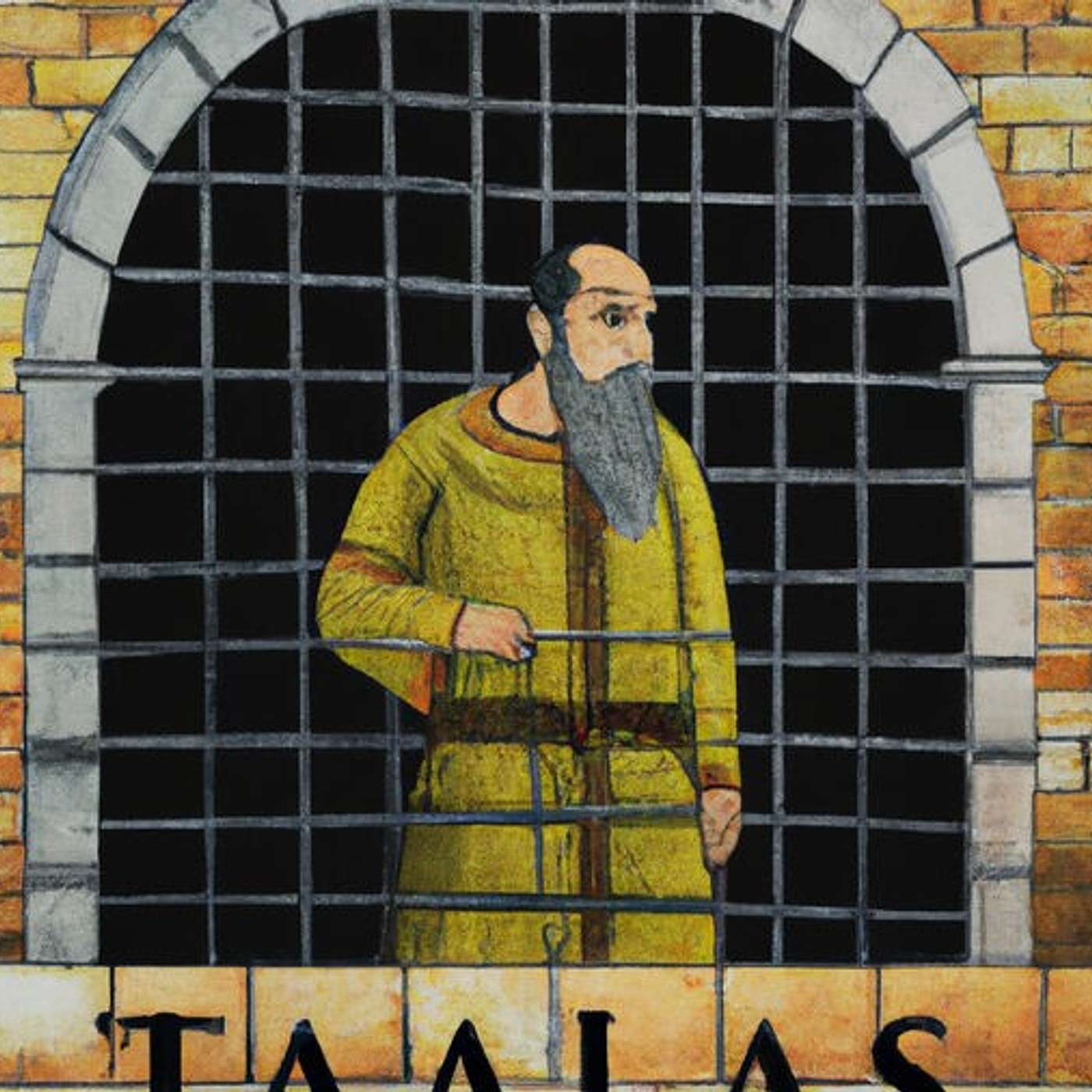
Dr. Thomas Constable, Plano Bible Chapel SonicLight.com
Bible Study with Dr. Thomas Constable
These are extremely informative and entertaining bible study lectures that have blessed many seekers of knowledge and faith over the last 20 years or more. Dr. Thomas L. Constable is a prominent theologian and former professor of Bible Exposition at Dallas Theological Seminary. He is also a pastor at Plano Bible Chapel in Plano, Texas, where he has served for over 50 years. Dr. Constable is widely known for his Bible commentary series, SonicLight.com, which includes Notes on the Bible, Notes on the Minor Prophets, and Notes on Revelation. He is also the author of several books, including "Talk...
Be sure to visit the podcast's website and support the creator: SonicLight.com
Author
Dr. Thomas Constable, Plano Bible Chapel SonicLight.com
Category
Podcast website
Latest episode
Aug 10, 2026
Where to listen?
Podcasts in the app Replaio Radio Coming soonPodcasts are coming to the app soon. Install now and be the first to see a whole new take on podcasts
 Install for free
Android almost 10M downloads · 4.7+ rating
iOS soon
Episodes
Deuteronomy 34, The Death of Moses 10.08.2026 37:53
Moses ascends Mt. Nebo and Yahweh shows him the entire Promised Land — from Dan in the north to the Negev, from the Mediterranean to the Jordan Valley — though he cannot enter it because of his sin at Meribah-kadesh in failing to honor God as holy before the people. Moses dies at 120 years of age with his eyes undimmed and his strength undiminished, and God Himself buries him in an unknown grave i...
Deuteronomy 33, Moses' Blessing of the Tribes 10.08.2026 43:58
In one of his final official acts, Moses pronounces a prophetic blessing on each of the twelve tribes of Israel, echoing Jacob's blessing in Genesis 49 and framed by an introduction depicting Yahweh coming in glory from Sinai with His holy ones to give His law to Israel in love. The individual blessings range from survival for Reuben to prophetic leadership for Judah, priestly calling for Levi, se...
Deuteronomy 32, The Song of Moses 10.08.2026 41:06
The Song of Moses is a covenant lawsuit — one of the great poems of the Old Testament — in which God calls heaven and earth as witnesses against Israel's future apostasy and records the indictment before it occurs. Constable traces its structure from the proclamation of God's faithful character as "the Rock" through the account of His gracious care of Jacob in the wilderness, then Israel's rebelli...
Deuteronomy 31, Moses' Last Acts: Commissioning Joshua and the Song of Moses 10.08.2026 39:19
Moses, now 120 years old, publicly commissions Joshua as his successor before all Israel with the charge "be strong and courageous" and deposits the written Book of the Law with the Levitical priests with instructions to read it aloud to all Israel every seventh year at the Feast of Booths. God appears in a pillar of cloud to confirm Joshua's commission, then reveals to Moses the sobering truth th...
Deuteronomy 30, The Call to Decision: Choose Life 09.08.2026 35:49
Chapter 30 offers Deuteronomy's most profound hope: even after the full measure of covenant curses falls on Israel in exile, God promises to gather her from the ends of the earth and circumcise her heart so that she loves Him with all her heart — an anticipation of the New Covenant that Constable links to Jeremiah 31 and Ezekiel 36. Obedience is not beyond reach; the word is "very near you, in you...
Deuteronomy 29, Moses' Third Address: An Appeal for Covenant Faithfulness 09.08.2026 30:18
Moses opens his third and final address with a sobering historical review — the Exodus, the wilderness provision, the defeat of Sihon and Og — then solemnly observes that despite all these wonders, God has not yet given Israel "a heart to understand, eyes to see, and ears to hear." He assembles all Israel — leaders, elders, wives, children, and resident aliens — into a formal covenant renewal, war...
Deuteronomy 28, The Blessings and Curses 09.08.2026 41:40
Chapter 28 is one of the most consequential chapters in Scripture: fourteen verses of blessing promise that obedience will elevate Israel above all nations — blessed in city and countryside, in children, crops, herds, and battle, with rain from God's heavenly treasury and a position of lending to nations rather than borrowing from them. Then follow fifty-four verses of covenant curses for disobedi...
Deuteronomy 27, Preparations for Renewing the Covenant: The Shechem Ceremony 09.08.2026 39:36
Moses instructs Israel to set up large plastered stones at Shechem and inscribe all the words of the law on them upon entering the land, publicly constituting the Mosaic covenant as Israel's national charter. An altar of uncut stones is to be built on Mt. Ebal for burnt and peace offerings, six tribes stand on Mt. Gerizim to bless the people and six on Mt. Ebal for curses, and the Levites then pro...
Deuteronomy 26, Covenant Celebration and Conclusion 09.08.2026 40:33
Chapter 26 closes Moses' second major address (chs. 5-26) with two covenant rituals: the firstfruits offering, in which the worshiper recites Israel's covenant creed — "My father was a wandering Aramean...He brought us to this place and gave us this land flowing with milk and honey" — as a public proclamation of God's saving faithfulness; and the triennial tithe declaration, in which the worshiper...
Deuteronomy 25, Laws Concerning Levirate Marriage and the Amalekites 09.08.2026 31:25
The levirate law requires a surviving brother to marry his dead brother's childless widow in order to preserve the dead man's name and inheritance in Israel; if he refuses, the widow performs the sandal ceremony before the elders as a public act of shaming that permanently marks his line as the house that refused its covenant duty. Moses adds requirements for equal weights and measures in all comm...
Deuteronomy 24-25, Laws Concerning Workers, Gleaning, and Individual Responsibility 09.08.2026 29:05
Moses establishes the principle of individual moral accountability — "each shall be put to death for his own sin" — then applies it through a series of concrete economic protections: aliens, orphans, and widows must receive justice; cloaks taken as collateral must be returned before nightfall; hired workers must be paid before sundown because "he is poor and sets his heart on it." At harvest time...
Deuteronomy 24, Laws Concerning Divorce, Military Exemption, and Loans 09.08.2026 41:16
When a man divorces his wife by written certificate and she remarries, he may not take her back even if the second husband dies — a law Moses gave not to endorse divorce but to regulate it and protect a woman's dignity and legal standing. Constable notes that the laws in this section consistently protect the vulnerable from exploitation: a newly married man is exempted from military service for a...
Deuteronomy 23, Laws Concerning Public Worship and Camp Regulations 09.08.2026 36:15
Moses legislates who may participate in the assembly of the LORD — excluding the sexually mutilated, those of illegitimate birth, Ammonites, and Moabites permanently because they refused covenant hospitality to Israel and hired Balaam to curse her, while permitting Edomites and Egyptians after the third generation. The army camp must be kept ritually pure because Yahweh walks in the midst of it, r...
Deuteronomy 22-23, Laws Concerning Purity and Marriage 09.08.2026 36:28
Moses opens with three purity illustrations — no mixed seed in a vineyard, no ox and donkey yoked together, no wool-linen blend in clothing — teaching that the order of creation must be respected and that distinct things God has separated must not be confused. Seven marriage cases follow, covering false accusations of non-virginity, adultery, rape, pre-betrothal intercourse, and incest, each speci...
Deuteronomy 21-22, Laws Concerning the Hanged, Lost Property, and Safety 09.08.2026 31:38
A criminal executed and hung on a tree must be buried the same day — "for he who is hanged is cursed of God" — a verse Paul quotes in Galatians 3:13 to explain that Christ bore the covenant curse on our behalf when He was crucified. Lost or straying animals and property must be actively returned to a neighbor rather than ignored, a woman must not wear men's clothing nor a man women's clothing, a m...
Deuteronomy 21, Laws Concerning Unsolved Murders, Captive Women, and Family 09.08.2026 27:47
When a murder victim is found with no known killer, the elders of the nearest city must perform an atonement ritual over a heifer in a valley with running water, declaring their innocence — acknowledging that communities bear corporate responsibility for blood shed within their jurisdiction. Moses then restricts a soldier's treatment of a captive woman he wishes to marry, requiring a month of mour...
Deuteronomy 20, Laws Concerning Holy War 08.08.2026 36:52
Before every battle a priest addresses the army with the word of divine assurance — "Do not be afraid; the LORD your God is the one who goes with you to fight for you" — and officers exempt those with new houses, new vineyards, new betrothals, or fearful hearts, keeping only men fully committed to God's purposes. Peace terms must be offered to distant cities before attacking; if they accept, the p...
Deuteronomy 19, Cities of Refuge and Laws Concerning Murder 08.08.2026 27:27
Moses commands that three cities of refuge be established west of the Jordan — in addition to the three already designated in Transjordan — to shelter those who kill someone unintentionally without prior malice, preventing a blood-avenger from executing an innocent manslayer in hot pursuit. Deliberate murderers, however, receive no asylum and must be surrendered for execution; moving a neighbor's...
Deuteronomy 18, Laws Concerning Priests, Levites, and Prophets 08.08.2026 36:15
The Levitical priests have no tribal land allotment; their inheritance is Yahweh Himself, sustained by portions of the sacrifices and firstfruits, and any Levite from anywhere in Israel has the right to come to the central sanctuary, minister there, and eat. God then explicitly prohibits every form of Canaanite divination and occult practice — child sacrifice, soothsaying, witchcraft, mediums, spi...
Deuteronomy 17, Laws Concerning Judges, Courts, and Kings 08.08.2026 41:47
Cases too difficult for local courts are to be brought to the central sanctuary where a Levitical priest and a judge will render a binding verdict; anyone who shows contempt for their ruling must die, since to reject this court is to rebel against the authority of God Himself. Moses then anticipates Israel's eventual request for a king, permitting it while imposing four restrictions: the king must...
Deuteronomy 16, The Three Annual Feasts; Laws Concerning Authority 08.08.2026 30:24
Moses legislates the three pilgrimage feasts at which all Israelite males must appear before the LORD at the central sanctuary: Unleavened Bread (Passover), commemorating the Exodus for seven days; Weeks (Pentecost), celebrating the grain harvest; and Booths (Tabernacles), commemorating the wilderness sojourn. Constable observes that these feasts functioned like the ancient treaty requirement that...
Deuteronomy 15, Laws Arising from the Fourth Commandment: The Year of Release 08.08.2026 40:34
The Sabbath principle extends into Israel's economic life through the seventh-year debt release: all debts owed by fellow Israelites are to be cancelled, with Moses explicitly warning against the temptation to refuse loans as the sabbatical year approaches — "you shall freely open your hand to him and shall generously lend him sufficient for his need." Constable notes this debt cancellation was wi...
Deuteronomy 14, Laws Arising from the Third Commandment: Dietary Laws and Tithes 08.08.2026 37:55
Because Israel is a holy people — Yahweh's sons set apart from all other nations — their diet must also mark them as distinct, and Moses prohibits the Canaanite mourning rites of self-laceration before laying out the detailed list of clean and unclean animals. Constable suggests the unclean animals were likely associated symbolically with death or pagan worship, reflecting the principle that holin...
Deuteronomy 13, Laws Arising from the Second Commandment: Against Idolatry 08.08.2026 43:23
Chapter 13 addresses three escalating forms of enticement to idolatry: a prophet who performs genuine signs and wonders but leads Israel to worship other gods must be put to death — even if his miracle comes true, God is using him to test Israel's love; a family member or close friend who secretly urges someone to serve other gods must be executed, with the accuser required to cast the first stone...
Deuteronomy 12, Laws Arising from the First Commandment: Worship at the Central Sanctuary 08.08.2026 43:18
Moses opens the legal corpus (chs. 12-26) by requiring that Israel worship Yahweh exclusively at the one central sanctuary He will choose, while completely demolishing every Canaanite altar, sacred pillar, Asherah pole, and even the names of the Canaanite gods. Constable notes this centralization reflects the logic of the suzerainty treaty: a vassal may pay tribute only to his sovereign, not to an...
Similar podcasts





Listen to the Bible Study with Dr. Thomas Constable podcast in Replaio
Radio and podcasts in one app - free, with no sign-up. Install today and do not miss the launch
Replaio is not a podcast publisher; show names, artwork and audio belong to their authors and are distributed through public RSS feeds.