
Dr. Thomas Constable, Plano Bible Chapel SonicLight.com
Bible Study with Dr. Thomas Constable
These are extremely informative and entertaining bible study lectures that have blessed many seekers of knowledge and faith over the last 20 years or more. Dr. Thomas L. Constable is a prominent theologian and former professor of Bible Exposition at Dallas Theological Seminary. He is also a pastor at Plano Bible Chapel in Plano, Texas, where he has served for over 50 years. Dr. Constable is widely known for his Bible commentary series, SonicLight.com, which includes Notes on the Bible, Notes on the Minor Prophets, and Notes on Revelation. He is also the author of several books, including "Talk...
Be sure to visit the podcast's website and support the creator: SonicLight.com
Author
Dr. Thomas Constable, Plano Bible Chapel SonicLight.com
Category
Podcast website
Latest episode
Aug 10, 2026
Where to listen?
Podcasts in the app Replaio Radio Coming soonPodcasts are coming to the app soon. Install now and be the first to see a whole new take on podcasts
 Install for free
Android almost 10M downloads · 4.7+ rating
iOS soon
Episodes
2 Peter 3:1-18, The Day of the Lord and Godly Living 03.08.2026 41:02
Chapter 3 addresses the scoffers' challenge to the second coming ('Where is the promise of His coming?' 3:4) with a comprehensive eschatological response that grounds present ethical urgency in the certainty of divine judgment. The scoffers' argument (3:3-4) is an argument from uniformity: 'ever since the fathers fell asleep, all continues just as it was from the beginning of creation.' Constable...
2 Peter 2:1-22, The Danger and Character of False Teachers 03.08.2026 50:12
Chapter 2 is the New Testament's most sustained and vivid description of false teachers — their methods, their character, their fate, and their effect on those who follow them. The false teachers are introduced (2:1-3) by their essential characteristic: they will 'secretly introduce destructive heresies, even denying the Master who bought them, bringing swift destruction upon themselves.' Constabl...
2 Peter 1:12-21, Eyewitness Testimony and Scripture's Origin 03.08.2026 42:26
Chapter 1:12-21 is the epistemological foundation of the letter — the basis on which Peter claims authority to teach what he teaches and to expose the false teachers of chapter 2. Two grounds are established: apostolic eyewitness testimony (1:16-18) and the prophetic word of Scripture (1:19-21). The pastoral introduction (1:12-15) is notable for its mortality-consciousness: Peter is writing in the...
2 Peter 1:1-11, Calling, Election, and Virtue 03.08.2026 44:11
Chapter 1:1-11 lays the doctrinal foundation for the entire letter in a single extended argument: divine power has granted everything needed for life and godliness (1:3-4), and this divine provision creates both the ground and the obligation for the sustained cultivation of virtue (1:5-11). The opening greeting (1:1) establishes an egalitarian theology of faith: 'to those who have received a faith...
2 Peter — Overview 03.08.2026 47:36
2 Peter is one of the most disputed books in the New Testament canon — challenged in antiquity (Eusebius classifies it among the 'disputed writings') and challenged still in modern scholarship over issues of authorship, style, and relationship to Jude. Constable defends Petrine authorship on the basis of the explicit self-identification (1:1, 'Simon Peter, a bond-servant and apostle of Jesus Chris...
1 Peter 5:8-14, Resist the Devil; Final Greetings 03.08.2026 45:12
The letter's closing section (5:8-14) pairs the cosmic adversary (the devil) with the cosmic community (the worldwide brotherhood of believers) in a final charge that grounds the readers' suffering in its ultimate context. 'Be of sober spirit, be on the alert. Your adversary, the devil, prowls around like a roaring lion, seeking someone to devour' (5:8). Constable notes the lion metaphor: a roarin...
1 Peter 5:1-7, Elders, Young Men, and Humility 03.08.2026 36:40
Chapter 5:1-7 addresses the community's leadership and then frames the entire letter's practical ethic in the single virtue of humility. The elder instruction (5:1-4) comes from a fellow elder (Peter refers to himself as 'a fellow elder and a witness of the sufferings of Christ') — the authority is relational and experiential, not merely positional. The three positive imperatives (5:2-3) define th...
1 Peter 4:12-19, The Fiery Trial 03.08.2026 39:10
Chapter 4:12-19 is the pastoral heart of the letter's suffering theology — and it represents a shift in tone from the earlier sections. The earlier sections anticipated suffering and gave theological preparation for it; here Peter writes as if the suffering has arrived or intensified: 'Beloved, do not be surprised at the fiery ordeal among you, which comes upon you for your testing, as though some...
1 Peter 4:1-11, Living for God in Suffering 02.08.2026 39:23
Chapter 4:1-11 applies the suffering-Christ pattern to the practical ethics of the readers' lives, with the sharpest ethical demands in the letter. The opening logic (4:1-2) is compact and striking: 'since Christ has suffered in the flesh, arm yourselves also with the same purpose, because he who has suffered in the flesh has ceased from sin, so as to live the rest of the time in the flesh no long...
1 Peter 3:18-22, Christ's Suffering and Victory 02.08.2026 39:18
The theological ground of the entire letter's ethic is stated most compactly in 3:18: 'For Christ also died for sins once for all, the just for the unjust, so that He might bring us to God, having been put to death in the flesh, but made alive in the spirit.' Constable identifies this as one of the most compact statements of the atonement in the New Testament: the substitutionary element (the just...
1 Peter 3:8-17, Suffering for Righteousness 02.08.2026 41:34
The transition from household relationships to community ethics (3:8-12) uses a Psalm 34 quotation to frame the call to unified, loving, blessing-oriented community life: 'Do not repay evil with evil or insult with insult, but giving a blessing instead; for you were called for the very purpose that you might inherit a blessing' (3:9). Constable notes the paradox: the way to receive blessing is to...
1 Peter 3:1-7, Wives and Husbands 02.08.2026 43:33
Chapter 3:1-7 addresses marriage within the new community, with the extended treatment devoted to wives (3:1-6) and a brief but theologically weighted charge to husbands (3:7). The instruction to wives (3:1-6) addresses specifically a situation where the husband is not a believer — the wife's conduct is the evangelistic instrument: 'even if any of them are disobedient to the word, they may be won...
1 Peter 2:13-25, Submission and the Suffering Servant 02.08.2026 35:54
The household code section (2:13-3:12) begins with the broadest scope — submission to human institutions, specifically governing authorities — and then narrows to the household (slaves, spouses). The motivation for submission to governing authorities (2:13-17) is not political ideology but theological witness: 'for the Lord's sake' (2:13), 'so that by doing right you may silence the ignorance of f...
1 Peter 2:4-12, Living Stones and a Holy Nation 02.08.2026 34:37
Chapter 2:4-12 is the theological and ecclesiological climax of the letter's first movement — the sustained development of what Peter calls the new community's identity. The living stone metaphor (2:4-8) draws on Isaiah 28:16, Psalm 118:22, and Isaiah 8:14 to build a composite picture of Christ as the foundation stone that is simultaneously precious to those who believe and a stumbling stone to th...
1 Peter 1:22-2:3, Born Again to Love and Long 02.08.2026 46:06
The transition passage of 1:22-2:3 builds the bridge between the individual new birth (1:3, 23) and the communal love that new birth produces. 'Since you have in obedience to the truth purified your souls for a sincere love of the brethren, fervently love one another from the heart' (1:22). Constable unpacks the logic: the purification that occurred in conversion — the internal change of the new b...
1 Peter 1:13-21, The Call to Holiness 02.08.2026 45:51
The first major ethical section (1:13-21) draws the behavioral consequences from the theological foundation of 1:1-12. The command structure is clear: 'prepare your minds for action, keep sober in spirit, fix your hope completely on the grace to be brought to you at the revelation of Jesus Christ' (1:13). Constable draws out the three imperatives as a single unified stance: mental readiness (girdi...
1 Peter 1:1-12, Election and Salvation 02.08.2026 42:50
The opening of 1 Peter (1:1-12) is a single extended sentence in the Greek (1:3-12) — a berakah or blessing that surveys the entire scope of the salvation the readers have received, from divine foreknowledge before time to eschatological glory at 'the revelation of Jesus Christ.' Constable unpacks the Trinitarian structure of 1:2: the elect are chosen 'according to the foreknowledge of God the Fat...
1 Peter — Overview 02.08.2026 43:15
1 Peter is addressed to 'aliens scattered throughout Pontus, Galatia, Cappadocia, Asia, and Bithynia' (1:1) — Jewish and Gentile Christians dispersed across the northern and western provinces of Asia Minor who are experiencing social hostility and pressure as a consequence of their Christian identity. Constable identifies the letter's occasion and purpose as pastoral encouragement for believers li...
James 5:13-20, The Proper Action; Living by Faith 02.08.2026 40:42
The final section of James addresses the life of prayer within the community of faith, centering on the remarkable promise of 5:14-16: 'Is anyone among you sick? Let him call for the elders of the church and let them pray over him, anointing him with oil in the name of the Lord; and the prayer offered in faith will restore the one who is sick.' Constable addresses several interpretive questions ab...
James 5:1-12, Warnings for the Rich; The Proper Attitude 02.08.2026 43:20
Chapter 5 opens with James's harshest prophetic oracle — addressed not to believers but to wealthy unbelievers who are oppressing their workers: 'Come now, you rich, weep and howl for your miseries which are coming upon you' (5:1). The indictments are specific: hoarding wealth while it rots and rusts (5:2-3), defrauding laborers of their wages (5:4), living luxuriously while others suffer (5:5), a...
James 4:1-17, Conflicts and Humble Submission 01.08.2026 39:35
Chapter 4 begins with a diagnostic question: 'What is the source of quarrels and conflicts among you?' (4:1). James's answer is theological: the source is not external injustice or personality clashes but 'your pleasures that wage war in your members' (4:1) — the same 'lusts' (hēdonai, hedonistic desires) that lead to murder and envy when frustrated. The unfulfilled desires lead to asking God — bu...
James 3:1-18, Speech and Divine Wisdom 01.08.2026 38:02
Chapter 3 is James's most concentrated treatment of the tongue — and one of the most sophisticated analyses of human speech in any ancient text. The opening warning against many becoming teachers (3:1) is motivated by accountability: teachers communicate truth with words, and words are the most dangerous tool a fallen human being possesses. The illustrations in 3:3-8 progress through four metaphor...
James 2:14-26, The Importance of Vital Faith 01.08.2026 38:51
James 2:14-26 is the most theologically debated passage in the letter, appearing at first to directly contradict Paul's teaching that justification is by faith alone. Constable resolves the apparent contradiction by carefully distinguishing the audiences and questions each apostle addresses. Paul in Romans and Galatians is answering: 'How is a person declared righteous before God?' — his answer is...
James 2:1-13, The Problem of Favoritism 01.08.2026 37:52
Chapter 2 opens with James's most concrete social critique: the favoritism shown to wealthy people when they enter the assembly, in contrast to the contempt shown to the poor. The scenario in 2:2-3 is specific: a man with gold rings and fine clothing enters the synagogue/assembly and is given the best seat; a poor man in dirty clothes is told to stand or sit on the floor. Constable notes that Jame...
James 1:19-27, The Proper Response to Trials 01.08.2026 41:30
James 1:19-27 pivots from the source of trials to the appropriate response to them, organized around two famous pairs: quick to hear vs. slow to speak and slow to anger, and hearing vs. doing. The first pair (1:19-20) establishes the posture of wisdom: 'everyone must be quick to hear, slow to speak and slow to anger; for the anger of man does not achieve the righteousness of God.' Constable notes...
Similar podcasts






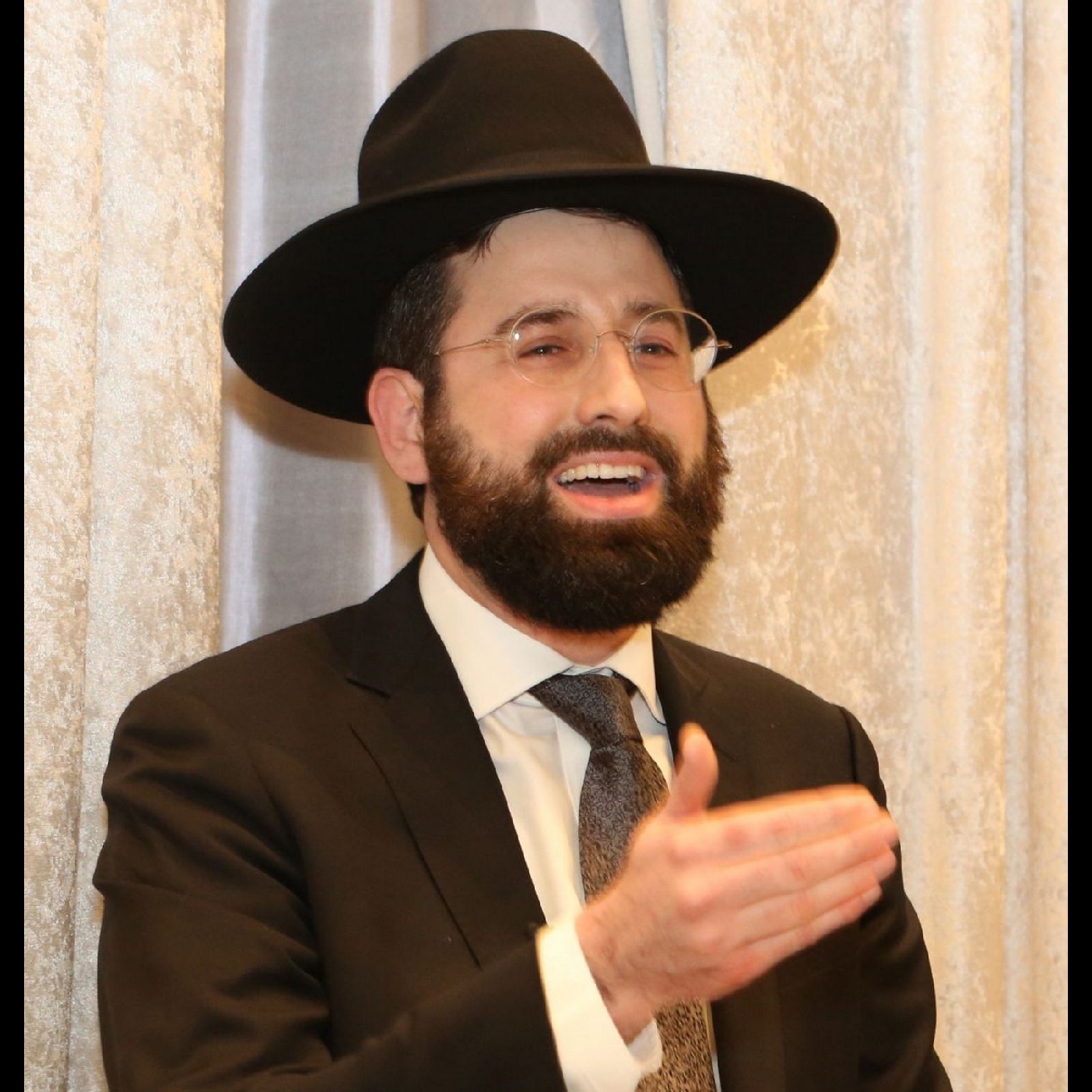

Listen to the Bible Study with Dr. Thomas Constable podcast in Replaio
Radio and podcasts in one app - free, with no sign-up. Install today and do not miss the launch
Replaio is not a podcast publisher; show names, artwork and audio belong to their authors and are distributed through public RSS feeds.
