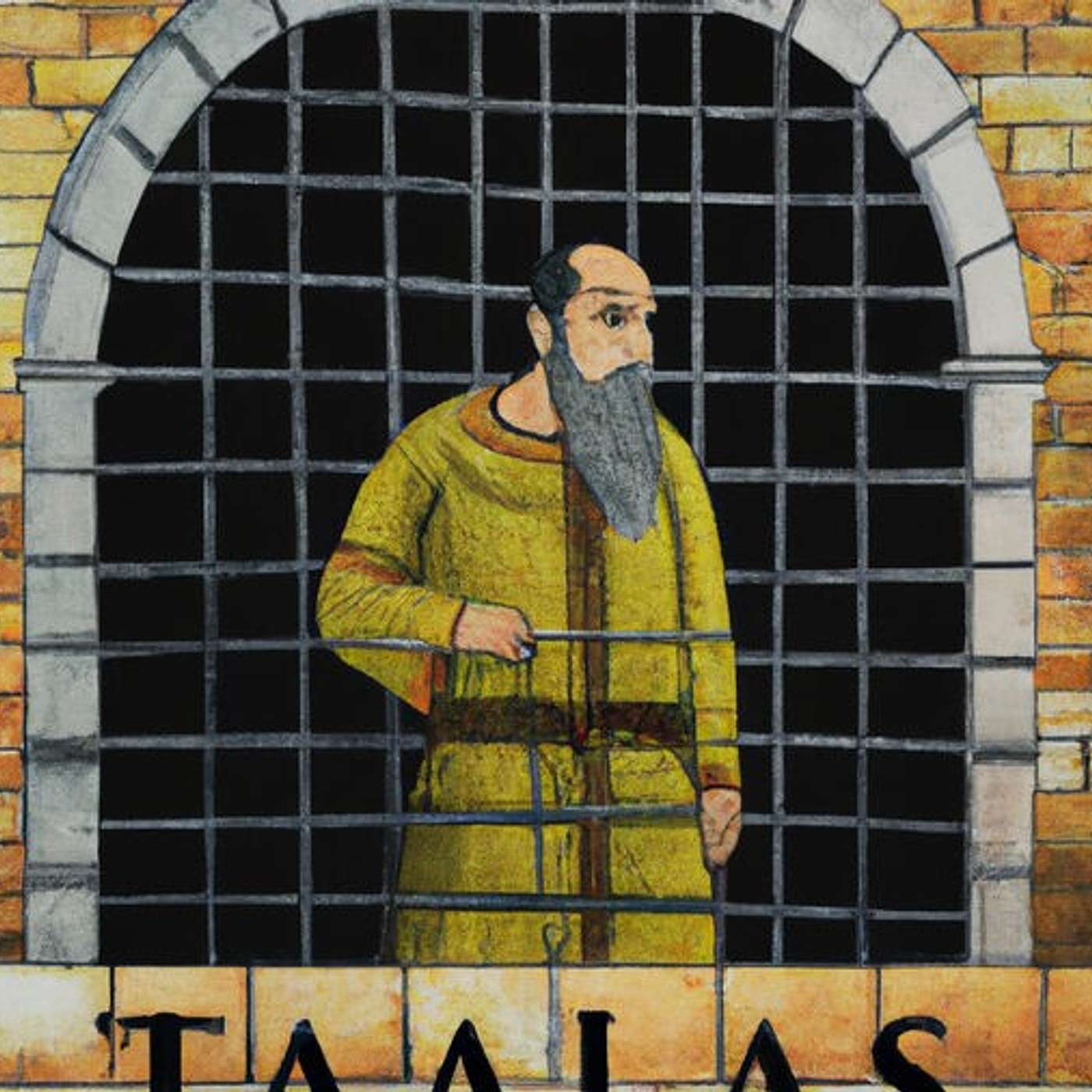
Dr. Thomas Constable, Plano Bible Chapel SonicLight.com
Bible Study with Dr. Thomas Constable
These are extremely informative and entertaining bible study lectures that have blessed many seekers of knowledge and faith over the last 20 years or more. Dr. Thomas L. Constable is a prominent theologian and former professor of Bible Exposition at Dallas Theological Seminary. He is also a pastor at Plano Bible Chapel in Plano, Texas, where he has served for over 50 years. Dr. Constable is widely known for his Bible commentary series, SonicLight.com, which includes Notes on the Bible, Notes on the Minor Prophets, and Notes on Revelation. He is also the author of several books, including "Talk...
Be sure to visit the podcast's website and support the creator: SonicLight.com
Author
Dr. Thomas Constable, Plano Bible Chapel SonicLight.com
Category
Podcast website
Latest episode
Aug 10, 2026
Where to listen?
Podcasts in the app Replaio Radio Coming soonPodcasts are coming to the app soon. Install now and be the first to see a whole new take on podcasts
 Install for free
Android almost 10M downloads · 4.7+ rating
iOS soon
Episodes
James 1:12-18, The Options in Trials 01.08.2026 29:21
James 1:12-18 addresses the theological question behind trials: is God the source of temptation? James is emphatic that He is not: 'Let no one say when he is tempted, "I am being tempted by God"; for God cannot be tempted by evil, and He Himself does not tempt anyone' (1:13). Constable distinguishes between trials (external circumstances that test and strengthen faith) and temptations (inner solic...
James 1:1-11, Introduction; The Value of Trials 01.08.2026 36:40
James's opening instruction is among the most counterintuitive in the New Testament: 'Consider it all joy, my brethren, when you encounter various trials' (1:2). Constable carefully parses this: James does not say to feel joy about the trial itself — the circumstances that produce trials are genuinely painful — but to 'consider' (hēgēsasthe, to evaluate or reckon) the trial with a joy-producing fr...
James — Overview 01.08.2026 29:28
James is the earliest of the New Testament epistles, written probably between A.D. 45-49 by James the half-brother of Jesus, who led the Jerusalem church until his martyrdom around A.D. 62. Constable identifies the letter's purpose as practical Christianity for Jewish believers: it addresses real problems in real communities — partiality toward the wealthy, uncontrolled speech, conflict and quarre...
Hebrews 13:1-25, Life within the Church 01.08.2026 42:33
Chapter 13 is the only chapter in Hebrews that looks like a conventional Pauline closing — a series of practical instructions followed by personal greetings — but Constable argues its instructions are not disconnected from the letter's argument but flow organically from it. The instructions address love of brethren (13:1), hospitality to strangers including the possibility of entertaining angels (...
Hebrews 12:1-29, The Danger of Unresponsiveness (the fifth warning) 01.08.2026 41:41
Chapter 12 opens with the letter's most famous metaphor — the 'cloud of witnesses' surrounding the runner — and climaxes in the fifth and final warning. The running metaphor of 12:1-2 picks up immediately from the faith gallery: 'since we have so great a cloud of witnesses surrounding us, let us also lay aside every encumbrance and the sin which so easily entangles us, and let us run with enduranc...
Hebrews 11:1-40, Perseverance in Faith 01.08.2026 44:21
Hebrews 11 is the Bible's most sustained celebration of faith — what Constable calls 'the honor roll of faith.' The famous definition in 11:1 — 'faith is the assurance of things hoped for, the conviction of things not seen' — is not a philosophical definition but a functional description: faith is the capacity to live in the present as though the future promises of God are already secured and the...
Hebrews 10:1-39, The Danger of Willful Sinning (the fourth warning) 01.08.2026 44:46
Chapter 10 brings the doctrinal argument of chapters 7-9 to its climax and then transitions to the letter's fourth and most severe warning. The theological climax in 10:1-18 restates the 'once for all' principle with quotations from Psalm 40:6-8 and Psalm 110:1: 'By one offering He has perfected for all time those who are sanctified' (10:14). The contrast with the Levitical sacrifices is made at t...
Hebrews 9:1-28, The Heavenly Sanctuary 31.07.2026 43:36
Chapter 9 contrasts the earthly tabernacle's arrangements and sacrifices with the heavenly sanctuary Christ entered. The detailed description of the earthly tabernacle (9:1-10) emphasizes its limits: the outer holy place was entered regularly by the priests, but the inner Holy of Holies 'only the high priest enters, once a year, not without taking blood' (9:7) — and this arrangement was 'a symbol...
Hebrews 8:1-13, The New Sanctuary and Covenant 31.07.2026 43:19
Chapter 8 pivots from the superiority of Christ's priesthood to the superiority of the covenant in which He serves. The main point of 8:1 is stated with unusual directness: 'Now the main point in what has been said is this: we have such a high priest, who has taken His seat at the right hand of the throne of the Majesty in the heavens, a minister in the sanctuary and in the true tabernacle, which...
Hebrews 7:1-28, The High Priestly Office of the Son 31.07.2026 43:29
Chapter 7 is the theological apex of Hebrews — the sustained demonstration that Christ's priesthood after the order of Melchizedek is superior to the Aaronic/Levitical priesthood in every dimension. Melchizedek appears in Genesis 14 as the king of Salem and priest of God Most High who blessed Abraham and received a tenth from him. Constable traces the argument from this brief account through the t...
Hebrews 6:1-20, The Danger of Immaturity (the third warning) Part 2 31.07.2026 43:46
Hebrews 6:1-8 contains the most debated passage in the letter and one of the most contested in the entire New Testament. The text describes people who have been 'enlightened' and have 'tasted the heavenly gift' and have 'been made partakers of the Holy Spirit' and have 'tasted the good word of God and the powers of the age to come' — and who have then 'fallen away.' The author states it is 'imposs...
Hebrews 5:1-14, The Danger of Immaturity (the third warning) Part 1 31.07.2026 41:42
Chapter 5 begins the letter's longest theological section — the exposition of Christ as the Melchizedekian high priest — which Hebrews calls the 'solid food' appropriate only for the mature (5:14). But before developing the doctrine, Hebrews interrupts with the third warning (5:11-6:20), introduced here in 5:11-14. The theological section opens (5:1-10) by defining the human high priest's qualific...
Hebrews 4:1-16, Rest for God's People 31.07.2026 41:31
Chapter 4 expands the 'rest' concept — already introduced through the Psalm 95 quotation — into one of the most theologically layered themes in Hebrews. Constable identifies at least three dimensions of 'rest' in the passage: the geographical rest of Canaan (which Joshua provided but which was not the ultimate rest, since Psalm 95 was written after the conquest), the creational rest of God on the...
Hebrews 3:1-19, The Danger of Unbelief (the second warning) 31.07.2026 42:13
Chapter 3 establishes the Moses-Christ comparison and then transitions to the second warning. Moses is honored: 'he was faithful in all His house' (3:2, citing Numbers 12:7). But the comparison is asymmetric: Moses was faithful 'as a servant' in God's house; Christ is faithful 'as a Son over His house' (3:5-6). Constable draws out the distinction: a servant's faithfulness is commendable but reflec...
Hebrews 2:1-18, The Danger of Negligence (the first warning) 31.07.2026 40:46
The first warning passage (2:1-4) interrupts the theological argument with pastoral urgency: 'For this reason we must pay much closer attention to what we have heard, so that we do not drift away from it' (2:1). Constable notes the verb 'drift away' (pararrheō, to flow past or slip away from) suggests not deliberate abandonment but gradual inattention — like a ship carried off course by current ra...
Hebrews 1:1-14, The Superiority of the Son 31.07.2026 46:06
The opening of Hebrews is the most exalted prose statement of Christology in the New Testament — seven attributes of the Son packed into two verses (1:2-3): He is the heir of all things, the agent of creation, 'the radiance of His glory and the exact representation of His nature,' the one who upholds all things by the word of His power, the one who made purification of sins, and the one who sat do...
Hebrews — Overview 31.07.2026 5:28
Hebrews is the most anonymous and theologically sophisticated book in the New Testament — its author is unknown (Paul, Apollos, Barnabas, Priscilla, and Luke have all been proposed), its audience is debated (Jewish Christians somewhere in the Roman Empire, possibly in Rome itself), and its genre is unique: it describes itself as 'a word of exhortation' (13:22), the same phrase used in Acts 13:15 f...
Titus 3:1-15, The Behavior of All in the Church; Conclusion 31.07.2026 43:02
Chapter 3 moves from conduct within the household of faith to conduct in the civic world. Paul instructs Titus to remind the congregation to be subject to rulers and authorities, to be obedient, to be ready for every good deed, to malign no one, to be peaceable, gentle, and showing 'every consideration for all men' (3:2). Constable notes the contrast being set up: the Cretans were known for being...
Titus 2:1-15, The Behavior of Various Groups in the Church 31.07.2026 41:46
Chapter 2 organizes its instructions around five social groups: older men, older women, younger women, younger men, and Titus himself as a model. Constable observes that this structure reflects the household codes common in Hellenistic ethical writing, but Paul transforms the genre: the motivation for each group's behavior is not social convention or civic virtue but the gospel. Older men are to b...
Titus 1:1-16, Appointment of Elders; Correction of False Teachers 30.07.2026 39:30
Chapter 1 opens with Paul's most theologically loaded self-introduction in any of his letters: he describes himself as a servant of God and apostle of Jesus Christ 'for the faith of those chosen of God and the knowledge of the truth which is according to godliness, in the hope of eternal life, which God, who cannot lie, promised long ages ago' (1:1-2). Constable draws attention to the phrase 'God,...
Titus — Overview 30.07.2026 36:36
Titus is one of the three Pastoral Epistles — alongside 1 and 2 Timothy — addressed not to a congregation but to a co-worker Paul had left in charge of a specific mission. Constable identifies the letter's central theme as 'sound doctrine producing godly behavior': the Greek word translated 'sound' (hygiainō) appears more frequently in the Pastorals than anywhere else in the New Testament, and it...
2 Timothy 4:1-22, Concluding Instructions 30.07.2026 44:04
Chapter 4 contains Paul's most solemn ministerial charge and his most personal farewell. The charge in 4:1-5 is delivered under the most serious possible oath: 'I solemnly charge you in the presence of God and of Christ Jesus, who is to judge the living and the dead, and by His appearing and His kingdom: preach the word.' Constable observes the five imperatives that follow as comprehensive in scop...
2 Timothy 3:1-17, Directions Concerning the Last Days 30.07.2026 43:22
Chapter 3 opens with one of Paul's most sobering prophetic passages: a catalog of vices that will characterize people 'in the last days.' The list in 3:2-5 — lovers of self, lovers of money, boastful, arrogant, revilers, disobedient to parents, ungrateful, unholy, unloving, irreconcilable, malicious gossips, without self-control, brutal, haters of good, treacherous, reckless, conceited, lovers of...
2 Timothy 2:1-26, Exhortations to Persevere 30.07.2026 38:51
Chapter 2 is the densest concentration of ministry metaphors in Paul's letters: soldier, athlete, farmer, workman, vessel, and servant all appear within twenty-six verses. Constable traces the logic connecting them. The soldier metaphor (2:3-4) establishes the posture of single-minded endurance — the soldier does not entangle himself in civilian affairs but pleases the one who enlisted him. The at...
2 Timothy 1:1-18, Salutation; Thanksgiving for Faithful Fellow Workers 30.07.2026 37:01
Chapter 1 opens with Paul reminding Timothy of his heritage: the genuine faith that 'first dwelt in your grandmother Lois and your mother Eunice, and I am sure that it is in you as well' (1:5). Constable notes the three-generation faith lineage as a model of how the gospel is meant to propagate — through household transmission as much as public proclamation. The central imperative comes immediatel...
Similar podcasts






Listen to the Bible Study with Dr. Thomas Constable podcast in Replaio
Radio and podcasts in one app - free, with no sign-up. Install today and do not miss the launch
Replaio is not a podcast publisher; show names, artwork and audio belong to their authors and are distributed through public RSS feeds.