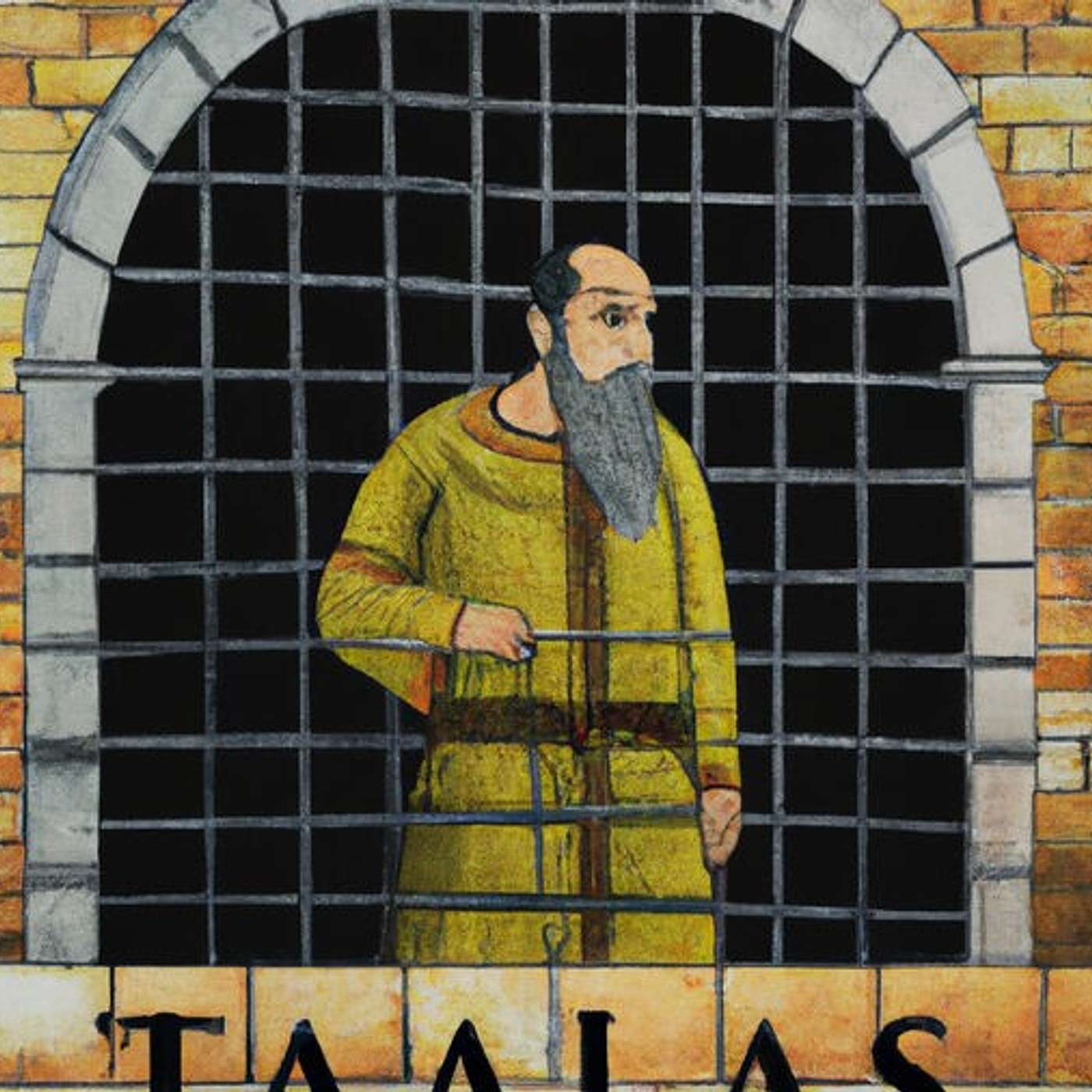
Dr. Thomas Constable, Plano Bible Chapel SonicLight.com
Bible Study with Dr. Thomas Constable
These are extremely informative and entertaining bible study lectures that have blessed many seekers of knowledge and faith over the last 20 years or more. Dr. Thomas L. Constable is a prominent theologian and former professor of Bible Exposition at Dallas Theological Seminary. He is also a pastor at Plano Bible Chapel in Plano, Texas, where he has served for over 50 years. Dr. Constable is widely known for his Bible commentary series, SonicLight.com, which includes Notes on the Bible, Notes on the Minor Prophets, and Notes on Revelation. He is also the author of several books, including "Talk...
Be sure to visit the podcast's website and support the creator: SonicLight.com
Author
Dr. Thomas Constable, Plano Bible Chapel SonicLight.com
Category
Podcast website
Latest episode
Aug 10, 2026
Where to listen?
Podcasts in the app Replaio Radio Coming soonPodcasts are coming to the app soon. Install now and be the first to see a whole new take on podcasts
 Install for free
Android almost 10M downloads · 4.7+ rating
iOS soon
Episodes
Revelation 20:7-15, The Final Revolt and the Great White Throne 05.08.2026 42:01
The second half of chapter 20 addresses the final outcome of the millennium and the ultimate judgment of all the dead. The final revolt (20:7-10): after the thousand years, Satan is released from the abyss and immediately goes out to deceive the nations — Gog and Magog, the number 'like the sand of the seashore' — who march against the camp of the saints and the beloved city. Fire comes down from...
Revelation 20:1-6, The Millennium 05.08.2026 44:07
Chapter 20 is one of the most debated chapters in the Bible — the only passage that explicitly states a thousand-year reign of Christ on earth (the millennium) — and the interpretation of this chapter has divided Christians for centuries into premillennialists (who read the thousand years as literal and future), amillennialists (who read it as symbolic of the church age or the eternal state), and...
Revelation 19, The Marriage Supper and the Rider on the White Horse 05.08.2026 42:30
Chapter 19 contains two visions that bracket the most theologically dense celebration and the most decisive military action in the book: the marriage supper of the Lamb (19:1-10) and the coming of Christ on the white horse (19:11-21). The fourfold 'Hallelujah' (19:1, 3, 4, 6) — the only occurrence of 'Alleluia' in the New Testament — opens the chapter as heaven erupts in praise over Babylon's judg...
Revelation 18, The Fall of Babylon 05.08.2026 45:07
Chapter 18 is Revelation's funeral dirge for the Babylon system — a sustained lament over the fall of the world's economic, commercial, and cultural order that is structured like the Old Testament prophetic laments over Tyre (Ezekiel 27-28) and the historical Babylon (Isaiah 13-14; Jeremiah 50-51). The announcement (18:1-3): a mighty angel descends with great authority and announces the fall of Ba...
Revelation 17, The Great Harlot Babylon 05.08.2026 46:02
Chapter 17 introduces one of Revelation's two most complex symbolic figures — the great harlot Babylon — and the angel's extended interpretation of the vision makes it one of the most allegorically elaborate passages in the book. The harlot (17:1-6) sits on many waters, rides the scarlet beast, is 'clothed in purple and scarlet and adorned with gold and precious stones and pearls,' holds a gold cu...
Revelation 16, The Seven Bowls of Wrath 05.08.2026 45:40
Chapter 16 unleashes all seven bowl judgments in rapid succession — the fastest-paced chapter in Revelation and the most intense concentration of divine judgment in the book. The command from the temple: 'Go and pour out on the earth the seven bowls of the wrath of God' (16:1). The first bowl (16:2): loathsome and malignant sores on those who have the mark of the beast — recalling the sixth Exodus...
Revelation 15, The Song of Moses and Preparation for the Bowls 05.08.2026 37:48
Chapter 15 is the shortest chapter in Revelation and serves as the transition hymn between the interludes (chapters 12-14) and the bowl judgments (chapter 16). The 'sign in heaven, great and marvelous' (15:1) — seven angels with seven last plagues — is introduced as 'the last, because in them the wrath of God is finished.' Constable notes the comprehensive finality: these are not a continuation of...
Revelation 14, The Lamb's Company and the Harvest 05.08.2026 41:31
Chapter 14 provides three visions that function as the last panel of the interlude (12:1-14:20) — each offering a preview of final outcomes: the Lamb's company on Zion (14:1-5), three angelic proclamations (14:6-13), and the dual harvest of the earth (14:14-20). The 144,000 on Mount Zion (14:1-5) stands in sharp contrast to the universal submission to the beast in chapter 13: while the earth worsh...
Revelation 13, The Two Beasts 05.08.2026 48:01
Chapter 13 introduces the two beasts — the Antichrist and the False Prophet — who form with the dragon the unholy trinity that counterfeits the Father, Son, and Spirit. The first beast from the sea (13:1-10) receives the dragon's power, throne, and authority. His description draws on Daniel 7's four beasts — lion, bear, leopard, ten horns — suggesting that this figure represents the culmination an...
Revelation 12, The Woman, the Dragon, and the Child 04.08.2026 43:24
Chapter 12 opens the second major interlude (12:1-14:20) that provides a cosmic and historical perspective on the spiritual war underlying the Tribulation. The three main figures introduced — the woman, the dragon, and the male child — are identified by the narrative itself. The woman (12:1-2) is 'clothed with the sun, and the moon under her feet, and on her head a crown of twelve stars' — imagery...
Revelation 11, The Two Witnesses and the Seventh Trumpet 04.08.2026 44:34
Chapter 11 presents one of the most debated passages in Revelation — the two witnesses — and then completes the trumpet sequence with the seventh trumpet's announcement of the kingdom's arrival. The measuring of the temple (11:1-2) uses an Old Testament metaphor: as Ezekiel measured the future temple (Ezekiel 40-48) and as Zechariah's measuring of Jerusalem expressed divine preservation (Zechariah...
Revelation 10, The Angel and the Little Scroll 04.08.2026 30:11
Chapter 10 is the first part of the extended interlude (10:1-11:14) between the sixth and seventh trumpets — structurally parallel to chapter 7's interlude between the sixth and seventh seals. The mighty angel with the little scroll (10:1-7) is one of Revelation's most majestic figures: clothed with a cloud, rainbow on his head, face like the sun, legs like pillars of fire, feet on sea and land, a...
Revelation 9, The Fifth and Sixth Trumpets 04.08.2026 43:24
Chapter 9 contains the fifth and sixth trumpets — the first and second of the three 'woe' trumpets — and two of the most terrifying visions in the book. The fifth trumpet (9:1-12) opens the abyss: a star fallen from heaven is given the key to the bottomless pit, from which smoke rises and locust-like creatures emerge. These locusts (9:3-11) are unlike any natural locusts: they do not harm vegetati...
Revelation 8, The Seventh Seal and the First Four Trumpets 04.08.2026 26:34
Chapter 8 opens the seventh seal and transitions into the next judgment sequence — the seven trumpets. The seventh seal produces 'silence in heaven for about half an hour' (8:1) — Constable identifies this as the most theologically pregnant pause in the book: the entirety of heaven stops its continuous worship (compare 4:8) in awe before what is about to come. The golden censer scene (8:3-5) is pi...
Revelation 7, The 144,000 and the Great Multitude 04.08.2026 40:27
Chapter 7 is the first of three major interludes in Revelation (the others being 10:1-11:14 and 12:1-14:20) — pauses between judgment sequences that provide theological perspective on the judgment and the community of the redeemed. The chapter answers the question of 6:17 ('who is able to stand?') with two complementary visions: the 144,000 sealed from Israel (7:1-8) and the innumerable multitude...
Revelation 6, The Six Seals 04.08.2026 44:44
Chapter 6 opens the scroll's seals and unleashes the first six of the seven-seal sequence — the beginning of the Tribulation's judgments in Constable's futurist framework. The four horsemen (6:1-8) are the most famous images of the chapter: the white horse whose rider went out 'conquering and to conquer' (6:2) — Constable identifies this as the Antichrist, not Christ (as in 19:11-16), since this i...
Revelation 4-5, The Throne Room and the Sealed Scroll 04.08.2026 49:47
Chapters 4-5 are the theological center of gravity of the entire book — a throne-room vision that establishes the cosmic sovereignty from which all that follows flows, and the Lamb's worthiness that grounds the unfolding of history's final act. Chapter 4 opens with the transition that separates the letters from the visions: 'Come up here, and I will show you what must take place after these things...
Revelation 3, Summary and the Overcomer Theme 04.08.2026 40:50
The concluding reflection on the seven letters as a whole addresses the 'overcomer' (nikōn) promises that close each letter and their theological significance. Constable identifies the overcomer theme as the central ethical thread of the letters: each letter ends with a promise to the one who 'overcomes' (2:7, 11, 17, 26; 3:5, 12, 21), and 1 John 5:4-5 defines the overcomer as 'everyone who is bor...
Revelation 3:14-22, Letter to Laodicea 04.08.2026 48:02
The letter to Laodicea (3:14-22) is the last and most universally known of the seven letters — the one with the Laodicean indictment of lukewarmness that has entered common language. Laodicea was one of the wealthiest cities in Asia Minor (a banking center and textile producer), had a famous eye-salve, and received its water through an aqueduct from hot springs that arrived lukewarm — the topograp...
Revelation 3:7-13, Letter to Philadelphia 04.08.2026 43:00
The letter to Philadelphia (3:7-13) is the second of the two letters that receive no rebuke — the other being Smyrna — and the one most oriented toward future promises. The Christological introduction is one of the book's most theologically loaded: 'He who is holy, who is true, who has the key of David, who opens and no one will shut, and who shuts and no one opens' (3:7). Constable unpacks each t...
Revelation 2:18-3:6, Letters to Thyatira and Sardis 04.08.2026 41:49
The letter to Thyatira (2:18-29) is the longest of the seven letters and the one with the most complex situation. The commendation is substantial: 'I know your deeds, and your love and faith and service and perseverance, and that your deeds of late are more than at first' (2:19) — this is a growing church, not a declining one. The rebuke focuses entirely on one person and her influence: 'Jezebel,...
Revelation 2:1-17, Letters to Ephesus, Smyrna, and Pergamum 03.08.2026 38:46
The first three letters of the seven (chapters 2-3) follow a consistent pattern: address (the angel of the church), the 'I know' section (Christ's assessment of the church's situation), commendation (what they have done well), rebuke (what needs correction, if applicable), exhortation to repentance or perseverance, warning or promise, and the closing call ('he who has an ear, let him hear') and ov...
Revelation 1, The Vision of the Risen Christ 03.08.2026 44:27
Chapter 1 establishes the revelation's origin, occasion, and the transforming vision that grounds the entire book. The prologue (1:1-3) traces the revelation's chain of communication: God gave it to Jesus Christ, who signified it through His angel to John, who bore witness to the word of God and the testimony of Jesus Christ. The beatitude of 1:3 — 'Blessed is he who reads and those who hear the w...
Revelation — Overview Part 2 03.08.2026 43:45
The second part of the Revelation overview addresses the book's structure, key symbols, and the interpretive principles Constable applies throughout. The structural key is 1:19 — 'Write the things which you have seen, and the things which are, and the things which will take place after these things' — which Constable reads as a divinely provided three-part outline: chapter 1 (the vision John has s...
Revelation — Overview Part 1 03.08.2026 35:22
Revelation is the most complex, most debated, and most symbolically dense book in the New Testament — and Constable's treatment opens by establishing the interpretive framework that will govern everything that follows. The book is simultaneously an apocalypse (a revelation of divine realities normally hidden, in the mode of Daniel, Ezekiel, and Zechariah), a prophecy (the only New Testament book t...
Similar podcasts





Listen to the Bible Study with Dr. Thomas Constable podcast in Replaio
Radio and podcasts in one app - free, with no sign-up. Install today and do not miss the launch
Replaio is not a podcast publisher; show names, artwork and audio belong to their authors and are distributed through public RSS feeds.