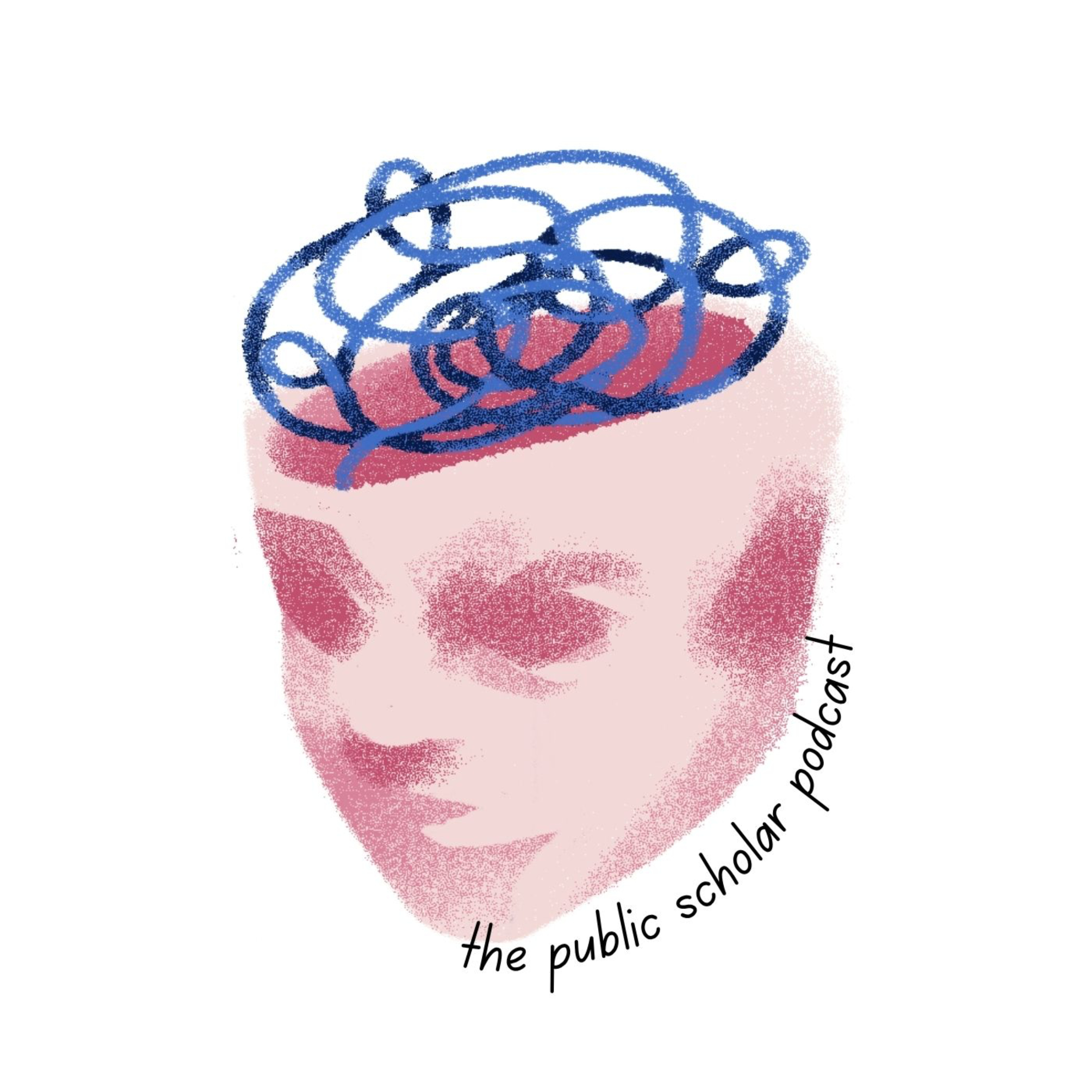
The Public Scholar
The Public Scholar
Good research deserves a bigger audience. At The Public Scholar, we sit down with researchers across the social sciences to talk about their work, their ideas, and the social realities shaping our world. Hosted by Melisa Çelik and Hêvîdar Isik, two doctoral students in sociology who believe knowledge should travel further than a journal article. New episodes in English, German, and Turkish.
Koniecznie odwiedź stronę podcastu i wesprzyj twórcę: podcasters.spotify.com
Autor
The Public Scholar
Kategoria
Strona podcastu
Ostatni odcinek
1 lip 2026
Gdzie słuchać?
Podcasty w aplikacji Replaio Radio Już wkrótcePodcasty trafią do aplikacji już wkrótce. Zainstaluj teraz i jako pierwszy zobacz nowe podejście do podcastów
 Zainstaluj za darmo
Android prawie 10 mln pobrań · ocena 4,8
iOS niedługo
Zainstaluj za darmo
Android prawie 10 mln pobrań · ocena 4,8
iOS niedługo
Odcinki
Black narratives in Europe and (not) fighting in academia w/ Jenaba Samura 01.07.2026 54:41
In this episode, we're joined by Jenaba Samura, a young researcher, writer, and speaker working at the intersection of Black European studies, gender, and postcolonial thought. We cover a wide range of topics, and at times Jenaba turns the questions back on us, making this a genuine conversation between three of us. Jenaba is currently working on her PhD thesis, exploring Afro-diasporic travel...
Migration as we know is ending w/ Prof. Nina Glick-Schiller 16.05.2026 1:15:40
Is migration as we known it ending? What are the new challenges we have and how can we detect them? In this episode, we sit down with Professor Nina Glick-Schiller. She has been one of the most influential voices in migration studies and ask her exactly that. A scholar who has spent decades challenging the assumptions baked into how we study human movement, Nina forces us to confront an uncomforta...
Episode 4: Pick-up-Artists und archivische soziologische Forschung mit Léandre Chavand 27.04.2026 58:31
Wer sind Pick-up-Artists und was wollen sie eigentlich? In dieser Folge sprechen wir mit Léandre Chavand, Masterstudent der Soziologie an der Universität Bielefeld, über seine Forschung zu Pick-up-Artists und darüber, wie antifeministische Diskurse gezielt eingesetzt werden, um junge Männer anzusprechen und zu mobilisieren. Im ersten Teil der Episode sprechen wir außerdem mit Leo über seine laufen...
Episode 3: Gig Work, Platform Economy & the Sociology of Corporations w/ Davis Weidemann 15.04.2026 1:05:16
What’s really going on behind gig work and digital platforms? In this episode, we chat with Davis Wiedemann, a young researcher from Germany who’s recently been admitted as a PhD student at Bielefeld University. We get into big-picture questions about how economic relations have changed over time, the rise (and sometimes fall) of corporations, and what the platform economy means for how we work to...
Episode 2: Studying Disabled Migrants in the U.S. w/ Claudia Castillo 15.04.2026 54:58
What happens when migration and disability intersect? In this episode, we sit down with Claudia Castillo, a Latina PhD student at the University of Illinois Chicago, to talk all things disability studies and migration. From her personal journey as a migrant and PhD student to her experiences as a mother of a disabled child, this conversation moves between the personal and the political. We also di...
Episode 1: who are we and what is this all about? 15.04.2026 50:10
In this intro episode, Melisa and Hêvîdar chat about who they are, where they come from, and what The Public Scholar Podcast is all about. Expect a mix of topics, a bit of rambling, and plenty of thoughts on things like early-career researchers, first-gen academics, figuring out how to be a good lecturer, and why scientific communication actually matters. Cited works: Teaching to Transgress: Ed...
Podobne podcasty







Słuchaj podcastu The Public Scholar w Replaio
Radio i podcasty w jednej aplikacji - za darmo, bez zakładania konta. Zainstaluj już dziś i nie przegap premiery
Replaio nie jest wydawcą podcastów; nazwy audycji, okładki i audio należą do ich autorów i są rozpowszechniane przez publiczne kanały RSS