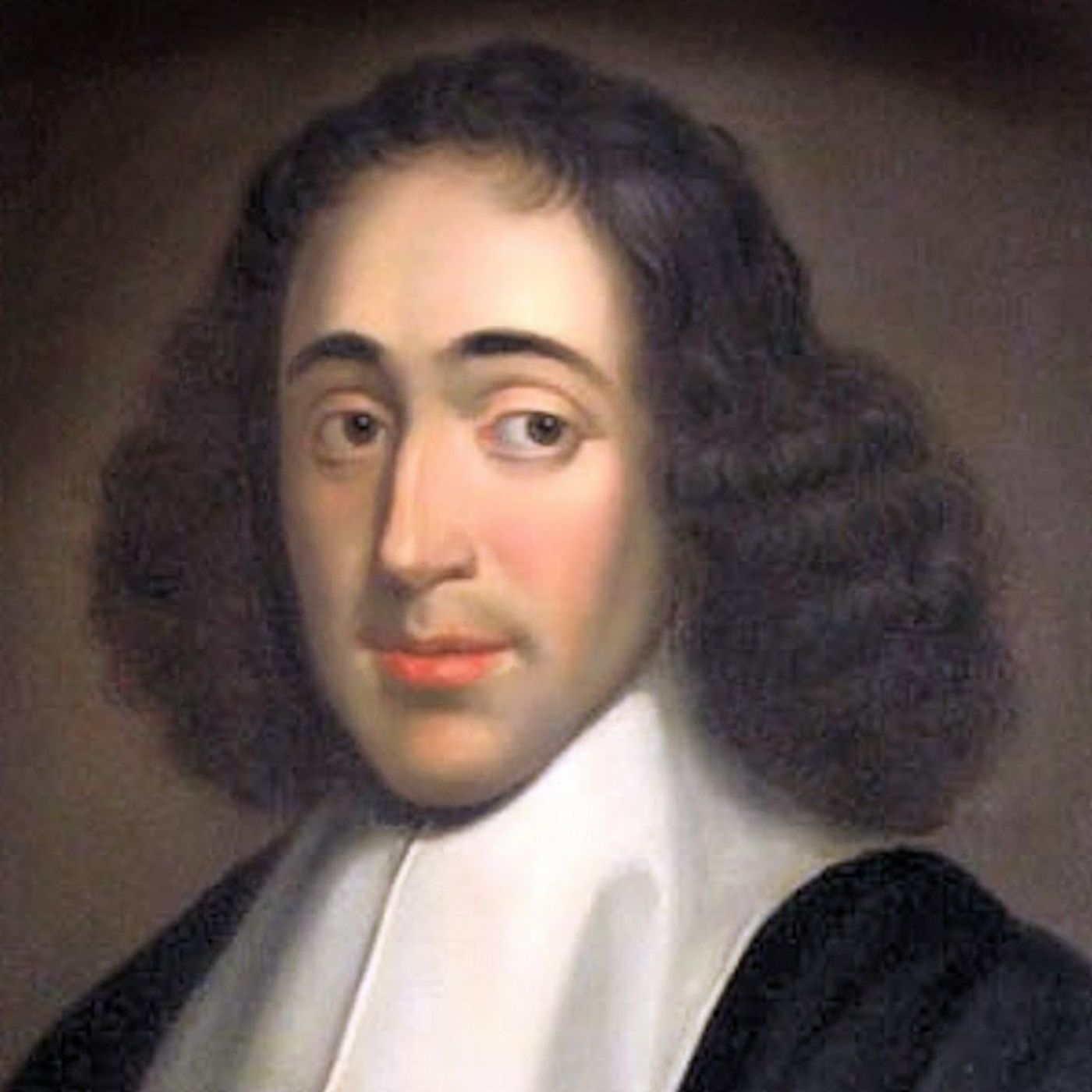
Baruch Spinoza, philosopher.
Baruch Spinoza, philosopher.
Baruch Spinoza, philosopher of the Dutch Golden Age. Baruch (de) Spinoza (24 November 1632 – 21 February 1677), also known under his Latinized pen name Benedictus de Spinoza, was a philosopher of Portuguese-Jewish origin, who was born in the Dutch Republic. A forerunner of the Age of Enlightenment, Spinoza significantly influenced modern biblical criticism, 17th-century rationalism, and Dutch intellectual culture, establishing himself as one of the most important and radical philosophers of the early modern period. Influenced by Stoicism, Thomas Hobbes, René Descartes, Ibn Tufayl, and hetero...
Koniecznie odwiedź stronę podcastu i wesprzyj twórcę: www.spreaker.com
Autor
Baruch Spinoza, philosopher.
Kategoria
Strona podcastu
Ostatni odcinek
30 wrz 2025
Gdzie słuchać?
Podcasty w aplikacji Replaio Radio Już wkrótcePodcasty trafią do aplikacji już wkrótce. Zainstaluj teraz i jako pierwszy zobacz nowe podejście do podcastów
 Zainstaluj za darmo
Android 5 mln+ pobrań · ocena 4,8
iOS niedługo
Zainstaluj za darmo
Android 5 mln+ pobrań · ocena 4,8
iOS niedługo
Odcinki
Modern era. 30.09.2025 5:12
Spinoza and Zionism. In the Tractatus Spinoza said, in passing, about the Jews that "were it not that the fundamental principles of their religion discourage manliness, I would not hesitate to believe that they will one day, given the opportunity, establish once more their independent state, and that God will again choose them". This comment, and Spinoza's general emphasis on the political-natio...
Other philosophical connections. 30.09.2025 9:37
Many authors have discussed similarities between Spinoza's philosophy and Eastern philosophical traditions. A few decades after the philosopher's death, Pierre Bayle, in his famous Historical and Critical Dictionary (1697) pointed out a link between Spinoza's alleged atheism with "the theology of a Chinese sect", supposedly called "Foe Kiao", of which he had learned thanks to the testimonies of th...
Pantheism. 30.09.2025 6:23
Spinoza was considered to be an atheist because he used the word "God" [Deus] to signify a concept that was different from that of traditional Judeo-Christian monotheism. "Spinoza expressly denies personality and consciousness to God; he has neither intelligence, feeling, nor will; he does not act according to purpose, but everything follows necessarily from his nature, according to law ...". Thus...
Ethical philosophy.. 30.09.2025 3:25
Spinoza's notion of blessedness figures centrally in his ethical philosophy. Spinoza writes that blessedness (or salvation or freedom), "consists, namely, in a constant and eternal love of God, or in God's love for men. Philosopher Jonathan Bennett interprets this as Spinoza wanting "'blessedness' to stand for the most elevated and desirable state one could possibly be in." Understanding what is m...
Philosophy, Ethics. 30.09.2025 8:38
Spinoza considered The Ethics his chief project and philosophical legacy. The work has been associated with that of Leibniz and René Descartes as part of the rationalist school of thought, which includes the assumption that ideas correspond to reality perfectly, in the same way that mathematics is supposed to be an exact representation of the world. The Ethics, a "superbly cryptic masterwork", con...
Career as a philosopher. 30.09.2025 9:01
Spinoza published little in his lifetime, and most formal writings were in Latin, reaching few readers. Apart from Descartes' Principles of Philosophy and the Theologico-Political Treatise, his works appeared in print after his death. Because the reaction to his anonymously published work, Theologico-Political Treatise, was unfavorable, Spinoza told supporters not to translate his works and abstai...
Expulsion from the Jewish community. 29.09.2025 5:16
Amsterdam was tolerant of religious diversity so long as it was practiced discreetly. The community was concerned with protecting its reputation and not associating with Spinoza lest his controversial views provide the basis for possible persecution or expulsion. Spinoza did not openly break with Jewish authorities until his father died in 1654 when he became public and defiant, resulting from len...
Biography. 29.09.2025 6:39
Family background. Spinoza's ancestors, adherents of Crypto-Judaism, faced persecution during the Portuguese Inquisition, enduring torture and public displays of humiliation. In 1597, his paternal grandfather's family left Vidigueira for Nantes and lived outwardly as New Christians, eventually transferring to Holland for an unknown reason. His maternal ancestors were a leading Porto commercial fam...
Podobne podcasty






Słuchaj podcastu Baruch Spinoza, philosopher. w Replaio
Radio i podcasty w jednej aplikacji - za darmo, bez zakładania konta. Zainstaluj już dziś i nie przegap premiery
Replaio nie jest wydawcą podcastów; nazwy audycji, okładki i audio należą do ich autorów i są rozpowszechniane przez publiczne kanały RSS