Philip Guedalla
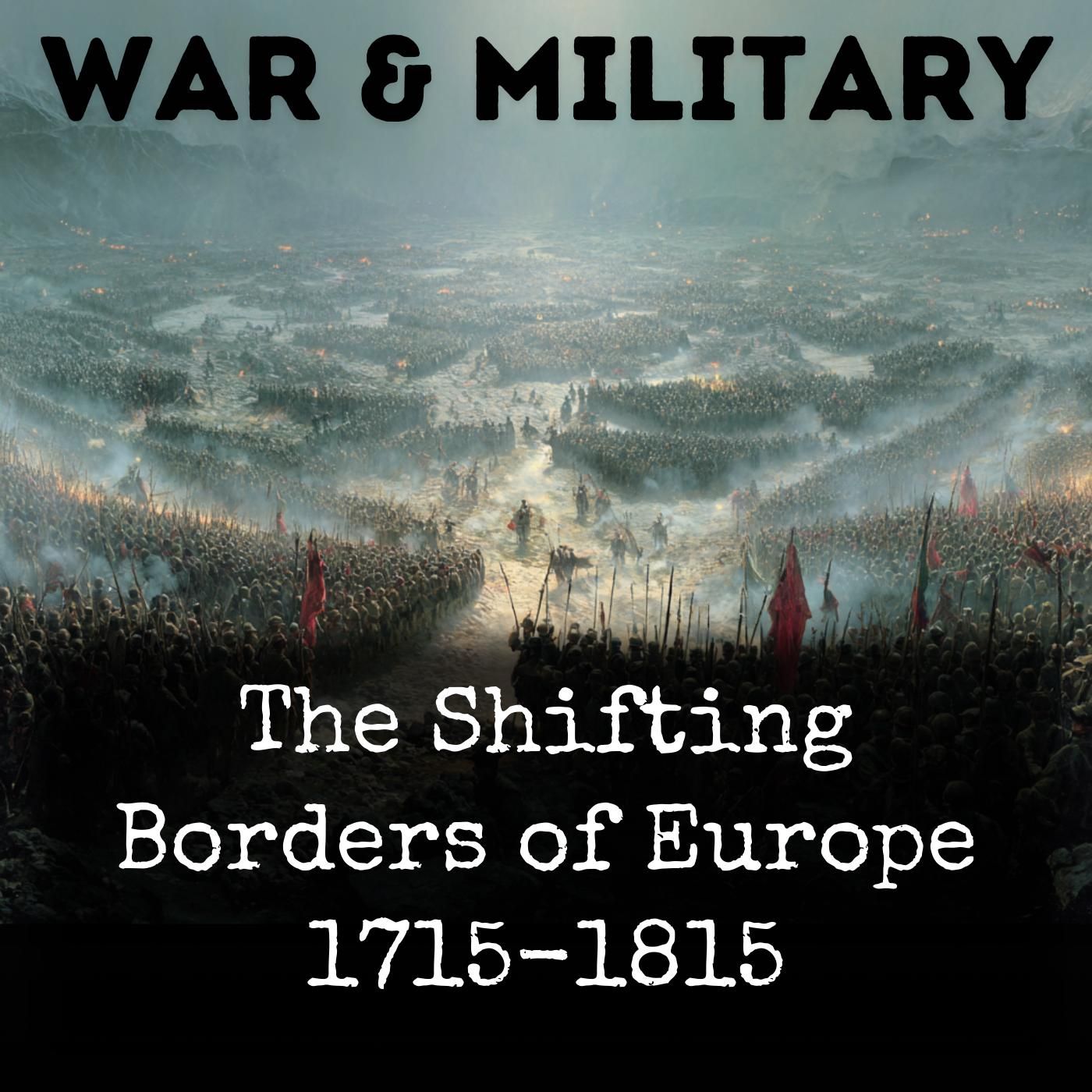
The Shifting Borders of Europe 1715-1815
As Philip Guedalla aptly puts it, History is the most interesting part of geography, and this is particularly true for European history, which is intricately tied to the continents ever-changing borders. From the Peace of Utrecht in 1713 to the Congress of Vienna in 1815, Europe experienced a relentless cycle of partition and re-partition fueled by conflict. Frederick the Great forged Prussia at Austrias expense, while Catherine the Great claimed the Ukraine. Meanwhile, France witnessed the collapse of the old order as Napoleon redefined the map of Europe. Join us for a compelling journey thro...
Autor
Philip Guedalla
Categoría
Web del podcast
Último episodio
7 de ene. de 2026
¿Dónde escuchar?
Podcasts en la app Replaio Radio Muy prontoLos podcasts llegarán muy pronto a la app. Instálala ahora y sé el primero en descubrir una forma totalmente nueva de vivir los podcasts
 Instálala gratis
Android casi 10 M de descargas · valoración de 4,8
iOS muy pronto
Instálala gratis
Android casi 10 M de descargas · valoración de 4,8
iOS muy pronto
Episodios
029 - Bk III Ch 13 The Late Empire Pt 3 07.01.2026 23:02
As Philip Guedalla aptly puts it, History is the most interesting part of geography, and this is particularly true for European history, which is intricately tied to the continents ever-changing borders. From the Peace of Utrecht in 1713 to the Congress of Vienna in 1815, Europe experienced a relentless cycle of partition and re-partition fueled by conflict. Frederick the Great forged Prussia at A...
028 - Bk III Ch 13 The Late Empire Pt 2 06.01.2026 20:22
As Philip Guedalla aptly puts it, History is the most interesting part of geography, and this is particularly true for European history, which is intricately tied to the continents ever-changing borders. From the Peace of Utrecht in 1713 to the Congress of Vienna in 1815, Europe experienced a relentless cycle of partition and re-partition fueled by conflict. Frederick the Great forged Prussia at A...
027 - Bk III Ch 13 The Late Empire Pt 1 06.01.2026 21:51
As Philip Guedalla aptly puts it, History is the most interesting part of geography, and this is particularly true for European history, which is intricately tied to the continents ever-changing borders. From the Peace of Utrecht in 1713 to the Congress of Vienna in 1815, Europe experienced a relentless cycle of partition and re-partition fueled by conflict. Frederick the Great forged Prussia at A...
026 - Bk III Ch 12 The Middle Empire Pt 2 06.01.2026 21:26
As Philip Guedalla aptly puts it, History is the most interesting part of geography, and this is particularly true for European history, which is intricately tied to the continents ever-changing borders. From the Peace of Utrecht in 1713 to the Congress of Vienna in 1815, Europe experienced a relentless cycle of partition and re-partition fueled by conflict. Frederick the Great forged Prussia at A...
025 - Bk III Ch 12 The Middle Empire Pt 1 06.01.2026 24:36
As Philip Guedalla aptly puts it, History is the most interesting part of geography, and this is particularly true for European history, which is intricately tied to the continents ever-changing borders. From the Peace of Utrecht in 1713 to the Congress of Vienna in 1815, Europe experienced a relentless cycle of partition and re-partition fueled by conflict. Frederick the Great forged Prussia at A...
024 - Bk III Ch 11 The Early Empire Pt 2 06.01.2026 22:22
As Philip Guedalla aptly puts it, History is the most interesting part of geography, and this is particularly true for European history, which is intricately tied to the continents ever-changing borders. From the Peace of Utrecht in 1713 to the Congress of Vienna in 1815, Europe experienced a relentless cycle of partition and re-partition fueled by conflict. Frederick the Great forged Prussia at A...
023 - Bk III The Empire Ch 11 The Early Empire Pt 1 06.01.2026 22:35
As Philip Guedalla aptly puts it, History is the most interesting part of geography, and this is particularly true for European history, which is intricately tied to the continents ever-changing borders. From the Peace of Utrecht in 1713 to the Congress of Vienna in 1815, Europe experienced a relentless cycle of partition and re-partition fueled by conflict. Frederick the Great forged Prussia at A...
022 - Bk II Ch 10 The French Republic The Consulate Pt 3 06.01.2026 15:29
As Philip Guedalla aptly puts it, History is the most interesting part of geography, and this is particularly true for European history, which is intricately tied to the continents ever-changing borders. From the Peace of Utrecht in 1713 to the Congress of Vienna in 1815, Europe experienced a relentless cycle of partition and re-partition fueled by conflict. Frederick the Great forged Prussia at A...
021 - Bk II Ch 10 The French Republic The Consulate Pt 2 06.01.2026 14:33
As Philip Guedalla aptly puts it, History is the most interesting part of geography, and this is particularly true for European history, which is intricately tied to the continents ever-changing borders. From the Peace of Utrecht in 1713 to the Congress of Vienna in 1815, Europe experienced a relentless cycle of partition and re-partition fueled by conflict. Frederick the Great forged Prussia at A...
020 - Bk II Ch 10 The French Republic The Consulate Pt 1 06.01.2026 18:53
As Philip Guedalla aptly puts it, History is the most interesting part of geography, and this is particularly true for European history, which is intricately tied to the continents ever-changing borders. From the Peace of Utrecht in 1713 to the Congress of Vienna in 1815, Europe experienced a relentless cycle of partition and re-partition fueled by conflict. Frederick the Great forged Prussia at A...
019 - Bk II Ch 9 The French Republic The Directory Pt 2 06.01.2026 23:32
As Philip Guedalla aptly puts it, History is the most interesting part of geography, and this is particularly true for European history, which is intricately tied to the continents ever-changing borders. From the Peace of Utrecht in 1713 to the Congress of Vienna in 1815, Europe experienced a relentless cycle of partition and re-partition fueled by conflict. Frederick the Great forged Prussia at A...
018 - Bk II Ch 9 The French Republic The Directory Pt 1 06.01.2026 22:13
As Philip Guedalla aptly puts it, History is the most interesting part of geography, and this is particularly true for European history, which is intricately tied to the continents ever-changing borders. From the Peace of Utrecht in 1713 to the Congress of Vienna in 1815, Europe experienced a relentless cycle of partition and re-partition fueled by conflict. Frederick the Great forged Prussia at A...
017 - Bk II Ch 8 The French Republic The Convention Pt 2 06.01.2026 25:39
As Philip Guedalla aptly puts it, History is the most interesting part of geography, and this is particularly true for European history, which is intricately tied to the continents ever-changing borders. From the Peace of Utrecht in 1713 to the Congress of Vienna in 1815, Europe experienced a relentless cycle of partition and re-partition fueled by conflict. Frederick the Great forged Prussia at A...
016 - Bk II Ch 8 The French Republic The Convention Pt 1 06.01.2026 19:56
As Philip Guedalla aptly puts it, History is the most interesting part of geography, and this is particularly true for European history, which is intricately tied to the continents ever-changing borders. From the Peace of Utrecht in 1713 to the Congress of Vienna in 1815, Europe experienced a relentless cycle of partition and re-partition fueled by conflict. Frederick the Great forged Prussia at A...
015 - Bk II Ch 7 The French Monarchy Pt 2 06.01.2026 27:52
As Philip Guedalla aptly puts it, History is the most interesting part of geography, and this is particularly true for European history, which is intricately tied to the continents ever-changing borders. From the Peace of Utrecht in 1713 to the Congress of Vienna in 1815, Europe experienced a relentless cycle of partition and re-partition fueled by conflict. Frederick the Great forged Prussia at A...
014 - Bk II The Revolution Ch 7 The French Monarchy Pt 1 06.01.2026 22:36
As Philip Guedalla aptly puts it, History is the most interesting part of geography, and this is particularly true for European history, which is intricately tied to the continents ever-changing borders. From the Peace of Utrecht in 1713 to the Congress of Vienna in 1815, Europe experienced a relentless cycle of partition and re-partition fueled by conflict. Frederick the Great forged Prussia at A...
013 - Bk I Ch 6 The Reign of Diplomacy Pt 2 06.01.2026 25:48
As Philip Guedalla aptly puts it, History is the most interesting part of geography, and this is particularly true for European history, which is intricately tied to the continents ever-changing borders. From the Peace of Utrecht in 1713 to the Congress of Vienna in 1815, Europe experienced a relentless cycle of partition and re-partition fueled by conflict. Frederick the Great forged Prussia at A...
012 - Bk I Ch 6 The Reign of Diplomacy Pt 1 06.01.2026 15:06
As Philip Guedalla aptly puts it, History is the most interesting part of geography, and this is particularly true for European history, which is intricately tied to the continents ever-changing borders. From the Peace of Utrecht in 1713 to the Congress of Vienna in 1815, Europe experienced a relentless cycle of partition and re-partition fueled by conflict. Frederick the Great forged Prussia at A...
011 - Bk I Ch 5 The American Revolution Pt 2 06.01.2026 24:00
As Philip Guedalla aptly puts it, History is the most interesting part of geography, and this is particularly true for European history, which is intricately tied to the continents ever-changing borders. From the Peace of Utrecht in 1713 to the Congress of Vienna in 1815, Europe experienced a relentless cycle of partition and re-partition fueled by conflict. Frederick the Great forged Prussia at A...
010 - Bk I Ch 5 The American Revolution Pt 1 06.01.2026 22:03
As Philip Guedalla aptly puts it, History is the most interesting part of geography, and this is particularly true for European history, which is intricately tied to the continents ever-changing borders. From the Peace of Utrecht in 1713 to the Congress of Vienna in 1815, Europe experienced a relentless cycle of partition and re-partition fueled by conflict. Frederick the Great forged Prussia at A...
009 - Bk I Ch 4 The Eastern Question Pt 2 06.01.2026 25:32
As Philip Guedalla aptly puts it, History is the most interesting part of geography, and this is particularly true for European history, which is intricately tied to the continents ever-changing borders. From the Peace of Utrecht in 1713 to the Congress of Vienna in 1815, Europe experienced a relentless cycle of partition and re-partition fueled by conflict. Frederick the Great forged Prussia at A...
008 - Bk I Ch 4 The Eastern Question Pt 1 06.01.2026 28:08
As Philip Guedalla aptly puts it, History is the most interesting part of geography, and this is particularly true for European history, which is intricately tied to the continents ever-changing borders. From the Peace of Utrecht in 1713 to the Congress of Vienna in 1815, Europe experienced a relentless cycle of partition and re-partition fueled by conflict. Frederick the Great forged Prussia at A...
007 - Bk I Ch 3 The Seven Years' War Pt 2 06.01.2026 26:07
As Philip Guedalla aptly puts it, History is the most interesting part of geography, and this is particularly true for European history, which is intricately tied to the continents ever-changing borders. From the Peace of Utrecht in 1713 to the Congress of Vienna in 1815, Europe experienced a relentless cycle of partition and re-partition fueled by conflict. Frederick the Great forged Prussia at A...
006 - Bk I Ch 3 The Seven Years' War Pt 1 06.01.2026 23:14
As Philip Guedalla aptly puts it, History is the most interesting part of geography, and this is particularly true for European history, which is intricately tied to the continents ever-changing borders. From the Peace of Utrecht in 1713 to the Congress of Vienna in 1815, Europe experienced a relentless cycle of partition and re-partition fueled by conflict. Frederick the Great forged Prussia at A...
005 - Bk I Ch 2 The Rise of Prussia Pt 2 06.01.2026 20:42
As Philip Guedalla aptly puts it, History is the most interesting part of geography, and this is particularly true for European history, which is intricately tied to the continents ever-changing borders. From the Peace of Utrecht in 1713 to the Congress of Vienna in 1815, Europe experienced a relentless cycle of partition and re-partition fueled by conflict. Frederick the Great forged Prussia at A...
Podcasts similares






Escucha el podcast The Shifting Borders of Europe 1715-1815 en Replaio
Radio y podcasts en una sola app - gratis y sin registro. Instálala hoy y no te pierdas el estreno
Replaio no es editor de podcasts; los nombres de los programas, las portadas y el audio pertenecen a sus autores y se distribuyen a través de canales RSS públicos