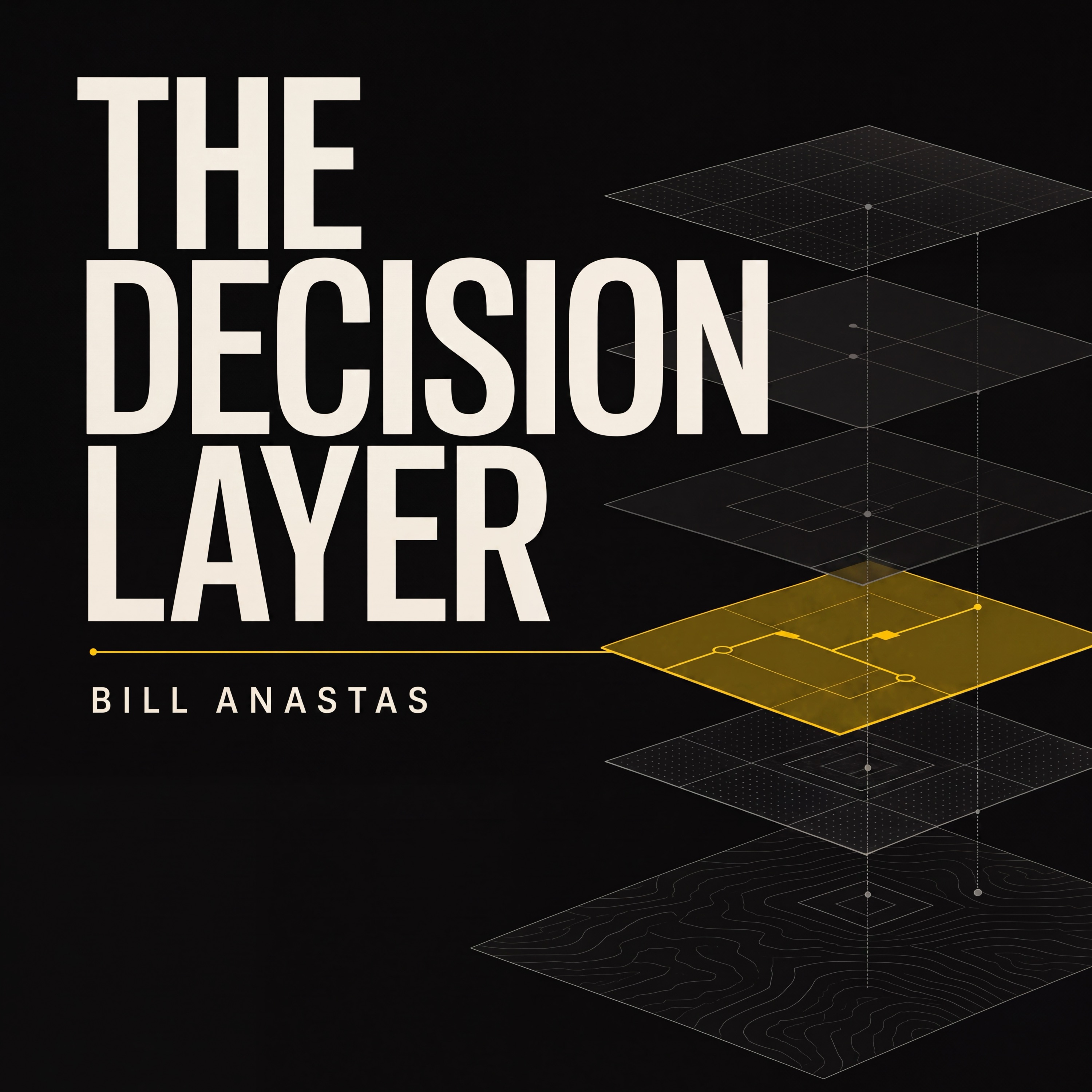
Bill Anastas
The Decision Layer
The layer above tools, meetings, models, options, and intentions: where judgment decides what survives contact with reality.
Autor
Bill Anastas
Categoría
Web del podcast
Último episodio
10 de jul. de 2026
¿Dónde escuchar?
Podcasts en la app Replaio Radio Muy prontoLos podcasts llegarán muy pronto a la app. Instálala ahora y sé el primero en descubrir una forma totalmente nueva de vivir los podcasts
 Instálala gratis
Android 5 M+ de descargas · valoración de 4,8
iOS muy pronto
Instálala gratis
Android 5 M+ de descargas · valoración de 4,8
iOS muy pronto
Episodios
A Decision Is Not Real Until Something Dies 10.07.2026 12:12
Episode 5 of The Decision Layer is about the difference between agreement and consequence, and why a recommendation isn't real until the team accepts what it has to kill.
Notes Are Often Disguised Anxiety 03.07.2026 11:03
Episode 4 of The Decision Layer is about learning to hear the pressure underneath a note, so the work can answer the real problem instead of just obeying the visible instruction.
The Work Does Not Care What You Meant 26.06.2026 11:28
Episode 3 of The Decision Layer is about why intent is private and the work is public: production begins when the room stops defending what it meant and starts dealing with what the artifact actually says.
The Smart Room Problem 18.06.2026 10:27
Episode 2 of The Decision Layer is about what happens when smart groups optimize for performance instead of judgment, and when intelligence becomes atmosphere instead of consequence.
Production Is the Art of Killing Almost-Good Options 13.06.2026 10:39
The first episode of The Decision Layer is about the production judgment nobody gives enough credit: killing plausible, polished, almost-good options until the work can survive contact with reality.
Podcasts similares







Escucha el podcast The Decision Layer en Replaio
Radio y podcasts en una sola app - gratis y sin registro. Instálala hoy y no te pierdas el estreno
Replaio no es editor de podcasts; los nombres de los programas, las portadas y el audio pertenecen a sus autores y se distribuyen a través de canales RSS públicos