Paul Hesse
The Chinese Revolution
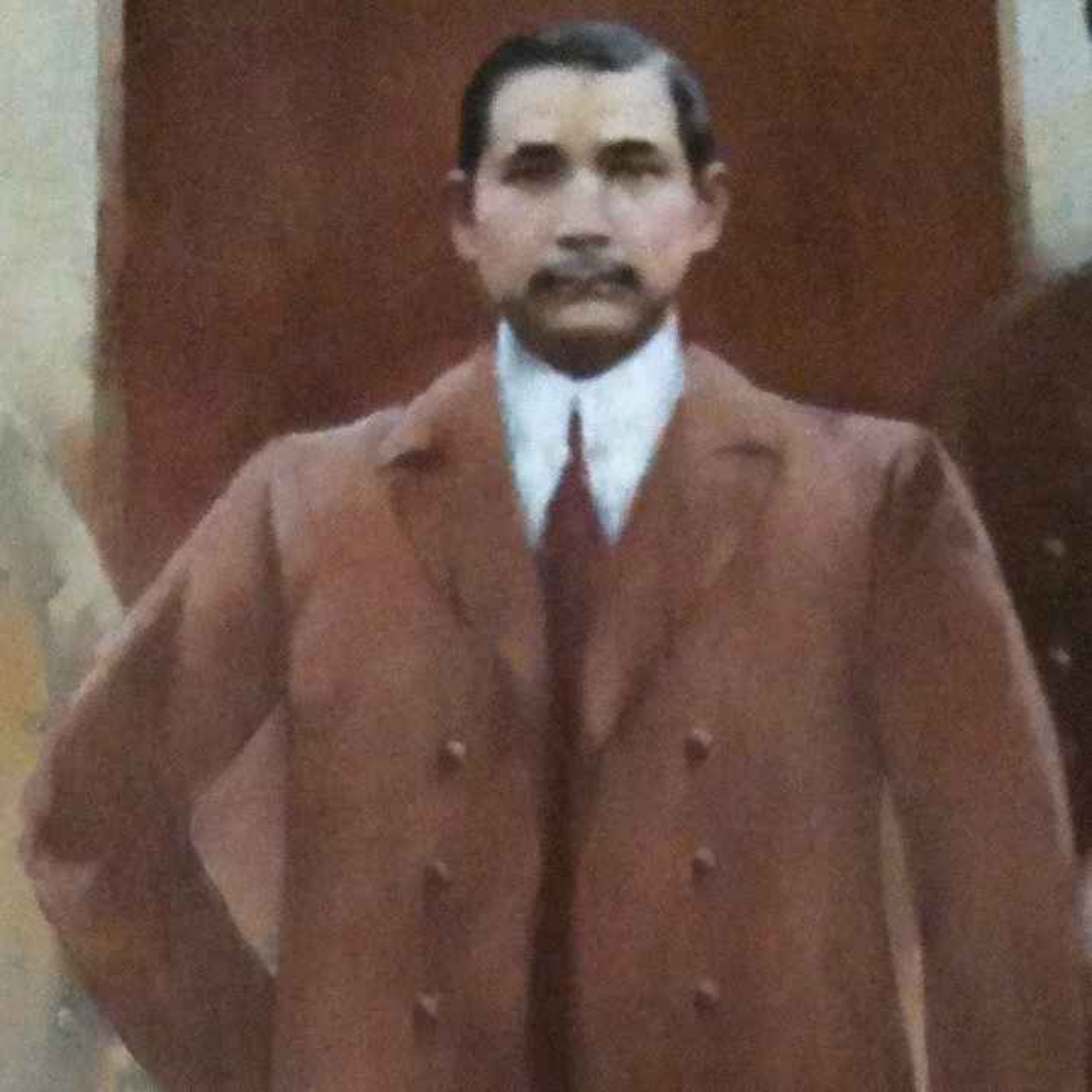
The history of 19th century and 20th century China, leading up to the Chinese Revolutions, the Republic of China and then the People's Republic of China. This podcast was inspired by Mike Duncan's Revolutions. This podcast follows him by telling the stories leading to the Chinese Revolutions. The episodes cover the Opium Wars, Taiping Rebellion, foreign treaties and concessions bringing trade and Christianity to China, the Boxer Rebellion, China's 1911 Revolution, the Warlord Period, the KMT and the rise of the Communist Party of China. The Chinese United Fronts are discussed. Personalities li...
No dejes de visitar la web del podcast y apoyar a su creador: chineserevolution.substack.com
Autor
Paul Hesse
Categoría
Web del podcast
Último episodio
30 de jun. de 2024
¿Dónde escuchar?
Podcasts en la app Replaio Radio Muy prontoLos podcasts llegarán muy pronto a la app. Instálala ahora y sé el primero en descubrir una forma totalmente nueva de vivir los podcasts
 Instálala gratis
Android casi 10 M de descargas · valoración de 4,8
iOS muy pronto
Instálala gratis
Android casi 10 M de descargas · valoración de 4,8
iOS muy pronto
Episodios
The Wang Jingwei Regime: A Puppet Regime in Nanjing 30.06.2024 28:19
In 1938, after the Battle of Wuhan, Wang Jingwei left Chongqing and the Republic of China team in Chongqing for Hanoi. He negotiated with Japanese officials and eventually set up a puppet regime know as the Wang Jingwei Regime and also as the Reorganized National Government of the Republic of China. It was almost totally under Japanese domination, with little autonomy. Wang Jingwei's background, i...
Living Under Japanese Occupation 27.05.2024 29:20
Japan controlled Taiwan as a colony from 1895 to 1945. During the Second Sino-Japanese War, Chinese language education and publications stopped and the Imperial Subject Movement tried to Japanize residents of Taiwan. The Baojia system was helpful in controlling the locals and confiscating grain during the war. The Taiwanese were mobilized to support the Japanese War Effort and experienced conscrip...
The Brilliance of Chairman Mao 07.04.2024 20:02
By the early 1940s, the Communists in Yan’an were feeling relatively secure. The Japanese advance in north China had not reached that area. The Sino-Japanese War and the United Front meant that Chiang Kai-shek’s main concern had been Japan and not the Communist Party. The Nationalist Government in China even funded the Communists in Yan’an. Thousands of recruits flocked to Yan'an. C...
Hope and the Second United Front in Wuhan 03.03.2024 26:11
For ten months in 1938, Hankou in Wuhan was the center of China's Second United Front and defense against the Japanese invasion. Artistic expression, political parties and free speech all blossomed. Neither the KMT nor the Communist Party fully controlled the city and a variety of generals, thinkers and artists came together to defend against Japanese aggression. Wuhan was under the control of Gen...
The National Palace Museum Treasures During the Second Sino Japanese War 12.02.2024 55:21
The treasures of the National Palace Museum, originally the Forbidden City, followed China's path. They escaped the invading Japanese by leaving Beijing, first for Shanghai, then Nanjing and then followed southern, central and northern routes to Sichuan and safety. The Chinese government followed a similar path, as did countless Chinese individuals and families. Japanese bombers followed these ref...
The Beginning of the Second Sino-Japanese War and the Nanjing Massacre 15.01.2024 25:23
On July 7, 1937, the Second Sino-Japanese War and World War II began with the Marco Polo Bridge Incident. It is also known as the Lugou Bridge Incident. Within days of the small skirmish with 100 Chinese garrison troops, the Japanese had brought in 180,000 troops. After that, the fighting between the Chinese and the Japanese did not stop until 1945. Japan then attacked Shanghai. Nationalist troops...
Chiang Kai Shek is Kidnapped 07.01.2024 16:23
After the Long March, the Chinese Communists were mostly in northern Shaanxi, wanting a breather. Japan had continued its aggression in China after it set up the puppet state of Manchukuo under Emperor Pu Yi. It manufactured incident after incident and had expanded its army’s reach into northern and northeast China. It was trying to influence Inner Mongolia and Hebei, around Beijin...
The Long March 25.12.2023 41:44
Zhou Enlai planned in secret the details of the Chinese Communist's escape from the encirclement of the Central Soviet. He identified a Guangdong warlord who preferred to save his troops rather than fight the Red Army. The First Red Army was able to pass through a number of blockhouses, before reaching the last of Chiang Kai-shek's fortifications near the Xiang River and suffering major casualties...
Encircling the Chinese Soviet Republic 10.12.2023 23:35
Mao Zedong had been chosen as President of the Chinese Soviet Republic, but he never controlled its Red Army. Wang Ming and the 28 Bolsheviks had more control, including over land policy and preparations to defend against the Fifth Encirclement Campaign. On land, the Communist Party of China officials didn't want land redistribution to result in a countryside of middle peasants holding private pro...
Japan Attacks Manchuria and Shanghai 04.12.2023 22:37
In September 1931, junior officer's of Japan's Kwantung Army in Manchuria set off explosives to make it look like a Chinese attack on Japanese interests along the South Manchuria Railway. This is often called the Mukden Incident or named after the nearby Liutiao Lake. The Kwantung Army then attacked Zhang Xueliang's nearby garrison and, with Japanese reinforcements, moved into the rest of Manchuri...
Conflict Among the Communists 27.11.2023 41:26
Mao had long desired revolution to peace. Even as a student, he wrote of his desire for the destruction of the old universe. Thanks to his teacher Yang Changji, he met early leaders of the Communist Party, got a job as a junior librarian in Beijing and met his second wife. Yang Kaihui fell deeply in love with Mao and stayed loyal to him, even after Mao left her and took a new wife. She preferred t...
Chiang Kai-shek's Strong-Arm Tactics 16.11.2023 33:14
Chiang Kai-shek used strong-armed tactics to fundraise for his army and government. Kidnapping, ransoms and execution were part of his tactics. He allied with the Green Gang of Shanghai, as did the French authorities. Shanghai businessmen were kidnapped and held for ransom unless they bought Nanjing's bonds during the Northern Expedition. T.V. Soong found a better way to sell Chinese bonds. He inc...
The People's Liberation Army is Founded 06.11.2023 23:06
After the Northern Expedition, the Guomindang (KMT) ejected Communists from the Nationalist Party. The Communist Party of China had no army. Zhou Enlai had inserted Communists into the Nationalists' Army and the Nanchang Uprising was a coup planned to carve a Red Army out from the Guomindang's troops. It succeeded and they briefly formed a Revolutionary Committee in Nanchang and He Long took comma...
The War of the Central Plains 02.11.2023 24:17
Chiang Kai-shek (Jiang Jieshi) wanted to shrink the Chinese armies following the Northern Expedition. However, the warlords wouldn't agree without a fight. The result was the War of the Central Plains when Chiang defeated the warlords who had helped him win the Northern Expedition. One by one and then as a group they resisted his efforts to assert Nanjing's control over the provincial and regional...
The Fallout from the Northern Expedition 22.10.2023 22:58
Zhang Zuolin paid for his defeat by the Northern Expedition with his life. Japan assassinated their former Manchurian ally by detonating a bomb as his train passed. Manchuria was becoming chaotic as refugees arrived fleeing battles and famine in Shandong. Other former warlords also died as family members of their victims took revenge. The Nationalists suspended the Constitution and decreed that Ch...
The Northern Expedition 15.10.2023 35:49
The Nationalists' Northern Expedition began with doubts by their Communist allies. But it was a military success and quickly Henan and then Hebei provinces were captured. Mikhail Borodin then wanted the armies to move north along the Hankou-Beijing railway line. Instead, Chiang Kai-shek (Jiang Jieshi) preferred to follow the Yangzi River downstream and take the rich provinces controlled by the war...
The Chinese Situation At The Beginning Of The Nationalists’ Northern Expedition 09.10.2023 17:40
In the lead up to Chiang Kai-shek's Northern Expedition, both the KMT's Hu Hanmin and the Christian General Feng Yuxiang were in Moscow. Hu sought admission by the KMT to the Comintern as China's representative. Feng was seeking weapons and engineers for his National People's Army. Both returned deeply skeptical about the Soviet Union and its intentions towards China. The USSR wanted an alliance w...
Succession Battles in the KMT 04.10.2023 16:26
Two funerals were held for Sun Yat-sen on the same day. One involved Christian rites by his family, to prove that Sun was not a Bolshevik. The other was organized by the Communist Party and involved the Soviet Ambassador and a loudspeaker playing Sun's message about nationalism. Already there was a fight to claim Sun's legacy. Sun's widow, Song Qingling, was from a family which had all studied in...
Organizing 01.10.2023 21:33
The Communist Party of China and the KMT both needed organizing. The KMT and Sun Yat-sen were overly reliant on southern warlords. When they turned on Sun, that made the KMT homeless and risked the life of Sun and those close to him, like his wife Song Qingling. She suffered a miscarriage when Chen Jiongming attacked their house in Guangzhou. Never again would Madame Sun Yat-sen be able to bear ch...
China and Asia in 1921 24.09.2023 18:50
A detailed look at China's internal divisions and its neighbours in 1921 when its Communist Party was founded. Image; Map of China and Asia in 1921 Created for the Chinese Revolution Podcast and Chinese Revolution YouTube series. Hosted on Acast. See acast.com/privacy for more information.
How to Grow the New Communist Party of China? 10.09.2023 16:48
The new Communist Party of China faced decisions on how to grow. Henk Sneevliet, representative of the Communist International (Comintern) to the Far East recommended allying with Sun Yat-sen and the KMT and forming a United Front. Communist Party members could join the KMT as individuals while the Communist Party criticized it and organized the workers and peasants for revolution. Henk faced resi...
Atheism in China 01.09.2023 33:33
A discussion with Anthony Vernon about atheism in China, both before and since Communism. The distinction between Chinese and foreign religions is featured, as well as how the Chinese Communist Party has changed its policies towards religions over time. Image: "Karl Marx, painted portrait _DDC2742" by Abode of Chaos is licensed under CC BY 2.0 You save and you support this podcast by using those l...
Episode 40 - The Founding of the Communist Party of China 28.08.2023 17:49
Students were the first Chinese to pay attention to the Russian Revolution and the new Communist government there. The Communist International (or Comintern) founded in 1919, also actively promoted and sponsored revolution abroad. Gregory Voitinsky arrived in 1920 as part of the Soviet efforts in China. Chinese students in France (like Zhou Enlai) and professors at Peking University were quic...
Sun Yat-sen's Three Principles of the People 27.08.2023 14:18
Sun Yat-sen's Three Principles of the People inspired the KMT party and were implemented after his death in 1925. They also facilitated cooperation between the KMT and the Communist Party of China during the periods of a United Front. This episode discusses those Three Principles as a prelude to a look at the founding of the Chinese Communist Party. You can support this show through Buy me a coffe...
Update- End of August 2023 24.08.2023 1:51
This podcast update looks forward to the beginning of the Chinese Communist Party, its United Front with the KMT, then the death of Sun Yat-sen, who is followed by Chiang Kai-shek. You’ll hear stories of the KMT’s successful Northern Expedition before turning its knives on the Communists and the beginning of the fighting between those two sides. There will also be another context episode with a gu...
Podcasts similares







Escucha el podcast The Chinese Revolution en Replaio
Radio y podcasts en una sola app - gratis y sin registro. Instálala hoy y no te pierdas el estreno
Replaio no es editor de podcasts; los nombres de los programas, las portadas y el audio pertenecen a sus autores y se distribuyen a través de canales RSS públicos