
Tablet Magazine
Take One Daf Yomi
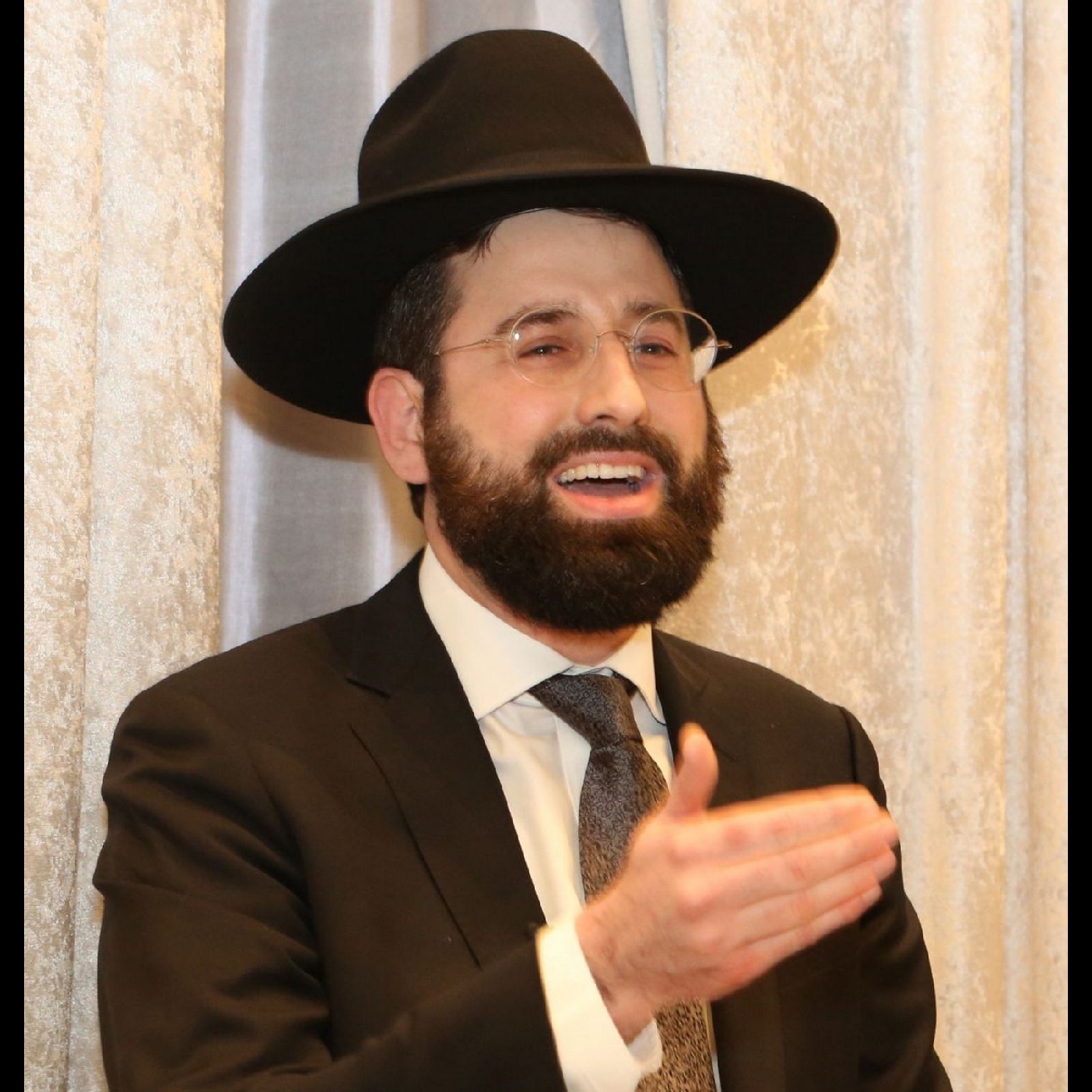
As Jews around the world engage in a seven-and-a-half year cycle of Daf Yomi, reading the entire Talmud one page per day, Tablet Magazine's new podcast, Take One, will offer a brief and evocative daily read of the daf, in just about 10 minutes. New episodes will be released daily Monday through Friday.
No dejes de visitar la web del podcast y apoyar a su creador: www.tabletmag.com
Autor
Tablet Magazine
Categoría
Web del podcast
Último episodio
21 de oct. de 2026
¿Dónde escuchar?
Podcasts en la app Replaio Radio Muy prontoLos podcasts llegarán muy pronto a la app. Instálala ahora y sé el primero en descubrir una forma totalmente nueva de vivir los podcasts
 Instálala gratis
Android casi 10 M de descargas · valoración de 4,8
iOS muy pronto
Episodios
Bekhorot 33 - More Than Meats the Eye 21.10.2026 8:49
On today’s page, Bekhorot 33, the rabbis consider the value of meat from animals that can no longer be sacrificed. Liel welcomes producer Josh Kross for a conversation about the difference between how food looks and how it tastes, with detours through molecular gastronomy, Montreal poutine, and good old-fashioned cholent. What can a messy plate of delicious food teach us about recognizing the true...
Bekhorot 32 - The Limits of Privilege 20.10.2026 5:43
On today’s page, Bekhorot 32, Beit Shammai and Beit Hillel disagree about who may eat the meat of a firstborn animal that develops a blemish and cannot be sacrificed. Their debate raises a much bigger question about the privileges we grant those who serve the public—and the limits we place on those privileges. What can the laws governing priestly gifts teach us about keeping public servants from t...
Bekhorot 30 and 31 - Keeping the Faith 19.10.2026 6:21
On today’s pages, Bekhorot 30 and 31, the rabbis consider what happens when someone once trusted to observe Jewish law begins cutting corners. From a dishonest butcher to a woman whose second marriage threatens to undermine her religious commitments, Liel explores how easily our standards can shift when our circumstances change. How do we make sure that life's compromises don't become compromises...
Bekhorot 28 and 29 - Don't Quit Your Day Job 16.10.2026 6:40
On today’s pages, Bekhorot 28 and 29, the rabbis ask whether judges should be paid for their rulings, leading to a much bigger question: Should anyone be allowed to make money teaching Torah? Liel turns to Maimonides, whose uncompromising answer challenges the very idea of making a living from religious scholarship. What can one of Judaism's greatest thinkers teach us about the relationship betwee...
Bekhorot 27 - The Long-Distance Relationship 15.10.2026 7:01
On today’s page, Bekhorot 27, the rabbis grapple with a question that remains surprisingly relevant: How should Jews living outside Israel participate in religious obligations rooted in the Holy Land? Liel explores how this ancient debate echoes today's arguments over what Israeli and American Jews owe one another—and whether every disagreement really needs a resolution. Can Jewish unity survive w...
Bekhorot 26 - What's the Rush? 14.10.2026 6:05
On today’s page, Bekhorot 26, the Mishnah instructs us to wait before giving a firstborn animal to the priest, allowing it time to grow and mature. Liel explores how this seemingly minor requirement protects the dignity of everyone involved and transforms a routine obligation into an opportunity for spiritual reflection. Why might the time we spend preparing to fulfill a mitzvah be just as importa...
Bekhorot 25 - First Among Equals 13.10.2026 31:39
On today’s page, Bekhorot 25, we consider the importance of being first—not just among newborn animals, but among the people making decisions that shape history. Liel shares a conversation from Tablet's The Barbarians with Wall Street Journal editorial board member Elliott Kaufman, whose new book, In the War Room: The Inside Story of Israel's Fight Against Hamas and the Iranian Axis, takes readers...
Bekhorot 23 and 24 - Waiting for Elijah 12.10.2026 5:23
On today’s pages, Bekhorot 23 and 24, a strange case involving a sheep and a pig-like offspring leaves the rabbis facing a question they cannot definitively answer. Liel explores the meaning of teiku, the tradition that Elijah the Prophet will someday resolve our most stubborn disputes, and the remarkable story of why Elijah visits every Passover Seder and brit milah. What makes Elijah the perfect...
Bekhorot 21 and 22 - Shepherds, not Sheep 09.10.2026 5:48
On today’s pages, Bekhorot 21 and 22, the rabbis discuss how to determine whether an animal has previously given birth, eventually concluding that the answer requires a knowledgeable shepherd. Liel wonders what happened to that kind of practical wisdom in a world where we increasingly rely on technology we know how to use but don't really understand. Are we still masters of the tools around us, or...
Bekhorot 20 - With Love and Correction 08.10.2026 6:03
On today’s page, Bekhorot 20, Rabbi Yehoshua wastes no time correcting Rabbi Yishmael when his former student gets a point of halacha wrong. But years before that rebuke, Rabbi Yehoshua had encountered the young prodigy imprisoned in Rome, recognized his extraordinary potential, and paid a fortune to free him. What does it mean to care enough about a student to both invest everything in him and te...
Bekhorot 19 - The Mystery of the Headless Cow 07.10.2026 6:21
On today’s page, Bekhorot 19, the rabbis discuss the rite of the Egla Arufa, or the decapitated calf, sacrificed whenever a stranger was murdered by an unknown assailant as a way to shock us all into understanding that we are responsible for each other. Still, why such a brutal ritual? And why a calf? Listen and find out. Learn more about your ad choices. Visit megaphone.fm/adchoices
Bekhorot 18 - Doubles Trouble 06.10.2026 6:25
On today’s page, Bekhorot 18, a ewe gives birth to two males whose heads appear at precisely the same moment, leaving the rabbis with a problem: Which one is actually the firstborn? What follows is a wonderfully intricate argument about stronger lambs, weaker lambs, competing claims, and the burden of proof. What can two newborn lambs teach us about the extraordinary precision of Talmudic reasonin...
Bekhorot 16 and 17 - Same as it Ever Was? 05.10.2026 7:00
On today’s pages, Bekhorot 16 and 17, the rabbis ask what happens when an animal no longer looks the way its species is supposed to look. Centuries of breeding and natural change make that ancient question surprisingly modern, with implications for everything from wool to matzah. What does Jewish law consider meaningful change, and what can safely be chalked up to nature taking its course? Listen...
Bekhorot 14 and 15 - Not in My Backyard 02.10.2026 7:01
On today’s pages, Bekhorot 14 and 15, a discussion of private altars raises a surprisingly fundamental question: Why should sacrifice be confined to the Temple in Jerusalem? From backyard altars to IMAX theaters, Liel explores why the most powerful experiences sometimes require a special place—and what happens when the sacred becomes too familiar. Why might getting closer to holiness require keepi...
Bekhorot 13 - Beast of Burden 01.10.2026 6:36
On today’s page, Bekhorot 13, the rabbis ask why the humble donkey, alone among non-kosher animals, has a firstborn that must be redeemed. Rabbi Eliezer Melamed offers three answers involving gratitude, holiness, and the surprising spiritual potential of the material world. What can a lowly beast of burden teach us about finding the sacred in even the most ordinary things? Listen and find out. Lea...
Bekhorot 12 - A Koy-Named Ewe 30.09.2026 8:02
On today’s page, Bekhorot 12, the rabbis wrestle with sheep-goat hybrids and the mysterious koy, an animal so difficult to classify that the sages couldn’t even agree on what it was. With some help from Rabbi Adin Steinsaltz, we discover that this strange creature may have a surprisingly familiar relative. What can a zoological mystery teach us about making sense of the unfamiliar? Listen and find...
Bekhorot 11 - Mind The Gap 29.09.2026 10:57
On today’s episode, we set aside Bekhorot 11 to celebrate Sukkot with Professor Richard Hidary and his new book, Discovering the Jewish Holidays: Eight Talmudic Readings. Drawing on Michelangelo, Moses, the Ark of the Covenant, and one very short sukkah, Hidary explores the mysterious boundary separating Heaven and Earth. Can we ever reach across the gap and encounter the Divine? Listen and find o...
Bekhorot 9 and 10 - Are You Smarter Than 60 Greek Sages? Pt. 2 28.09.2026 8:33
On today’s pages, Bekhorot 9 and 10, Rabbi Yehoshua ben Chananya completes his astonishing mission against the 60 sages of Athens, proving that winning an argument sometimes requires considerably more than having the better argument. Presidential historian Tevi Troy joins us to explain why the story reminds him of Richard Nixon facing down Nikita Khrushchev in a model American kitchen in Moscow. W...
Bekhorot 7 and 8 - Are You Smarter Than 60 Greek Sages? Pt. 1 25.09.2026 9:19
On today’s pages, Bekhorot 7 and 8, the Roman emperor challenges Rabbi Yehoshua ben Chananya to prove that he can outsmart the legendary sages of Athens. What follows is an extraordinary battle of wits involving riddles, disguises, impossible tasks, and one very clever pair of backwards sandals. Can Rabbi Yehoshua beat 60 of the ancient world’s wisest men at their own game? Listen and find out—or...
Bekhorot 6 - Lost in Translation 24.09.2026 7:18
On today’s page, Bekhorot 6, the rabbis wrestle with et, a tiny, ubiquitous Hebrew word that has no English equivalent, and with a sage who built an entire method of interpretation around it before deciding he had gone too far. From Proust to Pope to Finnegans Wake, Liel explores what happens when even our greatest writers and readers reach the limits of language. Can knowing when to stop searchin...
Bekhorot 5 - Which Came First? 23.09.2026 7:24
On today’s page, Bekhorot 5, Rabbi Yochanan and Reish Lakish disagree about when the Israelites began sanctifying their firstborn: before entering the Promised Land or only after they arrived. Their dispute raises a much bigger question about how we approach the things we hope to accomplish. Do we wait until everything is in place before getting to work, or can doing the work be what gets us there...
Bekhorot 2,3, and 4 - Parenthood: The Firstborn 22.09.2026 8:49
On today’s pages, Bekhorot 2, 3, and 4, we begin a new tractate by learning about the special status of firstborn animals. Rabbi David Bashevkin joins us to ask why Judaism cares so much about who comes first—and what the arrival of a firstborn changes for everyone who follows. What can Steve Martin teach us about becoming responsible for someone other than ourselves? Listen and find out. Learn mo...
Chullin 141 and 142 - The End 18.09.2026 7:59
On today’s pages, Chullin 141 and 142, we reach the end of Tractate Chullin and look back at what months of studying meat, kashrut, and the intricacies of eating have taught us. Rabbi Dovid Bashevkin joins us to explain why our most basic need for nourishment can become an expression of Jewish identity—and a reminder that we depend on something beyond ourselves. What does keeping kosher ultimately...
Chullin 140 - Murder Most Fowl 17.09.2026 6:44
On today’s page, Chullin 140, the rabbis encounter a bird that has killed a human being—and must now be brought to justice. Its strange case takes us from the Talmud to Alfred Hitchcock’s The Birds and the bizarre real-life avian attack that helped inspire it. What can killer birds teach us about confronting our own most dangerous instincts? Listen and find out. Learn more about your ad choices. V...
Chullin 139 — A Mitzvah in Search of a Problem 16.09.2026 6:56
On today’s page, Chullin 139, yesterday’s mother bird returns with a thornier question: If sending her away is a mitzvah, should we actually go looking for nests just so we can perform it? Generations of rabbis disagree, turning one unusual commandment into a meditation on what it means to pursue a holy life. Are mitzvot opportunities to seek out, or instructions for the moments life puts in our p...
Podcasts similares







Escucha el podcast Take One Daf Yomi en Replaio
Radio y podcasts en una sola app - gratis y sin registro. Instálala hoy y no te pierdas el estreno
Replaio no es editor de podcasts; los nombres de los programas, las portadas y el audio pertenecen a sus autores y se distribuyen a través de canales RSS públicos
