Megan Thomas
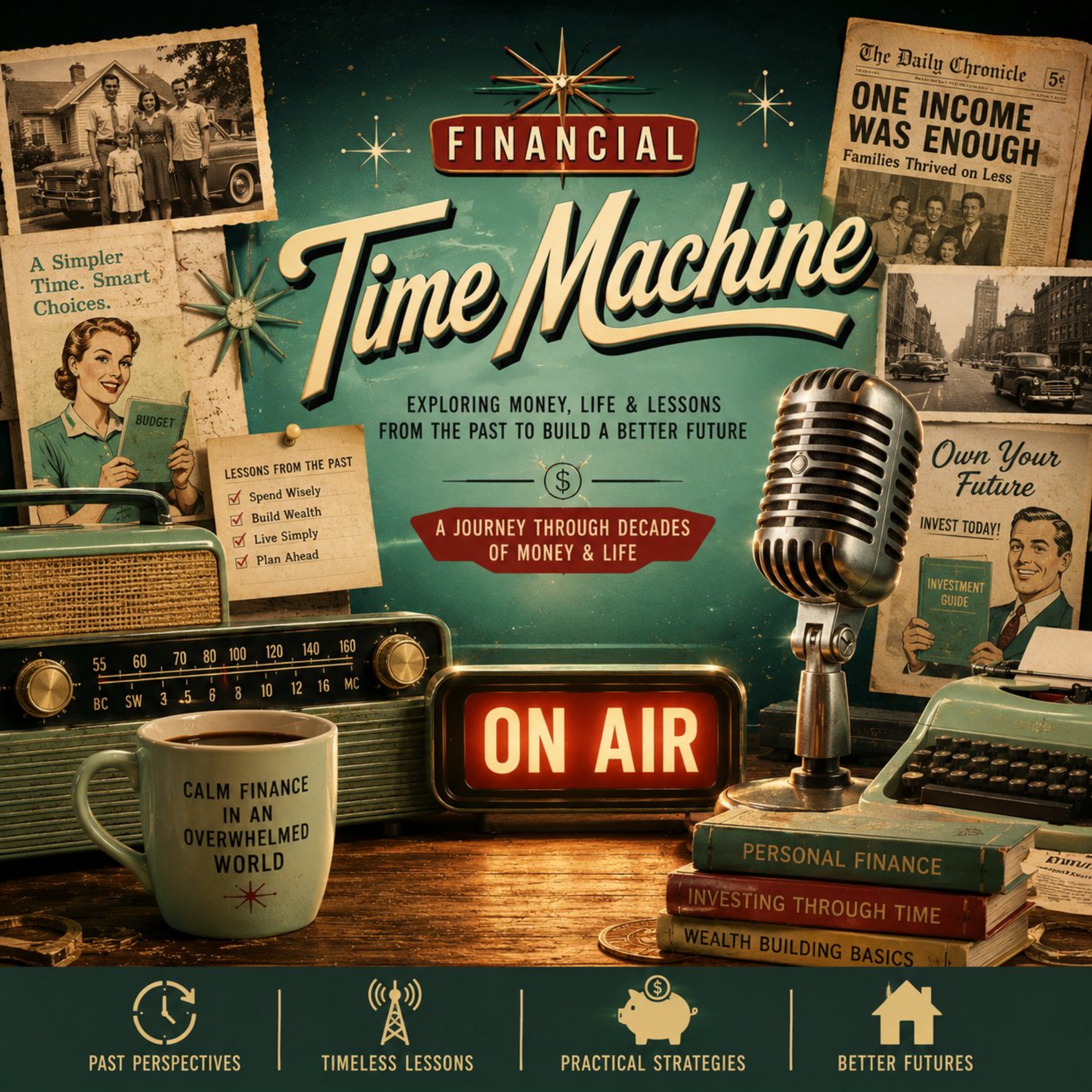
Financial Time Machine
Financial Time Machine is a nostalgic journey through the money, life, and lessons of the past. Each episode explores how previous generations built homes, raised families, handled money, and found happiness in simpler times — without the overwhelm of modern life. From vintage budgeting habits and forgotten financial wisdom to old advertisements, cultural shifts, and everyday life across the decades, this podcast blends storytelling, nostalgia, and practical perspective for today’s world. Whether you miss the charm of mid-century America, love retro culture, or just want calmer, more intention...
No dejes de visitar la web del podcast y apoyar a su creador: cdn.podpilot.org
Autor
Megan Thomas
Categoría
Web del podcast
Último episodio
28 de oct. de 2026
¿Dónde escuchar?
Podcasts en la app Replaio Radio Muy prontoLos podcasts llegarán muy pronto a la app. Instálala ahora y sé el primero en descubrir una forma totalmente nueva de vivir los podcasts
 Instálala gratis
Android casi 10 M de descargas · valoración de 4,8
iOS muy pronto
Episodios
The Layaway Ledger: How Putting Things Aside Taught Patience, Planning, and the Joy of Finally Paying It Off 28.10.2026 7:25
In this episode of Financial Time Machine, we climb into the time capsule and land in the aisles of a mid-century department store, where a small sign reading 'Layaway' changed the way families bought everything from winter coats to washing machines. Before credit cards normalized instant ownership, layaway was the patient middle path—you paid a little each week, the store held your item in the ba...
The Drive-In Economy: How the Drive-In Movie Theater Taught Families About Money, Leisure, and Togetherness 27.10.2026 9:58
Step back to a summer evening in 1965, when the sky turned violet and the flicker of a massive screen lit up rows of parked cars. In this episode, we explore the rise and fall of the drive-in movie theater—not just as a nostalgic pastime, but as a fascinating window into American family economics. We'll uncover how a single admission price bought a double feature, a playground for the kids, a carl...
The Family Ledger: How Grandparents Tracked Every Penny in a Notebook 26.10.2026 8:09
Step back to a time when the family budget lived not in an app but in a worn notebook kept in the kitchen drawer, next to the flour and the telephone. In this episode, we explore the lost art of the family ledger—the handwritten columns, the careful pencil marks, the monthly ritual of balancing income against expenses, and the quiet pride of seeing savings grow line by line. From the Depression-er...
The Sunday Paper: How the Weekly Newspaper Built Trust, Habits, and Household Budgets 23.10.2026 12:48
Step back to a time when Sunday morning meant the thud of a rolled-up newspaper on the porch, the smell of coffee, and the quiet rustle of pages spread across the kitchen table. This episode explores how the Sunday paper—with its thick comics section, grocery coupons, classified ads, and community columns—shaped American spending habits, family routines, and even financial literacy. We'll walk thr...
The Icebox Era: How the Cold Pantry Shaped Kitchens, Budgets, and Family Rhythm 22.10.2026 8:54
Step back to a time when the kitchen's heartbeat was a wooden box cooled by a dripping block of ice. This episode of Financial Time Machine explores the era of the icebox—roughly the 1900s through the 1940s—when every meal, grocery run, and leftover depended on a daily dance with melting ice and careful planning. We'll wander through the practical economics of the iceman's route, the cost of a 25-...
The Sunday Sauce Economy: How One Weekly Meal Fed the Family Budget 21.10.2026 6:40
This episode of Financial Time Machine transports listeners to the mid-century American kitchen, where the Sunday roast wasn't just a meal—it was a financial strategy, a social ritual, and a weekly anchor for family life. We explore how previous generations planned, budgeted, and stretched ingredients across an entire week, transforming leftovers into new meals and turning the kitchen into the hea...
The Milkman's Ledger: How Home Delivery Taught America the Art of Daily Trust 20.10.2026 8:17
In this episode of Financial Time Machine, we step back to the era when the clink of glass bottles on the porch was the sound of a neighborhood waking up. The milkman wasn't just delivering dairy; he was the heartbeat of a local economy built on trust, routine, and small daily transactions. We explore how families managed weekly milk bills, adjusted orders with handwritten notes, and relied on a m...
Fix It and Keep It: The Lost Economy of Repair 26.06.2026 9:09
We used to call a repairman before we called a store. This episode visits the culture of repair that kept mid‑century American households humming: corner appliance shops, instruction manuals at the kitchen table, a shoe cobbler who knew your family by name, and trade skills taught in high schools and back porches. I tell stories of pennies saved by mending, of warranties that meant something, and...
Sew & Save: The Home Sewing Economy 25.06.2026 7:04
In this episode Megan Thomas folds listeners into the soft clack of a treadle and the hush of a mid-century living room to tell the story of home sewing as an economic habit. We trace how patterns from Sears, fabric remnants, and neighborhood sewing circles kept family budgets balanced, turned wardrobe repairs into ritual, and created skills passed from mother to child. This is not a how-to; it’s...
Neighbors' Bank: The Quiet World of Credit Unions, Rotating Savings, and Community Lending 24.06.2026 8:59
In this calm, story‑forward episode Megan Thomas explores the overlooked economy of community finance: credit unions, building societies, and informal rotating savings clubs (from local 'pardner' circles to immigrant 'susu' networks). We’ll visit small-town credit unions and kitchen‑table circles where neighbors pooled paychecks to buy a stove, pay a medical bill, or cover school costs. Through hi...
Scrip & Storefronts: The Private Currency That Bought a Town 23.06.2026 10:54
On a Saturday night in a coal town, the grocer slid a small cardboard token across the counter and a family’s week of groceries changed hands. In this episode Megan Thomas pulls back the curtain on company scrip and the ubiquitous company store—the private currency that ran whole communities, shaped household budgets, and blurred the line between wages and credit. We trace origins from mining and...
Green Stamps & Stamp Books: The Quiet Currency of Mid‑Century America 22.06.2026 8:29
Megan Thomas guides listeners through the peculiar economy of trading stamps: colorful adhesive proofs collected at the grocery counter, tucked into leather stamp books, and later traded for toasters, bicycles, or a family set of dishes. This episode explains where trading stamps came from and how they worked as a marketing tool and a community ritual. We linger on the tactile pleasures—the slow a...
Letters to the Bank: How the Post Office Became America's Financial Lifeline 19.06.2026 9:17
When we think of the post office today, we picture parcels and stamps. But for much of the 20th century the local post office was also a place to cash a check, buy a money order, open a postal savings account, or tuck away a war bond for your child. In this episode Megan Thomas tells the quiet story of how postal financial services knit together small towns, bridged rural banking gaps, and built p...
Layaway & the Long Wait: How Installment Plans Shaped Mid‑Century Consumer Life 18.06.2026 8:56
In this episode Megan Thomas steps into the quiet ritual of waiting: layaway slips tucked in wallets, store clerks stamping promises, and families budgeting around payment plans to bring home a refrigerator, radio, or living-room set. We trace the rise of installment credit, layaway counters at five-and-dime stores and department stores, and the social rhythms those practices created—neighborhood...
The Balancing Act: Checkbooks, Passbooks, and the Ritual of Money Before Screens 17.06.2026 8:16
There was a time when paying the electric bill involved a fountain pen, a carbon copy, and an evening at the kitchen table. In this episode Megan Thomas traces the everyday choreography of pre-digital money: the checkbook register, bank passbook updates, waiting for the mail, and the nightly ritual of reconciling balances. Through textured storytelling we explore how those small practices shaped s...
Mortgage-Burning Nights: Why Paying Off the House Was a Celebration 16.06.2026 8:15
In this episode Megan Thomas traces the intimate, often celebratory world of mortgage payoff rituals from the 1940s through the 1970s. We’ll step into living rooms where neighbors gathered for a mortgage-burning party, listen for the subtle financial practices that made early payoff possible, and unpack the policies and habits — GI Bill loans, fixed-rate mortgages, dual incomes, thrifty household...
Rationed Abundance: How Wartime Ration Books Taught Families to Stretch a Dollar and Find Joy 15.06.2026 8:21
When inked stamps and numbered coupons decided what you ate, wore, or drove, American households learned an economy of creativity. This episode travels into middle‑century kitchens and wartime grocery lines to tell the story of ration books, neighborhood swap networks, coupon clipping, and the rituals families used to stretch scarce goods into everyday comfort. Through vivid scenes—mammas arrangin...
Allowance Lessons: Pocket Money, Paper Routes, and Childhood Finance in Mid‑Century America 12.06.2026 8:30
In this 10‑minute episode Megan Thomas guides listeners through the quiet classroom of childhood finance: pocket change, chore-based allowances, paper routes at dawn, lemonade stands on hot sidewalks, and the small jars and stamp books that turned coins into lessons. We’ll explore how families used structured allowances to teach thrift, responsibility, and delayed gratification; how community norm...
Full Tank, Full Life: How Mid‑Century Gas Stations Fueled Family Budgets and Roadside Culture 11.06.2026 6:22
Gas stations were more than pumps and oil cans—they were tiny community hubs, roadside markets, and the engines of mid‑century family life. In this episode Megan Thomas takes us to the neon-lit corners of small towns and highway exits to explore how filling the tank shaped budgets, travel rituals, weekend freedoms, and social habits from the 1940s through the 1970s. We’ll listen to the rhythm of a...
Hand-Me-Down Economy: Thrift, Mending, and Secondhand Life Before Fast Fashion 10.06.2026 7:48
Before landfill aisles and seasonal fast fashion, American households kept wardrobes alive through mending, swapping, church rummage sales, and a culture that prized usefulness over novelty. In this 10-minute monologue Megan Thomas walks listeners through the tactile practices that stretched budgets and knitted communities together: the ritual of patching a knee, the neighborhood swap meet after a...
Christmas Clubs & Rotating Savings: How Mid‑Century America Saved Together 09.06.2026 7:29
In this episode Megan Thomas guides listeners into the quiet world of mid‑century savings rituals: Christmas club accounts at local banks, neighborhood 'savings circles,' and rotating credit arrangements that forced discipline, built trust, and created little seasonal windfalls for families. Through evocative scenes—a bank teller stamping a passbook, women dropping coins into a church jar, neighbo...
When the Lights Came On: How Evening Rituals Shaped Family Budgets 08.06.2026 7:35
Evenings were once the elastic edge of family life: the hour when pay envelopes were opened, supper was served, radio dramas and later prime-time TV set the pace for shopping and conversation, and local shops timed sales to catch commuters. In this 10-minute episode Megan Thomas guides listeners through the unseen economy of the after-work hour—how nightly rhythms shaped consumption, influenced ho...
The Price of Play: How Childhood Entertainment Shaped Family Budgets 05.06.2026 7:41
Children’s play has always been part of the family balance sheet. In this episode Megan Thomas tells a gentle, story‑led history of childhood entertainment from the 1940s through the 1980s — when backyard forts, hand-me-downs, simple store-bought toys, and neighborhood leagues delivered joy without high costs. We’ll paint everyday scenes: a parent repairing a wooden sled, a Saturday toy trade on t...
Home Repair Days: The Do-It-Yourself Economy That Kept Families Afloat 04.06.2026 8:56
In this episode Megan Thomas steps into the cluttered garage light of decades past to explore the quiet economy of home repair. For generations, a broken toaster or a leaky roof was an invitation to learn, tinker, and save—turning basements into classrooms and neighbors into spare-parts librarians. We trace the rise of repair manuals, mail-order replacement parts, traveling repairmen, and the ritu...
The Community Table: How Potlucks, Church Suppers, and Shared Meals Kept Family Budgets Humble 03.06.2026 7:40
In this episode Megan Thomas guides listeners to the long wooden tables of mid‑century America to explore a quietly powerful household economy: the community meal. From church basements and PTA covered‑dish nights to neighborhood block parties and workplace luncheons, shared meals reduced grocery bills, redistributed labor, and created social capital that people could call on in hard times. We’ll...
Podcasts similares








Escucha el podcast Financial Time Machine en Replaio
Radio y podcasts en una sola app - gratis y sin registro. Instálala hoy y no te pierdas el estreno
Replaio no es editor de podcasts; los nombres de los programas, las portadas y el audio pertenecen a sus autores y se distribuyen a través de canales RSS públicos