
South Bahamas Conference of Seventh-day Adventists
Eternal Pages
Enteral Pages is a 30-minute program which seeks to provide deeper thought and conversation into the Seventh-day Adventist Quarterly, along other relevant and related subjects.
Autor
South Bahamas Conference of Seventh-day Adventists
Categoría
Último episodio
28 de mar. de 2025
¿Dónde escuchar?
Podcasts en la app Replaio Radio Muy prontoLos podcasts llegarán muy pronto a la app. Instálala ahora y sé el primero en descubrir una forma totalmente nueva de vivir los podcasts
 Instálala gratis
Android casi 10 M de descargas · valoración de 4,8
iOS muy pronto
Episodios
Love is the Fulfillment of the Law 28.03.2025 30:03
While they were dealing with a problematic member, someone on the church board said to the pastor, “We can’t make decisions based on compassion.” We can’t? The pastor wondered what this person’s understanding of God and of God’s law must have been. Compassion certainly needs to be central in how we deal with people, especially erring ones. Compassion is part and parcel of love, and as Romans 13:8...
Love and Justice: The Two Greatest Commandments 28.03.2025 30:02
Though we have confidence that God will make all things right in the end, it still matters what we, as Christians, do in the here and now. Though there may be many injustices and evils that God will not now eradicate (because of the parameters of the cosmic conflict), this doesn’t mean that we can’t be used to help alleviate whatever suffering and evil we come across, at least to whatever degree p...
What More Could I Have Done 10.03.2025 30:03
Some years ago, an insightful children’s story was printed in Guide magazine. The story focuses on a boy named Denis, an orphan living as a foster child with a family in medieval times. Denis passionately hates the king of his land because, when his parents were sick, the king’s soldiers carried him away, and he never saw them again. Only later did he learn that the king separated them in order to...
Rules of Engagement 07.03.2025 30:01
A powerful narrative that reveals the nature of the cosmic conflict can be found in 1 Kings 18:19–40, Elijah on Mount Carmel, where the Lord exposes the so-called “gods of the nations.” Yet, there is more behind the scenes about these “gods” than that they are mere figments of pagan imagination. Behind the “gods” that the nations surrounding Israel thought they were worshiping was, actually, somet...
The Cosmic Conflict 07.03.2025 30:01
Central to biblical theology is the great controversy between Christ and Satan. Although the idea of a cosmic conflict between God and celestial creatures who have fallen and rebelled against God is a prominent motif of Scripture (Matt. 13:24–30, 37–39; Rev. 12:7–10) and also is prevalent in much of Christian tradition, many Christians have rejected or neglected the whole idea. From a biblical per...
Free Will, Love, and Divine Providence 07.03.2025 30:02
Providence is the term used to describe God’s action in the world. How we think about God’s providence makes a huge difference in how we relate to God, how we relate to others, and how we think about the problem of evil. Christians hold various understandings of divine providence. Some believe that God exercises His power in a way that determines all events to happen just as they do. He even choos...
The Problem of Evil 07.03.2025 29:58
Perhaps the greatest problem facing Christianity is the problem of evil—how to reconcile the fact that God is perfectly good and loving, with the fact of evil in this world. In brief terms, if God is all-good and all-powerful, why is there evil, and so much of it, too? This is not merely an academic problem but something that deeply troubles many people and that keeps some from coming to know and...
God's Love of Justice 07.03.2025 29:59
n the ancient Near East, the “gods” of the nations were not only fickle, immoral, and unpredictable, but they also commanded atrocities, such as child sacrifice. And even then, the pagan masses could not count on their favor, and so they dared not cross their tribal “deities.” According to Deuteronomy 32:17, behind such “gods” were demons (see also 1 Cor. 10:20, 21). And their forms of worship wer...
The Wrath of Divine Love 07.02.2025 29:56
Though God’s compassion is often celebrated, many find the idea of His wrath disturbing. If God is love, they think He should never express wrath. That notion, however, is false. His wrath arises directly from His love. Some claim that the Old Testament God is a God of wrath and that the New Testament God is a God of love. But there is only one God, and He is revealed as the same in both Testament...
God is Passionate and Compassionate 07.02.2025 30:03
Emotions are often viewed as undesirable and to be avoided. For some people, emotions are intrinsically irrational, and thus, the good man or woman would not be described as “emotional.” In some ancient Greek philosophy, the idea of the “rational” man, who is (mostly) either impervious to passions or who rules over his emotions by way of unemotional reason, is prized as the ideal. Unbridled emotio...
To Be Pleasing to God 07.02.2025 30:03
Imagine the following scenario: a five-year-old child comes to his father with a poorly wrapped gift on Father’s Day. Excitedly, he hands the gift to his father. Imagine that the father says, “Son, I do not care about your gift. After all, there is nothing you could give me that would please me. Anything you could give me, I could get for myself, and anything you give to me was either bought with...
Covenantal Love 13.01.2025 30:04
Many have been taught that the Greek word agape refers to a love that is unique to God, while other terms for love, such as phileo, refer to different kinds of love, more deficient than agape. Some claim, too, that agape refers to unilateral love, a love that only gives but never receives, a love entirely independent of human response. However, careful study of divine love throughout Scripture sho...
God Loves Freely 06.01.2025 30:04
Though Peter had denied Jesus three times, just as Jesus had predicted (Matt. 26:34), these denials were not the end of the story. After the Resurrection, Jesus asked Peter, “ ‘Do you love Me more than these?’ ” And Peter replied, “ ‘Yes, Lord; You know that I love You.’ ” And Jesus said, “ ‘Tend My lambs.’ ” Then, Jesus again asked Peter, “ ‘Do you love Me?’ ” And Peter replied, “ ‘Yes, Lord; You...
Knowing Jesus and His Word 23.12.2024 30:03
John’s Gospel, like Mark’s, ends with a meeting in Galilee. This final lesson on John deals with that meeting but integrates it with the theme of how we know Jesus and the Word of God—a concept that runs through the fourth Gospel. Though they were with Jesus more than three years, the disciples were still greatly unprepared for the Crucifixion and Resurrection, even though Jesus had told them agai...
The Hour of Glory 16.12.2024 30:03
Jesus’ crucifixion and resurrection are the climax of John. The first ten chapters cover roughly three and a half years; chapters 11–20, in contrast, cover about one to two weeks. The four Gospels present the death of Jesus in different ways. Though their accounts are compatible, each author emphasizes key points that especially resonate with the themes of his Gospel. Matthew emphasizes the fulfil...
The Father, Son and The Spirit 16.12.2024 29:31
The Gospel of John is a mosaic of themes. John calls upon signs (miracles) to show that Jesus is the Messiah promised by the prophets. John uses an array of witnesses to proclaim Jesus as the Christ. He also uses the “I AM” statements to point to His divinity. All three members of the Godhead are mentioned in John 1 (John 1:1–4, 14, 18, 32–34). For centuries humans have tried fully to understand t...
The Truth, The Way and The Life 09.12.2024 30:03
The Gospel of John is divided into four main sections: The Prologue (John 1:1–18), the Book of Signs (John 1:19–12:50), the Book of Glory (John 13:1–20:31), and the Epilogue (John 21:1–25). Our study so far has focused mainly on the Prologue and the Book of Signs, laying out who Jesus is via His miracles (signs), dialogues, and teachings. The lessons now shift particularly to the third section of...
The Source of Life 02.12.2024 30:03
The Gospel of John is divided into four main sections: The Prologue (John 1:1–18), the Book of Signs (John 1:19–12:50), the Book of Glory (John 13:1–20:31), and the Epilogue (John 21:1–25). Our study so far has focused mainly on the Prologue and the Book of Signs, laying out who Jesus is via His miracles (signs), dialogues, and teachings. The lessons now shift particularly to the third section of...
Fulfilling Old Testament Prophecies 18.11.2024 30:04
We can see again and again in the book of John all the things that Jesus said and did which revealed that, yes, the Messiah (hammashiach), the Christ, had come to Israel. And He had come, in fact, as one of them, a Jew born in Bethlehem, just as the Scriptures had predicted. Yet, as John wrote, “He was in the world, and the world was made through Him, and the world did not know Him” (John 1:10, NK...
Blessed are Those That Believe 11.11.2024 30:04
Throughout his Gospel, John has a diversity of people—people with different backgrounds, beliefs, and experiences—all testifying to who Jesus was. “ ‘Behold the Lamb of God!’ ” (John 1:36, NKJV). “ ‘We have found the Messiah’ ” (John 1:41, NKJV). “ ‘We have found Him of whom Moses . . . wrote’ ” (John 1:45, NKJV). “ ‘Rabbi, You are the Son of God! You are the King of Israel!’ ” (John 1:49, NKJV)....
More Testimonies of Jesus 11.11.2024 30:00
Jesus doesn’t merely say astonishing things about Himself or about who He is or about who sent Him or about where He came from. He also showed who He is by the miracles and signs that He performed. As some openly testify of Jesus: “ ‘When the Christ comes, will He do more signs than these which this Man has done?’ ” (John 7:31, NKJV). He backed up His words with actions that proved the truth of Hi...
Testimonies of the Samaritan 29.10.2024 31:10
Who were the Samaritans? The northern kingdom of Israel had been taken captive by the Assyrians in 722 b.c. To create political stability, the Assyrians dispersed their captives throughout their empire. Likewise, captives from other nations were brought to populate the northern kingdom, and these became the Samaritans, who practiced their own form of Judaism. Relations, however, were not good betw...
Witnesses of Christ as the Messiah 29.10.2024 17:15
No question, Jesus provided people with powerful scriptural evidence to back up the claims that He had been making about Himself, including “Verily, verily, I say unto you, He that believeth on me hath everlasting life” (John 6:47). But there’s more: turning water into wine; feeding thousands with a few loaves of bread; healing the nobleman’s son; restoring the man at the pool of Bethesda; giving...
The Prologue 29.10.2024 26:35
Week one dealt with the end of the book of John, which explained why he wrote his Gospel. This week’s lesson returns to the beginning of the Gospel, where John sets forth the direction that he, inspired by the Holy Spirit, intends to take the reader. In the first words and paragraphs of their writing, New Testament writers often present the themes that they intend to cover. So does John, whose the...
Signs of Divinity 29.10.2024 30:28
The Bible is clear that Jesus Christ is the eternal Son, one with the Father, underived and uncreated. Jesus is the One who created all that was made (John 1:1–3). Thus, Jesus has always existed; there never was a time when He didn’t exist. Though Jesus came to this world and took upon Himself our humanity, He always kept His divinity. And at specific times, Jesus said and did things that revealed...
Podcasts similares






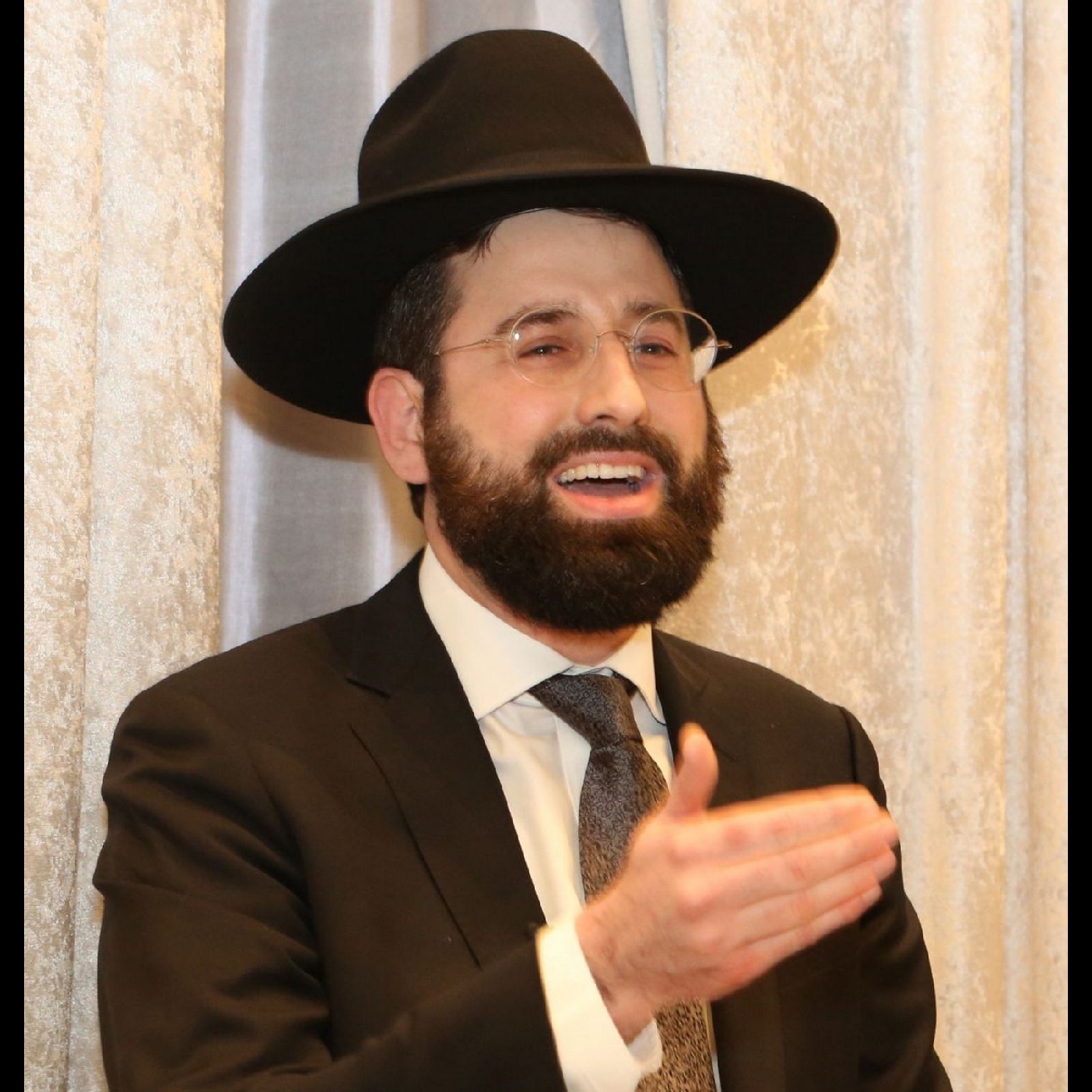

Escucha el podcast Eternal Pages en Replaio
Radio y podcasts en una sola app - gratis y sin registro. Instálala hoy y no te pierdas el estreno
Replaio no es editor de podcasts; los nombres de los programas, las portadas y el audio pertenecen a sus autores y se distribuyen a través de canales RSS públicos
