Founders Fund
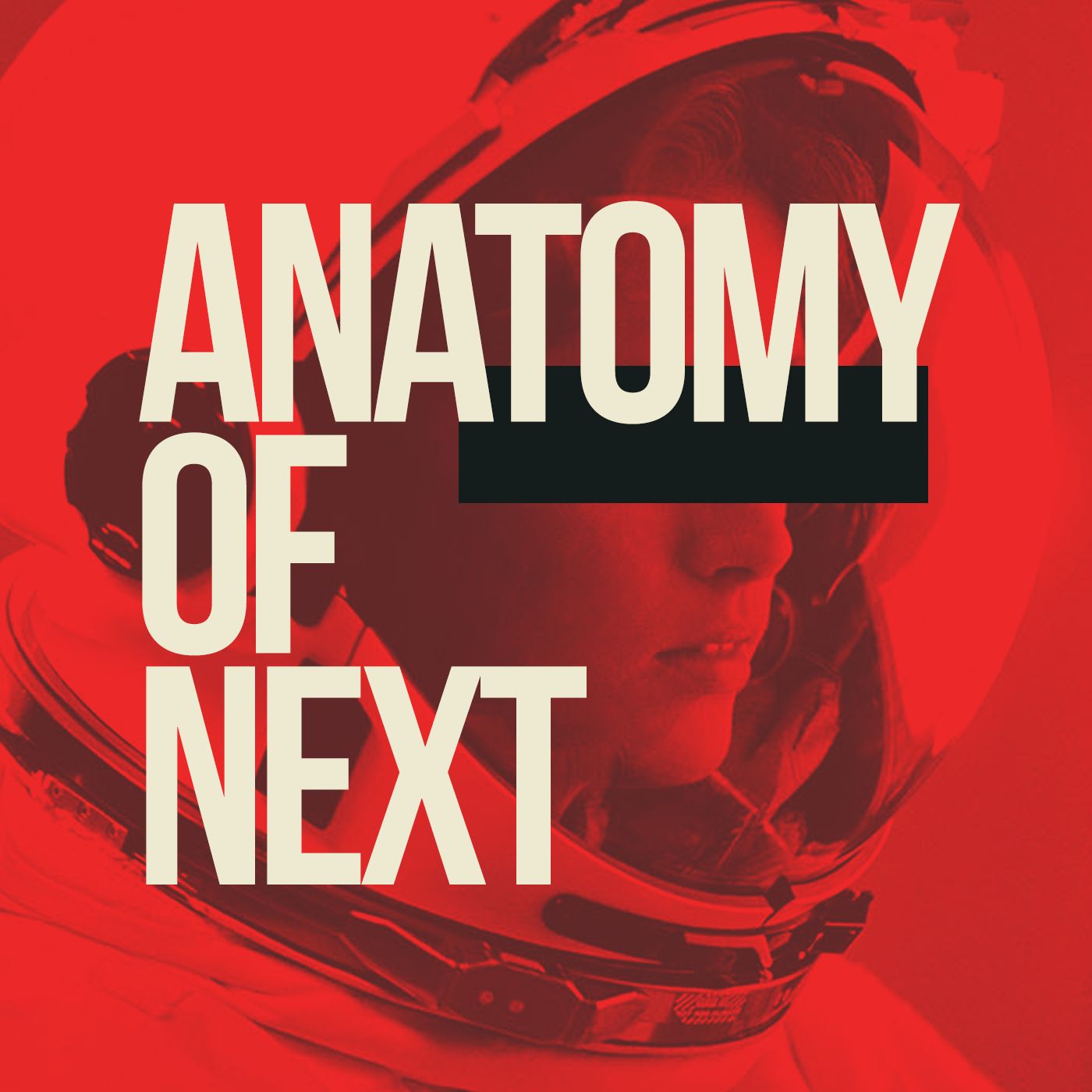
Anatomy of Next
In the second season of Anatomy of Next, explore every aspect of going to Mars, transforming it into a habitable world, and building a new branch of human civilization. How do we bring a cold, dead planet back to life? Can we build an atmosphere on Mars, thaw the frozen plains, and build an ocean? How do we seed a barren land with life, and make a red Mars green? Then, it’s everything from politics and education to money, music, and architecture. What does it mean to be human on an alien world?
Autor
Founders Fund
Categoría
Web del podcast
Último episodio
7 de sep. de 2023
¿Dónde escuchar?
Podcasts en la app Replaio Radio Muy prontoLos podcasts llegarán muy pronto a la app. Instálala ahora y sé el primero en descubrir una forma totalmente nueva de vivir los podcasts
 Instálala gratis
Android casi 10 M de descargas · valoración de 4,8
iOS muy pronto
Instálala gratis
Android casi 10 M de descargas · valoración de 4,8
iOS muy pronto
Episodios
Peter Thiel // The Diversity Myth, 30 Years Later 07.09.2023 1:08:53
Nearly 30 years after publishing “The Diversity Myth,” Peter Thiel sits down with Mike Solana to unpack what the book got right and wrong. Thiel argues that social distractions have stunted scientific progress, slowed economic growth and weakened our geopolitical standing. How did anti-Western rhetoric popularized on college campuses in the 90s morph into the culture wars that divide our country t...
Patri Friedman // Starting Over 29.12.2020 33:22
What if we just... left? The challenges facing our cities are enormous. Our problems could take years to correct, or decades. The purpose of this season is to explore new ways to reinvigorate our cities, but it's worth entertaining the alternative. What if we built something new, from the foundation up? I sat down with Patri Friedman, founder of both the Seasteading Institute and Pronomos Capital,...
Robert Poole // Gridlock 18.12.2020 33:01
Why is the traffic so bad? And why is so hard to build new transportation infrastructure? Robert Poole is the co-founder and director of transportation policy at Reason Foundation, and the author of Rethinking America’s Highways. We talked about congestion, variable pricing, light rail, tunnel boring machines, and why they don’t seem to work in our cities — or rather, why we won’t let them work —...
Garrett Langley // Standing Guard 23.10.2020 37:08
Flock Safety is building a national network of security cameras monitoring neighborhood traffic. In some cities, their work has been instrumental in reducing property crime by as much as 70 percent. In this episode of Anatomy of Next, Mike Solana sits down with Garrett Langley, the CEO and founder of Flock. They talk about the network — where it came from, and how it works — its impact, how Flock...
ASYLUM #3 — Trivial Pursuit 14.10.2020 41:02
In San Francisco, how does government work? Who is in charge, what can they do — structurally, what are they actually capable of? — and most importantly: what are they focused on? A look at our Board of Supervisors, its apparent war on growth (and possibly tech), and an argument for moving forward (spoiler alert: you just have to vote (sorry)) Featuring: Trisha Thadani (San Francisco Chronicle), T...
Daniela Perdomo // A New Signal 10.09.2020 30:55
There's almost nothing more terrifying than losing communication in the heat of a blazing wildfire. In recent months, California has been brought to its knees by natural disaster. Now more than ever we need the help of our firefighters, and to keep them safe. An entirely centralized communication infrastructure is a single point of failure we just can't risk. Daniela Perdomo is the founder and CEO...
Fnnch // Brand New Paint Job 27.08.2020 42:41
Who owns our streets? Our bus and train stops? Our public walls and public parks? If public property truly belongs to the public, can members of the public (which is to say: us) do with our property whatever we want? And on the absolute ground floor, can we not just... make it all look a little bit nicer? Fnnch is an artist based in San Francisco, and the man behind the famous honey bear, which lo...
Matthew Putman // Nano City 04.08.2020 37:09
Consider the computer mouse. It takes a massive, sprawling, global system, and thousands of parts and people from all over the world, many months, or even years after conceptualization, and design, to get that product to your desk. But what if you could do it all in a "factory" the size of your one-bedroom apartment… in a building down the street? I sat down with Matthew Putman and talked about th...
Alexis Rivas // House Factory 28.07.2020 21:20
Separate from our government's anti-housing policies, a big piece of our crisis in affordability comes down to the way we think about new homes. In Japan, for example, where housing is significantly more affordable, newer homes are far more popular than older homes, and this has galvanized both construction and prefabrication. At scale, this reduces cost. I interviewed Alexis Rivas about his compa...
ASYLUM #2 — Legalize Housing 29.06.2020 52:49
The housing crisis is the root of almost every serious challenge San Francisco faces. From property to construction to regulation, when it’s possible to build at all it’s too expensive to meaningfully increase supply. Because it’s too expensive to build here, most people can’t afford to live here. So let’s get into it: why does the housing crisis exist, in what ways is it unique to the Bay Area, a...
Andrew Farah // Density 17.06.2020 24:43
Almost every infrastructural challenge our cities face begins with the question of density. How many people are actually in the city? Where are they spending their time? Which trains are overcrowded? What about parks? Sidewalk traffic? San Francisco has one of the worst housing crises in history. Which of our buildings are being used at capacity? Without an answer to these questions it's impossibl...
Ryan Delk // School is Not a Place 27.05.2020 31:52
Ryan Delk is the founder and CEO of Primer, a company rethinking the way we educate our children, beginning with tools to help out homeschoolers. If we started over today, with today's technology, with today's educational research, and with everything we’ve learned about learning this past century — if you could start our approach to education over, from scratch — what would you build?
Joshua Browder // An Army of Robotic Lawyers 12.05.2020 19:41
Overcomplicated bureaucracy has been a plague on human productivity, with a disproportionately adverse affect on the poor and poorly connected, for hundreds of years, and with each year that passes it gets worse. Enter: your personal army of robotic lawyers. I sat down with Joshua Browder to talk about his company DoNotPay, and his mission to empower everyday citizens caught in some manner of bure...
Delian Asparouhov // Machines That Drive 01.05.2020 35:51
As we continue our conversation on the city, we turn to traffic and begin with the big related tech story — what happened to self-driving cars? In this episode, my colleague Delian provides a lay of the land for the space, and we talk about a world of perfect self-driving cars. What does that look like? Would it have any impact on traffic? If not, what? Why is this important? We also talk about te...
Ryan Petersen // Global Trade and Civilization 21.04.2020 38:06
How do we get our stuff? Ryan Petersen is the founder and CEO of Flexport, a freight forwarding and customs brokerage company. We sat down to talk about the nature of trade, a literally ancient system that has been the lifeblood of global commerce, and by extension human civilization, since the dawn of time. How is technology changing that system? How *should* that system change? And how do we app...
ASYLUM #1 — Boomtown, USA 13.04.2020 47:58
This season on Anatomy of Next we return to Earth, and we take a look around the neighborhood. How do our cities work, where do they need work, and what do we build next? We open in our hometown. San Francisco should be the greatest city in the world. What went wrong, and how do we fix it?
NEW WORLD #11 — Interstellar 22.02.2019 59:12
SEASON TWO FINALE: and we enter the galaxy. From an atmosphere and an ocean to genetically-modified flora, new AR construction paradigms, and the directed evolution of our second branch of human civilization, we’ve created a new world on Mars. But what comes next for humanity? Let’s take a look at the mechanics of interstellar travel in antimatter propulsion, hibernation technology, and time dilat...
Kai-Fu Lee // China 18.02.2019 36:39
This season we've talked a lot about different ways of doing things. Now let's talk about a country that IS doing things differently — at least... differently than the United States. We sat down with Kai-Fu Lee, author of AI Superpowers, to talk about artificial intelligence, China, and what the Chinese technology strategy means for America and Europe.
NEW WORLD #10 — Sex in Space, Part One 12.02.2019 24:03
Sex, reproduction, and marriage have been linked for most of human history, but today that paradigm is evolving. This season of Anatomy of Next we've looked at every aspect of turning Mars into a habitable world. Now what about the changes in biology that are going to alter the way we populate our world? From artificial gametes derived from skin cells and genetically-modified embryos to babies in...
NEW WORLD #10 — Sex in Space, Part Two 12.02.2019 37:28
In our last episode, we looked at the technologies that are fundamentally changing biological reproduction. Now, we conclude that conversation with a look at the human relationship. What is a healthy relationship on Earth, and what might it look like in space? Or Mars? We explore the problems we're currently facing in love, and we imagine a healthy path forward: new paradigms for navigating confli...
NEW WORLD # 9 — Multiplanar Humanity 04.02.2019 53:30
Augmented and virtual realities are introducing a digital layering to the human experience that will dramatically impact every city of the future. In “Multiplanar Humanity” we explore the complications and potential of a multi-layered world, starting with one of the more practical applications of augmented reality technology — construction, and a look at how the first city on Mars will be built. T...
Christina Lomasney // Material Advance, Part Two 02.02.2019 22:45
In our second episode on materials science, we take a look at metal. Christina Lomasney is the CEO of Modumetal, a company nanoscopically-engineering alloys. In a wide-ranging conversation, we talked about her work at Modumetal, the Martian applications of her work, the decentralized city, and the democratization of engineering.
Dan Widmaier // Material Advance, Part One 31.01.2019 22:55
Dan Widmaier is the founder and CEO of Bolt Threads. They make materials from nature that are high performance, but hard to extract, and develop technology that makes the scaling of production on these materials possible. Today, they're making spider silk affordable to the average consumer. We're designing a new world, and to build our new world we'll necessarily be developing new materials. But b...
Paul Dabrowski // Biological Factory 30.01.2019 9:48
What if you could plant a seed, and grow a building? A few episodes ago we talked to Paul Dabrowski, CEO of Synthego, a company building tools that help biologists. Paul's hope for the field of synthetic biology is a path to curing all disease. But in a world of further biological understanding, there are few limits to what we can grow. Let’s talk about the biological factory.
Adrian Aoun // Martian Sick Day 26.01.2019 10:35
As we plan the shape of our future Martian capital, we continue our conversation with Adrian Aoun, founder of Forward, a company changing the way we think about the doctor. In our last episode we spoke broadly about the world — the way policy and design affect our lives today, and some of the ways they could or should change in the 21st Century. Today, we speak a little more specifically: how do w...
Podcasts similares







Escucha el podcast Anatomy of Next en Replaio
Radio y podcasts en una sola app - gratis y sin registro. Instálala hoy y no te pierdas el estreno
Replaio no es editor de podcasts; los nombres de los programas, las portadas y el audio pertenecen a sus autores y se distribuyen a través de canales RSS públicos