R.J. Rushdoony
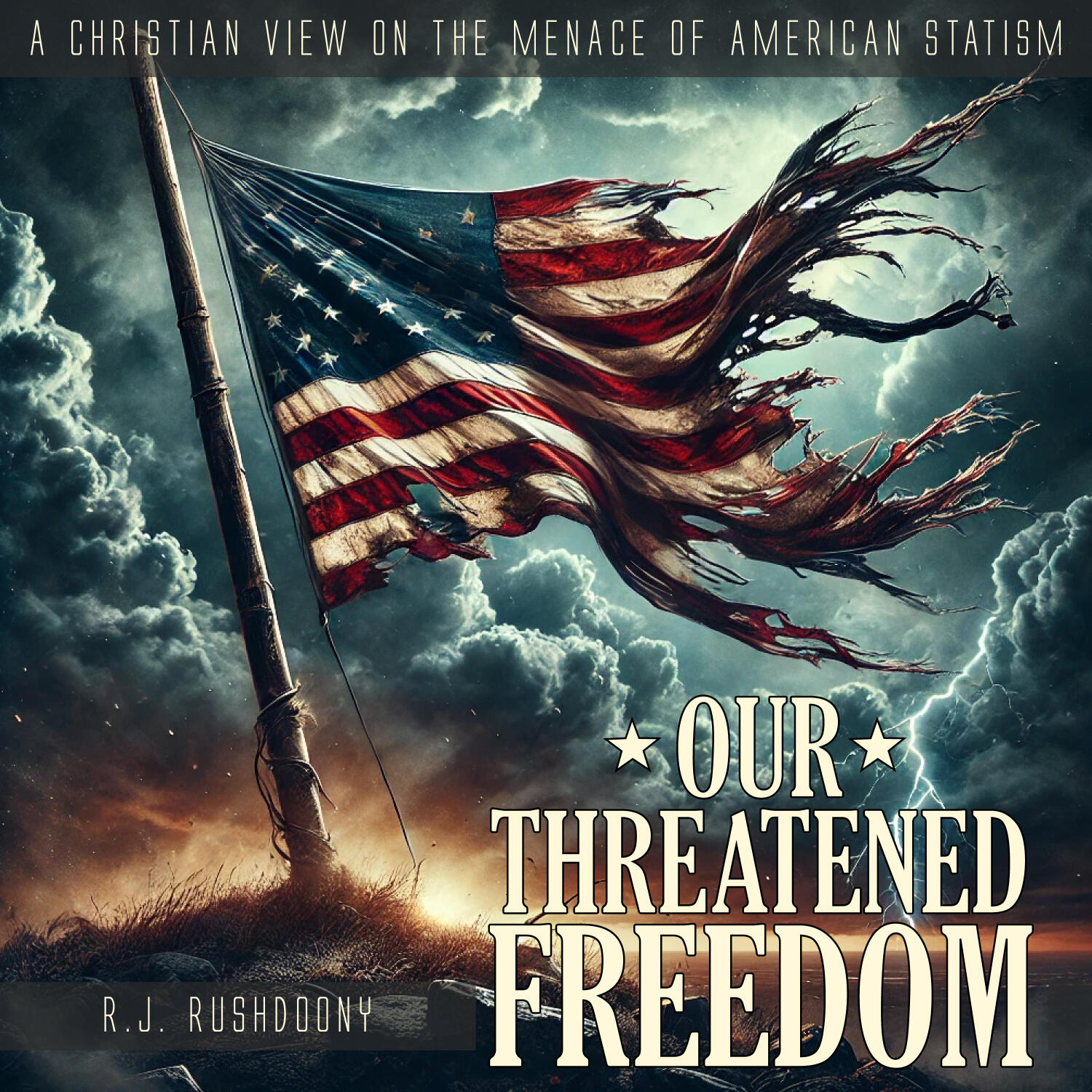
Our Threatened Freedom
A Christian View on the Menace of American Statism with R.J. Rushdoony
Vizitează neapărat site-ul podcastului și susține-i creatorul: cr101radio.com
Autor
R.J. Rushdoony
Categorie
Site-ul podcastului
Cel mai nou episod
11 nov. 2026
Unde asculți?
Podcasturi în aplicație Replaio Radio În curândPodcasturile ajung în curând în aplicație. Instaleaz-o acum și fii primul care descoperă o abordare complet nouă a podcasturilor
 Instalează gratuit
Android 10 mil.+ descărcări · nota 4,7+
iOS în curând
Episoade
Is the Church a Charitable Trust? 11.11.2026 4:27
IThe increasing trend of reclassifying churches, Christian schools, and missionary agencies as charitable trusts threatens religious freedom by placing them under state control, requiring them to represent all creeds and religions, and treating their property as belonging to the public rather than the congregation; the First Amendment was specifically designed to prevent such state interference, e...
Is There a Return to Religion? 04.11.2026 3:32
This essay argues that while many observers speak of a “return to religion,” such claims must be tested by substance rather than appearances, because past religious revivals often amounted to little more than temporary sentiment or social conformity. True renewal, it contends, cannot be measured by church attendance or religious consumption alone, since social stress and crisis can provoke superfi...
Is Our Federal Bureaucracy Out of Control? 28.10.2026 3:23
The federal bureaucracy is increasingly out of control, creating inefficiency, corruption, and overregulation while citizens bear the burden; lost records, incomprehensible forms, endless paperwork, and useless projects exemplify a system growing unchecked, transforming governance from a representative republic into a bureaucratic oligarchy where freedom diminishes as the bureaucracy expands. #Fed...
What are the Facts of Soviet Slave Camps? 21.10.2026 3:27
A Christian View on the Menace of American Statism
Can a Hole in the Ground be Productive? 14.10.2026 3:27
Throughout U.S. history, there has been a recurring temptation to replace hard work and productivity with gimmicks or government schemes promising easy wealth, from Richard Schell’s 1874 plan to dig a transcontinental canal funded by printed money to Keynes’s 1936 theory that digging holes in the ground would boost employment and national output; such ideas have fueled nonproductive federal spendi...
Who Are the Debtors of America? 07.10.2026 3:39
In America, the poor carry the least debt because they are generally considered bad credit risks, the middle class holds moderate debt primarily for homes, farms, and small businesses, while the rich borrow most easily and carry the highest proportion of personal debt; corporations are actually the largest debtors outside the government, funding expansions, acquisitions, and operations, and on top...
Are We Misjudging our Prison Convicts? 30.09.2026 3:39
Our prisons have become breeding grounds for violence and extortion, as illustrated by a young man murdered for refusing to pay $5 a week to a gang in Los Angeles Men’s Central Jail, highlighting that the humanistic assumption that prisoners are “good at heart” blinds us to their evil nature; misjudging criminals as unfortunate or reformable only endangers society, and true safety requires recogni...
Should Universities Get Grants from Pentagon Funds for Research? 23.09.2026 4:01
Universities receiving Pentagon research funds can divert focus from their core mission of education, as such grants though tiny compared to industry contracts ($852 million to universities vs. $116.7 billion to industry in 1982) often prioritize research over teaching, benefit professors financially, and may reward politically connected alumni rather than serve practical scientific advancement; w...
Are We In a Banking Crisis? 16.09.2026 3:34
Too often, we let fear of words charges of racism or bigotry paralyze us while taxpayers fund groups that fail obligations yet sue the government and receive federal support, highlighting how timidity in confronting abuses undermines both freedom and fiscal responsibility. #FreedomOfSpeech #TaxpayerBurden #StopAbuse #NameCalling #ProtectLiberty
Are We Afraid of Words? 09.09.2026 3:33
There is evidence of a real return to faith in the United States, particularly within evangelical churches, which have grown significantly from 1972 to 1982 while modernistic denominations have declined; this growth is accompanied by an increase in Christian schools, agencies addressing social problems from a Biblical perspective, and efforts to influence politics and economics according to faith,...
Are You a Patron of the Arts? 02.09.2026 3:23
Through our taxes, we are unwitting patrons of the arts, funding millions for projects many consider frivolous or objectionable erotic shows, feminist journals, or ex-convict art programs while contributing to a growing national deficit that threatens economic stability and, ultimately, freedom. #ArtsFunding #TaxpayerBurden #FiscalResponsibility #StopWastefulSpending #ProtectFreedom
Are We a Suicidal People? 26.08.2026 3:44
U.S. foreign aid and loans often fund oppressive regimes, military projects, and even human-rights abuses abroad, effectively financing tyranny, slavery, and the enemies of freedom, while lacking proper oversight, making our generosity a tool for global harm rather than good. #StopFinancingTyranny #ForeignAidReform #ProtectFreedom #AccountabilityMatters #NoAidForOppression
Who Makes History? 19.08.2026 3:18
History is made by people, not abstract “social forces”; men and women of faith and action shape events, drive progress, and give purpose to civilizations, while the modern notion that vague forces dictate outcomes undermines human responsibility, freedom, and the Biblical understanding of man as God’s active creation. #HistoryMakers #FaithAndAction #HumanResponsibility #BiblicalWorldview #Freedom...
Are We a Nation of Book Burners? 12.08.2026 3:05
Concerns about “book banning” in U.S. schools are often misrepresented; parents may object to certain books for moral or educational reasons, while libraries promote works aligned with humanistic perspectives, but true censorship prohibiting publication altogether does not exist here; freedom means the right to choose, and defending that choice requires respecting others’ freedom to make their own...
Should Life be Better at the Top? 05.08.2026 3:31
Those in positions of responsibility deserve fair compensation, but when civil officials use taxpayer money for extravagant personal benefits like $85,000 office remodels they cross from just reward into exploitation, creating a growing gap between leaders and citizens, eroding trust, and undermining freedom; life should be better at the top only in proportion to responsibility and service, not lu...
Who Gets Hurt by Trade Controls? 29.07.2026 3:22
The passage argues that trade controls and protectionism ultimately harm consumers more than they help producers. While some domestic industries may complain about cheap foreign imports whether Japanese or American the real effect of tariffs and trade restrictions is to raise prices for the majority of consumers, who are paying more for goods that could otherwise be purchased more cheaply. Free tr...
What is Wrong with Deficit Spending? 22.07.2026 3:22
The passage argues that deficit spending is both economically and morally harmful. Economically, running annual deficits accumulates national debt, threatens programs like Social Security, and risks eventual bankruptcy. Deficit spending fuels inflation, which undermines the purchasing power of citizens and destabilizes the economy. Morally, debt living is seen as a symptom of poor discipline and p...
Do We Have a Dynasty of Wealth in the United States? 15.07.2026 2:51
This passage argues that the United States does not have a permanent dynasty of wealth. While some inherited fortunes exist, the majority of the richest Americans earned their wealth independently, and new industries such as microelectronics and emerging energy technologies continuously create fresh fortunes. Economic change ensures that wealth shifts over time, discouraging stagnation. Historical...
Who is Taking Care of the Poor? 08.07.2026 2:58
This passage emphasizes that the primary caregivers for the poor in the U.S. are not government agencies, but private and voluntary institutions. The family remains the most effective welfare system, providing for sick members, elderly parents, and children’s education from kindergarten through college. Churches, both Protestant and Catholic, supplement this care by aiding the homeless and transie...
How Bad is Pollution? 01.07.2026 2:54
This passage emphasizes that historical urban pollution was far worse than what we typically imagine today. In the era of horse-drawn vehicles, cities in the U.S. and London were covered with tons of horse manure, creating unsanitary conditions and difficult foot traffic. Noise pollution from horseshoes and buggy wheels added to the chaos. Going back further, in 1783, many cities lacked sewers, an...
Are We Over-Polluted and Over-Populated? 24.06.2026 3:01
This passage argues that fears of overpopulation and overpollution are largely myths. Citing Dr. Julian L. Simon’s The Ultimate Resource, it emphasizes that food production, farmland availability, and natural resources are increasing, not diminishing. Pollution has been declining, population density does not inherently create social or biological problems, and immigration contributes positively to...
Who Gets Hurt by Budget Cuts? 17.06.2026 2:59
This passage argues that the public is often misled about budget cuts. Media and politicians claim that cuts primarily harm the poor and elderly, but in reality, budgets are frequently still increasing, and cuts usually apply only to proposed increases. Meanwhile, overgrown bureaucracies and legislators’ own expenditures remain untouched. Ordinary citizens, facing rising taxes and aggressive colle...
Are We Suffering From a New Bigotry? 10.06.2026 2:57
This passage argues that a new form of bigotry is emerging in the foster-care system, where devout Christians though responsible and moral are being rejected as foster parents. The author cites a tragic case in Pomona, California, where a child was sexually abused and killed in foster care, suggesting that prejudice against Christian foster parents may contribute to such failures. The broader conc...
Are the Courts an Enemy to Justice? 03.06.2026 3:15
This passage argues that the courts, rather than serving justice, have increasingly become instruments of relativism and majority rule, often harming victims more than criminals. It highlights Oliver Wendell Holmes Jr.’s philosophy that the law is a game to be played according to its rules rather than a pursuit of justice, suggesting that justice is no longer viewed as absolute but as subject to h...
Does Bionic Man Have a Future? 27.05.2026 3:13
This passage critiques the uncritical glorification of science and technological enhancements, using the “bionic man” as a symbol of this trend. The author argues that while medical devices pacemakers, glasses, crutches are helpful, they are no replacement for God’s original design and natural human faculties. Scientific interventions, including test-tube babies, are portrayed as risky, morally co...
Podcasturi asemănătoare








Ascultă podcastul Our Threatened Freedom în Replaio
Radio și podcasturi într-o singură aplicație - gratuit și fără înregistrare. Instaleaz-o azi și nu rata lansarea
Replaio nu este editorul podcasturilor; numele emisiunilor, coperțile și materialul audio aparțin autorilor lor și sunt distribuite prin fluxuri RSS publice