
Artis L Beatty, OD, MS
Uncommonly Remarkable
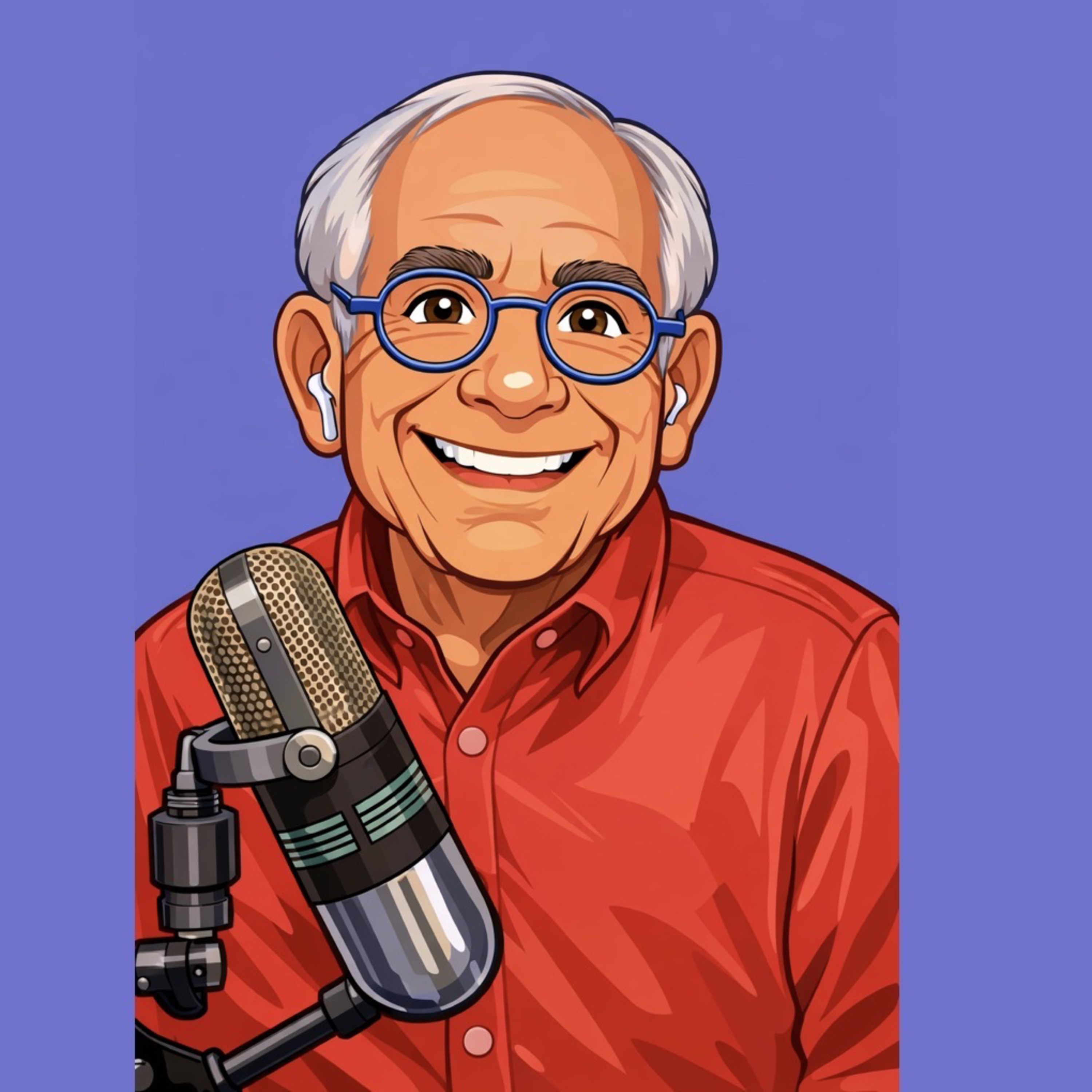
Uncommonly Remarkable is a health and wellness show focused on understanding how the body works and how everyday choices shape long-term health. The show is published in two formats: authored monologues that explore core ideas around health, resilience, and human biology, and In Conversation episodes featuring long-form discussions with clinicians, scientists, and founders. Rather than chasing trends, the show focuses on systems, signals, and long-term trajectory. Hosted by Artis Beatty.
Author
Artis L Beatty, OD, MS
Category
Podcast website
Latest episode
Jul 10, 2026
Where to listen?
Podcasts in the app Replaio Radio Coming soonPodcasts are coming to the app soon. Install now and be the first to see a whole new take on podcasts
 Install for free
Android 5M+ downloads · 4.8 rating
iOS soon
Install for free
Android 5M+ downloads · 4.8 rating
iOS soon
Episodes
What is a Peptide, Really? 10.07.2026 13:53
Send us Fan Mail Recommended next listen: In Conversation: Daniel Tausan — Peptides, GLP-1s, and Stress Peptides seem to be everywhere. They're discussed in conversations about healing, GLP-1 medications, hormones, healthy aging, and longevity—but if someone asked you to explain what a peptide actually is, could you? After recording my conversation with Daniel Tausan, I realized we spent near...
Peptides, GLP-1s, and Stress: What Actually Improves Your Health? 28.06.2026 47:04
Send us Fan Mail Peptides are everywhere right now. GLP-1 medications continue to dominate health conversations. And stress may be having a bigger impact on long-term health than most people realize. In this episode, I sit down with Daniel Tausan to explore what peptides actually are, how they work inside the body, and why they have become such a popular topic in health and longevity circles. We d...
When Self-Help Stops Working 20.04.2026 5:07
Send us Fan Mail Most people assume that if something works, they should keep doing it. And for a while, that’s true. Routines, habits, and structure can help you manage stress and bring things back under control. But there’s a point where those same approaches stop producing the same result—and most people don’t recognize it when that happens. Instead, they try to do it better. More consistency....
Not All Struggle Is the Same 13.04.2026 9:51
Send us Fan Mail Most people collapse very different experiences into the same category — stress, burnout, depression — and assume they’re all versions of the same thing. They’re not. And when you misread what you’re actually experiencing, the response doesn’t match. Sometimes that means underreacting to something serious. Sometimes it means treating something normal like it’s a crisis. In this ep...
Why People Keep Falling Off the Wagon 30.03.2026 7:23
Send us Fan Mail If you have ever tried to change how you eat, how you train, or how you take care of yourself, there is a moment that almost always shows up where it feels like you have stopped or fallen off. In this episode, I look at that moment more closely. Most people interpret it as a break in consistency, but it is often not a break at all. It is part of the pattern. The expectation that c...
You Can’t See Your Own Health Clearly 23.03.2026 5:40
Send us Fan Mail Last time, I talked about how the visual standard for the human body has changed over time, and how what looks strong or healthy today would have looked unusual just a few decades ago. But even if you understand that those standards are distorted, there’s a deeper problem: most people still can’t accurately evaluate their own health. In this episode, I explore why that happens. Th...
When the Human Body Became an Unrealistic Standard 16.03.2026 7:31
Send us Fan Mail very generation carries an idea of what a healthy or strong human body is supposed to look like. The surprising part is how dramatically those expectations change even though the biology of the human body remains largely the same. From ancient sculpture to action figures, from Batman to Barbie, cultural images of the body have gradually shifted toward more extreme and exaggerated...
Vision Is Infrastructure 09.03.2026 13:32
Send us Fan Mail I have intentionally avoided talking about eyes on this show — even though I am an optometrist — because I never wanted the conversation to narrow into prescriptions and lenses. But vision is larger than refractive error. Vision determines autonomy. It affects how safely you drive, how steadily you move, and how independently you age. It also provides one of the only direct window...
You’re Asking the Wrong First Question 02.03.2026 9:34
Send us Fan Mail We recently talked about protein as infrastructure — an ongoing expense tied to what we expect our bodies to maintain. That framing still stands. But there’s a broader mistake that often shows up before we even get to the accounting. When we want to improve muscle, recovery, or long-term health, we usually start by asking how much protein we should eat. The question isn’t wrong. I...
Protein Isn’t the First Question 23.02.2026 38:46
Send us Fan Mail Protein dominates health conversations — but are we focusing on the wrong lever? In this conversation, Carson and I unpack muscle preservation, hormones, fiber, and where peptides actually fit into long-term health. Protein is one of the most talked-about nutrients in modern health culture. But true protein deficiency in the United States is rare — while other foundational element...
Sleep Loss Changes Your Mind Before You Notice 16.02.2026 11:09
Send us Fan Mail Most people who say they function fine on six hours of sleep are not lying. They are describing how it feels. The problem is that sleep loss alters perception before it causes obvious collapse. I explore how sleep architecture recalibrates emotional regulation, decision-making, and cognitive bandwidth; why subjective performance stabilizes while objective performance declines; how...
Protein Is an Ongoing Cost 09.02.2026 5:08
Send us Fan Mail The body doesn’t follow nutrition rules. It keeps accounts. You can also checkout the video version of this episode here: https://youtu.be/ClVdbSaG_8Q Protein is one of the places where that accounting becomes visible. Muscle tissue is constantly being built and broken down, and when intake doesn’t consistently exceed the cost of what the body is being asked to maintain, the syste...
Why Supplements Don’t Work the Way People Expect 02.02.2026 6:16
Send us Fan Mail Most people take supplements expecting clear, predictable results. In practice, supplements rarely work that way — not because they’re useless, but because expectations are misaligned with how the body actually adapts. In this episode, I explain: Why supplements feel inconsistent even when people “do everything right” The difference between support and substitution Why context mat...
Pillars Break. Pyramids Endure. 26.01.2026 6:45
Send us Fan Mail This is an authored monologue from Uncommonly Remarkable℠ . Burnout doesn’t usually come from a lack of motivation. It shows up in people who are capable, disciplined, and consistent—often the ones holding the most responsibility. In this episode, I explore why burnout is often caused by structure rather than effort, how identity load becomes concentrated over time, and why relyin...
Why Most Fitness Plans Fail (It’s Not Discipline) 19.01.2026 4:00
Send us Fan Mail This is an authored monologue from Uncommonly Remarkable℠. Most people don’t fail at fitness because they lack discipline — they fail because they’re running a system that was never designed for real human lives. In this episode, Artis explains why motivation-based fitness plans break down, how time and complexity sabotage consistency, and why better design beats willpower every t...
When Discipline Is a Coping Mechanism 12.01.2026 4:40
Send us Fan Mail This is an authored monologue from Uncommonly Remarkable . We tend to recognize mental health struggles when they look like crisis — when things fall apart, when someone withdraws, when distress becomes visible. But many people struggle in a different way. They function. They perform. They stay disciplined. And because of that, their distress often goes unnamed. In this monologue,...
Personal Health Is Still Your Responsibility — Even in a Broken System 05.01.2026 5:54
Send us Fan Mail This is an authored monologue from Uncommonly Remarkable. Personal health responsibility is not about blame — it’s about clarity. In this episode, I explore the line between what healthcare systems are built to do and what they can never fully own for us. Acute care saves lives. But long-term health still depends on daily decisions, awareness, and personal agency. This is a conver...
Ep. 68 Julius Torelli — Gratitude, Discipline, and the Long Game of Health 29.12.2025 54:21
Send us Fan Mail I’m joined by cardiologist Julius Torelli for a conversation on how thoughts, stress, and daily habits shape physical health. We explore chronic illness, the limits of modern medicine, the physiological effects of gratitude, and what it means to take ownership of well-being. Julius also shares his path from traditional cardiology to founding Gratefully Well. Learn more at https://...
Why Gratitude Changes the Body Before It Changes the Mind 29.12.2025 5:19
Send us Fan Mail This is an authored monologue from Uncommonly Remarkable. Gratitude is usually treated as a mindset shift — but the body experiences it first. Chronic stress, dissatisfaction, and vigilance create a real physiological cost over time, even when we don’t feel “burned out.” In this episode, I explain why gratitude isn’t abstract or emotional fluff, but a biological signal that influe...
Your “Normal” Might Be Symptoms — and Your Gut Quietly Runs the Show 22.12.2025 7:56
Send us Fan Mail A lot of people don’t feel great — but because they’ve felt that way for years, they call it “normal.” Chronic fatigue. Bloating. Brain fog. Low drive. Relying on caffeine just to function. None of that feels urgent enough to act on, so it becomes a baseline instead of a signal. In this monologue, I unpack a simple but important idea: your “normal” might actually be symptoms — and...
Your Biology Isn’t Broken — Your Feedback Loops Are 22.12.2025 5:52
Send us Fan Mail Most health problems don’t appear overnight. They develop quietly—as signals—long before symptoms show up. In this episode, I explore a different way of thinking about health: not as diets, hacks, or genetic destiny, but as feedback, resilience, and direction over time. We talk about why biology rarely “breaks,” why genetics usually aren’t the main driver, how metabolic flexibilit...
Ep. 67 Listening, Repair, and the “Yes, And” Mindset for Couples | Peter Anderson 16.12.2025 1:00:52
Send us Fan Mail Most relationships don’t break in one big moment — they drift through small, unspoken patterns. Relationship mentor Peter Anderson shares how couples can reconnect by understanding the nervous system , practicing true listening , and bringing back play (without using humor in a way that cuts). We explore emotional safety, repair after conflict, and practical ways to communica...
Ep. 66 Trauma Transformed: Neuroplasticity, Tech, and the Future of Mental Health with Dr. Bhargav Patel 09.12.2025 40:00
Send us Fan Mail What actually happens to the brain after trauma — and why do some people get stuck in PTSD while others grow stronger? In this episode, I’m joined by Dr. Bhargav Patel , a child and adolescent psychiatry fellow at Brown, researcher on trauma and post-traumatic growth, former chief medical officer of a healthcare AI company, and founder of a vegan nutrition startup. We explore how...
Ep. 64 Cold Plunge, Hyperbaric Oxygen and the Truth About Biohacking Your Healthspan (with Troy Laing) 25.11.2025 57:58
Send us Fan Mail Biohacking isn’t supposed to be a personality trait or a toy box of gadgets. Done well, it’s a structured way to improve your healthspan – how well you live, not just how long. In this conversation, Troy Laing, founder of Culture OC in Newport Beach, shares how he went from a childhood marked by trauma and addiction to building a biohacking and regenerative health center that blen...
Ep. 63 How 21 Minutes a Week Can Redefine Fitness 18.11.2025 55:21
Send us Fan Mail 21 minutes, twice a week. PJ from XGYM explains how strict time-under-tension and true muscle failure produce real-world strength and endurance—without bulking or joint risk. We dig into functional vs. traditional training, why “dense” muscle matters, the X-Scream cable system, brain-type-based coaching for adherence, and the five most practical habits to protect brain health. Lin...
Similar podcasts




Listen to the Uncommonly Remarkable podcast in Replaio
Radio and podcasts in one app - free, with no sign-up. Install today and do not miss the launch
Replaio is not a podcast publisher; show names, artwork and audio belong to their authors and are distributed through public RSS feeds.
