eleatham
The Naked Heart
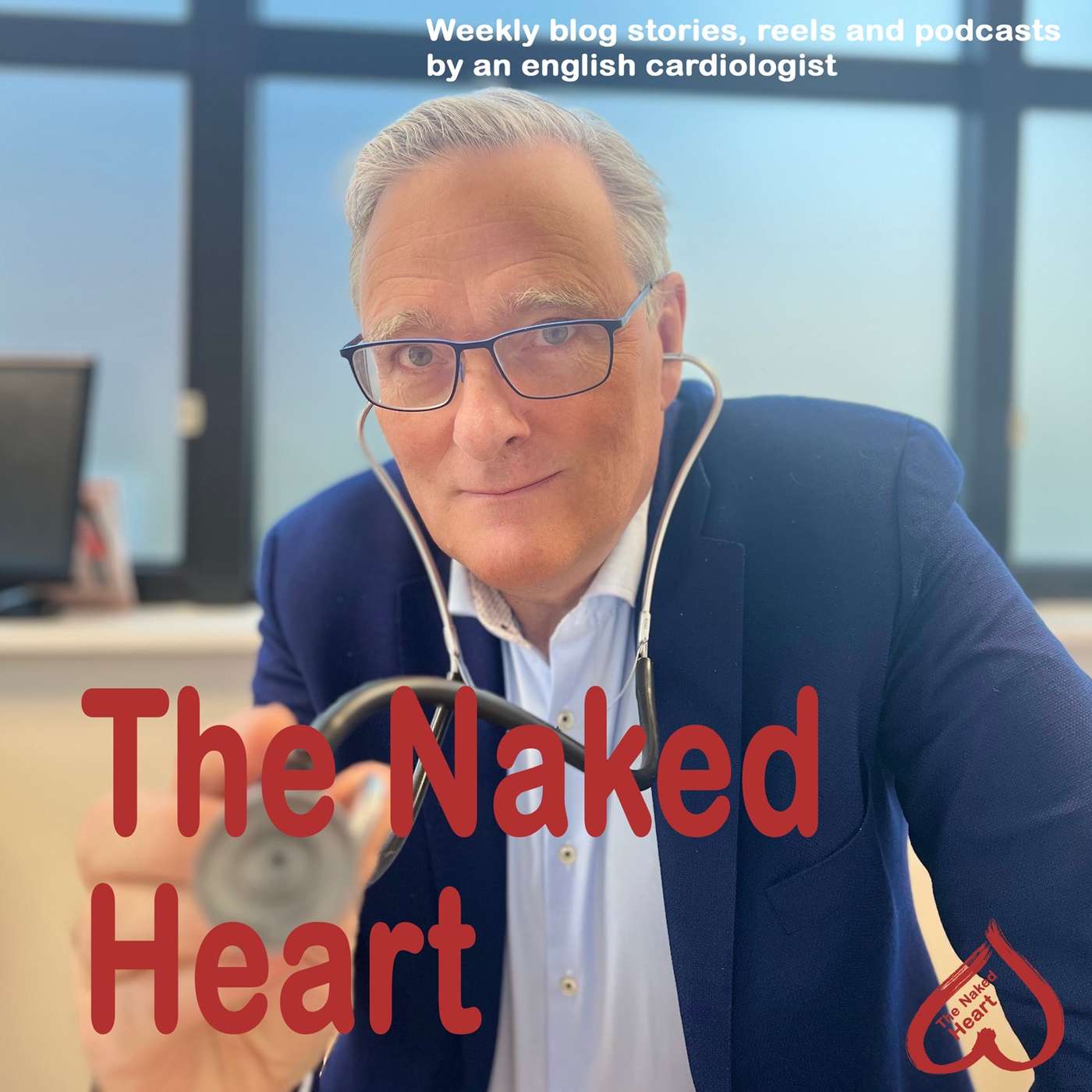
The Naked Heart is a weekly series of blogs and social media publications from English cardiologist Dr Edward Leatham. His brief is to apply 50 years of breathing and practicing medicine to the series as part of a move from cardiologist and physician to educator. The podcast publications that accompany each blog are AI constructs designed to broaden my audience and make quite complicated yet important knowledge more accessible. The blog articles release each week provide additional information for readers https://www.scvc.co.uk/category/naked-heart/Podcasts until Jan 2026 are located at https:...
Where to listen?
Podcasts in the app Replaio Radio Coming soonPodcasts are coming to the app soon. Install now and be the first to see a whole new take on podcasts
 Install for free
Android 5M+ downloads · 4.8 rating
iOS soon
Install for free
Android 5M+ downloads · 4.8 rating
iOS soon
Episodes
Why Cardiovascular Prevention Matters Before 30 13.05.2025 14:10
Emerging evidence shows that lifetime exposure to LDL cholesterol and high glucose variability are some of the strongest predictors of cardiovascular risk. Just as lung cancer risk is tied to pack-years of smoking, heart disease risk correlates with cumulative LDL levels and impaired glucose metrics over time. This is why some people in their 20s with risk factors (like diabetes or a family histo...
Cardiovascular Health Under 20: A Guide for Young People and Their Families 05.05.2025 14:38
It may seem unusual to talk about heart disease in teenagers and children, but the groundwork for heart health is laid early in life. Habits formed in youth often carry into adulthood, and many cardiovascular risk factors—like high cholesterol, high blood pressure, or obesity—can be silent, slowly progressing without symptoms. In families where heart disease runs deep, understanding risk and preve...
Cardiovascular Prevention: Why Waiting Until 60 Is Too Late 29.04.2025 13:31
Cardiovascular disease often strikes decades before symptoms appear, especially in the critical age range known as *"Sniper’s Alley"* (40–60 years). Waiting until 60 is too late. Early prevention, particularly LDL cholesterol control, saves lives. Learn why family history demands a proactive approach — and why starting young matters. Read the full story
The Rise of Online Home Blood Testing: A Paradigm Shift in Preventative Healthcare 11.04.2025 14:33
In recent years, there has been a noticeable shift in how individuals approach their health and wellbeing. With increasing public awareness around the importance of early detection and preventative medicine, combined with the reduced accessibility of primary care appointments, online home blood testing has rapidly gained popularity. This change has been further fuelled by the undeniable convenienc...
The Cardiometabolic Clinic 15.03.2025 27:59
With continued advancements in imaging, pharmacology, and personalised medicine, the SCVC cardiometabolic clinic is positioned to lead the way in preventative cardiology. The integration of real-time metabolic assessments, cutting-edge lipid profiling, and targeted pharmacotherapy represents a paradigm shift in how cardiovascular risk is managed. For full blog
How does stress affect your heart? 24.01.2025 14:50
Stress is an unavoidable part of modern life. We encounter it at work, at home, in traffic, and even while reading the news. Although we often discuss stress casually, its impact on the human body is profound—particularly on the cardiovascular system. In this article, we will explore how stress affects the heart and blood vessels, drawing on clinical insights, expanding scientific knowledge, and p...
Home Monitoring in Cardiology: A New Era of Patient Care 14.01.2025 25:24
Over the past decade, healthcare has experienced a remarkable evolution in how patients are monitored and managed remotely. Although the Covid-19 pandemic may have accelerated this trend, it is clear that even before the pandemic—when visits to see the doctor occasionally became nigh on impossible—modern technology was already paving the way for clinicians, particularly cardiologists, to care for...
10 Things Everyone Who Has Had a Coronary Stent or Bypass Operation Should Know 16.12.2024 12:53
Having a stent or bypass is not the end of the story—it is the beginning of a new chapter in managing your cardiovascular health. With the right combination of medications, lifestyle changes, rehabilitation programmes, and vigilant follow-up using advanced diagnostic techniques, you can greatly reduce your risk of future events. Stay engaged with your healthcare team, keep informed about new thera...
Beta blockers 09.12.2024 14:19
The body’s natural “fight or flight” response is crucial for survival in dangerous situations. This response increases heart rate, boosts blood pressure, and diverts blood to muscles, preparing us for rapid action. However, in modern life, where many people feel overstimulated, this response is often triggered unnecessarily—by stress, anxiety, or medical conditions—leading to elevated heart rates,...
How to take a 'Statin Holiday' in your own N-of-1 trial 02.12.2024 11:13
A “statin holiday” involves temporarily discontinuing your statin medication—typically for four to six weeks—to observe whether your symptoms improve. This break can provide valuable insights into whether statins are the culprit or if other factors, such as unrelated medical conditions or lifestyle changes, are contributing to your symptoms. The blog and podcast explain how a simple visual diary c...
Aspirin: the cheap wonder drug. 25.11.2024 26:27
Aspirin, or acetylsalicylic acid, is one of the oldest and most widely used medications in the world. Well known for its analgesic effects, it was later discovered to be effective (in much smaller doses) in preventing platelet aggregation that had a pivotal role in arterial thrombosis. Its role in inhibiting platelet activity has made it a cornerstone in the prevention and treatment of arterial t...
When do we intervene in aortic stenosis? 18.11.2024 20:14
The timing of intervention in aortic stenosis is critical. Delaying surgery or transcatheter procedures until symptoms become severe or complications arise can lead to poorer outcomes. Conversely, intervening too early may expose patients to unnecessary procedural risks. For exceptionally fit individuals aged 75-85, timely intervention can be particularly advantageous, as they may tolerate surgica...
Aortic Stenosis 18.11.2024 15:21
The aortic valve is the ‘non return’ valve positioned to prevent oxygenated blood leaving the heart from refluxing back into the heart after each heart contraction. When this valve narrows, it restricts the flow of blood leaving the heart in a condition known as ‘aortic stenosis’. Aortic stenosis (AS) is a progressive and potentially life-threatening condition. It predominantly affects older adult...
Angina 12.11.2024 19:54
Angina pectoris, commonly known simply as angina, is not a diagnosis but a clinical syndrome characterised by chest pain or discomfort resulting from myocardial ischaemia—conditions under which the blood flow to the heart muscle is insufficient to meet its metabolic demands. This symptom can be the first indicator of coronary artery disease (CAD), the most common type of heart disease, which is wh...
Chronotropic Incompetence 04.11.2024 20:51
A young and healthy heart can double its stroke volume in a heartbeat. However, this capability diminishes with an ageing heart, especially one that has been subjected to high blood pressure, heart valve issues or metabolic conditions such as poor glucose control over many years. These factors cause the left ventricle to stiffen in many people as they age, limiting their left ventricle's ability...
Left ventricular suction, stiffness and heart failure 02.11.2024 14:35
Getting your head around the difference between heart failure with preserved ejection fraction (HFpEF) and heart failure with reduced ejection fraction (HFrEF) is a challenge for everyone. This is a technical discussion about why a stiff heart causes poor left ventricular suction and diastolic dysfunction. In part 2 of the podcast their is a major focus on what lifestyle measures during mid life m...
Starting Betablockers? 01.11.2024 11:49
Beta blockers work on the beta receptor situated on the surface of cells that are affected by circulating adrenaline which the body releases in times of stress. Small amounts of adrenaline circulate, even at rest and help determine the resting heart rate and cardiac output. They also have a direct action on the Sinoatrial node which sets the heart rate and the AV node, which becomes very important...
Bradycardia: When does a Slow Heart Rate Becomes a Health Concern? 31.10.2024 21:14
Bradycardia, or a slow heart rate, is a term you might have come across in a medical report or perhaps during a routine checkup. For many, hearing that their heart rate is "too low" can trigger concern. But what does bradycardia actually mean? And when does a slow pulse become something to address with a healthcare professional? Let’s dive deeper into the causes, symptoms, and treatment options, t...
Why do patients with AFib feel breathless? 28.10.2024 19:01
In atrial fibrillation, the atrial tissue quivers at approximately 600 cycles per minute, which means that it has no useful pumping function. The left atrium in patients with atrial fibrillation, merely acts as a passive conduit between the lungs and the left ventricle. It no longer serves to prime the left ventricle, and as a result, there may be less blood entering the heart during diastole and...
Glucose: A Matter of Life and Death 20.10.2024 8:39
There is increasing evidence that high blood and tissue glucose levels may be an important risk factor for many non communicable diseases. CGM monitoring should be considered in all patients affected by heart disease, in order to define glucotype and current glucose profile- both easily treated if 'unhealthy' . Read more about glucose here https://www.scvc.co.uk/news/why-glucose-may-be-the-most-im...
Why is Atrial Fibrillation a risk factor for heart attacks and stroke? 14.10.2024 16:24
By 75 yrs of age 8.3 % of men and 5.7% of women are in AFib Many people are not aware they have it AFib is the cause of 20% of all stroke and upto half of all disabling hemiparetic stroke AFib can cause heart attacks and heart failure For every case of permanent AFib there are 100s of cases of intermittent Afib called paroxysmal atrial fibrillation or ‘PAF’
Your blood pressure: how low is low enough? 11.10.2024 7:50
Emerging evidence suggests that lower blood pressure targets may offer substantial benefits for cardiovascular health, particularly in those at higher risk. However, individual patient factors and potential side effects must be carefully considered. Further research is needed to refine optimal targets and individualise treatment strategies for long-term benefit. https://www.scvc.co.uk/naked-heart/...
Could salt be causing your raised blood pressure? 07.10.2024 6:12
As only 10% of patients with high blood pressure are 'salt sensitive' (meaning that the blood pressure fails to fall in 90% of hypertensives, when salt intake is greatly reduced), it seems plausible that consuming high levels of sodium from a young age can “programme” the cardiovascular system to maintain higher blood pressure later in life. Listen to the podcast and/or read about it here https:/...
Measuring your own blood pressure: time for the N-of-1 trial? 07.10.2024 7:09
In today's world, where the pursuit of a healthy as well as a long life is everyone's goal, the importance of managing your own blood pressure has become an increasingly obvious. With an upsurge in patients over 80 experiencing heart failure linked to poorly controlled blood pressure from midlife, it's crucial that individuals, particularly from the age of 40 upwards, pay greater attention to thei...
Your LDL cholesterol and heart plaque 06.10.2024 9:15
In the first podcast in the series, the discussion revolves around cholesterol and the fact that while your blood LDL cholesterol determines the development of coronary plaque, your levels are more about your genetics than necessarily what you eat. In contrast, what happens to coronary plaque over your lifetime and whether it causes a heart attack is more about 'inflammation', what carbohydrates...
Similar podcasts







Listen to the The Naked Heart podcast in Replaio
Radio and podcasts in one app - free, with no sign-up. Install today and do not miss the launch
Replaio is not a podcast publisher; show names, artwork and audio belong to their authors and are distributed through public RSS feeds.