
Dr Caroline Lloyd
The EMDR Doctor Podcast
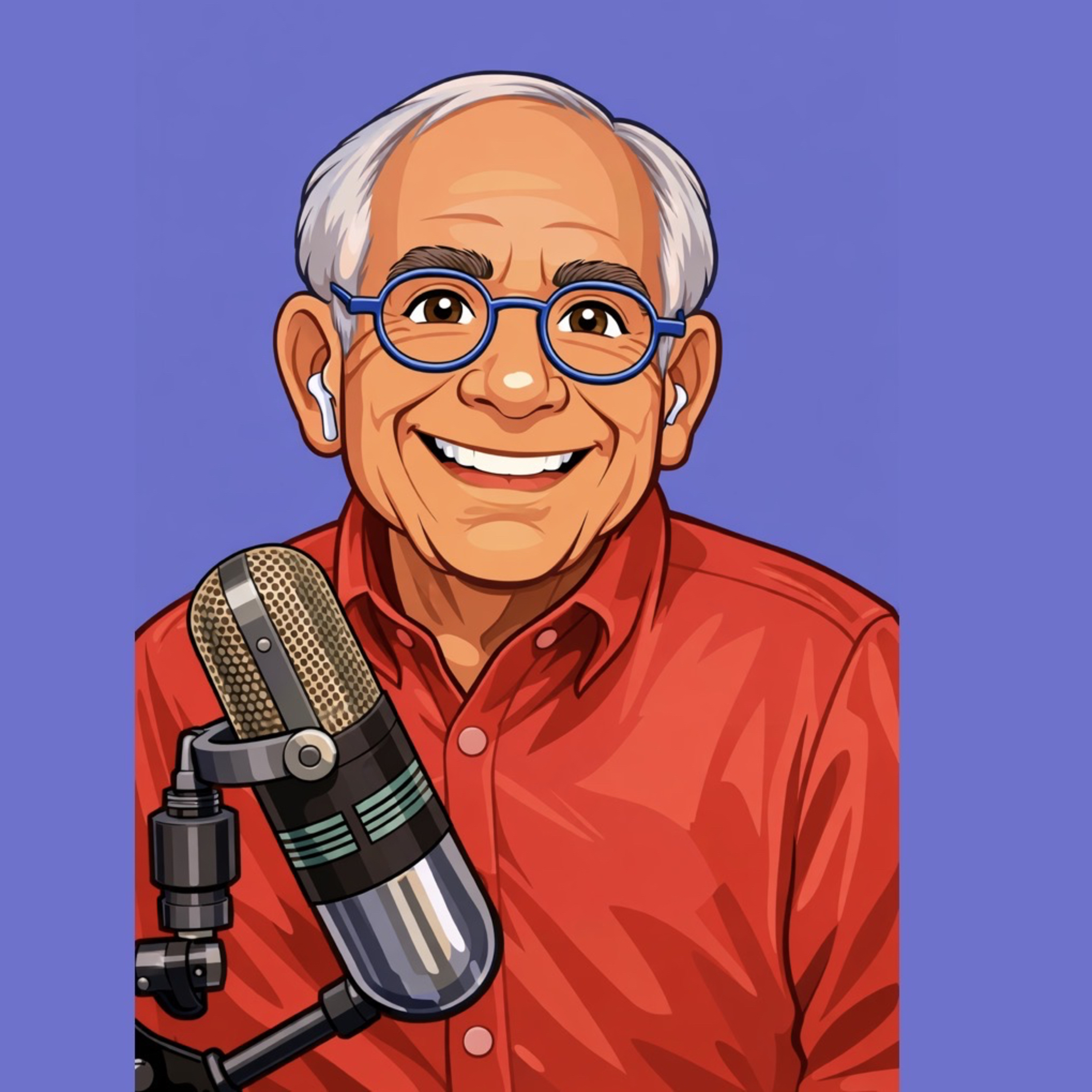
Dr Caroline is a Mental Health GP who is passionate about helping her clients resolve their difficult memories using EMDR. Eye Movement Desensitisation and Reprocessing is an amazingly effective therapy for trauma and difficult memories. This podcast demystifies EMDR. Dr Caroline shares all her knowledge and experience to help you decide if EMDR is for you, and how best to get the most from your EMDR journey.
Be sure to visit the podcast's website and support the creator: www.emdrdoctor.com.au
Author
Dr Caroline Lloyd
Category
Podcast website
Latest episode
Oct 30, 2026
Where to listen?
Podcasts in the app Replaio Radio Coming soonPodcasts are coming to the app soon. Install now and be the first to see a whole new take on podcasts
 Install for free
Android 10M+ downloads · 4.7+ rating
iOS soon
Episodes
81. Rejection Proof: How EMDR takes the sting out of "No" 30.10.2026 12:19
In this episode, Dr. Caroline Lloyd discusses Jia Jiang's book 'Rejection Proof' , in which he overcame his fear of rejection through daily public exposure challenges. She hypothetically case-conceptualises his story (not as a client) through an EMDR lens: Tracing his fear to early shame-based experiences and outlining how resourcing, early memory targets, and flash-forwards could shift his belief...
80. EMDR as a rigid protocol or a creative adventure? 23.10.2026 10:09
In this episode, Dr. Caroline Lloyd addresses the creative adaptability of EMDR, addressing the perception that it is a rigid, script-driven therapy. Creative and flexible aspects of EMDR can include how it's delivered; what it can be used for; and techniques used within each session Key Points: 1. The criticism: EMDR is sometimes seen as rigid and protocol-driven, which reflects the early...
79. Positive parenting for EMDR 17.10.2026 16:38
In this episode, Dr. Caroline Lloyd explains how positive parenting principles can help adults, especially those with difficult childhoods and dissociative identity disorder (DID), learn to treat themselves with kindness. She describes a sequence of listen and validate feelings first, then comfort and regulate, and only then solve the problem. Responding to your own emotional "whispers" with compa...
78. How to choose an EMDR target to process 27.09.2026 24:34
In this episode, Dr. Caroline Lloyd addresses how to choose a memory target for EMDR, emphasizing that there's no "wrong" choice, but some will be more effective than others. She introduces the "wheelbarrow of trauma" analogy, explains the concepts of "memory networks”, “chunking”, and working with past, present and future targets. Key Points: 1. No target is truly "wrong" – Any memory chos...
77. Myths about DID 08.09.2026 16:37
In a preview of the upcoming webinar on Dissociative Identity Disorder (DID), on 17th September 2026, Dr. Caroline Lloyd dispels five common myths: that DID is rare, that it is dangerous, that it isn't real, that everyone has DID, and that therapy aims to eliminate alters through fusion. Key Points: 1. Myth: DID is rare. In reality, DID affects an estimated 1–1.5% of the population worldwid...
76. EMDR for FND 30.08.2026 23:28
In this episode, Dr. Caroline Lloyd explores functional neurological disorder (FND), which produces real, medically unexplained physical symptoms (like tremors, seizures, or gait problems), rooted in unconscious emotional distress rather than deliberate deception. FND is often linked to trauma, and can be shaped by cultural attitudes toward emotional expression. Research is limited on the role of...
75. EMDR for chronic illness 25.08.2026 13:05
In this episode, Dr. Caroline Lloyd discusses using EMDR to address the trauma associated with chronic and degenerative illness; including loss of control, anticipatory grief, anger, guilt, and self-blame, among both patients and caregivers. She explains how EMDR can be used to process specific painful memories tied to the illness journey; helping people release fear, shame, and distress, although...
74. How soon is to soon to do EMDR? 14.08.2026 14:47
In this episode, Dr. Caroline reflects on assisting with EMDR basic training led by Larissa Meysner, noting how more recent training now incorporates more sophisticated, somatically-focused techniques earlier than in the past. She discusses her own evolving practice, which blends EMDR with schema therapy, EMDR 2.0, and relational integrative approaches, emphasizing creativity and a lighter tone, e...
73. Can EMDR help menopause? 04.08.2026 13:13
In this episode, Dr. Caroline Lloyd discusses the possible role of EMDR for helping with menopause. EMDR plays a role in resolving underlying CPTSD/trauma that often resurfaces as estrogen declines; and for directly targeting the distress, anxiety, and self-consciousness associated with symptoms like sleep disruption and hot flushes. Key Points: 1. Declining estrogen can "unmask" underlying...
72. EMDR for perfectionism 12.07.2026 21:57
In this episode, Dr. Caroline Lloyd explores perfectionism not as a simple drive for high standards, but as a fear-based defense. Perfectionism often functions as protection against shame— “if I’m perfect, I won’t be criticized, rejected, or deemed not good enough”. Perfectionism often develops in childhood, and can become an exhausting adaptation that evolves into a vicious cycle: high standards...
71. EMDR FAQs 27.06.2026 18:11
In this episode, Dr. Caroline Lloyd answers eight common questions about EMDR therapy, including how it differs from hypnosis, the importance of eye movements, how quickly it works, and its ability to treat a wide range of conditions beyond PTSD. She also addresses whether it can surface forgotten memories, whether belief in the therapy is necessary, the possibility of feeling worse before better,...
70. How can EMDR help sleep? 19.06.2026 16:13
In this episode, we explore EMDR and sleep. Host, Dr. Caroline Lloyd explains how EMDR can be used in reducing the anxiety and catastrophic thinking behind insomnia, and also as a simple but effective self-soothing technique. Dr. Lloyd discusses nightmares, sleep talking, and sleep paralysis - emphasizing psychoeducation and fear reduction through EMDR. The episode also covers practical sleep hygi...
69. Flying Blind - ways to help unspeakable shame. Blind to therapist protocol in EMDR therapy 28.05.2026 17:07
In this episode, Dr. Caroline Lloyd explores the highly effective "Blind to Therapist" EMDR protocol. Sometimes, the shame attached to a traumatic event is simply too excruciating or unspeakable for a client to verbalize. Instead of spending months or years trying to get a client to narrate their trauma, therapists can use the Blind to Therapist protocol to provide immediate relief. Dr. Lloyd brea...
68. Mothers in EMDR therapy 12.05.2026 11:04
In this episode, Dr. Caroline Lloyd reflects on the many experiences Mother’s Day can bring, including non-traditional mothering, caring for aging mothers, and grief after early loss. Drawing on her work providing group EMDR with the Australian organization Mums Matter, she describes how group EMDR involves minimal trauma disclosure, uses bilateral stimulation and distress ratings via chat, and su...
67. Granparents in EMDR therapy 01.05.2026 18:15
In this episeode we explore the the role of grandparents in clients’ lives, within the EMDR framework. Sometimes, intergenerational trauma can span generations, with clients aiming to break the cycle for their own children. While, for many clients, grandparents represent love, kindness, protection, and stability, often contrasting with a parent’s traumatic experiences. Grandparents may provide a d...
66. I'm addicted to social media, can EMDR help me? 10.04.2026 13:50
In this episode, we examine the potential for EMDR to tackle the pervasive problem of social media addiction and its impact on daily life. Constant scrolling can erode focus, disrupt sleep, provoke anxiety, and fuel a cycle of comparison that harms self-esteem. The rapid influx of information can also shorten attention spans and reduce cognitive clarity. As social media addiction often masks under...
65. EMDR for Adoption Trauma 20.03.2026 14:25
In this episode, we explore the complex nature of adoption trauma, and how EMDR and other therapies can support healing. Adoption can involve multiple layers of loss, identity challenges, and attachment disruptions—not just for adoptees, but for all members of the adoption triad (the adoptee, adoptive parents and birth parents). As well as early separation trauma, and ongoing feelings of differenc...
64. EMDR Rethinking Personality Disorders 06.03.2026 14:39
This episode explores a new way of understanding personality disorders. Instead of seeing them as fixed and lifelong conditions, emerging research suggests they may actually be adaptive responses to early trauma. We discuss how personality traits develop through both genetics and early experiences, and how difficult childhood environments can lead to protective beliefs and coping patterns tha...
63. Taming Fear and Panic using EMDR 20.02.2026 16:13
In this episode, we explore one of the most common emotional experiences brought to therapy: fear—in all its forms, from anxiety to full-blown panic. We unpack how fear manifests in the body, why it sometimes gets “stuck,” and how EMDR can help calm and retrain the brain’s response to fear triggers. Fear doesn’t have to rule your life. Panic attacks and chronic anxiety are highly treatable. With E...
62. Shame and Guilt in therapy - an EMDR approach 16.02.2026 15:01
In this episode, we explore two of the most complex and misunderstood emotions in human psychology — shame and guilt. While guilt tells us “I’ve done something bad,” shame tells us “I am bad.” Drawing on the groundbreaking research of Dr. Brené Brown, we unpack how shame develops, why it’s often hidden even within therapy, and — most importantly — how it can be healed. Through deep clinical experi...
61. Healing Anger - an EMDR approach 05.02.2026 10:49
Today we are talking about anger... the 'bodyguard' of sadness, fear or shame. It has such connotations in our society, especially for women. Anger in women can be a little bit taboo, or we may also be a bit afraid of anger, if it has been a feature of our young years. If we repress our anger, it has ways of spilling out, and keeping anger under wraps, can be physically demanding and exhausting, i...
60. Crying in EMDR sessions 29.01.2026 14:34
Is it normal to cry during EMDR therapy? This is one of the most common questions clients ask before their first session. In this episode of the EMDR Doctor Podcast, I explain why crying in EMDR is not only normal, but often a sign that meaningful processing is occurring. Many people are surprised to find strong emotions arise in EMDR, even when they feel they’ve already “dealt with” a memory. EMD...
59. What is EMDR? 22.01.2026 8:45
In the first episode of the EMDR Doctor podcast for 2026, I return to basics by asking the fundamental questions; what is EMDR, how does it work, and why do so many people, who have done years of therapy, suddenly find that they have fast tracked their recovery with EMDR? I explain the basics of EMDR therapy, dispelling misconceptions about its name and methodology. Listeners will learn about the...
58. Finding Peace: Group EMDR in the Wake of Terror 19.12.2025 10:38
This week’s episode of The EMDR Doctor Podcast comes from a heavier place. Following the devastating Bondi attack, it didn’t feel right to carry on with a light, festive conversation. Instead, I wanted to pause, acknowledge the collective grief many in our community are feeling, and speak about something practical and hopeful — how Group EMDR can support people after tr...
57. Unwrapping the Christmas Blues 12.12.2025 22:28
It’s Christmas… and I’m embracing my inner Grinch just a tiny bit this week. In this episode, we’re unpacking the Christmas Blues — the stress, the chaos, the pressure, the grief, the perfectionism, the money stuff, the complicated families… all of it. Because honestly? A lot of people don’t love Christmas, and there are so many valid reasons why. From impossible expectations to old wounds that ge...
Similar podcasts







Listen to the The EMDR Doctor Podcast podcast in Replaio
Radio and podcasts in one app - free, with no sign-up. Install today and do not miss the launch
Replaio is not a podcast publisher; show names, artwork and audio belong to their authors and are distributed through public RSS feeds.
