
Dr Thomas D. Riisfeldt
Riisfeldt Neurology Education
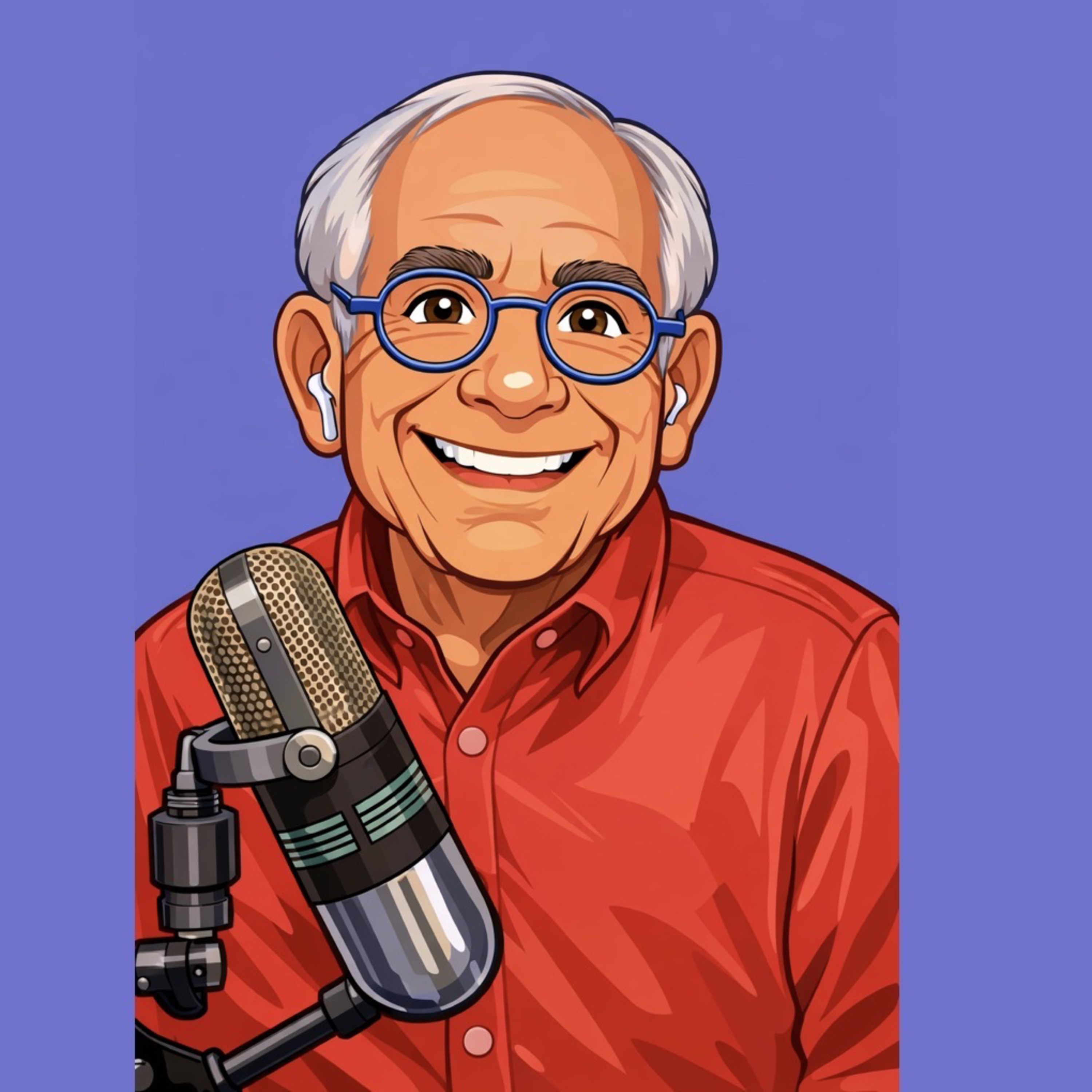
Welcome to Riisfeldt Neurology Education, a not-for-profit, free open access project with a philosophical touch exploring all areas of clinical neurology! I’m your host, Dr Thomas D. Riisfeldt, an Australian neurologist, epileptologist and neurophysiologist/neuromuscular specialist, and also a physician, philosopher and bioethicist. This podcast is aimed at medical students, neurologists/physicians and their trainees, and any other medical, nursing or allied health professionals involved in the care of patients with neurological conditions. From cortex to curiosity... Keep calm and synapse on!
Be sure to visit the podcast's website and support the creator: rneurologyeducation.org
Author
Dr Thomas D. Riisfeldt
Category
Podcast website
Latest episode
Jan 12, 2026
Where to listen?
Podcasts in the app Replaio Radio Coming soonPodcasts are coming to the app soon. Install now and be the first to see a whole new take on podcasts
 Install for free
Android almost 10M downloads · 4.8 rating
iOS soon
Install for free
Android almost 10M downloads · 4.8 rating
iOS soon
Episodes
Diagnostic reasoning 101: Generating a differential diagnosis in medicine & neurology 12.01.2026 50:08
CORRECTIONS: I probably should have emphasised that the anterior horn cell/lower motor neuron cell body sits in the ventral horn of the spinal cord, with its axon then projecting through the nerve root, plexus, peripheral nerve and ultimately down to the neuromuscular junction. The anterior horn cell diseases/motor neuronopathies are therefore encompassed by the anatomical approach laid forth spec...
SGLT2 inhibitors and reduced risk of Parkinson’s disease and dementia: Journal club 29.12.2025 49:08
This episode continues our run of journal club episodes, this time looking at whether SGLT2 inhibitors used for type 2 diabetes mellitus have any associated reduction in dementia (such as Alzheimer’s disease and vascular dementia) and Parkinson’s disease, therefore falling into these respective series as well. The content of this episode is best suited for more senior audience members (neurologist...
Dopamine uptake scan (DAT SPECT; DaTscan) for Parkinson's disease/primary extrapyramidal syndromes 15.12.2025 48:01
This instalment brings another journal club episode, this time in the Parkinson’s disease and movement disorders series, focussing on the diagnostic accuracy of dopamine uptake scans (DAT SPECT; DaTscan) for Parkinson’s disease and the other primary extrapyramidal disorders/Parkinson’s plus syndromes (progressive supranuclear palsy, PSP; multiple system atrophy, MSA; corticobasal degeneration, CBD...
Tenecteplase for stroke to 24 hrs: TRACE-III study journal club 02.12.2025 1:00:06
We’re thrilled to present our first journal club episode, focusing on tenecteplase for ischaemic stroke in the 4.5-24 hour time window in patients with large vessel occlusions (LVOs) in whom mechanical thrombectomy is not an available option (the TRACE-III study, published in the New England Journal of Medicine; NEJM in 2024). This is a landmark study extending the thrombolysis timing window beyon...
How to run a stroke call/code stroke & decision-making re. thrombolysis/thrombectomy eligibility 27.11.2025 1:02:25
Hope you’re ready for an important one! In this next instalment in the stroke & cerebrovascular diseases series we discuss how to effectively run a stroke call/code stroke, focussing on establishing the time last seen well (or midpoint of sleep), the baseline function (modified Rankin scale; mRS), stroke deficits (National Institutes of Health Stroke Scale; NIHSS), relevant comorbidities, & antico...
Parkinson’s disease: Common ward management dilemmas 10.11.2025 30:42
In this next episode in the movement disorders and Parkinson’s disease series, we begin with a brief overview of the mechanisms of action of the medications used to treat Parkinson’s disease, before focusing on five common and important ward dilemmas encountered in the management of patients with Parkinson’s disease: (1) the patient is unable to take their oral antiparkinsonian medications, (2) th...
Extrapyramidal & Parkinson’s disease examination (theory) with pearls & pitfalls 03.11.2025 36:26
We’re thrilled to announce the first episode in our movement disorders & Parkinson’s disease series (also continuing our clinical method series), beginning with a discussion of how to perform an extrapyramidal examination, particularly in the context of suspected Parkinson’s disease, progressive supranuclear palsy (PSP), multiple system atrophy (MSA), corticobasal degeneration (CBD; or cortico...
Clinical approach to the dizzy patient, & vertigo causes & overview of management 29.10.2025 46:03
The second episode in the neuro-otology and vertigo series takes a step back to review the clinical approach to the patient presenting with the notoriously misinterpreted symptom of ‘dizziness’, before reviewing the best way to classify common causes of vertigo into either acute persistent vertigo vs. episodic vertigo (which can in turn be triggered vs. non-triggered). It then discusses the diagno...
Central vertigo (HiNTs+) & Dix-Hallpike/related examinations (theory) with pearls & pitfalls 26.10.2025 45:54
We’ve got another surprise installed for you today… the first episode in the neuro-otology and vertigo series! (Again as an overlap with our ongoing clinical method series). This episode focuses on the HiNTs+ examination in distinguishing central from peripheral causes of an acute vestibular syndrome, in particular distinguishing a posterior circulation stroke (of the brainstem or the cerebellum a...
How to perform a lumbar puncture (LP) & what tests to order 22.10.2025 1:04:33
This is the first episode in the neurological procedures series… drum roll please… you guessed it, it’s the lumbar puncture (LP)! This episode describes at length the many indications for lumbar punctures (a super helpful procedure!), the contraindications and how to evaluate these, how to consent the patient, what equipment is required and recommended, different options for ways to perform the pr...
NIHSS hyperacute stroke examination (theory) with pearls & pitfalls 19.10.2025 58:33
Correction: 19:30 Visual threat testing is for testing visual fields when the patient isn't properly responding to your initial standard field testing (not for when there is already an established field deficit in a cooperative and responsive patient) Correction: 21:31 Should say "retrochiasmal components" (not "upper motor neuron components", oops!) Correction: 45:56 Same...
Lower limb neurological examination (theory) with pearls & pitfalls 16.10.2025 46:44
This episode further continues our clinical method series by turning to the lower limb examination, focussing on tips and tricks to optimise your examination technique assessing inspection, tone, power, reflexes, sensation, coordination, stance and gait. The diagnostic utility of many of these examination components are critically discussed, and various pearls and pitfalls are highlighted, along w...
Upper limb neurological examination (theory) with pearls & pitfalls 12.10.2025 48:01
This episode continues our clinical method series by turning to the upper limb examination, focussing on tips and tricks to optimise your examination technique assessing inspection, tone, power, reflexes, sensation and coordination. This episode also introduces some neurophysiological and anatomical principles, and ties these in with key patterns encountered in clinical neurology (such as distingu...
PART 2: Cranial nerves examination (theory) with pearls & pitfalls 04.10.2025 44:25
This episode is part 2 of the session taking a deep dive into the specific examination techniques for each cranial nerve, focussing on pearls and pitfalls for optimal testing, along with focussing on linking the examination to relevant neurological pathologies for contextualisation and to aid memorisation. This episode, part 2, focuses on cranial nerves V and VII-XII (the trigeminal, facial, vesti...
Cranial nerves examination (theory) part 1 with pearls & pitfalls 02.10.2025 59:03
This episode begins with a description of the examinable components of each cranial nerve, and how they are best grouped together for an efficient and logical examination, before taking a deep dive into the specific examination techniques for each cranial nerve, focussing on pearls and pitfalls for optimal testing, along with focussing on linking the examination to relevant neurological pathologie...
Nocturnal hypermotor (hyperkinetic) seizures vs. physiological arousals & parasomnias 30.09.2025 22:29
This episode discusses how to semiologically distinguish nocturnal hypermotor (hyperkinetic) seizures typical of sleep-related hypermotor epilepsy (SHE, formerly nocturnal frontal lobe epilepsy, NFLE) from the two main differential diagnoses for paroxysmal sleep behaviours, namely exaggerated/confusional physiological arousals and various parasomnias (in both NREM and REM sleep, especially night t...
Explaining our logo! 30.09.2025 10:22
This short (and less serious!) episode explains the many hidden details in our intricate logo, with a few perhaps unexpected learning points discussed along the way, including a brief discussion of different ways of acquiring an electroencephalogram (EEG) recording, the four radiological locations for typical multiple sclerosis (MS) lesions, some of the clinical symptoms and signs of idiopathic Pa...
Is it a seizure? Distinguishing seizures, convulsive syncopes & psychogenic non-epileptiform spells 27.09.2025 1:20:20
This episode discusses how to distinguish a bilateral tonic-clonic seizure (of generalised, focal or unknown onset) from a convulsive syncope and from a psychogenic non-epileptiform spell/seizure (PNES, as part of functional neurological disorder, FND). To do so, we focus on key aspects of the semiology of the episode in addition to other relevant historical factors in the systems review, past me...
Epilepsy definition & classification 25.09.2025 1:16:28
This episode first explores the clinical definition of epilepsy, why diagnosing epilepsy is important, and the fundamental steps required to make an accurate diagnosis. It then discusses the relationship between seizure classifications and epilepsy classifications, and the core clinical and electrographic components that constitute an epilepsy syndrome. It then provides a detailed overview of th...
Seizure definition & classification 25.09.2025 58:14
This episode explores the ways in which seizures can be pathophysiologically, clinically and electrographically defined, and considers the various possible clinical manifestations of seizures, before scrutinising the current 2025 International League Against Epilepsy (ILAE) classification of seizures, encompassing focal, generalised and unknown-onset seizures, followed by a comparison of this curr...
History taking in neurology 25.09.2025 39:47
This episode begins by reviewing the importance of optimal history taking in clinical neurology, along with associated history-taking pearls and pitfalls, before exploring the ordering and components of the history. It then progresses to an in-depth discussion of the history of the presenting complaint, systems review, past medical history, family history, medications and allergies, and the psych...
Introduction to audio podcast & video channel 23.09.2025 27:26
Welcome to the inaugural episode of Riisfeldt Neurology Education (@rneurologyeducation), a not-for-profit, free open access and easily accessible project exploring all areas of clinical neurology! I’m your host, Dr Thomas D. Riisfeldt, an Australian neurologist, epileptologist, and neurophysiologist/neuromuscular specialist, and also a physician, philosopher and bioethicist. This podcast is aimed...
Similar podcasts



Listen to the Riisfeldt Neurology Education podcast in Replaio
Radio and podcasts in one app - free, with no sign-up. Install today and do not miss the launch
Replaio is not a podcast publisher; show names, artwork and audio belong to their authors and are distributed through public RSS feeds.
