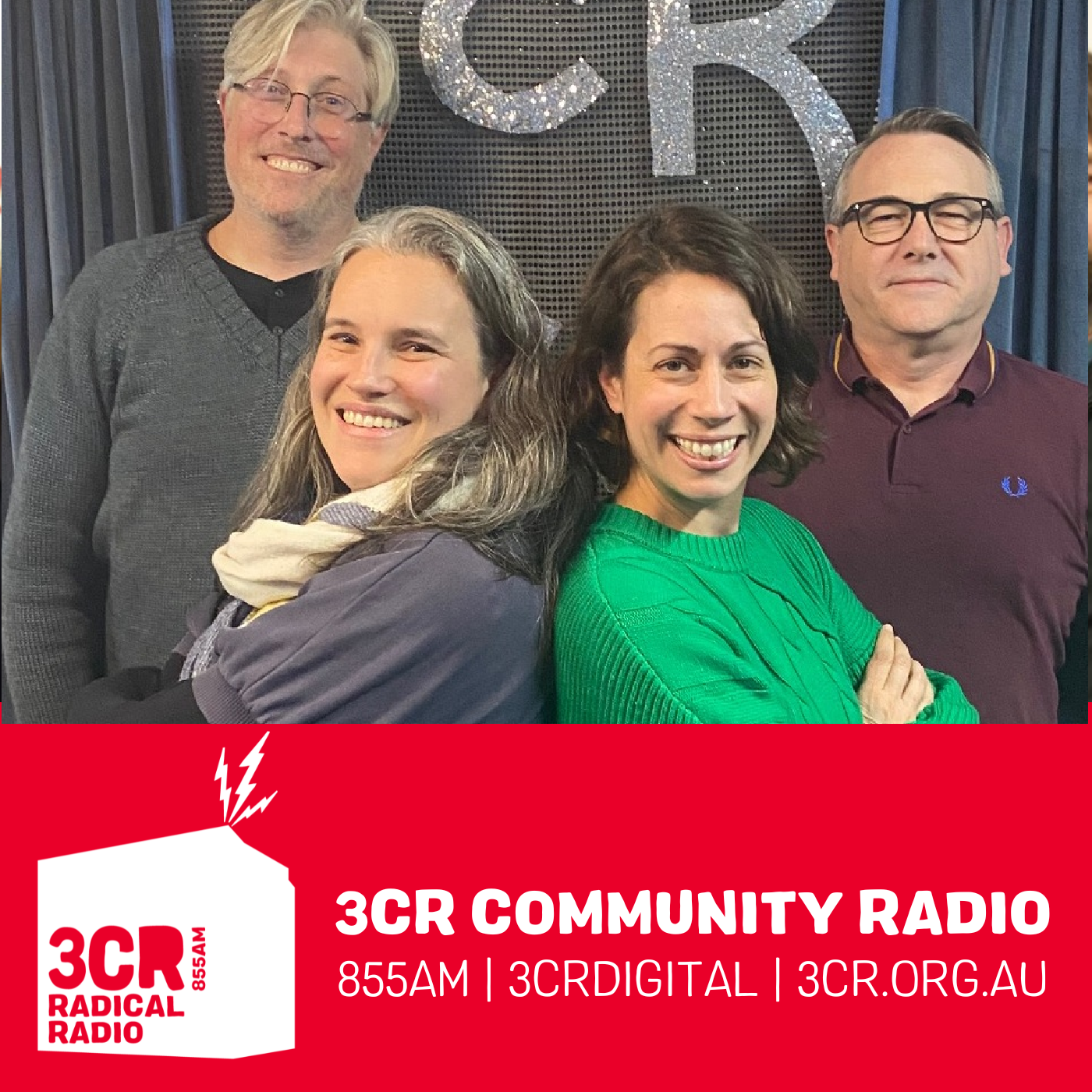
Chris Lassig, Stuart Burns, Claire Farrugia and Linden Ashcroft.
Lost in Science
Lost in Science is your weekly hit of mind-blowing science, strange facts, and big ideas. From cutting-edge discoveries to the science behind everyday life, our curious and passionate hosts make it fun, fast, and fascinating. If it’s weird, wonderful, or just worth knowing - we’re on it.
Author
Chris Lassig, Stuart Burns, Claire Farrugia and Linden Ashcroft.
Category
Podcast website
Latest episode
Jul 8, 2026
Where to listen?
Podcasts in the app Replaio Radio Coming soonPodcasts are coming to the app soon. Install now and be the first to see a whole new take on podcasts
 Install for free
Android 5M+ downloads · 4.8 rating
iOS soon
Install for free
Android 5M+ downloads · 4.8 rating
iOS soon
Episodes
Blue LED's, microfossils and rocking reef fish 06.05.2015
This week on Lost in Science, Beth talks to Phd candidate April Boaden about her research into the impacts of fishing on the Great Barrier Reef. Stuart looks at the impacts of LEDs and what they are, and Chris finds out that the mysterious shapes found in ancient Western Australian rock are not ancient fossils, but minerals in the rock.
Coloured quinces, human DNA manipulation and ancient antibiotic resistance 29.04.2015
On this week's show, Chris discovers why red is a common colour in autumn among the plants. Beth discovers that antibiotic resistance in bacteria has probably been lurking for a very long time. And Stu reports on recent developments in human gene manipulation in living embryonic cells.
Hiring women in science, poison gas and you can name Pluto 22.04.2015
A recent paper suggests that there is no discrimination against women at the hiring stage of a science job. We discuss what these findings might mean and talk about other reasons why women choose not to go further in science careers. With the centenary of World War l upon us, Stu talks about why this war is called the chemists war and the chemical processes and poisonous gases that were used at th...
Mice talk, Brontosaurus resurrected, Saving the Swift parrot 15.04.2015
The Brontosaurus is a well known dinosaur, which was soon after discovery relegated to an incorrect synonym: its species had already been described elsewhere and named Apatosaurus. But new evidence suggests that the Brontosaurus is a genuine species of Diplodocid, and is once more recognised as a valid taxon for a real exitinct species. Mice are certainly not extinct, and while we may have been ta...
Nitrogen, Big Bang and talking bats 08.04.2015
Lost in Science talks up Nitrogen, where would we be without it? We take a look at a theory of the beginning of the Universe and if it holds up to scrutiny. We then take look at language acquisition in bats and the take a listen to the kind of music that cats like to listen to.
Bugs in water, in your body and in the comments 01.04.2015
Chris talks to John Gooderham at launch of The Waterbug App (www.thewaterbugapp.com), which helps you measure environmental health by identifying freshwater macroinvertebrates—like the ferocious water tiger pictured above. Meanwhile, Beth talks some more to Linda Blackall about the helpful symbiotic microbes on which we and other organisms depend, and Stu digs into a study from the journal PLOS ON...
Microbes, meatbags and consensus 25.03.2015
The team is joined by a couple of funny scientists with a show in the Melbourne International Comedy festival about the human body, we also discuss the implications of a study showing that pairs of people reach a consensus even when it's obvious a group member is more or less skilled than the other member in the group, and we talk to Dr. Linda Blackall about the importance of microbes.
Limpet Teeth 04.03.2015
Limpet Teeth - the hardest substance know to science.
Similar podcasts








Listen to the Lost in Science podcast in Replaio
Radio and podcasts in one app - free, with no sign-up. Install today and do not miss the launch
Replaio is not a podcast publisher; show names, artwork and audio belong to their authors and are distributed through public RSS feeds.