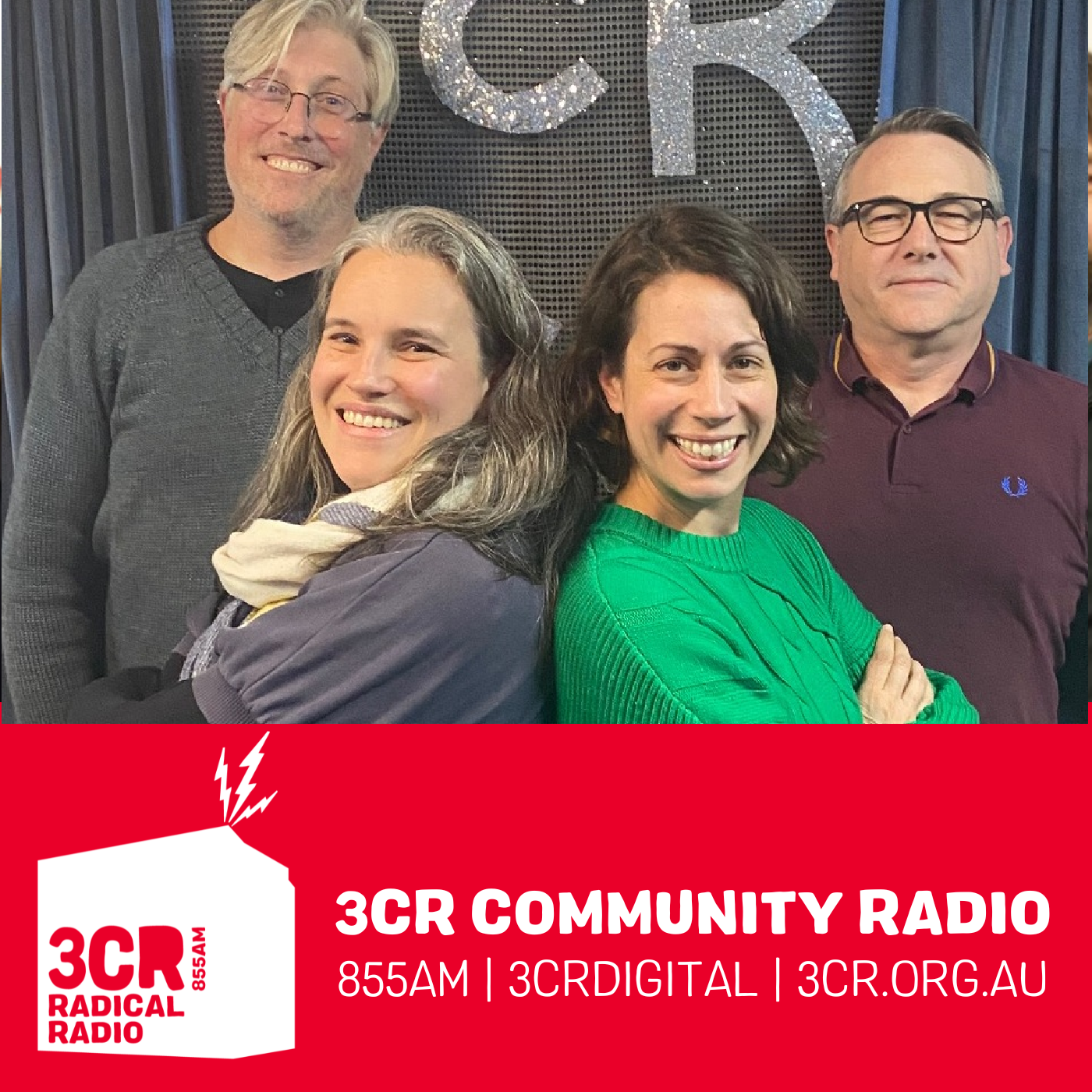
Chris Lassig, Stuart Burns, Claire Farrugia and Linden Ashcroft.
Lost in Science
Lost in Science is your weekly hit of mind-blowing science, strange facts, and big ideas. From cutting-edge discoveries to the science behind everyday life, our curious and passionate hosts make it fun, fast, and fascinating. If it’s weird, wonderful, or just worth knowing - we’re on it.
Author
Chris Lassig, Stuart Burns, Claire Farrugia and Linden Ashcroft.
Category
Podcast website
Latest episode
Jul 8, 2026
Where to listen?
Podcasts in the app Replaio Radio Coming soonPodcasts are coming to the app soon. Install now and be the first to see a whole new take on podcasts
 Install for free
Android 5M+ downloads · 4.8 rating
iOS soon
Install for free
Android 5M+ downloads · 4.8 rating
iOS soon
Episodes
The hunt for Australia's climate past, dino tracks and billion year old algae 05.04.2017
This week on the show climatologist and weather data rescuer Dr Linden Ashcroft talks about her research discovering old (and often lost) Australian weather records to get a better understanding of what our climate was like before we had a bureau of meteorology taking standardised measurements. We chat about how historic weather data is hugely important for understanding weather events today and f...
Orangutan flange, mini mammals and brain facts 22.03.2017
This week on the show Claire uncovers what is really going on with those felshy melon shaped protrusions on the side of male orangutans faces, and why do only some males have 'em? Manisha talks about new research into how climate change caused dwarfism in mammals based on data and fossil records from over 50 million years ago. And a truly cerebral moment as Chris goes head to head with science com...
Food v cancer, new ancient humans, and kale, so much kale 15.03.2017
Can you believe the many, many news reports that tell you certain foods can cause or prevent cancer? A 2013 paper analysed the evidence for 50 common ingredients to find out whether the claims stack up. We also dig up a new discovery of fossils of mysterious human ancestors in China, and we find out why kale is so nutritious and different from other members of the species Brassica oleracea.
Velvet Worms, Dragon's blood and Molasses flood 08.03.2017
The unusual Velvet worm may be a mystery to many, but this weird creature has been around for 500 million years, hiding in the undergrowth. Find out what sets it apart from most other animals. How does the blood of Komodo Dragons offer the promise of a new kind of antibiotic? Claire finds out. And the Great Molasses Flood of 1919, how did it happen and why did it cause so much havoc? Chris explain...
Earthquakes, case for a new continent & evaluating your achievements 01.03.2017
Another Earth moving episode of Lost in Science! This week Stu talks us through how digging holes and damming rivers is fundamentally changing the Earth's geology and seismic activities. That's right - more frequent Earthquakes from human activities. Also Claire gives the lowdown on the new continent in town - Zealandia. It might be 94% under water but Zealandia stands up to scrutiny when pitted a...
Black holes, tasty tomatoes and visualisation 22.02.2017
This week, Chris reveals why we're so sure black holes exist, Manisha explains how to use visualisation to achieve your goals, and Claire reports how scientists can make tomatoes tasty again.
Bushfire risk, frog spit, and avoiding decision fatigue 15.02.2017
Why is Australia's landscape so susceptible to fire, and how will a changing climate alter the risk of bushfires? Stu talks to Dr. Trent Penman a forest scientists with the University of Melbourne to find out. Chris describes the non-newtonian characteristics of frog spit and how it helps them catch their dinner. Manisha continues her series on the psychology of keeping resolutions by looking at d...
China's water pollution, chocolate pollinators and kicking new year goals part 2 08.02.2017
This week we talk to Dr Matthew Currell about how manufacturing in China has led to unprecedented water pollution throughout thw entire country. This is now causing widespread health effects including a phenomenon known as cancer villages - which are small communities in China close to polluting factories where cancer rates are far above the national average. You can read more about the water poll...
Venom, conspiracies and resolutions 01.02.2017
In our first episode back for 2017, Chris finds out which venomous Australian animal causes the most harm, Stu calculates the unlikeliness of keeping conspiracies secret, and Manisha gives a science-based tip for keeping your New Years resolution by setting smaller goals.
Lost in Science Summer Series part 4 25.01.2017
Lost in Science Summer series: We hear from speakers at Laborastory, a monthly event in Melbourne where people share stories of their science heroes and science villainsThis week we hear from Alanta Colley about the good and evil ways of birth control pioneer Marie Stopes; while Dani Measday digs up the dirt on the long running and melodramatic rivalry between palaeontologists Othniel Charles Mars...
Lost in Science Summer series part 3 18.01.2017
Lost in Science Summer series: We hear from speakers at Laborastory, a monthly event in Melbourne where people share stories of their science heroes and science villainsArjun Chalal gives us an insight in to one of the most famous unknown players of 20th century medicine, the immortal Henrietta Lacks, and Jessica Snir looks back on the somewhat grotesque achievements and unfulfilled plans of Russi...
Lost in Science Summer Series part 2 11.01.2017
Lost in Science Summer Series continues this week with more stories from the Laborastory, a monthly event in Melbourne where speakers talk about their science heroes (and the occasional villain). This week Anna Sexton explains about the time malaria was a good thing, and Nicholas J. Johnson talks about amateur Everythingologist Charles Dawson, and his quest to find the Missing Link.
Lost in Science Summer Series 04.01.2017
Lost in Science Summer series showcases stories from the Laborastory, a monthly event where science enthusiasts share stories of their science heroes, and occasionally science villains. This weeks we hear from Lost in Science hosts Chris Lassig on would-be time traveller Dr. Ronald Mallett, and Stu Burns recounts the story of the villainous hero, Dr. Fritz Haber.
End of year wrap up, including 2 new frogs, lots of tributes, and a science of the year quiz 28.12.2016
The end of year wrap up for Lost in Science, including tributes to scince names who passed away over 2016, introducing two new frogs discovered during the year, and a science quiz of major science events on 2016. See if you can do better than the Lost in Science crew!
British Medical Journal seasonal japes, the truth about Rudolph; Do people put on weight at Christmas, and why do they get so sleepy? 21.12.2016
The holiday season episode of Lost in Science is full of festive science facts, including the British Medical Journal's annual cracker jokes, the shocking truth about the most famous Reindeer, how much weight do people put on over Christmas, and why do we get sleepy after a Christmas feast?
Is NASA's EM drive really a thing? And why students are not studying science 14.12.2016
This week we examine the plausibility of the impossible space engine, the EmDrive, and we talk about how and why the number of Australian students enrolling in science is decreasing.
A2 milk, plant defence and dwarf planets 07.12.2016
Claire takes a look at the science behind all this marketing of A2 milk you see on the supermarket shelf. Manisha talks about plant defences. Chris introduces us to the other lesser known dwarf planets in our solar system. It isn't just Pluto out there, you know.
Echidnas, Lasers and Malaria 30.11.2016
Stu Burns finds out how putting fitbits on Echidnas helped us understand how important they are ecologically by talking to researcher Christine Cooper. Chris asks "LASERs, how do they work?"And Claire talks to Anna Sexton about her PhD research into Malaria.
Milk: cow v soy v nut; plant genes for sex and dryness 23.11.2016
This week, Claire tells us all we need to know about the nutritional value of soy and nut milks vs cow, and Stu speaks to Scott McAdam from the University of Tasmania about his discovery of a gene that determines the sex of ferns and is also the key to drought tolerance in flowering plants.
Oldest evidence of Aboriginal habitation; smart bees; and science of will power 16.11.2016
This week, we look at the new findings showing the oldest evidence for aboriginal habitation in arid Australia is actually 10 000 years previous to what was previously thought. Also, Chris takes us into the mind of the bumble bee to shift our thinking on how we see animal intelligence. Can bumblebees really learn and teach? And what is your will power like? Stu takes a look at the psychological st...
Histamines, antihistamines, the placebo effect and Victorian mosquito plague 09.11.2016
Ever wondered what histamines are, and why some people are anti-histamine? Stu finds out why histamines are actually important and why stopping them permanently might be a bad idea. Chris looks at a new review questioning the very existence of the placebo effect. And Claire discovers that South Eastern Australia is undergoing a mosquito plague of biblical proportions, and wonders if it's a bad thi...
Billionaire mad science, Devil tumour immunity, and natural contraception app 02.11.2016
This week we look at some more science projects from Silicon Valley billionaires, including efforts to travel to other stars, cure all diseases and destroy the universe. We also hear some optimistic news about Tasmanian Devils evolving immunity to the deadly facial tumour disease, and we learn about the NaturalCycles app that can apparently accurately and successfully predict a woman's fertility c...
Characterising hallucinations and the suckiest creature of all time. 26.10.2016
Hallucinations have been recorded for centuries both arising from illness and from consumption of certain substances, but what exactly are they? On the show this week we talk to Associate Professor Joel Pearson from UNSW about recent research that characterises hallucinations in a way that shows their origin, and a way to quantify them so they can be studied with greater accuracy. Here's a link to...
2016 Nobel Prizes for science 19.10.2016
This week on the show we discuss the winners of the Nobel prizes for science this year. Prizes were awarded for Medicine and Physiology, Chemistry, and Physics. The winner for the Medicine and Physiology prize won for his work explaining the means by which cells recycle components, known as autophagy. The Chemistry prize was shared by three scientists who contributed to the technology of molecule...
Similar podcasts





Listen to the Lost in Science podcast in Replaio
Radio and podcasts in one app - free, with no sign-up. Install today and do not miss the launch
Replaio is not a podcast publisher; show names, artwork and audio belong to their authors and are distributed through public RSS feeds.