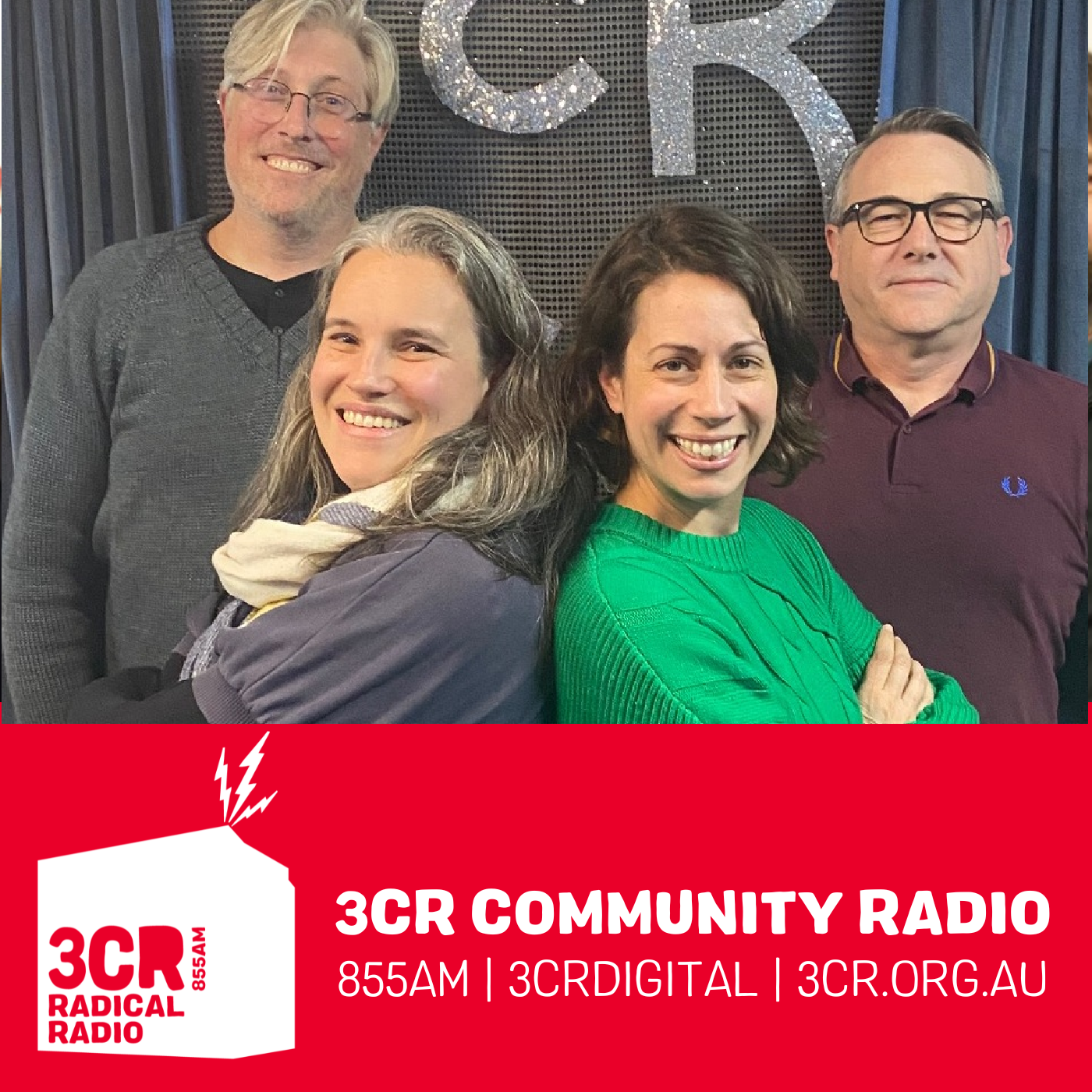
Chris Lassig, Stuart Burns, Claire Farrugia and Linden Ashcroft.
Lost in Science
Lost in Science is your weekly hit of mind-blowing science, strange facts, and big ideas. From cutting-edge discoveries to the science behind everyday life, our curious and passionate hosts make it fun, fast, and fascinating. If it’s weird, wonderful, or just worth knowing - we’re on it.
Author
Chris Lassig, Stuart Burns, Claire Farrugia and Linden Ashcroft.
Category
Podcast website
Latest episode
Jul 8, 2026
Where to listen?
Podcasts in the app Replaio Radio Coming soonPodcasts are coming to the app soon. Install now and be the first to see a whole new take on podcasts
 Install for free
Android 5M+ downloads · 4.8 rating
iOS soon
Install for free
Android 5M+ downloads · 4.8 rating
iOS soon
Episodes
Why don't poisonous animals poison themselves? Also bats, naked mole rats, and more! 12.09.2018
This week, Chris finds out how venomous animals like snakes and poisonous animals like the poison dart frog avoid harm from their own toxins; and Claire speaks to science communicator and bat whisperer Micaela Jemison about vampire bats, naked mole rats and other marvels at the Smithsonian Institution.
Eureka Prizes for science, science of spaghetti breaking and rosehip neurons 05.09.2018
This week on the show Claire gives a round up of the highlights of the Eureka Prizes for science, or as we like to affectionately call them, the 'Archies'. Chris brings a tasty scientific question into the studio that has been plaguing physicists for years - why does spaghetti break in 3 parts? And Stu talks about a new neuron that has just been discovered, the rose-hip neuron!
What does the brain stem do, and when is National Threatened Species Day? 29.08.2018
This week Claire talks to David Farmer, a neurophysiologist at the Florey Institute about the brain stem and how it keeps us going, and Stu brings National Threatened Species Day on the 7th of September to the table to talk about why it's important.
Understanding AI, lazy hominins and ancient cheese 22.08.2018
This week, Chris talks about how artificial intelligence and deep learning so complex that researchers have to do experiments to figure out how they work; Stu tells us about a new theory that our hominin predecessors, Homo erectus, may have gone extinct due to laziness; and Claire shares the discovery of ancient Egyptian cheese that's over 3 thousand years old and probably poisonous.
TRIPLE CREATURE FEATURE; Magnet hating sharks, psychedelic cicadas and arctic wolfspiders 15.08.2018
It's another Lost in Science Triple Creature Feature! Claire talks to Vincent Raoult from the University of Newcastle about using magnets to repel sharks and rays from fish traps. Stu tells us about the fungus Massospora cicadina, which uses psychedelics to hijack cicadas before replacing their abdomens (pictures at https://www.nature.com/articles/s41598-018-19813-0, but be warned, they're disgust...
Lost in Science Week! 08.08.2018
Our Lost in Science Week special to connect listeners to science week eventa all around the country, we talk to ethicist Chris Gyngell abotu the Humans 2.0 event, as well as cover other events all over Australia. To find events near you go to the Science week website and put in your postcode to discover something in your neighbourhood.
Water plinking physics, space grease and commuting bacteria 01.08.2018
This week, Chris shares how physicists have finally explained why water makes a plinking sound when it drips, and potentially how to stop it; Stu tells us about the discovery that the galaxy is filled with organic grease molecules; and Claire looks at new research into how bacteria spread on public transport, and how they get more mixed up throughout the day.
How do wetlands sequester carbon? And is green space in cities good for people? 25.07.2018
This week on the show Stu interviews Dr Paul Carnell about the testing he has just done on Victorian wetlands and why they are so good at capturing carbon from the atmosphere. Also this week Claire looks at the science behind community green spaces. Do they just look good, or are they good for health as well?
How will climate change affect the planet? Why haven't we gone back to the moon? What does the new exoplanet tell us? 18.07.2018
Stu looks at new analysis of past warm periods on earth to figure out how climate change may affect us in future. Claire asks why we haven't returned to the moon in 45 years. Chris looks further into space to find out about PDS 70 a recently discovered exoplanet and what it can tell us about our own solar system.
Thalidomide, Koko the gorilla, and new (old) giant dinosaur 11.07.2018
This week, Chris talks about the controversial career of William McBride, the Australian doctor known for alerting the world to the dangers of thalidomide; Claire tells us all about a newly discovered sauropod dinosaur Ingentia Prima, 30 million years older than its relatives; and Stu explains how Koko, the famous signing gorilla, probably wasn't really able to communicate with human language.
3 parent babies, micromorts, and alternative to dark matter 04.07.2018
This week on the show Claire takes a look at IVF babies with three genetic parents; two parents for the nuclear DNA, and a different parent passing down their mitochondrial DNA. This new technology is assisting couples with mitochondiral diseases to have healthy babies. Also on the show this week Chris goes to the fringe of physics and takes a closer look at Modified Newtonian Dynamics; a theory s...
Saline, Bogong Moths and the Stanford Prison Experiment revisited 27.06.2018
Stu looks at why saline is used as as temporary blood replacement, and how much can be used at one timeClaire finds out why allows Bogong Moths to travel such massive distances to their summer homes. Chris looks into the famous Stanford Prions Experiment and finds that all is not as it seemed.
Science around the campfire, and organics on Mars 20.06.2018
This week, Chris goes to Mars - metaphorically - to investigate the discovery of organic molecules. And Claire speaks to Jack and Pauline from Campfires & Science (@campfirescience) about doing citizen science and finding rare species out in the bush.
Supernovae, wild horses vs the environment and marshmallows revisited. 13.06.2018
Chris explains hwo close a supernova star would need to be to have an effect on earth, Claire looks at the recent decision of the NSW government to ignore scientific advice on feral animal control, and Stu revisits the marshmallow test, a standard psychology paper on will power which has been questioned in a recent repetition.
Placebos, volcanoes, and Stephen Hawking's last paper 06.06.2018
Claire discusses the hot topic of volcanoes and the longest volcano chain in the world in Australia! Stu looks at the placebo effect, does it actually exist or is it all in the statistics. And Chris pays homage to the late, great Stephen Hawking by explaining his very last published paper.
Combating climate change at the grassroots & Yanny vs Laurel 30.05.2018
On the show this week Claire speaks to Agronomist, climate change activist and protagonist of an award winning documentary, Guy Webb about his grassroots approach to combating climate change using a humble fungi to capture carbon from the atmosphere and sequester it in the soil. Catch the film, aptly named Grassroots, showing as part of the SCINEMA international film festival between May 31 - June...
Antibiotic resistant epidemics, and international travel footprints flying high 23.05.2018
This week, Chris speaks to biologist Dr. Gregory Crocetti about a new strain of antibiotic resistant typhus, and Stu looks into the carbon footprint of international travel: it's higher than anyone thought.
Arty, farty, sluggy science 16.05.2018
This week, Chris speaks to visual ecologist Aviva Reed (www.avivareed.com) about communicating science with art; Stu tells us all about the indigestible starch inulin and its source, the Jerusalem artichoke, aka the sunchoke, aka the fartichoke; and Claire brings us news of the transfer of memory between two sea snails via RNA.
Hoppy yeast with CRISPR and how big is the universe? 09.05.2018
This week on the show we hear from Brewer Jon Seltin, who gives us the low down on a science story that is taking the beer world by storm! Researchers have recently used CRISPR to modify brewer's yeast to make it taste like hops, and brewed a craft beer from this modified yeast that has beer judges swooning! Also this week Chris poses the question "How big is the universe?", and then attempts to a...
New megapest insect, Fruit fly sex, and is chocolate really good for you? 02.05.2018
Stu reports on a new hybrid insect pest in Brazil which the CSIRO have been researching, Claire brings in the latest in fruit fly sexual gratification research and Chris answers the eternal questions: Are coffee, booze and chocolate actually good for us?
Flesh eating bacteria update, not-so-rare earth metals, PFAS in the water 25.04.2018
This week Claire updates us on the flesh-eating Buruli ulcer epidemic and research into how it's spread; Stu tells us all about rare earth metals that are used in modern technology and how they're not so rare any more; and Chris looks at the PFAS chemicals behind the water contamination in Bundaberg and other places in Australia (for updates see www.bundaberg.qld.gov.au/pfas).
Medicinal plants from the Israeli desert and chill factors in trees 18.04.2018
This week on the show we talk to Jess Snir about research looking at the medicinal quality of plants in the Israeli desert, and how traditional Bedouin knowledge has been informing the scientific research. Also this week Stu explaing how deciduous trees know when to start flowering after winter, and how scientists can work this out using something called a "chill unit".
Space stations, Wallaby invaders and new human organ? 11.04.2018
Stu talks about the Chinese Space Station, Tiangong 1, crashing into the Pacific, and the future of space stations, Claire explains how a pest problem in New Zealand led to the unextinction of an Australian native animal, and Chris looks into the Interstitium, the latest organ claimed to be discovered in the human body.
Eucalypts and bushfires; superfluid liquid helium 04.04.2018
Claire speaks to Tom Fairman about the effect of more frequent bushfires on Australia's eucalypt forests. Read more at https://pursuit.unimelb.edu.au/articles/recurring-fires-are-threatening-the-iconic-snow-gum Chris tells us all about the amazing properties of liquid helium, a superfluid with zero viscosity. Here's a short video from the BBC showing some of the amazing properties:And a classic 19...
Funny bees, Indigenous migration & twin astronauts 28.03.2018
This week on the show we are joined by comedian Alanta Colley to talk about her new science comedy - Days of our Hives. Stu looks at new research using genetics to determine Indigenous Australian migration throughout Australia 50 000 years ago. Claire introduces us to NASA's identical twin brothers who are taking part in an experiment to find out what happens to the body in space.
Similar podcasts





Listen to the Lost in Science podcast in Replaio
Radio and podcasts in one app - free, with no sign-up. Install today and do not miss the launch
Replaio is not a podcast publisher; show names, artwork and audio belong to their authors and are distributed through public RSS feeds.