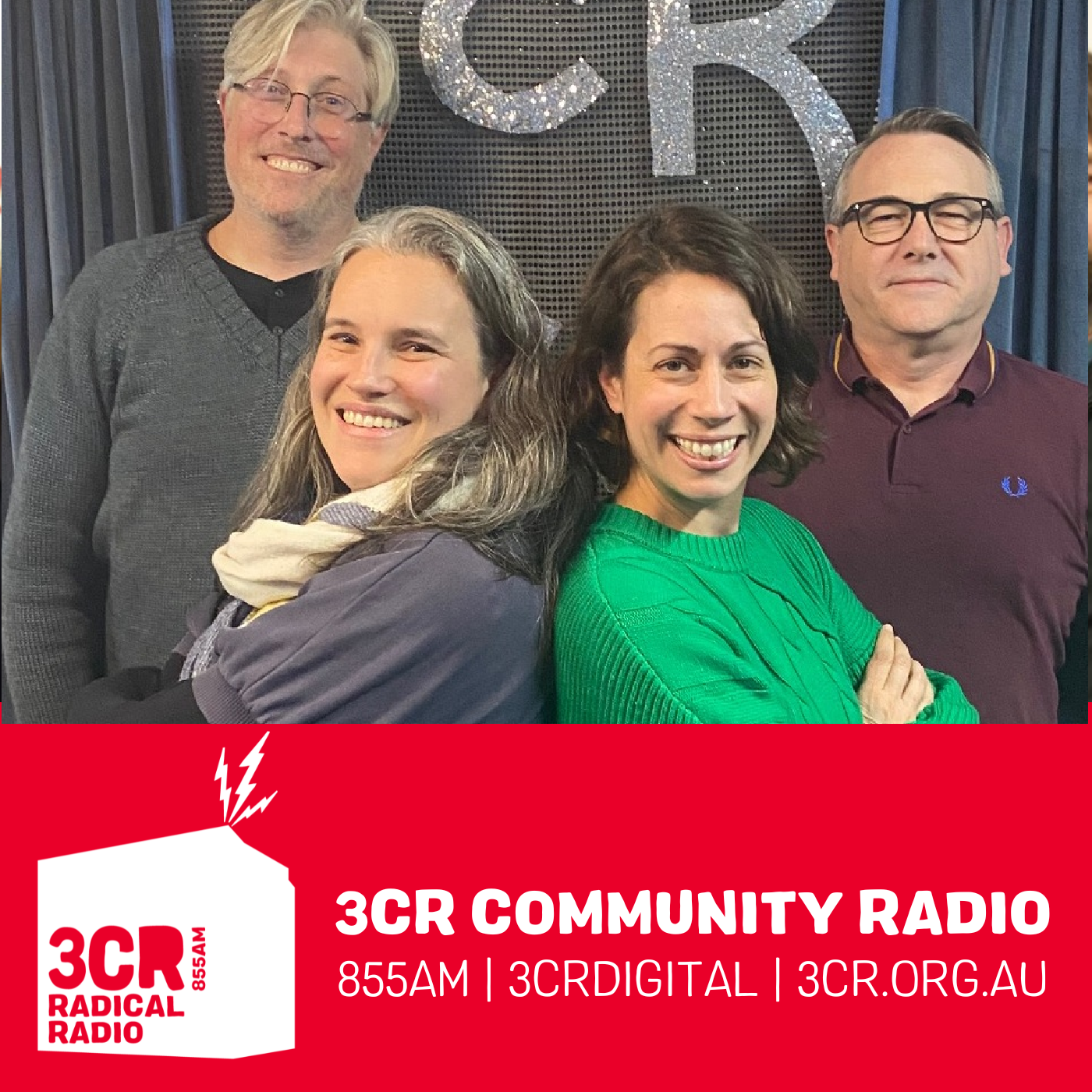
Chris Lassig, Stuart Burns, Claire Farrugia and Linden Ashcroft.
Lost in Science
Lost in Science is your weekly hit of mind-blowing science, strange facts, and big ideas. From cutting-edge discoveries to the science behind everyday life, our curious and passionate hosts make it fun, fast, and fascinating. If it’s weird, wonderful, or just worth knowing - we’re on it.
Author
Chris Lassig, Stuart Burns, Claire Farrugia and Linden Ashcroft.
Category
Podcast website
Latest episode
Jul 8, 2026
Where to listen?
Podcasts in the app Replaio Radio Coming soonPodcasts are coming to the app soon. Install now and be the first to see a whole new take on podcasts
 Install for free
Android 5M+ downloads · 4.8 rating
iOS soon
Install for free
Android 5M+ downloads · 4.8 rating
iOS soon
Episodes
Air pollution, the physics of hate, and teeth and tongues 28.08.2019
This week, Chris tells us how online hate networks follow the same physics as milk curdling, and this could help us fight them; Claire speaks to chemical engineer Gabriel da Silva about air pollution, its health impacts and how bad it is in Australia; and Stu shares the disturbing but potentially useful idea of growing teeth on tongues.
Seaweed eating cows, spiderwebs & valuable elements 21.08.2019
This week on the show we hear from Chris and the impactful Australian discovery of feeding pink seaweed to cattle reduces methane emissions by up to 90%.Also on the show Stu draws our attention back to the periodic table of elements, this time to Selenium and Tellurium - two elements named after the moon and the Earth, and which have a special significance in the production of solar cells. And Cla...
The Curiosity show returns on stage, Physics prize doubts 14.08.2019
Chris looks at the recently awarded Breakthrough Prize in Physics and why some physicists are doubtful of its merit, and Stu talks to the conductor of the Victorian Youth Symphony Orchestra about their upcoming performance with the presenters of the Curiosity Show
National Science Week! Fish at the museum, disposables at the gallery, and events around Australia 07.08.2019
On this special episode for National Science Week, Stu gives us a run-down of events around the country; Chris speaks to Melbourne Museum fish expert Dianne Bray about the research she'll talk about at their events; and Claire speaks to Tilly Boleyn, curator of Science Gallery Melbourne about their new program called Disposable. Find out about this and other events at scienceweek.net.au
Asteroid armageddon, apple bacteria, and liquid magnets 31.07.2019
This week, Claire tells us where to find bacteria in apples, Chris looks at a near miss from an unexpected asteroid and what the chances of one hitting us are, and Stu finds out how to make liquid magnets. No, not this stuff: https://youtu.be/ensd-258iGQ
Brain implants to read minds, the search for alien life and the value of meteorites 24.07.2019
Stu finds out about Elon Musk's latest plans to tap into peoples' brains directly, Chris looks into the science behind the search for alien life and guest Jacinta explains how meteorites are valuable in terms of money, but also to scientific research.
Full moon feature: Apollo 11 science, Soviet moon missions, and moon trees 17.07.2019
To celebrate the 50th anniversary of the Moon Landing, we go full moon: Chris looks at the science of getting to the Moon and what we learnt from it; Stu takes us back to the Space Race with the competing Soviet missions; and Jacinta introduces us to the amazing Moon Trees from Apollo 14, which are still alive today.
Ancient Indigenous aquaculture, the Spanish flu and very old fungi! 10.07.2019
This week on the show Claire talks about Australia's ancient Indigenous eel aquaculture site in South Western Victoria - Budj Bim, and its recent UNESCO World Heritage status. Chris has another anniversary on his mind, 100 years since the Spanish Flu epidemic started in Western Europe, killing over 50 million people world wide. And Stu introduces us to the recently discovered oldest multicellular...
Mud volcanos, demon eyed animals and algorithms in Magic: the gathering 03.07.2019
Stu discusses the advantages of New Zealand's geothermal activity, and some of the more immediate disadvantages, Claire finds out why some animals eyes shine back in demonic ways in the dark, and guest Jacinta Bowles talks about how some players of card game Magic: the Gathering have used it to build unpredictable algorithms to trap other players.
Endometriosis examined and cold fusion reheated 26.06.2019
This week, Claire speaks to medical researcher Eliza Colgrave about endometriosis, what it is, how common it is, and what science is telling us about causes, diagnosis and possible treatment; and Chris tells us about how 30 years since the controversial claims of cheap energy from cold fusion, the topic is being reexamined by Google.
Tech wars: The good, the bad, and the misused 19.06.2019
This week we look into technology, being used for good and... less than good. Claire looks at how drones can impact the lives of wildlife Chris looks at how disruptive technologies can disrupt our lifestyles, and Stu looks at how science is begin gamified to solve some heavy number crunching science problems In games like Fold It, EteRNA and more.
Macadamia nut clones and quarks 12.06.2019
This week on the show Stu talks macadamia nuts with Dr Chris Hardner from the University of Queensland and the incredible new research just published suggesting most of the world's commercial macadamia nut stock may come from one tree in Australia. Also on the show Chris pays tribute to Murray Gell-Man, whose groundbreaking research investigating particle physics led to the discovery of none other...
Australia's spider-woman, and how fertility changes with age 05.06.2019
This week, Stu tells us about the life of Australian spider expert Barbara York Main, who among many other things recorded the longest-lived spider in the world; and Claire talks to Dr Kiri Beilby about how age affects fertility in both women and men, and getting reliable information from sources like yourfertility.org.au
Bacterial insecticide, all in good taste bud, and plastic not-so-fantastic 29.05.2019
On this week's show, Stu talks to Dr. Sarah Piper about the possibility of using bacteria to deliver targeted insecticide, Claire finds out if all animals taste in the same way as people, and Chris looks into the problem of plastic pollution.
Carnivorous plant pollinators, Phosphorus and SCINEMA science film festival 22.05.2019
This week on the show Chris asks the question "How do carnivorous plants get pollinators if they eat insects?", Stu talks about the essential element Phosphorus, and we hear all about the best of the best science films that made the grade for the SCINEMA the International Science Film Festival in 2019, happening in a city or regional centre near you!
Asteroid water, box jellyfish stings, and pints of science 15.05.2019
This week, Chris looks at how measuring elements in samples brought back from asteroids could reveal where the Earth's water came from; Stu asks Greg Neely from the University of Sydney about his research into how box jellyfish cause pain, and how that could lead to an antidote; and Claire talks to Elodie Camprasse about scientists speaking about their work in pubs around the country for Pint of S...
Sexual harassment in physics, Australian bee species and ionic flight 08.05.2019
Chris looks into claims of sexual harassment in the physics labs of the world, Claire talks to Kit Prendergast about the status of Australian native bee species, and Stu investigates the development of ionic flight, a means of propulsion that relies on no moving parts to fly a plane.
Dinosaur extinction and peanut allergies 24.04.2019
This week, Chris looks at a discovery that perhaps too sensationally claims to show the moment the dinosaurs went extinct; and Claire speaks to Dwan Price from Deakin University about why some substances, such as peanut allergens, can get through our guts to cause an allergic reaction.
Why we should be Casso-wary, the science of the Black Hole photo and 3D printing the human heart 17.04.2019
On this week's show, Claire finds out when to be wary of the Cassowary, and why they might be likely to attack people, Chris looks into the science behind the recent Black Hole Picture, and Stu finds out how to replace a broken heart, at least possibly in the future.
Exercise and immune function, night parrots & super powers 10.04.2019
This week on the show Claire speaks to immunologist Catriona Nguyen-Robertson about the link between exercise and immune function. Chris explains the new controversy surrounding the Night Parrot, and Stu looks at a medical case of a real life woman with super powers that are now helping others.
Australian pitcher plants, sea lions, and invasive species 03.04.2019
This week it's all about Australian species and the threats they face. Stu talks to Adam Cross about the native Albany pitcher plant threatened by poaching and loss of habitat; Claire visits the Australian sea lions at Kangaroo Island, at risk from gillnet fishing; and Chris counts down Australia's top ten invasive species as measured by how many species they threaten.
Mary Anning: Fossil Hunter, More science comedy, and the grapes of sparks 27.03.2019
Stu fills us in on his favourite Anning, Mary Anning: Fossil Hunter, Chris talks to Alanta Colley and Ben McKenzie about their upcoming science comedy show "You Chose Poorly" and we also try out an experiment in our microwave to see if we can get sparks to fly from a grape!
Connected to Port Phillip & Tesla Comedy 20.03.2019
This week on the show we catch up from Ellie Michaelides and Cathy Cavallo from Remember the Wild and hear about the Connected to Port Phillip Initiative to bring awareness and connection to the unique diversity of Port Phillip. Also on the show, comedian Seam M Elliott talks about his new comedy show playing at the Melbourne Interantional Comedy Festival Tesla: Deathrays and Elephants
Counting bats and tallying bugs 13.03.2019
This week, Stu looks at reports that insect populations are falling, and finds out that the threat may have been exaggerated. Meanwhile, Chris goes on a citizen science expedition and takes part in a flying-fox fly-out count, to find out how populations of these megabats are faring. If you're interested in joining the fly-out count, go to https://megabatcount.wordpress.com/
Similar podcasts






Listen to the Lost in Science podcast in Replaio
Radio and podcasts in one app - free, with no sign-up. Install today and do not miss the launch
Replaio is not a podcast publisher; show names, artwork and audio belong to their authors and are distributed through public RSS feeds.