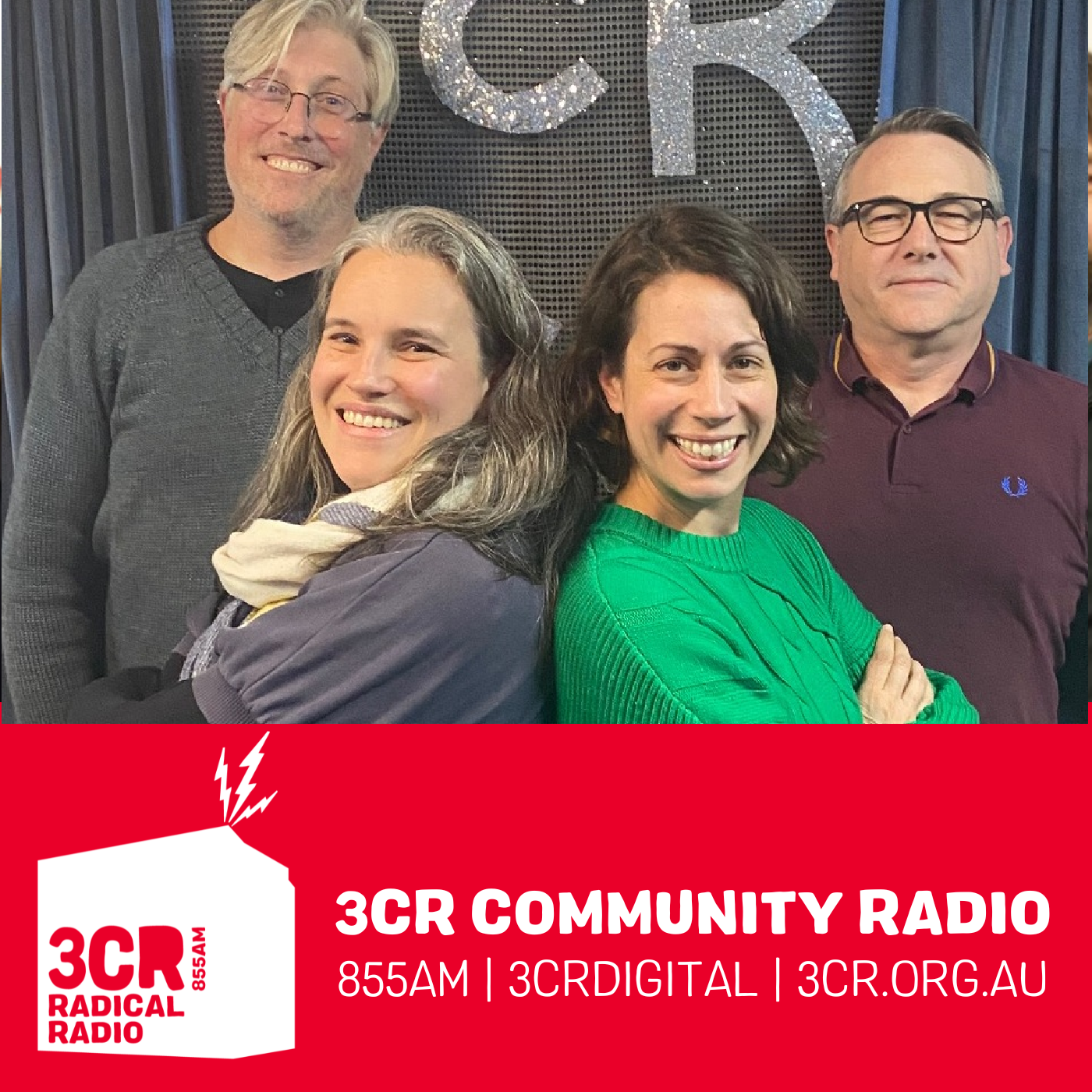
Chris Lassig, Stuart Burns, Claire Farrugia and Linden Ashcroft.
Lost in Science
Lost in Science is your weekly hit of mind-blowing science, strange facts, and big ideas. From cutting-edge discoveries to the science behind everyday life, our curious and passionate hosts make it fun, fast, and fascinating. If it’s weird, wonderful, or just worth knowing - we’re on it.
Author
Chris Lassig, Stuart Burns, Claire Farrugia and Linden Ashcroft.
Category
Podcast website
Latest episode
Jul 8, 2026
Where to listen?
Podcasts in the app Replaio Radio Coming soonPodcasts are coming to the app soon. Install now and be the first to see a whole new take on podcasts
 Install for free
Android 5M+ downloads · 4.8 rating
iOS soon
Install for free
Android 5M+ downloads · 4.8 rating
iOS soon
Episodes
Big step in the fight against Dengue Fever and invasive earthworms 02.09.2020
This week on the show Stu asks the question investigates the question of whether there are invasive worms living in our soils, and if so what effect do they have? Also on the show Claire talks about the breakthrough Australian research which has shown how highly effective an Australian innovation is at fighting dengue fever.
Pardalote parasites and magnetic mutts 26.08.2020
Claire tells us the story of how crafty researchers are protecting Pardalotes from prevalent problematic parasites, while Chris finds out if dogs are able to perceive the earth's magnetic field, and how we might be able to observe that in their behaviour.
Ivermectin for COVID-19 and zombie pigs 19.08.2020
This week on the show Chris talks through the evidence for the effectiveness of ivermectin to treat COVID-19, and Stu takes us back to 2019, a more simple time, when science stories about zombie pigs were the most terrifying thing being reported!
Labradors and laboratories testing for COVID-19 12.08.2020
It's all about coronavirus testing this week on Locked in Science, as Stu fills us in on the two main types of tests currently used for COVID-19: the PCR test that detects genes from the virus in nasal swabs, and the blood tests for antibodies; meanwhile Claire talks to Anne-Lise Chaber and Susan Hazel about their new research training sniffer dogs to detect whether people are infected.
Science Week roundup, and first hand covid news 05.08.2020
This week on Locked in Science, with National Science Week only a matter of days away, Claire gives us a rundown of events happening all over the country, many of them accessible online, and Chris fills us in on his covid caused absence from the show, and we hear from his partner who was hit hard with the illness, but is now recovering.
A Taste of Tomorrow & Matter and Antimatter 29.07.2020
This week on Locked in Science, with National Science Week just around the corner Stu talks to plant scientist Dr Kim Johnson about an upcoming event called A Taste of Tomorrow exploring the future of foods - as part of the Possible Impossible online event series for National Science Week. Also on the show we bring you a story from the vault as Chris explores one of the great mysteries of the univ...
Coronas in space and vaccines on earth 22.07.2020
This week on Locked in Science Claire turns to watch the skies and look at some different kinds of corona in space, and Stu looks at some science that has been brought to light by the coronavirus and some that looks like it might help slow it down.
How to engineer a face mask and the La Niña effect 15.07.2020
This week on Locked in Science we speak to Biomedical Engineer Professor Sandra Kentish about the best way to effectively make yourself a mask to keep you and the community safe from COVID-19. Also on the show Stu updates us on the latest forecasts from the Bureau of Meteorology for an increase likelihood of rain from the La Niña effect.
How sewage is used to track a virus, and IVF science 08.07.2020
On Locked in Science this week, Claire learns how frozen sewage is being used to track the presence of viruses in big cities, and Chris looks at some of the science behind IVF fertility
MTHFR gene investigation and the Arctic permafrost on fire! 01.07.2020
This week on the show Stu investigates the MTHFR gene, a gene that helps the body to process folate, but is also at the centre of some dubious misinformation by the "Wellness Industry".Also on the show this week, Chris turns his mind to the Northern Hemisphere's summer, and the fires that are currently burning in the arctic circle - why is this happening, and what will be the effects!
Battling brassicas and coronavirus clusters 24.06.2020
This week in the spirit of the International Year of Plant Heatlh, Stu tells us about the arms race between brassicas – which include vegetables such as cabbages, kale, cauliflower and broccoli – and their pests and diseases; meanwhile Claire shares what it's like to get tested for COVID-19, and how recent research shows that "superspreaders" could be responsible for clusters of coronavirus outbre...
Controversial COVID-19 cures, and CRISPR treatments 10.06.2020
This week on the show we delve into some controversial medical science. First up Chris revisits the research on Hydroxychloroquine, also known as Donald Trump's favourite COVID-19 medication, and the most recent research about this treatment that has come out, and subsequently been retracted. Also this week Stu brings us up-to-date on CRISPR and what medical advances are currently being made, and...
Sharks smelling and spiders flying 03.06.2020
This week on Locked-in Science we confront some common fears, as Claire speaks to Victoria Camilieri-Asch about her research on shark brains to find out how well they can really smell; and Stu investigates rumours of flying spiders, with some surprising results.
Water science and quantum superfluids 27.05.2020
This week on another episode of Locked-in Science, Chris talks to Pint of Science speaker Kyla Adams about research into the vortices of quantum fluids, and Claire brings us a story from water scientist Bradley Moggridge in his own words finding connections between his indigenous heritage and his scientific career.
Fires in logged forests, and the science of twins 20.05.2020
This week on the show Stu speaks to Dr Jen Sanger from the University of Tasmania about her research which suggests that logging forests can increase the intesnity of bushfires. Also on the show, Chris shares some personal news, him and his partner are expecting twins! So in true scientific fashion, he has hit the scientific journals and brings us the most uptodate research into the science of twi...
200 years of nursing, plus news from outer space 13.05.2020
This week's Locked-in Science brings us International Nurses Day in 2020, which is also the International Year of the Nurse and Midwife, marking 200 years since the birth of Florence Nightingale. Clare talks to Professor Marie Gerdtz from the University of Melbourne about what has and hasn't changed since then, and the impact on nurses of the COVID-19 pandemic. And Stu brings a galaxy of space new...
Does your wine have legs? And what makes the dough sour? 06.05.2020
On the show this week, we continue our Locked in Science show, with Chris looking into the (grape) pressing issue of why wine sticks to the side of your glass, and Claire explores the wild world of Sourdough.
Coronavirus in sewage and science in lockdown 22.04.2020
This week on Locked in Science, Claire speaks to Paul Bertsch from the CSIRO about the successful detection of the SARS-CoV-2 coronavirus in sewage in Brisbane, as a way of tracking infections. Also, Stu shares some science that's become possible due to people being in lockdown, and Chris tells us about Australia's rapidly updated guidelines for treating COVID-19, which can be found online at covi...
Stinky Lemurs courting, warming Coral bleaching 15.04.2020
This week on Locked in Science, our second socially isolated show Claire suggests some citizen science projects you can take part in while in isolation, some which could help find treatments for COVID-19, and some that will get your mind off it altogether. And now that we are all online shopping more Stu looks at what the relative carbon footprint is of online versus in store shopping. And Chris i...
COVID-19 research: surface safety, vaccine development, and chloroquine controversy 01.04.2020
In our first remotely recorded, socially distant episode, we look at some of the research on the coronavirus SARS-CoV-2 and the disease COVID-19. Claire tells us about a new study into how long the virus lasts in the air and on various surfaces, Stu explains what’s involved in developing a vaccine, and Chris dives into the controversy around possible treatment with chloroquine and hydroxychloroqui...
COVID-19 Coronavirus special 18.03.2020
Chris talks to epidemiologist Freya Shearer about the impacts of COVID-19 and how it's transmitted, Stu looks at how new viruses can appear, and Claire explains at how to look after ourselves if we self isolate during the pandemic.
International Women's Day 2020 Special; Gertrude Elion, Franklin Women and On the Origin of Faeces 11.03.2020
It's the International Women's Day Lost in Science special with special guests Alanta Colley and Sarah Nagorcka joining Claire in the studio. This week on the show Sarah tells the incredible story of pharmacologist Gertrude Elion and her story of dedication and perseverance in the face of sexism. Also about how women in STEM around the world are increasing recognition of female identifying scienti...
Biggest bangs, defrosting worms and nature films 04.03.2020
This week, Chris ranks the biggest explosions ever in the universe, Stu reveals how 42,000-year-old nematodes are coming back to life from thawing permafrost, and Claire speaks to Ellie Michaelides about the Wild by Nature short film competition. Details at www.rememberthewild.org.au/wild-by-nature
Super solar cells using quantum mechanics and cooling human body temperatures 26.02.2020
This week on the show Claire chats to Professor Jared Cole from the ARC Centre of Excellence in Exciton Science about how quantum mechanics is helping to create more efficient and sustainable solar panels and why this is so important. And Chris describes new research suggesting that global human body temperatures have been cooling over the last 100 years.
Similar podcasts




Listen to the Lost in Science podcast in Replaio
Radio and podcasts in one app - free, with no sign-up. Install today and do not miss the launch
Replaio is not a podcast publisher; show names, artwork and audio belong to their authors and are distributed through public RSS feeds.