
David Burns, MD
Feeling Good Podcast | TEAM-CBT - The New Mood Therapy
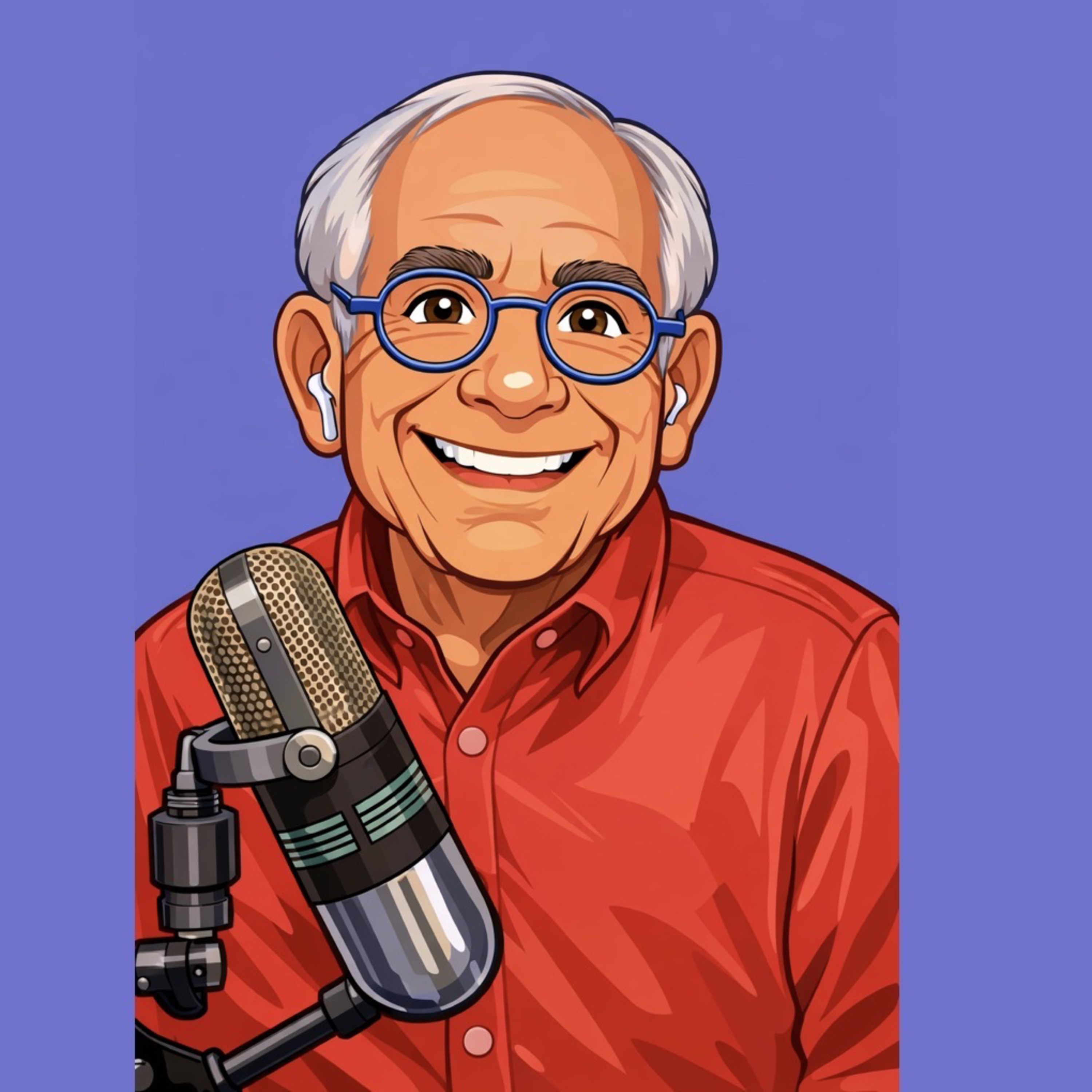
This podcast features David D. Burns MD, author of "Feeling Good, The New Mood Therapy," describing powerful new techniques to overcome depression and anxiety and develop greater joy and self-esteem. For therapists and the general public alike!
Be sure to visit the podcast's website and support the creator: feelinggood.com
Where to listen?
Podcasts in the app Replaio Radio Coming soonPodcasts are coming to the app soon. Install now and be the first to see a whole new take on podcasts
 Install for free
Android almost 10M downloads · 4.8 rating
iOS soon
Install for free
Android almost 10M downloads · 4.8 rating
iOS soon
Episodes
030: Live Session (Mark) — Empathy Phase (Part 2) 03.04.2017 47:00
After reviewing Mark's scores on the Brief Mood Survey, the Empathy phase of the session unfolds. During this phase of the session, David and Jill will not try to help, rescue, or save Mark. They will simply try to see the world through his eyes and provide some warmth and compassion. Mark explains that he had two goals in life when he was a young man. He hoped to have a large, loving family; and...
029: Live Session (Mark) — Introduction & Testing Phase (Part 1) 27.03.2017 30:24
This is the first in a series of podcasts that will feature live therapy. As you listen, you'll have the opportunity to peak behind closed doors to see how TEAM-CBT actually works in a real-world setting, and not role playing. The patient is a physician named Mark who has been haunted for decades by a problem with his oldest son, and he feels like a failure as a father. Although the facts of your...
028: Scared Stiff — The Motivational Model (Part 6) 20.03.2017 46:28
The key is bringing the patient's subconscious resistance to conscious awareness, and melting it away with paradoxical techniques. This is absolutely critical if you are hoping to see a complete elimination of symptoms in any type of anxiety. You may recall that the Outcome Resistance for anxiety disorders usually results Magical Thinking—the anxious patient may be suffering intensely and asking f...
027: Scared Stiff — The Hidden Emotion Model (Part 5) 13.03.2017 26:50
David reminds us about the differences between healthy fear and unhealthy, neurotic anxiety, or an anxiety "disorder" like a phobia, or OCD, and so forth. He explains that negative thoughts, and not events, trigger all our emotions, healthy or unhealthy. However, healthy fear results from negative thoughts that are valid and undistorted, and does not need treatment. For example, if you are walking...
026: Scared Stiff — The Exposure Model (Part 4) 06.03.2017 44:38
We begin by describing the three different deaths of the ego that are required for recovery from depression, anxiety, or a relationship conflict, respectively. For depression recovery often results from the "Great Death," A Buddhist concept that involves the discovery that there is no such thing as a "self" that could be worthless, or inferior, or judged by another person. David and Fabrice only t...
025: Ask David — How do you handle a patient you don't like (or who bores you)? 27.02.2017 37:44
David answers these questions: How do you deal with a patient (or friend) who is boring? How do you deal with a patient (or friend) you don't like? How do you get patients to do their psychotherapy homework? How do you deal with a patient (or friend) who is boring? David describes a technique he learned from a mentor, Dr. Myles Weber, during his second year of psychiatric residency at Highland Hos...
024: Scared Stiff — The Cognitive Model (Part 3) 20.02.2017 51:36
The cognitive model of anxiety is based on three powerful ideas: Anxiety always results from negative thought (NTs) that involve the prediction of danger. For example, if you have public speaking anxiety, you are probably telling yourself something like this: "I just know I'm going to blow it. My voice will tremble. People will know I'm anxious. My mind will go blank. I'll mumble and make a total...
023: Scared Stiff — What Causes Anxiety? What's the Cure? (Part 2) 13.02.2017 23:20
There are 4 powerful treatment models for anxiety, including The Cognitive Model The Exposure Model The Motivational Model The Hidden Emotion Model Each approach has a completely different theory about the causes of anxiety and utilizes completely different treatment techniques. For example, cognitive therapists believe that distorted thoughts trigger all anxiety, and that the most effective treat...
022: Scared Stiff — What Is Anxiety? (Part 1) 06.02.2017 28:49
David and Fabrice answer these questions: What is anxiety? How does it differ from depression? Do anxiety and depression always go hand in hand? How does anxiety differ from healthy fear? What are the most common forms of anxiety? How common is anxiety? Anxiety, like depression, has been called the world's oldest con. That's because you are always fooling yourself, and buying into negative thought...
021: Ask David — Shameful Sexual Fantasies 30.01.2017 16:45
A listener with OCD is plagued with intrusive and shameful sexual fantasies. David discusses his treatment strategies for a young man from Argentina who was struggling with forbidden fantasies of Jesus having sex with the Virgin Mary in all positions of the Kama Sutra, but the harder he tried to control them, the more intense and tantalizing they became. Being a good Catholic lad, he was terrified...
020: The Truth About Antidepressants? 23.01.2017 32:10
Discussion of recent startling and disturbing research studies by Dr. Irving Kirsch and others that suggest that the chemicals called "antidepressants" may, in reality, have few or no true antidepressant effects above and beyond their placebo effects. Dr. Burns illustrates the placebo effect with a thought experiment, and explains why it is so confusing to researchers and the general public alike....
019: Ask David — The Defiant Child: A Secret All Parents Should Know 16.01.2017 24:41
Can the EAR techniques help a listener deal more effectively with a defiant, oppositional child. Dr. Burns reveals a fantastically helpful secret that he and his wife stumbled across in raising their own children. If you have ever struggled in your attempts to deal with an oppositional child or adolescent, you will find this podcast enlightening!
018: Ask David — Overcoming the Fear of Death 09.01.2017 10:42
David and Fabrice address this question submitted by a listener: Dear Dr. Burns, I read Feeling Good twenty years ago. It was a wonderful relief and help to me. Your book has helped me live a better and balanced life. The best part was passing the knowledge on to my daughter. I thought I read a wonderful description of how to handle death anxiety in the book. I was describing it to a friend, but...
017: Ask David — Dare to be "average"—The perfectionist's script for self-defeat 02.01.2017 23:23
David answers a challenging question posed by a listener: Dear Dr. David: In your Feeling Good Handbook , you suggest that the reader just allows himself or herself to be an ordinary person instead of trying to be perfect. Contrary to your opinion in the book, you're an outstanding therapist in reality. You've studied in one of the world's top colleges, you're well-educated with a doctor degree, a...
016a: Special Interview: Can Depression and Anxiety Be Treated in a Two-Hour Therapy Session? with Lisa Kelley 28.12.2016 41:01
David and Fabrice are joined by Lisa Kelley, a certified TEAM-CBT therapist and former journalist from Littleton, Colorado. Lisa interviews David about an interview / blog David has just published on this website. Lisa begins by asking how people responded to a survey on David's website asking this controversial question: " Do you believe that a depressed individual could experience a complete eli...
016: Ask David — How can I cope with a complainer? How can I help a loved one who is depressed? 26.12.2016 32:49
How can you help a depressed friend or family member? You may be surprised to discover that the attempt to "help" is rarely effective, and may even make the problem worse . In contrast, the refusal to help is nearly always helpful. But to understand that paradox, you'll have to give a listen to this fascinating edition of "Ask David!" David and Fabrice also address a related problem nearly all of...
015: The Five Secrets of Effective Communication (Part 2) 19.12.2016 33:05
If used skillfully, the Five Secrets can resolve nearly any relationship conflict and transform hostility, resentment and mistrust into intimacy and warmth, often with amazing speed. And although this may seem easy when you first learn about the Five Secrets, it's extremely difficult in real world situations. In this Podcast, David and Fabrice discuss a number of predictable emotional and mental e...
014: The Five Secrets of Effective Communication (Part 1) 12.12.2016 38:25
Practically all of us have a friend, colleague, client, customer or family member we aren't getting along with very well. Perhaps the difficult person in your life is excessively critical of you, complains constantly, won't express his or her feelings, always has to be right, or never listens to you. Does anyone come to mind? In this podcast, David and Fabrice discuss five communication secrets th...
013: Ask David — Is Anxiety Inevitable? 05.12.2016 25:28
A fan points out that many of the examples in David's book, When Panic Attacks , are high functioning individuals with lots of education and good jobs. She asks Dr. Burns if depression and anxiety are inevitable among people who are poorly educated and without many assets. Dr. Burns again addresses the ancient but persistent question of whether our suffering results from the actual problems in our...
012: Negative and Positive Distortions (Part 3) 28.11.2016 25:28
Discuss of " Should" Statements , Labeling , and Blame . Dr. Burns brings these distortions to life with a case of a severely depressed woman who felt profoundly guilty and devastated after her brother's tragic suicide.
011: Negative and Positive Distortions (Part 2) 21.11.2016 32:26
T hree common distortions: Jumping to Conclusions (including Mind-Reading and Fortune-Telling ), Magnification and Minimization (also called the Binocular Trick), and Emotional Reasoning .
010: Negative and Positive Distortions (Part 1) 18.11.2016 31:34
C ommon thought distortions that trigger negative feelings: All-or-Nothing Thinking, Overgeneralization, Mental Filter, and Discounting the Positive.
009: Should I Try to Be Happy All the Time? Healthy vs. Unhealthy Emotions 15.11.2016 31:32
When we're feeling depressed, anxious, or angry, should we accept our feelings or try to change them?
008: M = Methods (Part 2) — You Can CHANGE the Way You FEEL 12.11.2016 33:30
A session with a severely depressed, suicidal, hospitalized woman with rapidly cycling bipolar illness, who'd had 15 years of failed treatment with drugs and psychotherapy.
007: M = Methods (Part 1) — You FEEL the Way You THINK 09.11.2016 34:06
The three basic principles of CBT: Negative feelings, like depression, anxiety, and anger, do not result from what happens to us, but rather from our thoughts about what's happening. In fact, our thoughts, or "cognitions," create all of our emotions, positive and negative. When you're depressed or anxious, the negative thoughts that trigger your distress, like " I'm no good ," or " Things will nev...
Similar podcasts






Listen to the Feeling Good Podcast | TEAM-CBT - The New Mood Therapy podcast in Replaio
Radio and podcasts in one app - free, with no sign-up. Install today and do not miss the launch
Replaio is not a podcast publisher; show names, artwork and audio belong to their authors and are distributed through public RSS feeds.
