
Michelle Cohen Farber
Daf Yomi for Women - Hadran
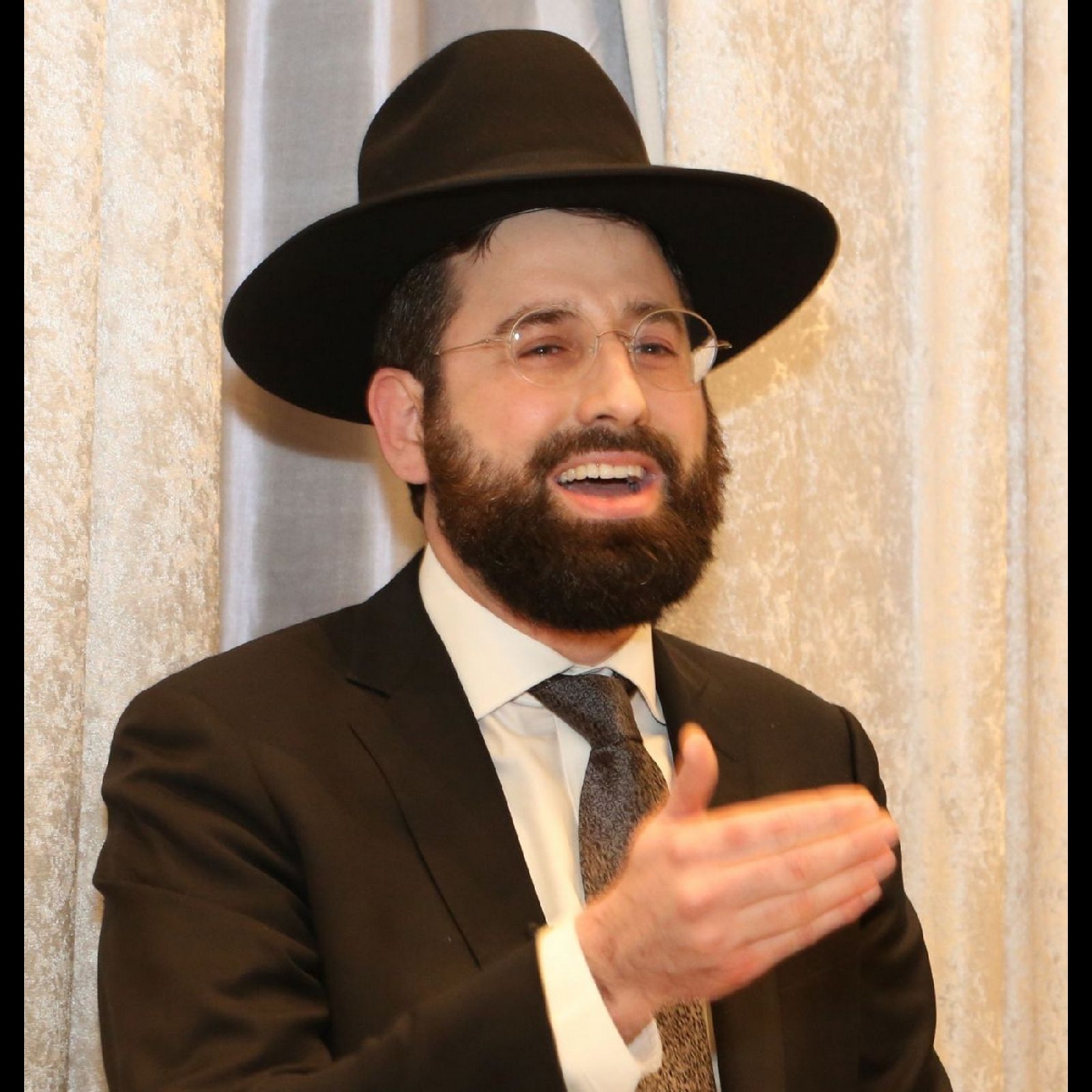
Hadran.org.il is the portal for Daf Yomi studies for women. Hadran.org.il is the first and only site where one can hear a daily Talmud class taught by a woman. The classes are taught in Israel by Rabbanit Michelle Cohen Farber, a graduate of Midreshet Lindenbaum's scholars program with a BA in Talmud and Tanach from Bar-Ilan University. Michelle has taught Talmud and Halacha at Midreshet Lindenbaum, Pelech high school and MATAN. She lives in Ra'anana with her husband and their five children. Each morning the daf yomi class is delivered via ZOOM and then immediately uploaded and available for p...
Author
Michelle Cohen Farber
Category
Podcast website
Latest episode
Jul 10, 2026
Where to listen?
Podcasts in the app Replaio Radio Coming soonPodcasts are coming to the app soon. Install now and be the first to see a whole new take on podcasts
 Install for free
Android 5M+ downloads · 4.8 rating
iOS soon
Install for free
Android 5M+ downloads · 4.8 rating
iOS soon
Episodes
Menachot 107 - April 28, 11 Iyar 28.04.2026 48:03
Study Guide The Mishna lists various vows, such as "I vow to bring gold to the Temple" or "I vow to bring wine," and specifies the exact quantities required to fulfill each obligation. The Gemara then analyzes and clarifies the Mishna's rulings for every case mentioned. A debate exists between Rebbi and the Sages regarding the minimum amount of oil required for a vow—specifically, whether it is on...
Menachot 106 - April 27, 10 Iyar 27.04.2026 48:55
The Mishna rules that if one vows to bring a mincha (meal offering) but cannot recall which type, they must bring all five standard types. Abaye explains that this ruling can also align with Rabbi Shimon's position, which recognizes a sixth type consisting of both wafers and loaves; he argues that bringing the wafers and loaves separately covers the possibility of the combined type as well. The Ge...
Menachot 104 - Shabbat April 25, 8 Iyar 24.04.2026 42:26
There is a contradiction raised against Rav Bibi, who testified about a case where the blood of a carcass was measured to see if there was enough to convey impurity. This contradicts a Mishna in Eduyot, where others testified that the blood of a dead animal is pure. The Gemara resolves this by explaining that there is a tannaitic debate on the matter and clarifies why those who declare it impure s...
Menachot 103 - April 24, 7 Iyar 24.04.2026 49:30
There is a dispute regarding a case where someone vowed to bring a mincha of barley. The Tana Kama says that because such a thing does not exist, we obligate them to bring a mincha of wheat. Rabbi Shimon disagrees and says that what was said is nothing, as there is no voluntary mincha of barley. Chizkiya and Rabbi Yochanan attempt to understand the Tana Kama's position. For Chizkiya, it is based o...
Menachot 102 - April 23, 6 Iyar 23.04.2026 47:44
The Gemara raises a difficulty from the laws of pigul against the principle that "anything ready to be sprinkled is considered as if it were already sprinkled," which implies viewing the act of sprinkling the blood as having already occurred. After resolving this difficulty, the Gemara presents the position of Rav Ashi, who rejects this principle. However, following a challenge from the laws of me...
Menachot 101 - Yom Haatzmaut - April 22, 5 Iyar 22.04.2026 48:47
The Gemara cites Vayikra 27:11 to teach that blemished animals are called impure. Although the verse refers to "impure animals," there is a different verse (Vayikra 27:27) that explains that impure animals be redeemed; therefore, the first verse must refer specifically to blemished animals. Shmuel maintains that items consecrated for their value can be redeemed even if they are unblemished. Two d...
Menachot 100 - Yom Hazikaron - April 21, 4 Iyar 21.04.2026 47:08
The Mishna states that when Yom Kippur fell on a Friday, preventing the meat from being cooked, the Babylonians would eat the goat sin offering raw. Rabbi Yochanan clarifies that these people were actually Alexandrians, but they were called Babylonians due to a general dislike of the Babylonians . The Mishna discusses various errors that can occur while setting up the showbread and the frankincens...
Menachot 99 - April 20, 3 Iyar 20.04.2026 48:27
The Gemara raises a difficulty regarding the opinion that the Table ( Shulchan ) was positioned in an east-west orientation. It resolves this by explaining that the Table crafted by Moses was not placed centrally between the other rows of tables, but rather stood on the western side, close to the Parochet , not in between the others. Regarding the ten T ables and ten Menoras added by King Solomon,...
Menachot 98 - April 19, 2 Iyar 19.04.2026 48:58
Rabbi Yochanan explains that a "medium-sized cubit" consists of six handbreadths. This terminology implies the existence of a larger cubit. A Mishna in Middot (1:3) is brought to explain that there were two measuring sticks kept in a room at the entrance to the Temple Mount (where a depiction of Shushan the capital was displayed). Both were larger than the medium cubit used by Moshe for the Tabern...
Menachot 97 - Shabbat Rosh Chodesh - April 18, 1 Iyar 17.04.2026 43:12
Study Guide The Gemara offers three suggestions for why the Shulchan , which was made of wood and covered in gold, was treated as a wooden vessel regarding the laws of impurity. After rejecting the first two possibilities, they conclude that the status is derived from a verse in Yechezkel, which describes the structure as "wood." This establishes that despite the gold plating, the table's essence...
Menachot 96 - Rosh Chodesh - April 17, 30 Nisan 17.04.2026 45:17
Diagram Unlike the s howbread ( l echem hap anim ) and the two loaves (s htei halechem ) , for which there is a debate about when they are sanctified the minchat c havitin of the Kohen Gadol and regular meal offerings are sanctified the moment they are placed into a s ervice v essel ( k li s haret ). From that point forward, they are considered holy and can be disqualified by factors such as bein...
Menachot 95 - April 16, 29 Nisan 16.04.2026 47:17
Study Guide Did the l echem h a p anim become disqualified in the desert whenever the Tabernacle was dismantled for travel? Furthermore, does this status depend on whether the bread remained on the Table ( Shulchan ) or had already been removed? There is a debate between Rabbi Yochanan and Rabbi Yehoshua ben Levi, which the Gemara interprets in three ways. In the final explanation , Ravin explains...
Menachot 94 - April 15, 28 Nisan 15.04.2026 46:29
Pictures The Mishna compares the details regarding the laws of semicha (leaning) and tenufa (waving). Semicha has a stringency in that all owners of the sacrifice are obligated to perform it, while the same does not hold true for tenufa . However, waving applies to both individual and communal sacrifices, to animals that are both alive and slaughtered, and to both animals and non-living items, suc...
Menachot 93 - April 14, 27 Nisan 14.04.2026 46:18
Study Guide There is a Tannaitic debate regarding whether an heir performs semicha (the laying of hands) on an inherited sacrifice and whether they are subject to the laws of temura (substitution) for such an animal. The Gemara provides scriptural sources for each of these positions. T he Mishna specifies who is exempt from the requirement of semicha and the Gemara brings the reason/ derivation fo...
Menachot 92 - April 13, 26 Nisan 13.04.2026 49:13
There is a tradition that there are two communal offerings that require semicha . Rabbi Yehuda and Rabbi Shimon disagree about which two they are. They both agree that the communal bull offering (brought for an unintentional sin of the congregation) requires semicha by the elders, but they disagree about the identity of the second one. Rabbi Yehuda holds that it is the scapegoat on Yom Kippur, not...
Menachot 90 - Shabbat April 11, 24 Nisan 10.04.2026 42:18
Study Guide
Similar podcasts







Listen to the Daf Yomi for Women - Hadran podcast in Replaio
Radio and podcasts in one app - free, with no sign-up. Install today and do not miss the launch
Replaio is not a podcast publisher; show names, artwork and audio belong to their authors and are distributed through public RSS feeds.
