
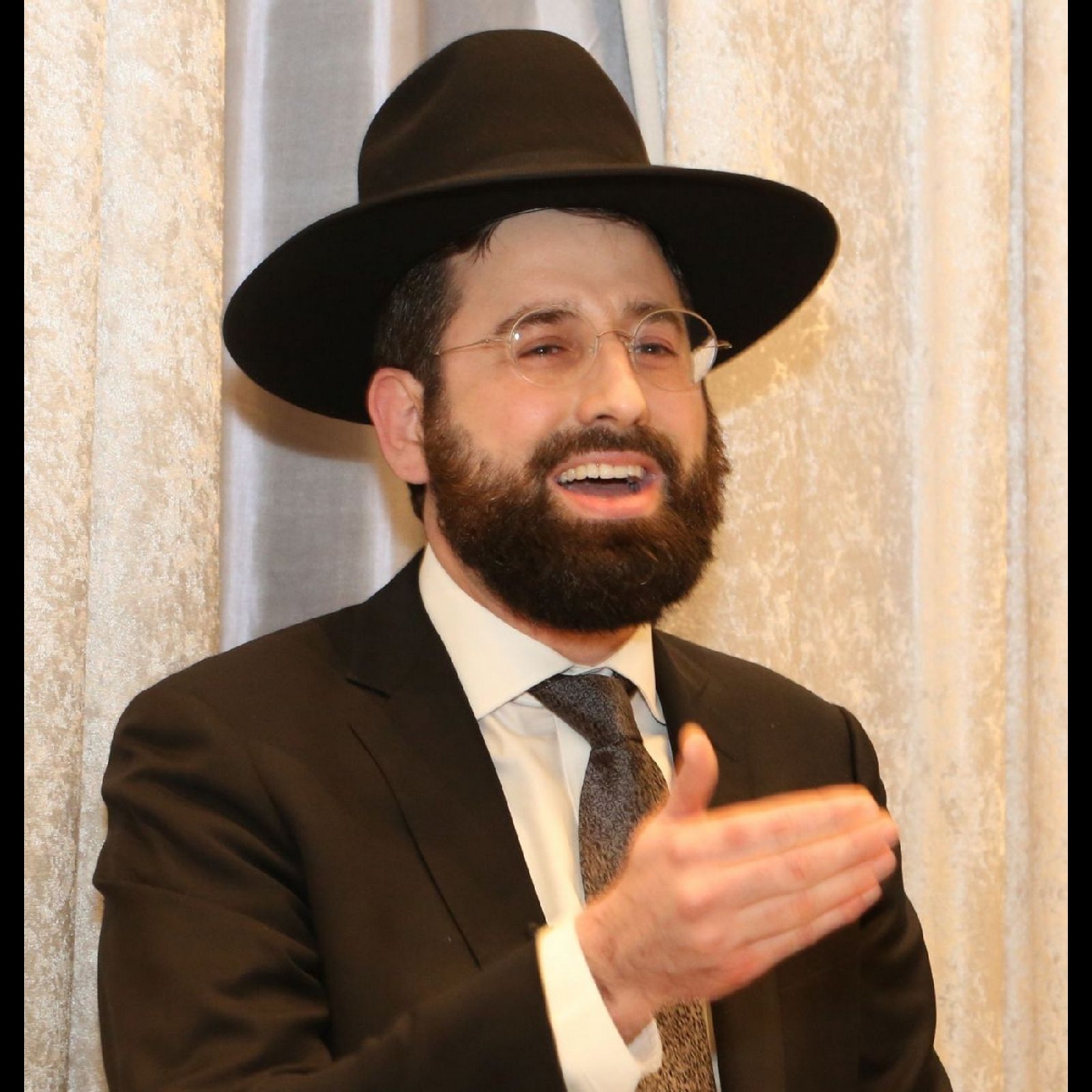
Michelle Cohen Farber
Daf Yomi for Women - Hadran
Hadran.org.il is the portal for Daf Yomi studies for women. Hadran.org.il is the first and only site where one can hear a daily Talmud class taught by a woman. The classes are taught in Israel by Rabbanit Michelle Cohen Farber, a graduate of Midreshet Lindenbaum's scholars program with a BA in Talmud and Tanach from Bar-Ilan University. Michelle has taught Talmud and Halacha at Midreshet Lindenbaum, Pelech high school and MATAN. She lives in Ra'anana with her husband and their five children. Each morning the daf yomi class is delivered via ZOOM and then immediately uploaded and available for p...
Author
Michelle Cohen Farber
Category
Podcast website
Latest episode
Jul 10, 2026
Where to listen?
Podcasts in the app Replaio Radio Coming soonPodcasts are coming to the app soon. Install now and be the first to see a whole new take on podcasts
 Install for free
Android 5M+ downloads · 4.8 rating
iOS soon
Install for free
Android 5M+ downloads · 4.8 rating
iOS soon
Episodes
Chullin 22 - Shavuot - May 22, 6 Sivan 21.05.2026 26:34
Study Guide The Gemara introduces a braita to show the source for the debate between the rabbis and Rabbi Elazar b'Rabbi Shimon in a bird burnt offering. The braita presents three distinct opinions on the biblical term " k'mishpat " regarding a bird burnt offering. The Sages debate whether this term compares it to an animal sin offering or a bird sin offering, detailing the exact procedural laws t...
Chullin 21 - May 21, 5 Sivan 21.05.2026 42:51
Study Guide Zeiri rules that if an animal or bird's neck bone is broken and the majority of the surrounding flesh is severed, it immediately becomes a neveila (carcass), even if it is still convulsing. Rava challenges this: if this state constitutes a neveila , how can melika be validly performed on a sacrificial bird, given that the process begins by breaking the neck? Rava answers that in melika...
Chullin 20 - May 20, 4 Sivan 20.05.2026 48:06
The sons of Rabbi Chiya taught that when performing melika (pinching the neck of a sacrificial bird), the kohen may draw the simanim (the windpipe and gullet ) toward the back of the neck and sever them without breaking the neck bone. The Sages dispute whether they meant this is the only valid method (to avoid rendering the bird a treifa by breaking the bone first), or if breaking the neck bone pr...
Chullin 19 - May 19, 3 Sivan 19.05.2026 44:05
Pictures Rav Nachman permitted slaughtering above the large ring, at the point where the "hat" begins to slope inward, provided that the chitim (wheat-shaped glands ) are at least partially left intact below the cut. This ruling matches neither the rabbis nor Rabbi Yossi b'Rabbi Yehuda, but appears to follow the position of Rabbi Chanina ben Antignus. Rav Huna and Rav Nachman dispute the exact pa...
Chullin 18 - May 18, 2 Sivan 18.05.2026 42:40
Slaughterers who failed to show their knives to a Chacham (Sage) for inspection were penalized, though the severity of the penalty differed depending on whether the knife was subsequently found to be smooth or notched. The teeth of a harvest sickle incline in one direction; therefore, if one used it to slaughter in the direction that cuts cleanly without tearing, Beit Shammai and Beit Hillel dispu...
Chullin 17 - Rosh Chodesh Sivan - May 17, 1 Sivan 17.05.2026 47:18
The Mishna rules that "one may always slaughter." Raba and Rav Yosef both understand this to refer to the period of Exile, but each explains it according to a different Tannaitic view - either Rabbi Yishmael or Rabbi Akiva. These Sages disagreed over whether the Jews l in the desert were forbidden to eat meat unless it was brought as a sacrifice, or whether they were permitted to eat meat even wit...
Chullin 16 - Shabbat May 16, 29 Iyar 15.05.2026 40:01
The Gemara brings a braita to prove that Rebbi differentiates between a slaughter performed with an item attached to the ground and one performed with an item that was originally detached but later became attached. An internal contradiction within the braita is resolved by applying this distinction. The Gemara then delves into the specific cases within the braita. First, it addresses slaughtering...
Chullin 15 - Yom Yerushalayim - May 15, 28 Iyar 15.05.2026 47:37
Study Guide
Chullin 14 - May 14, 27 Iyar 14.05.2026 47:52
The Mishna rules that if one slaughters an animal on Shabbat or Yom Kippur, the slaughter is valid. However, Rav asserts that the meat may not be eaten on that Shabbat, even raw. The Sages in the Yeshiva explained that Rav's position accords with the opinion of Rabbi Yehuda regarding the laws of Shabbat, and the Gemara attempts to identify which specific ruling of Rabbi Yehuda serves as the basis...
Chullin 13 - May 13, 26 Iyar 13.05.2026 46:16
Rabbi Chiya bar Abba recounts a discussion between Rabbi Ami and Rabbi Yochanan regarding the legal weight of a minor's intent. In the first version, the question is whether a minor's thoughts alone are significant. Rabbi Ami argues it is obvious they are not, citing a Mishna in Kelim 17:15 . Rabbi Yochanan clarifies that the doubt applies when a minor's action reasonably demonstrates their intent...
Chullin 12 - May 12, 25 Iyar 12.05.2026 46:16
Rav Nachman states in the name of Rav that meat is permitted if someone supervised the slaughter throughout the process. The Gemara questions why supervision is necessary, given the principle that most who engage in slaughtering are experts. It concludes that the case involves someone known to be ignorant of the laws of shechita who successfully severed the first siman (sign); however, this is ins...
Chullin 11 - May 11, 24 Iyar 11.05.2026 42:51
Study Guide The Gemara asks for the source of the principle that we follow the statistical majority ( rubba ), such as in cases of yibum involving minors where we assume the male is not a saris (sterile) and the female is not an aylonit (barren). The Gemara proposes ten different Torah laws as potential sources for this rule. While difficulties are raised against each possibility and some are reso...
Chullin 10 - May 10, 23 Iyar 10.05.2026 49:13
If it is discovered after shechita that the knife has nicks, can we assume the slaughter was valid because the nicks occurred after the two simanim were cut, or is there a concern that they occurred while cutting the hide before the simanim ? Rav Huna and Rav Chisda disagree on this matter. Two difficulties are raised against Rav Chisda's ruling to permit, but they are resolved. From where do we d...
Chullin 9 - May 9, 22 Iyar 08.05.2026 28:33
There is a dispute between Rav Yehuda in the name of Rav and Rav Chanania bar Shlemia in the name of Rav regarding which practical skills a Torah scholar must master through repetition. The first opinion lists writing, slaughtering, and circumcision, while the second adds the knot of the tefillin , the sheva berakhot , and the tying of tzitzit . Rav Yehuda quotes two further statements in the name...
Chullin 8 - May 8, 21 Iyar 08.05.2026 45:37
Rabbi Zeira says in the name of Shmuel that if one heats a knife and uses it for slaughtering, the animal is not considered a treifa . Although the heat could potentially damage the animal, the sharp edge of the blade severs the windpipe and gullet before the heat from the sides of the blade can cause a burn. A question is raised regarding a person who strikes another with a hot knife, resulting i...
Chullin 7 - May 7, 20 Iyar 07.05.2026 46:07
Rabbi Yehuda Hanasi decreed that produce in Beit Shean did not require tithing, as he ruled the area was not considered part of Israel for those specific purposes. This decision was based on the testimony of Rabbi Yehoshua ben Zeiruz, who observed Rabbi Meir eating a vegetable leaf without tithing it. Rabbi Yirmia challenged this testimony, suggesting various reasons why Rabbi Meir might have eate...
Chullin 6 - May 6, 19 Iyar 06.05.2026 46:55
When Rabbi Zeira heard that Rabbi Yochanan and Rabbi Asi were eating meat slaughtered by a Cuti, he assumed they must have been aware of a prior decree permitting it. He reasoned that had it been forbidden, they would have inadvertently consumed non-kosher meat - a mistake God would not allow to befall the righteous. This principle is derived from the story where God protected the animal of a righ...
Chullin 5 - May 5, 18 Iyar 05.05.2026 43:39
After explaining that the source for Rav Anan's statement in the name of Shmuel, that one can trust the slaughter of a person who worships idols was derived from Yehoshafat, the Gemara seeks evidence that Yehoshafat actually consumed Achav's meat. Two additional sources are examined to support Rav Anan. The first involves Eliyahu, who was fed meat by ravens ( orvim ), which supposedly originated f...
Chullin 4 - May 4, 17 Iyar 04.05.2026 46:55
Abaye and Rava each found support for their respective positions in a br aita - Abaye from the first sentence and Rava from the se cond . How does each Sage address the proof cited by the other? The second case in the b raita permits a Jew to rely on a C uti and consume birds strung together, provided the C uti eats the head of one of the birds on the string. The Gemara raises difficulties with th...
Chullin 3 - May 3, 16 Iyar 03.05.2026 46:33
Study Guide Following the presentation of Raba bar Ulla's interpretation, the Gemara introduces five alternative explanations of the Mishna. After surveying these options, it clarifies why each sage rejected the competing positions, highlighting the specific logical or textual difficulties inherent in each.
Chullin 2 - Shabbat May 2, 15 Iyar 01.05.2026 38:43
Study Guide The Mishna rules that all are permitted to slaughter animals, and if they do, the meat is kosher. While establishing this broad permission, the Mishna excludes minors, deaf-mutes ( cheresh ), and the mentally incompetent ( shoteh ). However, if a n adult supervises them to ensure the slaughter was performed correctly, the meat is valid. The Gemara questions the Mishna's phrasing: the...
Introduction to Masechet Chullin with Dr. Ayelet Hoffman Libson 30.04.2026 22:45
Introduction to Masechet Chullin
Menachot 110 - May 1, 14 Iyar 30.04.2026 33:27
Rav Huna differentiates between those living in exile in Babylonia and those living in other places regarding their nature. Rav Chisda (or Rav) is quoted as making a statement differentiating between gentiles who live in different places in the world, specifically in reference to whether or not they recognize God and the place of the Jewish people. However, after raising a difficulty, this stateme...
Menachot 109 - April 30, 13 Iyar 30.04.2026 45:59
A third challenge is brought against the ruling of Raba bar Avuha, which posits that one who vows to bring "an ox from my oxen" must provide his best ox . The difficulty arises from a comparison to commercial law: if a person sells "a house among my houses," they are not legally obligated to provide the buyer with their finest property. This discrepancy is resolved by distinguishing between the la...
Menachot 108 - April 29, 12 Iyar 29.04.2026 49:27
Six containers were used in the Temple for collecting voluntary offerings, for which six different explanations are provided to clarify their specific purposes. If a person vows to bring a specific animal for a voluntary offering and it becomes blemished, the animal must be redeemed and replaced. The Rabbis permit using the redemption money to purchase a different type, size, or number of animals,...
Similar podcasts







Listen to the Daf Yomi for Women - Hadran podcast in Replaio
Radio and podcasts in one app - free, with no sign-up. Install today and do not miss the launch
Replaio is not a podcast publisher; show names, artwork and audio belong to their authors and are distributed through public RSS feeds.
