NASDDDS
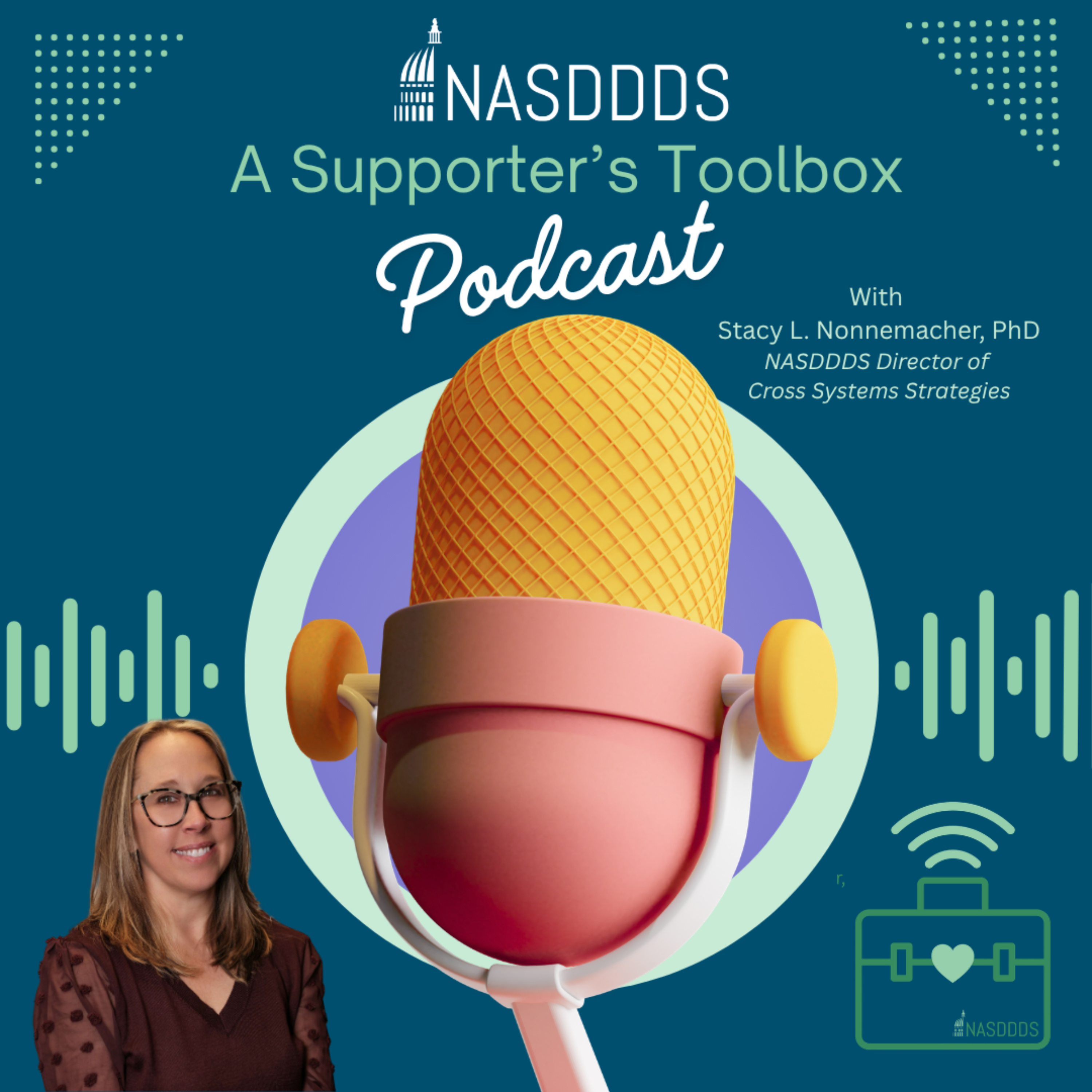
A Supporter's Toolbox With Stacy L. Nonnemacher, PhD
A podcast from NASDDDS’ Director of Cross-Systems Strategies, Stacy Nonnemacher, PhD. This quarterly podcast features tips and strategies for state IDD systems to share with providers. The topics are targeted for the DSP workforce and full of information for these professionals to use daily in their work.
Where to listen?
Podcasts in the app Replaio Radio Coming soonPodcasts are coming to the app soon. Install now and be the first to see a whole new take on podcasts
 Install for free
Android 5M+ downloads · 4.8 rating
iOS soon
Install for free
Android 5M+ downloads · 4.8 rating
iOS soon
Episodes
The Two-Handed Clap: A Supporter's Role in Navigating Healthcare 06.04.2026 8:20
Stacy emphasizes the critical role supporters play in helping individuals navigate healthcare by preparing in advance, supporting self-advocacy, and ensuring clear, respectful communication. By combining preparation with person-centered support, supporters can help ensure individuals are heard, respected, and better equipped to navigate healthcare experiences.
The 3 Rs of Crisis: Regulate, Relate, and Reason 06.04.2026 7:02
Stacy draws on Dr. Bruce Perry’s “3 Rs” framework—regulate, relate, reason— emphasizing that supporters must first manage their own emotions to help others feel safe, then validate their experience, and only afterward reflect and problem-solve. By understanding what soothes, validates, and teaches each person, supporters can help expand a person’s Window of Tolerance, strengthen emotional regulati...
Points of Influence: Finding Places as a Supporter 06.04.2026 8:05
Stacy encourages supporters to recognize their “points of influence.” She encourages supporters to be educated and understand they have influence that can meaningfully impact outcomes for someone. Ultimately, she challenges listeners to step outside their lane and use their influence to help people receive comprehensive, coordinated support.
Being Prepared: Creating a Plan for Crisis 06.04.2026 6:56
Stacy emphasizes the importance of proactive, person-centered crisis planning to prevent escalation and improve outcomes when challenges arise. By planning ahead, when the person is calm and involved in the process, supporters can build trust, increase self-awareness, and reduce the likelihood of hospitalizations or law enforcement involvement.
The Right Questions, Better Support 06.04.2026 17:13
Stacy sits down with self-advocate, Perri Spencer, to explore how asking the right questions is essential to providing the right support. Through Perri’s lived experiences, particularly in medical and mental health settings, the conversation highlights how vague language, unclear timeframes, and abstract rating scales can lead to misunderstandings and inadequate care. Together, they underscore tha...
Meeting Them Where They Are: A Harm Reduction Approach 06.04.2026 5:40
Stacy introduces harm reduction as a compassionate, practical approach to supporting people who engage in risky behaviors, challenging the traditional “all-or-nothing” mindset. Drawing from its roots in the substance use field, she explains how harm reduction focuses on minimizing risk and increasing safety, such as through tapering or safer alternatives, while supporters work to understand the un...
When It Matters Most: The Vital Role of Relationships 06.04.2026 5:25
Stacy emphasizes the essential role relationships play in preventing, navigating, and healing from crises for people with disabilities. Stacy encourages supporters to strengthen communication tools and social skills, promote choice and control in relationships, actively address isolation in ways that reflect individual preferences, and help people identify and pursue meaningful relationship goals....
Social Connections: Decreasing Negative Effects of Trauma 06.04.2026 8:10
Stacy discusses how traumatic experiences can lead to post-traumatic growth, including greater appreciation for life, stronger relationships, and increased personal strength. She encourages supporters to proactively help people build meaningful, trusting relationships that foster resilience, belonging, and emotional support, noting that while trauma cannot always be prevented, strong social bonds...
Words Matter 06.04.2026 5:56
Stacy discusses the power of words and how the language we use, especially in the disability field, shapes self-perception, behavior, and even brain responses. Research shows words can influence pain, performance, and stress. She urges supporters to practice mindful, affirming language that builds confidence and positively influences how individuals see themselves and how others see them. Words, s...
Similar podcasts






Listen to the A Supporter's Toolbox With Stacy L. Nonnemacher, PhD podcast in Replaio
Radio and podcasts in one app - free, with no sign-up. Install today and do not miss the launch
Replaio is not a podcast publisher; show names, artwork and audio belong to their authors and are distributed through public RSS feeds.