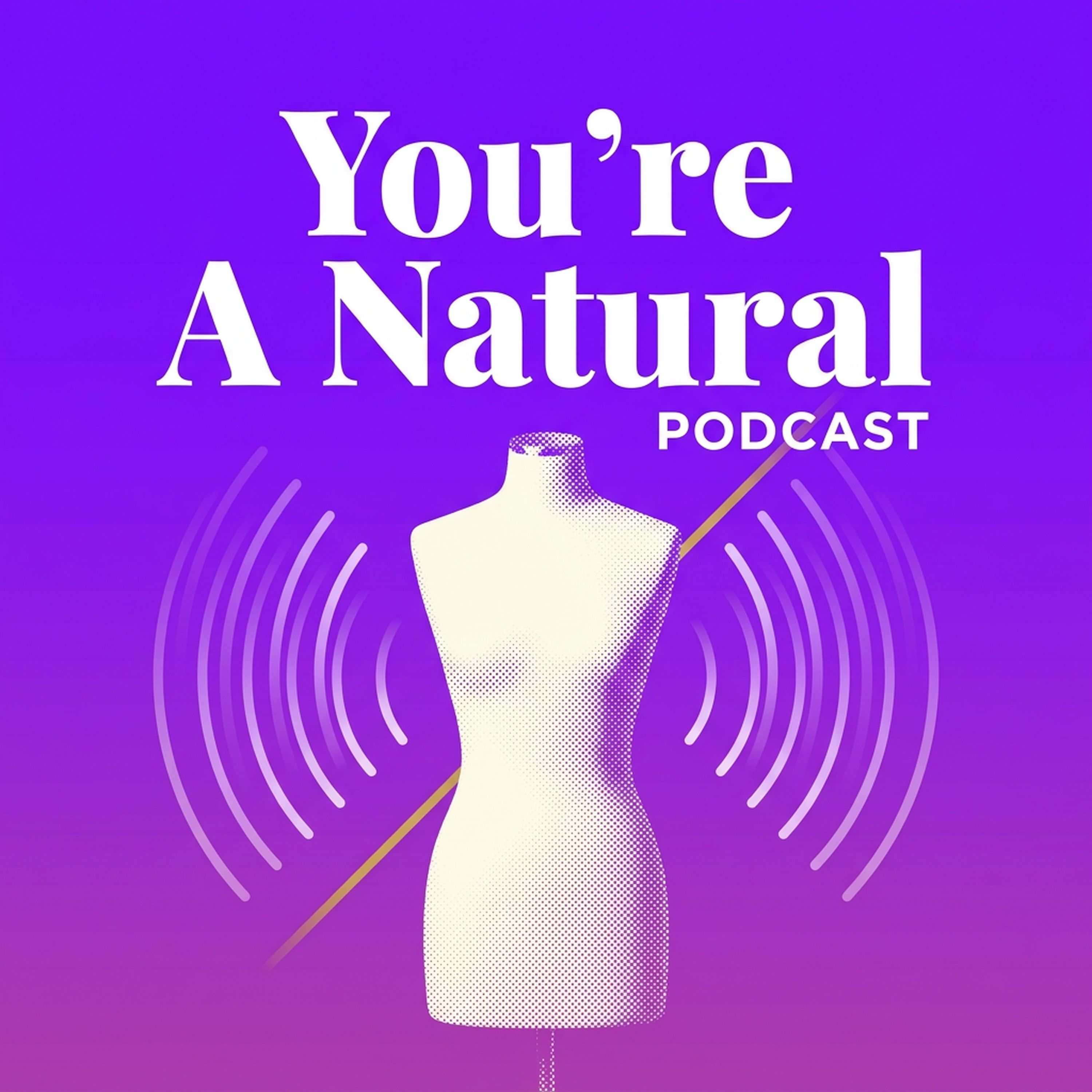
You're A Natural
You're A Natural
Prepare yourself to enjoy reading YAN's consumer intelligence reports. Each episode debates the key concepts and central tension of an article — unpacking the jargon so you arrive ready to read, not lost. Two hosts argue both sides. You decide which one you agree with. Then read the article at youreanatural.com.
Koniecznie odwiedź stronę podcastu i wesprzyj twórcę: youreanatural.com
Autor
You're A Natural
Kategoria
Strona podcastu
Ostatni odcinek
14 lis 2026
Gdzie słuchać?
Podcasty w aplikacji Replaio Radio Już wkrótcePodcasty trafią do aplikacji już wkrótce. Zainstaluj teraz i jako pierwszy zobacz nowe podejście do podcastów
 Zainstaluj za darmo
Android prawie 10 mln pobrań · ocena 4,7+
iOS niedługo
Odcinki
The High Street Exemption 19.06.2026 42:33
A gel-polish ingredient the EU pulled from sale in September 2025 is still lawful on a British shelf until Valentine's Day 2027. The molecule is largely benign to the wearer. The gap is the missing signal. In this episode, we debate: is the seventeen-month regulatory gap between the EU removing TPO from gel polish and Britain enacting its own ban a dangerous failure — or a rational, evidence-led d...
The Tap Question 17.06.2026 39:02
The same 0.1 µg/L PFAS drinking-water number is law in Glasgow and guidance in Reading. What changes isn't the number — it's whose hand is on the clock. In this episode, we debate: is the absence of a statutory PFAS limit in England and Wales a dangerous regulatory gap — or a rational outcome of a system that already carries the right number and delivers safe water? We unpack 5 concepts you will n...
The Recycled-Plastic Catch 15.06.2026 59:13
"Recycled" reads like a safety clearance. But the gold-standard test screens for the wrong contaminants, and outside the regulated food-contact channel no label tells you whether any chemical gate touched your product. In this episode, we debate: does the word "recycled" deserve the safety reassurance a careful shopper reads into it — or is it an origin story masquerading as a safety clearance? We...
Who Pays for the Bin 13.06.2026 53:26
The UK's new packaging fee is the right tax fixing a real cost — but in its first graded year, it charges for weight, not recyclability. The recyclable glass jar costs the producer nine times more than the unrecyclable laminate pouch. In this episode, we debate: Is a fee that charges producers mostly for weight the right way to price packaging disposal — or does it send a perverse signal when the...
The Words That Die 10.06.2026 42:26
From 27 September 2026, the EU bans "carbon neutral" from product labels. But "30% recycled content" — built on the same ledger-credit trick — survives. A banned word is not a measured fact, and a survivor word is not a true one. In this episode, we debate: is banning specific green words genuine consumer protection, or does it create a false sense of progress by killing the most visible offenders...
What the Box Won't Tell You About Your Teabag 08.06.2026 46:49
Most teabags are sealed with plastic the box never names — polypropylene, nylon, PET, or PLA. A lab counted thousands of genuine microplastic particles per cup, and a 2024 study watched them enter the nucleus of human intestinal cells. The regulator calls the risk "unlikely" — in the same assessment that says the data for a full evaluation does not yet exist. In this episode, we debate: should the...
The Bottle That Outlived Its Decade 07.06.2026 51:39
A 60-year-old plastic bottle washed up on a Scottish beach in 2026, its logo still legible. That single object quietly forces the question no label on the shelf will answer: when you throw a piece of plastic away, where does it physically go — and does any route you're offered actually make it stop existing? In this episode, we debate the central tension of the You're a Natural report "The Bottle...
Producer Responsibility 05.06.2026 53:48
In 1990, a Swedish researcher invented the phrase "producer responsibility" to mean manufacturers pay the full cost of their packaging's end of life. Germany implemented it in 1991 — producers funded household collection directly, paying more than EUR 48 per tonne. The UK adopted the phrase in 1997. The regulations required producers to pay approximately 10%. For nearly three decades, taxpayers co...
The Invoice Moment 03.06.2026 45:23
UK producers received their first Extended Producer Responsibility invoices in October 2025 — £423 per tonne of plastic packaging, roughly £1.5 billion in Year One. Over 80% of those costs pass through to consumers as invisible fractions of pennies on the weekly shop. Research shows visible taxes change behaviour roughly seven times more than invisible ones. The UK chose invisible. In this episode...
The Detox Label: What the Free-Of Badge Actually Buys 01.06.2026 36:43
A 'free-of' badge reliably lowers a parent's anxiety. Whether it lowers anything else is the part no one at the shelf can check. In this episode, we debate: whether 'free-of' safety badges are protecting your child from a real chemical exposure, or protecting you from the feeling of not knowing — and whether the distinction matters if the relief is real either way. We unpack 5 concepts you will ne...
Weight Is Destiny 29.05.2026 47:19
Glass is recycled at 80.4% in the UK — outperforming plastic by 50%. Yet under the new Extended Producer Responsibility scheme, glass pays roughly ten times more per container than plastic. The government's own internal cost model says volume is the limiting factor in recycling collections. The fee schedule charges purely by weight. In this episode, we debate: is the UK's weight-based EPR fee a cl...
The Nonstick Inheritance 25.05.2026 47:48
The "PFOA-free" label on your nonstick pan is technically accurate — and structurally blind to three documented pathways of exposure the regulatory test was never built to measure. In this episode, we debate: does a technically accurate regulatory label provide meaningful consumer protection when the test it rests on — a 1970s extractables migration assay — cannot see particle shedding, thermal de...
The Hidden Half — The Compost Problem (3/3) 22.05.2026 41:04
Voluntary certifications draw a perimeter. We read the word inside it as the whole product. The same gap — between what a standard audits and what the shelf word implies — recurs across organic cotton, natural cosmetics, organic wine, and carbon-neutral airline tickets. In this episode, we debate: Is the gap between what voluntary certifications audit and what consumers read from the shelf word an...
Where the Logo Ends 20.05.2026 39:12
GOTS — the Global Organic Textile Standard — wrote down the boundary of its job in plain language on its first body page: criteria for low-impact chemical inputs. Not soil-return. Not biodegradation. The label compresses that fifty-page scope into one word: organic. The consumer reads soil-return when the standard says nothing of the kind. In this episode, we debate: Is the gap between what GOTS c...
074 — The Dye Beneath (The Compost Problem 1/3) 18.05.2026 47:27
A GOTS-certified organic cotton towel carries a covalent dye-cellulose bond engineered in the 1950s to survive hundreds of washes. When you compost it, the cotton biodegrades — but the dye chemistry survives the soil. What does your garden inherit? In this episode, we debate: Is a coloured organic cotton towel genuinely compostable, or does the reactive dye that holds the colour through the wash a...
The Disclosure Gap 15.05.2026 58:07
The Disclosure Gap: the EU banned titanium dioxide from food after EFSA found a genotoxicity concern it could not rule out. The same substance, at comparable nanoparticle sizes, migrates from the "ceramic" nonstick pan that cooks your dinner — and nobody is required to measure it, limit it, or tell you about it. The hosts debate whether that gap is reasonable risk management or an unfulfilled regu...
The Coco Question: When SLS-Free Doesn't Mean What You Think 11.05.2026 44:46
The Coco Question: when you pay a premium for an "SLS-free" shampoo bar, are you buying a meaningful chemistry difference — or a different name from a 1973 vocabulary list that was never designed to help you compare? The hosts debate six concepts: the INCI naming system (a regulator's inventory repurposed as a consumer shopping tool), the 1,4-Dioxane Inversion (the "natural upgrade" Sodium Cocoyl...
The Reformulation Bill: The Price of the Forever Problem 08.05.2026 48:42
The Reformulation Bill: The Price of the Forever Problem — the third and final episode of The Forever Problem series. This episode follows the money: who paid for the four-year gap between a published lab finding and a regulatory enforcement action, and what the consumer’s “clean premium” was actually priced against. The hosts debate five concepts: the Three Clocks (chemistry, tort, and market tim...
The PFAS-Free Claim 07.05.2026 39:07
Five jurisdictions define "PFAS-free" differently — the ratio between the strictest threshold and the loosest is four thousand to one. A single word on a swing ticket sits atop five contradictory rulebooks. In this episode, we debate: is this regulatory fragmentation the honest consequence of complex science moving through democratic institutions at different speeds — or is the ambiguity itself th...
The Second Skin 29.04.2026 50:03
Performance activewear meets every physical specification of a pharmaceutical drug delivery system — heat, occlusion, hydration, duration, and sub-500-Dalton chemistry — pressed against the widest vasodilated capillary surface the body has, with zero of the measurement requirements. In this episode, we debate: is the absence of dose data for PFAS dermal exposure during exercise evidence that the r...
The Substitution 28.04.2026 53:45
The UK's Extended Producer Responsibility scheme sends £1.1 billion to English councils for recycling. But when earmarked money arrives at institutions already failing to meet statutory obligations, the earmark tends to dissolve. LARAC — the trade body for council recycling officers — has called ring-fencing "an urban myth." In this episode, we debate: is ring-fenced funding a genuine fiscal instr...
The Permission Slip Economy 24.04.2026 34:25
Your tote bag helps. And it writes you a permission slip. Both things are true. In this episode, we debate: Is voluntary eco-certification primarily an informational tool — or a psychological permission-slip architecture that keeps consumers feeling good about purchasing without changing what they purchase? We unpack 5 concepts you will need before reading the article: Moral Licensing, The Volunta...
The Alibi Menu — How Brands Sell Psychological Permission 20.04.2026 45:46
A pre-reading companion to the You're a Natural consumer intelligence report "The Alibi Menu." Two hosts debate a fundamentally uncomfortable question: when you click "sustainably sourced" on a product page, are you gathering information — or loading a pre-written excuse? The debate unpacks Sykes and Matza's 1957 Techniques of Neutralization, the 50-year attitude-behaviour gap, the 13% passive sea...
The Invisible Breath — The Indoor Air Problem (3 of 3) 18.04.2026 49:55
Everything sheds — wool, cotton, polyester, polypropylene. The difference is not whether fibres enter the lung but whether the lung can process what it has inhaled. The body has enzymatic clearance pathways for cellulose and keratin. It has no pathway for polyethylene, polypropylene, or polyethylene terephthalate. In this episode, we debate: Is the failure of indoor air quality to mobilise consume...
The Unregulated Room 18.04.2026 42:01
The UK regulates the air outside your front door in numbers — a daily index, a ten-point scale, a standing committee, a statute. Indoor air, where you spend 90% of your time, has none of these. Not even a committee tasked with producing a reading. In this episode, we debate: Is the absence of indoor air regulation prudent science waiting for evidence, or a structural loop where the evidence can ne...
Podobne podcasty





Słuchaj podcastu You're A Natural w Replaio
Radio i podcasty w jednej aplikacji - za darmo, bez zakładania konta. Zainstaluj już dziś i nie przegap premiery
Replaio nie jest wydawcą podcastów; nazwy audycji, okładki i audio należą do ich autorów i są rozpowszechniane przez publiczne kanały RSS