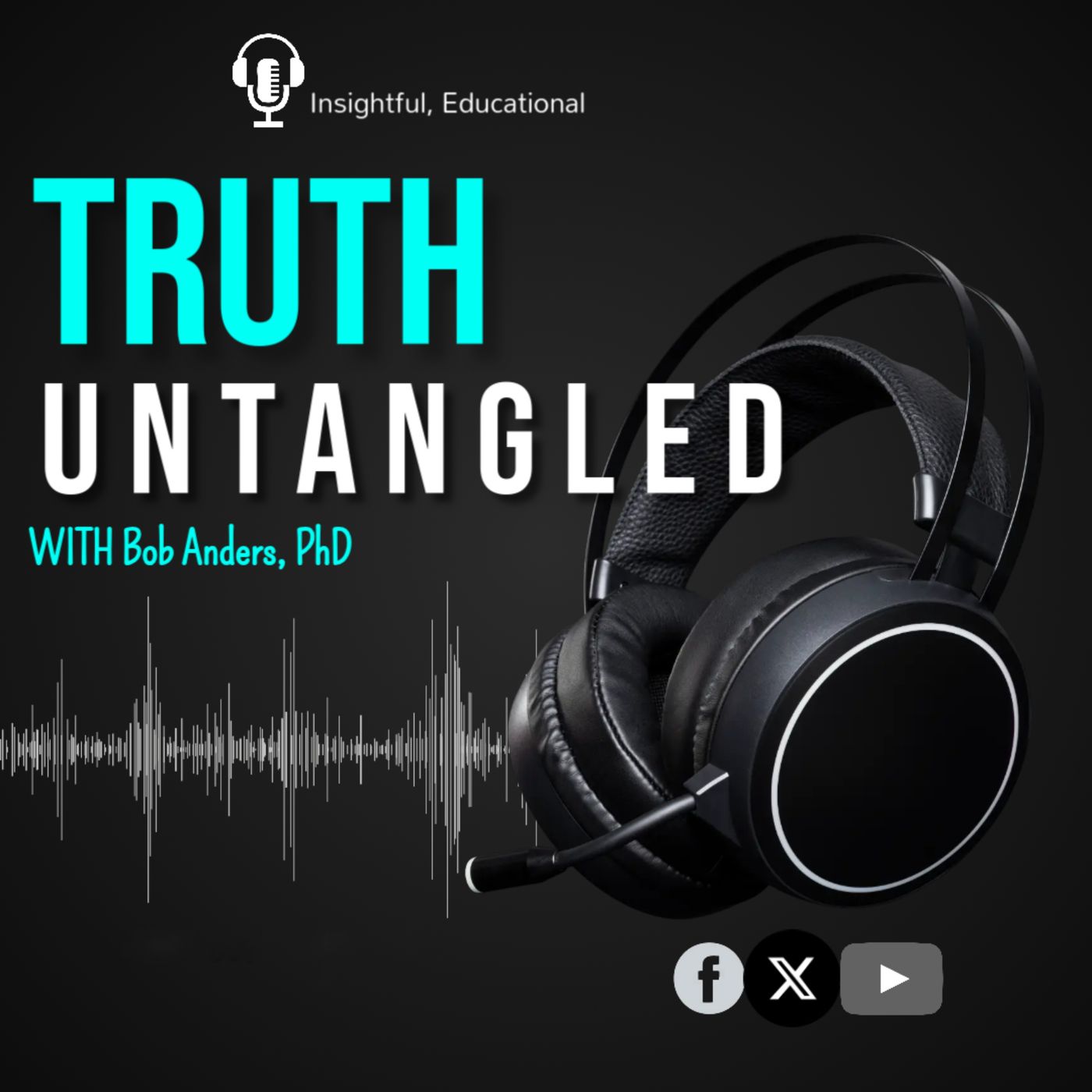
Bob Anders, Ph.D.
Truth Untangled
Bob is an International Award-Winning Producer with degrees in Psychology and a Ph. D. In Journalism. He has worked for over 30 years in Radio and Television Broadcasting. He is presently retired and enjoys spending his spare time creating podcasts. Member Society of Professional Journalists
Koniecznie odwiedź stronę podcastu i wesprzyj twórcę: www.spreaker.com
Autor
Bob Anders, Ph.D.
Kategoria
Strona podcastu
Ostatni odcinek
1 paź 2026
Gdzie słuchać?
Podcasty w aplikacji Replaio Radio Już wkrótcePodcasty trafią do aplikacji już wkrótce. Zainstaluj teraz i jako pierwszy zobacz nowe podejście do podcastów
 Zainstaluj za darmo
Android prawie 10 mln pobrań · ocena 4,8
iOS niedługo
Odcinki
287 Why Good Women Are Attracted To Bad Men 16.08.2025 5:01
The phenomenon of women being drawn to “bad men”—those who exhibit traits like dominance, emotional unavailability, rebelliousness, or cruelty—has long fascinated psychologists, sociologists, and cultural critics. Far from being a mere stereotype, this attraction reflects a complex mix of evolutionary, psychological, and cultural influences that shape individual preferences and romantic dynamics.
286 The Personality of a Thrill-Seeker 01.08.2025 5:32
Thrill seekers occupy a unique psychological space, straddling the line between audacity and awe. These individuals are defined not only by their actions—such as skydiving, rock climbing, or racing at breakneck speeds—but also by a deep, intrinsic drive to experience life at its most intense. Understand the personality of a thrill seeker. Explore the complex mosaic of traits, motivations, and psyc...
285 Are Tattoos A Sign Of A Mental Disorder? 15.07.2025 3:46
Research published in Personality and Mental Health clearly states that the presence of tattoos on forensic psychiatric inpatients should alert clinicians to a possible diagnosis of Antisocial Personality Disorder (ASPD). These tattoos also indicate a potential for histories of suicide attempt, substance abuse, and sexual abuse.
284 Why Good People Commit Horrific Crimes 01.07.2025 7:46
It is one of the most unsettling truths about humanity: under certain conditions, good people—those who are compassionate, loving, charitable, and often admired by peers—can commit crimes so horrific that they seem to defy all logic. When faced with such atrocities, society is often quick to label the perpetrator as inherently evil, mentally ill, or irredeemable. Yet the reality is much more compl...
283 The Fallacy of the “Chemical Imbalance” Theory in Mental Illness 15.06.2025 7:16
For a long time, the main story about mental illness—like depression and anxiety—has been that there's a "chemical imbalance" in the brain. This idea, which is usually explained in simple terms, says that mood disorders come from problems with neurotransmitters like serotonin, dopamine, and norepinephrine. According to this idea, mental illnesses are like diabetes or high blood pressure: a glitch...
282 The Dark Triad- Unveiling the Dark Side of Personality 02.06.2025 4:46
The concept of personality has long been a subject of intense study in the field of psychology. Researchers have explored not only the positive aspects of personality but also the darker side of human nature. A particularly intriguing area of study is the Dark Triad, a set of personality traits regarded as representing the darkest aspects of human nature.
281 Anchoring Bias 09.05.2025 4:16
Anchoring bias is a cognitive bias that causes individuals to rely heavily on the first piece of information they receive about a topic, even when subsequent information becomes available . This initial piece of information, known as the "anchor," serves as a reference point that influences all subsequent judgments and decisions, often leading to poor choices in various contexts.
280 The Myth That A College Degree Equates To Intelligence 24.04.2025 5:32
Society has long promoted the idea that a college degree is a clear sign of intelligence. This assumption, firmly entrenched in cultural narratives and perpetuated by employers, educators, and even parents, equates formal education with cognitive ability, critical thinking, and problem-solving skills. This notion is flawed and misleading. While a college degree can signify perseverance, dedication...
279 The Effect Of Q Scores On News Credibility 11.04.2025 7:01
In today's digital age, where news consumption is heavily influenced by digital engagement and personality-driven journalism, Q Scores, also known as Q Ratings, have become a critical tool for assessing the appeal of media personalities. Originally developed as a marketing tool to measure the popularity of celebrities, Q Scores have seeped into the world of news reporting, shaping which journalist...
278 The Toxicity Of Social Media 04.04.2025 6:02
Social media is now a vital part of modern life, providing platforms for communication, expression, and networking. But beware: beneath its benefits lies a complex web of negative psychological effects that can be profoundly damaging to mental health. This podcast will provide hard statistics and data that clearly illustrate the toxicity of social media and explore the reasons why it poses such si...
277 The Epidemic Of Mental Illness 27.03.2025 6:00
It seems that Americans are in the midst of a raging epidemic of mental illness at least as judged by the increase in the numbers treated for it.
276 The Systematic Motive Behind Keeping the Masses Uneducated 21.03.2025 4:16
In any society, education is universally recognized as a powerful tool for individual empowerment and societal progress. However, there is a disturbing trend where certain systems, whether governmental, corporate, or other institutional, have a vested interest in ensuring that the general population remains uneducated or undereducated. This deliberate perpetuation of widespread ignorance begs the...
275 The Power of Illusory Truth- How Governments and Media Manipulate Perception 14.03.2025 3:32
In a world inundated with information, it has become increasingly important to discern fact from fiction. However, the phenomenon of illusory truth plays a key role in shaping our beliefs and attitudes, often to the advantage of powerful entities like governments and media organizations. Illusory truth, also known as the illusion-of-truth effect, refers to the tendency of people to believe informa...
274 How to Identify Psychological Operations (Psyops) 07.03.2025 8:02
Psychological operations, or psyops, are campaigns that try to change how people think, act, and make decisions. Governments, intelligence agencies, companies, and sometimes people working alone use psyops to influence public opinion, create division, and control what people think.
273 Smartphones and Mass Psychosis 27.02.2025 4:01
In the digital age, smartphones are everywhere and play a big role in our daily lives. These small devices connect us to a huge online world, giving us information and entertainment right away. But as more and more people get smartphones, there are worries about how they affect our mental health and well-being.
272 Agentic Shift 21.02.2025 8:01
The term "agentic shift" describes a way of thinking and feeling where a person thinks of themselves as a tool or agent doing something because someone else wants them to, instead of thinking for themselves. This idea is important to understand how normal people can do things that go against their beliefs about what is right and wrong, especially when they are following someone in charge.
271 Locus of control 14.02.2025 3:46
Locus of control is a psychological concept. It describes the extent to which individuals believe they have control over the events in their lives. This idea was first studied by Julian B. Rotter in 1954. It has since become an important part of the study of personality. This idea affects many areas of life, including education, health, and personal development[
270 Regulating Emotions 07.02.2025 6:30
Emotions are a big part of life. They affect how we think, decide, and act. They alert us to our needs, desires, and limits. While emotions are natural and necessary, the way we manage them can have a big impact on our mental health, relationships, and overall quality of life. Emotional regulation is about understanding, expressing, and managing your emotions in a healthy way.
269 Why Some People Choose to Be Willfully Ignorant 31.01.2025 4:46
In an age where information is more accessible than ever, it's baffling that some individuals choose to embrace willful ignorance. Willful ignorance, or the deliberate avoidance or refusal to acquire knowledge or acknowledge facts, is a complex phenomenon rooted in various psychological, social, and cultural factors.
268 Why Some People Believe Everything They See on Social Media 24.01.2025 5:01
In a time where social media platforms control the information we consume every day, it's essential to understand why some people unquestioningly accept everything they see online as true.
267 Overcoming the Fear of Judgment 17.01.2025 4:46
In an age where our lives are increasingly lived in the public eye—through social media, professional environments, and community interactions—the fear of judgment has become a significant barrier to personal growth and fulfillment. This podcast will explore how the fear of judgment holds people back, its psychological impacts, and strategies for overcoming this pervasive issue.
266 Overcoming Grief 09.01.2025 5:32
Grief is an inevitable part of the human experience. It is a natural response to loss. This can include the death of a loved one, the end of a relationship, or any significant change in life. While grief can feel overwhelming, there are paths to healing and ways to navigate this emotional journey. The following steps will guide you in overcoming grief:
265 Hybristophilia 03.01.2025 7:31
Hybristophilia, also known as the "Bonnie and Clyde Syndrome," is a psychological phenomenon defined by a sexual or romantic attraction to individuals who have committed crimes, especially heinous or violent acts. This rare and controversial paraphilia gets its name from the Greek words "hybristos," meaning "to commit an outrage against someone," and "philia," meaning "love" or "attraction." It is...
264 Brain Rot 27.12.2024 3:46
Brain rot is the term used to describe the cognitive decline associated with excessive consumption of low-quality online content, particularly on social media platforms. It gained significant popularity in 2024. This phenomenon is so prevalent that Oxford University Press named it the Word of the Year for 2024. Its usage surged by 230% from 2023 to 2024.
263 The Rise of Podcasting as a Trustworthy Alternative to Corporate Media 20.12.2024 5:16
Podcasting is the future of media. It's a significant alternative to traditional corporate media, offering a platform that many listeners find more credible and engaging. This shift is particularly notable amidst growing skepticism towards mainstream news outlets, which have seen trust levels plummet. As audiences increasingly seek authentic voices and diverse perspectives, podcasters are filling...
Podobne podcasty








Słuchaj podcastu Truth Untangled w Replaio
Radio i podcasty w jednej aplikacji - za darmo, bez zakładania konta. Zainstaluj już dziś i nie przegap premiery
Replaio nie jest wydawcą podcastów; nazwy audycji, okładki i audio należą do ich autorów i są rozpowszechniane przez publiczne kanały RSS