Saul J. Weiner and Stefan Kertesz
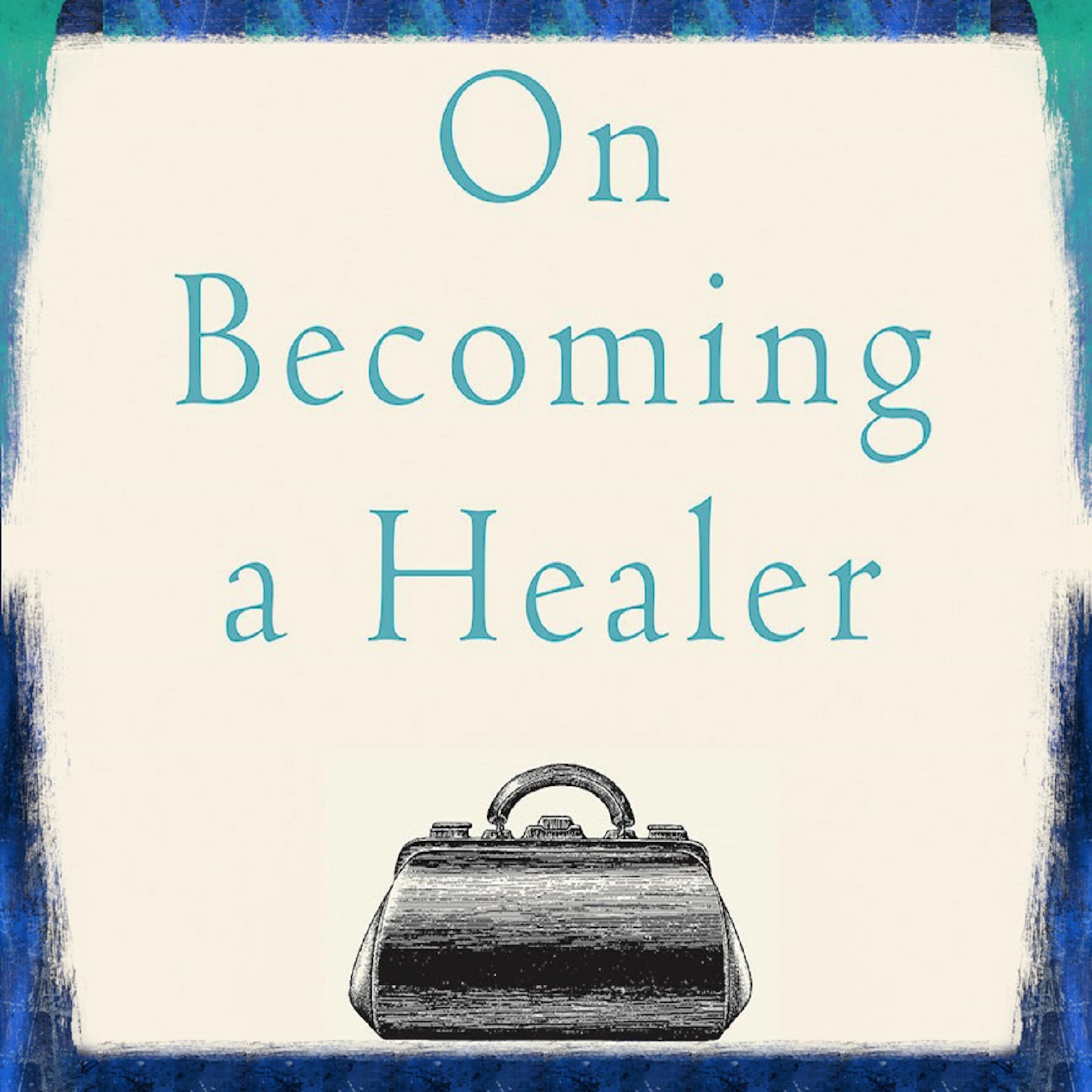
On Becoming a Healer
Doctors and other health care professionals are too often socialized and pressured to become "efficient task completers" rather than healers, which leads to unengaged and unimaginative medical practice, burnout, and diminished quality of care. It doesn't have to be that way. With a range of thoughtful guests, co-hosts Saul Weiner MD and Stefan Kertesz MD MS, interrogate the culture and context in which clinicians are trained and practice for their implications for patient care and clinician well-being. The podcast builds on Dr. Weiner's 2020 book, On Becoming a Healer: The Journey from Patient...
Koniecznie odwiedź stronę podcastu i wesprzyj twórcę: www.contextualizingcare.org
Autor
Saul J. Weiner and Stefan Kertesz
Kategoria
Strona podcastu
Ostatni odcinek
30 cze 2026
Gdzie słuchać?
Podcasty w aplikacji Replaio Radio Już wkrótcePodcasty trafią do aplikacji już wkrótce. Zainstaluj teraz i jako pierwszy zobacz nowe podejście do podcastów
 Zainstaluj za darmo
Android 5 mln+ pobrań · ocena 4,8
iOS niedługo
Zainstaluj za darmo
Android 5 mln+ pobrań · ocena 4,8
iOS niedługo
Odcinki
What do we lose and what do we gain by calling addiction a disease? 18.06.2024 50:10
The National Institute on Drug Abuse defines addiction as a "chronic disease" occurring in the brain – Many believe this definition can help to reduce stigma. But, is it helpful in the care of individual patients? In this episode we discuss what we gain and what we lose when we speak of people with addiction as having "diseased brains." The view of addiction as a chronic disease has traction, supp...
Can we learn and practice medicine well in a system that is so ill? 21.05.2024 51:26
In his book, The Present Illness, American Health Care and Its Afflictions, physician and historian Martin Shapiro, MD, PhD, MPH presents a scathing critique of a profession suffused with status, money, and power. At the same time, he also describes many deeply caring and rewarding patient care experiences, his own and those of colleagues. But these relationships are only possible when the clinic...
"Tough Love" is Not the Answer: A critique of NEJM reporting on student/trainee grievances and educator discontent 16.04.2024 59:53
A recent NEJM article and accompanying podcast episode (" Tough Love ") authored and hosted by the Journal's national correspondent sound the alarm that a culture of grievance among medical students and trainees about the discomforts of medical training is threatening to undermine both their medical education and patient care. She also describes widespread anxiety among medical educators who feel...
What a James Baldwin story can teach doctors and patients about care amidst suffering 19.03.2024 1:02:37
"Sonny's Blues" is a 1956 story by the author, James Baldwin, about a "sensible" and pragmatic algebra teacher and his younger musically gifted younger brother ("Sonny"), who struggles with heroin addiction. Both of them, raised in Harlem, are deeply affected by anti-Black racism. Although the older brother, who narrates the story, feels responsible for Sonny, he struggles to relate to him. With...
How confronting racist ideas I didn't realize I had is shaping me as a physician and a person 20.02.2024 55:30
In a 2021 episode that we reran last month, "About me being racist: a conversation that follows an apology," Saul talked with a former Black colleague after apologizing to her for something racist he had done twenty years earlier that hurt her for a long time. Since then, Saul has been thinking about how he got exposed to racist ideas and notions of power as a white male growing up in the Unite...
About me being racist: A conversation that follows an apology 16.01.2024 42:49
We are re-running this episode from 2021 because we're releasing a sequel next month in which Saul reflects on his journey confronting racist ideas he'd absorbed and that became impossible to ignore after he'd acknowledged his role in the incident described here. We are also re-running the episode because it exemplifies our commitment to facing things -- about ourselves and our profession – to e...
How effects of racism were mistaken for "race" in clinical algorithms: What clinicians should know 19.12.2023 1:03:58
For years, when physicians order tests to assess lung function, or blood work to determine kidney function, or look up guidelines for managing high blood pressure the results have been adjusted for race. This practice has been based on studies that seemed to indicate that the same result means different things if the patient is Black vs white. So, for instance, an "uncorrected' creatinine of 1.6 w...
Drug testing at time of birth: How physicians are co-opted into harming families while thinking they are doing the right thing 21.11.2023 1:02:43
The practice of urine drug testing during pregnancy and then often reporting positive results to Child Protective Services triggers a cascade that can result in separation of mother and newborn, with devastating consequence for both. These practices are more common when patients come from marginalized communities even when baseline substance use rates are the same. As our guest -- obstetrician/gyn...
Directly and Covertly Observing Care: How it Can Transform Medical Education and Improve Clinical Practice 18.10.2023 50:47
Direct, covert observation of health care is a novel and underutilized tool to assess health care trainees and clinicians. In this episode we talk with experts about two such approaches: the unannounced standardized patient and patient-collected audio. In the former, actors are sent incognito into practice settings, and in the latter real patients volunteer to record their visits on behalf of a qu...
"Dire Consequences": When students do not receive appropriate accommodations on the USMLE examinations 19.09.2023 43:32
In the prior episode we learned that there is no evidence that time-limited testing improves test validity and that, in fact, there is ample research showing that it makes tests less valid and less equitable. In this episode we discuss how, despite the data, the NBME denies accommodations on the USMLE exams to over half of medical students who have a documented learning disability and are approved...
Why it's time to remove time limits on tests, like the USMLE exams 22.08.2023 39:27
There is a widely held perception that being able to complete a test quickly is an indication of mastery when compared with those who need more time. As a result, it is often difficult to obtain accommodations on high stakes examinations, including the USMLE exams. Many students who request extra time because of a disability are denied accommodations and many other students who need it aren't eli...
Running the Gauntlet: My Journey into Medicine with a Learning Disability 25.07.2023 20:57
Stefan interviews co-host Saul about his experiences becoming a doctor with a learning disability. This episode, first run in 2020, sets the stage for two that will follow – in August and September, with experts on the science of student learning assessment and its implications for the USMLE examinations. These will address questions such as: Does struggling with multiple-choice tests under time...
Why are doctors turning to ChatGPT for help relating to patients? 27.06.2023 33:29
A recent New York Times article, titled "When Doctors Use a Chatbot to Improve Their Bedside Manner," should raise questions about why physicians are turning to artificial intelligence for help talking with other humans. While GPTChat can generate things to say, what comes out of AI is impersonal, as it knows nothing about the individuality of the doctor asking them, or of their patient, or of the...
Prescription Opioid Reductions and Suicide: What Should Caring Physicians Do in the Face of Uncertainty? 23.05.2023 36:58
The narrative that getting patients with chronic pain off opioids makes them safer was reinforced by a recent paper that got substantial media attention showing an association with reduced suicide rates at the population level -- But other data, at the patient level, shows an increased rate of suicide. Which is closer to the truth? And, if there's an answer, how does it apply to the individual pa...
My patient's in shackles: Can we take these off? 18.04.2023 39:44
We might assume that a patient who is chained to their hospital bed must be restrained for good reason, but our guest challenges that assumption in a published account of a man in shackles who is intubated, sedated, and paralyzed in the ICU. He and his co-author write that "Over-policing and mass incarceration have led to Black prisoners being disproportionately represented in jails and prisons....
From medical student mistreatment to burnout: How can we change the culture? 22.03.2023 40:31
In this second of a two-episode series on medical student mistreatment, we discuss its impact on burnout with a colleague who is working to change the culture of medical education and practice through research and leadership.
Medical Student Mistreatment: A Wicked Problem 21.02.2023 43:08
How is it that a healing profession -- medicine -- has such a deeply ingrained culture of harming its own? And what can we do about it? In this first of two back-to-back episodes on medical student mistreatment we consider the scope of the problem and attempts to confront it. We hear from one medical school that, with external funding, developed a program with online resources available to any s...
Uncommon wisdom from a family physician and medical educator 19.01.2023 33:00
Simon Auster, MD, was a family physician, psychiatrist, and medical educator who had extraordinary insight about practicing medicine but absolutely zero interest in drawing attention to himself. His students and patients had the good fortune of having him as their teacher or doctor but far too few have benefited from his wisdom. Today we discuss some of Simon's saying's -- "Simonisms" -- that are...
Challenging Questions to Help Physicians Reflect, Grow, and Find More Joy Practicing Medicine 15.12.2022 43:27
Medical training and practice habituates physicians to a culture that narrows the possibilities we see for finding joy and meaning in our work. We often become efficient task completers, stuck in routines, and prone to burnout. Saul and Stefan discuss a set of questions that challenge physicians to look at their work and themselves in fresh ways, can be used for mentoring or teaching purposes, as...
Organic Chemistry and the Questionable Ways We Select and Train Physicians 16.11.2022 30:03
In October, the New York Times published the first of several articles about an eminent professor at NYU who was dismissed after his students complained that his organic chemistry class, essential to medical school admission, was too hard. Thousands of comments were unsympathetic saying, essentially, that students who couldn't hack it shouldn't be doctors. But is that really true? Saul and Stefan...
Contextualizing Care in a Nutshell (and a New Study) 24.10.2022 27:29
Today, Stefan talks with Saul about his favorite topic (and life's work), contextualizing care. We're re-releasing this conversation (from January of last year) because Saul's research team has just published a new study -- an RCT, titled " Effect of Electronic Health Record Clinical Decision Support on Contextualization of Care: A Randomized Clinical Trial ," which is open access, so you can read...
Medical Gaslighting: Why Are We A--holes? 19.09.2022 35:29
Recent articles in mainstream media about "medical gaslighting" have struck a nerve with thousands of comments on social media platforms. People are complaining about how their doctors are treating them, with women and underrepresented minorities disproportionately telling some of the worst stories. Meanwhile physicians are responding, mostly on the defensive. They're saying their jobs are too to...
Urine Drug Screening: How it can traumatize patients and undermine the physician-patient relationship without helping anyone 11.08.2022 38:02
Urine drug screening (UDS) is used in the care of patients with opioid use disorder, and for patients receiving opioids for chronic pain. There's no strong evidence that testing helps patients, however, and no consensus on what to do with the results anyway. These tests, often mandated, may cause serious harm when physicians don't realize how often there are false positives or react punitively by ...
Pursuing a Medical Career While Black: What it Takes and Why it Matters 14.07.2022 55:43
Making it into and through medical school is tough even for those who have all the advantages: excellent schools starting at a young age, well-educated parents who may be doctors themselves, lots of role models and…white skin. In this episode we hear from two pre-meds and one newly minted physician, all Black, about their journeys with few of these advantages. Despite their remarkable optimism,...
Rescuing medical professionalism: Could "cup-of-coffee conversations" do more good than committees and letters-to-the-file? 26.05.2022 42:06
Medical students may be subject to professionalism review by committees, most commonly for "unreliability" such as not responding to emails, falling behind on compliance requirements, showing up late for assignments and so on. Then they hit the wards, and frequently experience mistreatment by residents and attendings (many of whom also don't answer their emails etc…), most commonly in the form of...
Podobne podcasty




Słuchaj podcastu On Becoming a Healer w Replaio
Radio i podcasty w jednej aplikacji - za darmo, bez zakładania konta. Zainstaluj już dziś i nie przegap premiery
Replaio nie jest wydawcą podcastów; nazwy audycji, okładki i audio należą do ich autorów i są rozpowszechniane przez publiczne kanały RSS