iHeartPodcasts
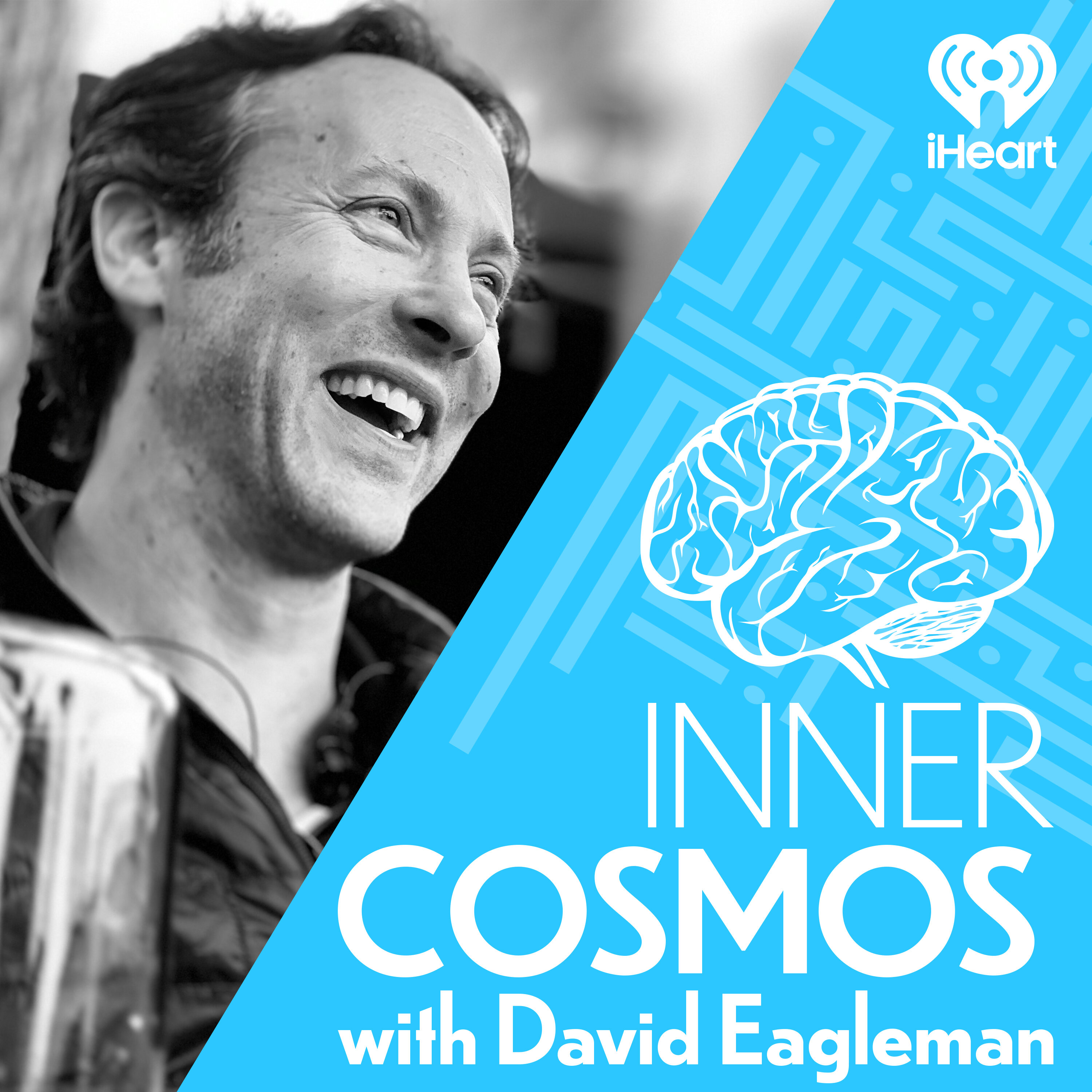
Inner Cosmos with David Eagleman
Neuroscientist and author David Eagleman discusses how our brain interprets the world and what that means for us. Through storytelling, research, interviews, and experiments, David Eagleman tackles wild questions that illuminate new facets of our lives and our realities.
Koniecznie odwiedź stronę podcastu i wesprzyj twórcę: www.iheart.com
Gdzie słuchać?
Podcasty w aplikacji Replaio Radio Już wkrótcePodcasty trafią do aplikacji już wkrótce. Zainstaluj teraz i jako pierwszy zobacz nowe podejście do podcastów
 Zainstaluj za darmo
Android prawie 10 mln pobrań · ocena 4,8
iOS niedługo
Zainstaluj za darmo
Android prawie 10 mln pobrań · ocena 4,8
iOS niedługo
Odcinki
Ep150 "Can We Engineer Dreams?" with Adam Haar Horowitz 20.04.2026 1:07:55
Can you influence what you dream about tonight? Are you spending years of your life in a world you don’t recall? Can nightmares be manipulated as a therapy? Are dreams sometimes predictive of changes in your health before you become aware of them? Join Eagleman with Adam Haar Horowitz, a neuroscientist and dream engineer who spends his working days trying to help people during their night ti...
Ep149 "What makes a brain grow up resilient?" with David Sussillo 13.04.2026 51:23
How can a brain grow up in chaos but find its way to order? There are many ways to have a bad childhood, but why do some children break while others bend and keep going? How much of who you are is written in your genes & how much is sculpted by your environment? How many versions of you were possible & why did this one win out? Join Eagleman today with David Sussillo, who was abandoned as...
Ep148 "How can we improve political dialog?" with Saul Perlmutter 06.04.2026 55:25
How can we improve political dialogue, and what does this have to do with the discovery that the universe behaves differently than expected? Why do we cling to beliefs even when evidence pushes against them? What if the biggest problem facing humanity could be solved with practice? Join Eagleman today with Saul Perlmutter, a Nobel-prize winning astrophysicist, but instead of the cosmos we talk abo...
Ep147 "Can we engineer human thought?" with Tom Griffiths 30.03.2026 50:22
Can the mind be captured with math? Modern AI seems to have burst out of the gate recently, but is it actually the latest chapter in a 300-year project to turn thought into something we can model? Why does current AI need petabytes of data, but a child can learn from just a few examples? Why does AI have 'jagged' intelligence – meaning it looks brilliant in one moment and then does something...
Ep146 "Who Counts as Human in Your Mind?" with Lasana Harris 23.03.2026 1:07:33
When do you view another person like an object? This is what neuroscientists mean when they talk about de-humanization: your brain doesn't crank up its social circuitry to understand the other person as having a mind like you do. Is dehumanization a cause of violence, or the fuel that keeps it burning? Do people who view themselves as highly empathetic dehumanize more than others? And on...
Ep145 Why do we compulsively click on ragebait? with Angele Christin 16.03.2026 1:10:28
Do algorithms shape our lives? What did clickbait look like before the internet? Why do journalists start writing differently when metrics are introduced? What does any of this have to do with cooking pasta in the bathtub, the actress Sarah Bernhardt, or Oxford English Dictionary’s word of the year? Join Eagleman with sociologist Angele Cristin to learn how algorithms invisibly sculpt...
Ep144 "How do things last?" Part 2: Millennia with Alexander Rose 09.03.2026 55:50
What is a 10,000 year clock? What is the Y10k bug? What allows some organizations to last a millennium? What do ancient ceramics have to do with ball bearings in satellites? What does any of this have to do with bristlecone pine trees, cymbals, or an extant hotel that launched in the sixth century? Join today for thinking about ourselves on a 10,000 year timescale with guest Alexander Rose.
Ep143 "How do things last?" Part 1: neurons to civilizations 02.03.2026 44:23
What makes things last, and what do very different lasting things have in common? Why might a space alien not be able to understand music? Why do windows in medieval cathedrals look thicker at the bottom, and what does this reveal about the world’s religions? What was the most important weapon in ancient history, and how did it disappear? Join today for the story of persistence, from sharks...
Ep142 "Do breakthroughs require rule-breakers?" with Eric Weinstein 23.02.2026 1:32:59
Why do revolutionary ideas so often come from outsiders? Do good scientists sometimes crowd out great ones? Do we still have room for scientific cowboys? And what is the relationship between national security and modern science? Are scientists participants in a larger game they barely see? What if the most important ideas are the ones you’re not allowed to hear about? From Crick and Watson t...
Ep141 "What do brains and weather systems have in common?" with Nicole Rust 16.02.2026 36:42
Does brain science need a new grand plan? Is the brain less like an assembly line and more like a weather system? What does this mean for what counts as explanatory, and how might AI help us in the near future? What does any of this have to do with how the drug Ritalin got its name? Today we’ll speak with neuroscientist Nicole Rust, author of Elusive Cures .
Ep140 "How does your brain decide what’s true?" with Sam Harris 09.02.2026 1:20:31
Why do we believe what we believe? Why is changing our opinions so difficult, and why does a challenged belief so often feel like a personal attack? What if beliefs didn’t evolve to be true, but to be socially useful? Today we speak with Sam Harris about the topic of our beliefs: how we see the world and what we take to be true about it.
Ep139 "What does alignment look like in a society of AIs?" with Danielle Perszyk 02.02.2026 58:24
Is intelligence a property of individual brains, or is it something that emerges from many brains trying to align with one another? How can we build AI agents to improve our understanding of the world and to mediate between rivaling humans? For this and much more, we speak today with Danielle Perszyk, a cognitive scientist who leads the human-computer interaction team at Amazon’s AGI Lab.
Ep138 "Why do our political brains mistake opinion for truth?" with Kaizen Asiedu 26.01.2026 1:07:53
What if your confidence in your political beliefs does not correlate with their accuracy? Why does a pundit's outrage often feel so convincing and nuance so unsatisfying? Are conspiracy theories a predictable feature of human brains? Is there any way to stop ourselves from mistaking our feelings for conclusions? How can we come to be clearer thinkers? Today we speak with political commentator...
Ep137 "Do cures ever create the next crisis?" with Thomas Goetz 19.01.2026 47:10
Medications are among the most important advancements of science, but their social consequences are often complex. What if some of our most common diseases are design flaws of modern life? Does it matter if we're fixing a root cause rather than just circumventing it? If a pill can quiet hunger, pain, or anxiety, is that "cheating"? Today we talk about the fascinating world of prescription dru...
Ep136 "Why do we care about mattering?" with Rebecca Goldstein 12.01.2026 41:31
What does it mean for your life to matter? We all talk a lot about happiness, pleasure, and meaning... but what if the real engine underneath it all is the need to feel we count? Is it possible that depression, extremism, and ambition all stem from the same psychological source? When is political polarization less about beliefs and more about threatened significance? Join Eagleman with philos...
Ep135: What does neuroscience mean by hypnosis? with David Spiegel 05.01.2026 55:17
What exactly is hypnosis? We’ve all heard of circus-like versions, but is there a real element to hypnosis that psychiatrists and neuroscientists are able to leverage? Can attention and expectation change what we feel (such as pain or anxiety)? What do suggestible states reveal about the brain’s pathways? How does hypnosis compare to meditation, flow states, or psychedelic drugs? Today...
Ep82 Re Broadcast "Why Do Your 30 Trillion Cells Feel Like a Self?" Part 1 29.12.2025 29:29
Happy Holidays- New Episodes starting Jan. 5th Every cell in your body changes, so why do you have a sense of continuity of the self – as though you're the same person you were a month ago? What does this have to do with the watercraft of the Greek demigod Theseus, or the End-of-History illusion, or why you go through so much trouble to make things comfortable for your future self, even thou...
Ep70 Re Broadcast "Why do our memories drift? Part 1: The War of the Ghosts" 22.12.2025 33:52
Happy Holidays- New episodes starting Jan. 5th Why did lions look so strange in medieval European art? What does this have to do with Native American folklore, eyewitness memory of a car accident, or what a person remembers 3 years after witnessing the 9/11 attack on the World Trade Center? And what does any of this have to do with flashbulb memories, misinformation, and the telephone game that yo...
Ep134 "What do brains teach us about morality?" with Joshua Greene 15.12.2025 1:15:32
Why will you make different moral decisions in similar circumstances? Why do some people make different choices than you? What happens when ancient moral instincts collide with modern problems such as pandemics, AI alignment, and political tribalism? Could a simple online game reduce polarization? Could you contribute to charities more effectively if you understood how your moral brain decide...
Ep133 "Why do people hold misbeliefs?" with Dan Ariely 08.12.2025 46:35
Why do people sometimes buy into ideas that seem obviously false from the outside, as with conspiracy theories? Is this kind of misbelief a universal feature of human brains? Does it offer clarity and belonging when reality feels chaotic and threatening? What would it take for you (under the right emotional conditions) to begin believing something that your past self would find unbelieva...
Ep132 "What will AI mean for the economy?" with Andrew Mayne 01.12.2025 51:24
If AI can do everything from writing novels to designing proteins, what remains that only humans can do? What's the human advantage in a world where machines can outperform us at almost any measurable task? What does any of this have to do with Stephen King’s nightmares, Tom Cruise’s stunts, the first shoeshine caught on camera, the shortage of air conditioner repairmen, and why hyper-...
Ep131 "What do brains tell us about politics?" Part 2: Rehumanization 24.11.2025 49:02
How do societies work their way out of polarization? And what does the answer have to do with broken trucks, the Apollo program, the movie 'Watchmen', Iroquois Native Americans, a new idea for social media algorithms, moral taste buds, and how we can take advantage of the common threads that bond us -- coming to see each other again as fellow travelers improvising their way through the same noisy...
Ep130 "What do brains tell us about politics?" Part 1: Polarization 17.11.2025 45:43
What do propaganda posters have in common across nation and time, and how is that related to the medial prefrontal cortex? What is behind repeating cycles of societal polarization? What does any of this have to do with the American Civil War, hippies vs soldiers, border ruffians vs free-staters, hanging chads, Pearl Harbor, and why education can serve as an immune response to mind viruses?
Ep129 "Is utopia possible or do human brains preclude it?" with Paul Bloom 10.11.2025 43:48
Would a utopia be possible? Or does our innate tribalism and jealousy make perfect societies difficult to achieve? Do we secretly love hierarchies? Why are primate brains such excellent detectors of unfairness? Why do things become more desirable when we’re told we can’t have them? Did the church’s disavowal of first-cousin marriage lead to better politics? This week Eagleman tal...
Ep128 "Would space aliens see the world as we do?" with Daniel Whiteson 03.11.2025 1:03:22
Imagine we eventually meet some alien scientists. If they can see electrons or smell photons, would their science look like ours? Is physics a universal language, or just a local dialect of the human brain? Would aliens use math, or might their truths be organized unrecognizably? Are the “laws of nature” really laws, or simply our interpretations? Join Eagleman with particle physi...
Podobne podcasty








Słuchaj podcastu Inner Cosmos with David Eagleman w Replaio
Radio i podcasty w jednej aplikacji - za darmo, bez zakładania konta. Zainstaluj już dziś i nie przegap premiery
Replaio nie jest wydawcą podcastów; nazwy audycji, okładki i audio należą do ich autorów i są rozpowszechniane przez publiczne kanały RSS