The Quint
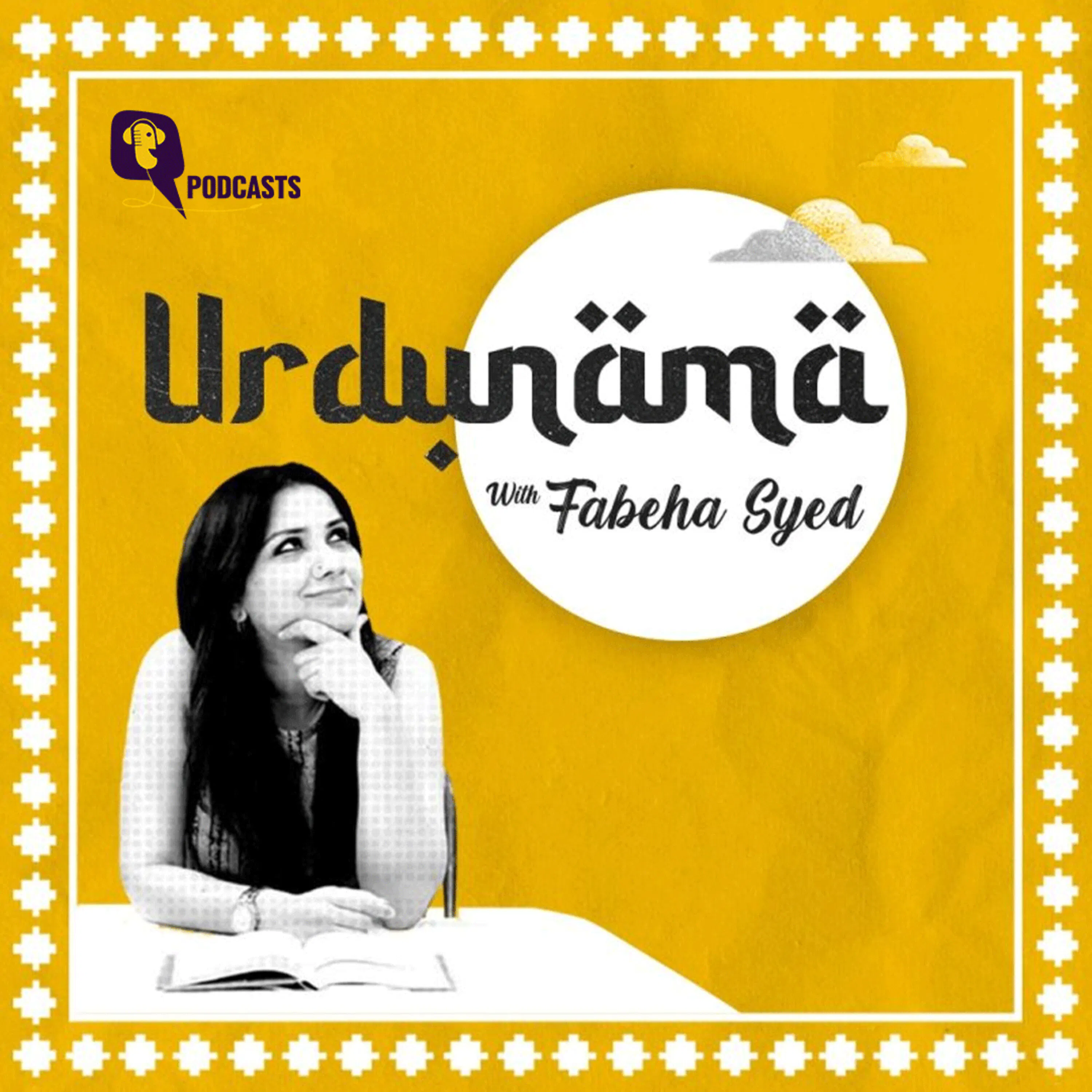
Urdunama
Bollywood songs turn us all into Grammy award-winning bathroom singers! But wait, do you know the meaning of every word you sing? Especially the ones in Urdu? On Urdunama, our host Fabeha Syed takes one word at a time and breaks it down for you. Be it the protest poetry of Faiz, or Sameer's 90s nostalgia, we have it all. If you like Urdu and poetry, this podcast is for you!
Mindenképp látogasd meg a podcast oldalát, és támogasd a készítőjét: bingepods.com
Hol hallgathatod?
Podcastok az alkalmazásban Replaio Radio HamarosanA podcastok hamarosan megérkeznek az alkalmazásba. Telepítsd most, és láss elsőként egy teljesen új megközelítést a podcastokhoz
 Telepítsd ingyen
Android közel 10 M letöltés · 4,8-as értékelés
iOS hamarosan
Epizódok
Bisaat: Knowing Your Place in the Game | Urdunama 17.10.2026 12:19
From the chessboard of life to the conversation between a mountain and a squirrel, we explore bisaat, a word that speaks to capacity, capability, and our place in the world. But how do we measure our own abilities, and how often do we judge ourselves or others by the same standards? As part of our ongoing exploration of khudi, or our sense of self, this episode looks at what bisaat reveals a...
What Is Mizaaj? Exploring Temperament, Personality and Khudi 10.10.2026 13:37
What does mizaaj tell us about who we are? In this episode of Urdunama, we explore the Urdu word for temperament and disposition, and its connection to khudi, which is the idea of the idea of selfhood popularised by Allama Iqbal. Through the poetry of Jaun Elia, Habib Jalib and Daagh Dehlvi, we reflect on how our natural tendencies shape us, how life experiences can change the way we express...
Wujood: What Does It Mean to Be? | Urdunama 03.10.2026 18:07
What does it mean to exist? Is wujood simply about being or does it also include the presence, influence and meaning that come with being? In this episode of Urdunama, Fabeha Syed explores wujood (وجود) through poetry, unpacking the many ways poets have thought about existence. Sometines as presence, as rootedness, as freedom, and as the forces that shape the way we inhabit the world. From Iqbal’s...
Bhagat Singh, Urdu and Revolution: Understanding His Multilingual World 26.09.2026 18:20
Ahead of Bhagat Singh’s 119th birth anniversary, Urdunama explores a lesser-known aspect of the revolutionary’s intellectual life: his relationship with the Urdu language and literature. In this episode, Fabeha Syed speaks to Professor Chaman Lal, former Professor and Chairperson of the Centre of Indian Languages at JNU and honorary advisor to the Bhagat Singh Archives & Resource Centre. A scholar...
Gheebat: Gossip, Backbiting and the Art of Gheebat 19.09.2026 13:32
We all say we hate gossip, but somehow, someone else’s business is always a little too interesting. In this episode of Urdunama, Fabeha Syed takes a closer look at gheebat, meaning the art of talking about people behind their backs. From everyday gossip and the conversations that bring us closer to poetry by Firaq Gorakhpuri and Yagana Changezi, we explore why we love to talk about other people’s...
Tasleem: The Meaning of Acceptance, Surrender and Letting Go in Urdu Poetry 12.09.2026 13:48
What does it mean to tasleem something? More than simply accepting what is, tasleem can mean shades of acknowledgement, surrender, respect and making peace with what cannot be changed. In this episode of Urdunama, Fabeha Syed explores the word through the poetry of Ghalib, Hali, Javed Akhtar, Jigar Moradabadi and Hafeez Jalandhari, and discovers how acceptance can sometimes be its own form of cour...
Ghutan: The Meaning of Suffocation in Urdu Poetry, From Kaifi Azmi to Gulzar 05.09.2026 19:29
What does ghutan truly mean? Is it physical suffocation, an eerie silence, or the weight of deep loneliness? Or is it that heavy feeling of being trapped inside an overwhelming wave of emotion? In this episode of Urdunama, Fabeha Syed breaks down the word through the poetry of legends like Kaifi Azmi and Gulzar, among others. She traces how ghutan evolves from a simple physical sensation to a comp...
Firaq Gorakhpuri: The Poet of Love, Longing and Pain in Urdu Poetry 29.08.2026 24:27
Firaq Gorakhpuri was born on 28 August 1896 as Raghupati Sahaay Firaq. On his birth anniversary, we return to a poet who changed how love could be written about in Urdu. Firaq writes of ishq, but also of what accompanies it: desire, qurbat, longing, loneliness, memory and dard. What sets him apart is the attention he pays to these emotions. He doesn’t just describe them; he looks closely at what t...
Marz: A Word for Guilt, Longing, Pain and More 22.08.2026 12:18
In Urdu poetry, “marz” does not always mean an illness. It can be the weight of guilt, a restless heart, someone else’s manipulation, or even the problems affecting an entire society. In this episode of Urdunama, we look at verses by Ameer Minai, Rahat Indori, Akbar Allahabadi and Hali to explore how each poet gives “marz” a different meaning, and how the idea of a cure changes with it. Learn more...
Khud-Mukhtaar: What Does It Really Mean to Be Independent? 15.08.2026 12:26
What does it mean to be khud-mukhtaar? In this Independence Day episode of Urdunama, Fabeha Syed looks at the Urdu word for being independent, self-governing and able to make your own choices. But khud-mukhtaari is not simply about doing what you want. It also means living with the consequences of your choices. Through the poetry of Allama Iqbal, Munawwar Rana, and others, this episode explores id...
Gumraah: Urdu Poetry on Being Lost, Misled and Finding the Way 08.08.2026 11:06
We usually think of gumraah as someone who has been led astray. But is that all the word means? In this episode of Urdunama, we unpack the word, 'gum-raah', through the poetry of Khumar Barabankvi and Muneer Niazi among others. Along the way, we discover that gumraahi isn't always about taking the wrong path. Sometimes it begins with trust. Sometimes with love. Sometimes with a destination t...
Gumshuda: When What's Lost Isn't Just a Person 01.08.2026 13:01
Most of us hear the word 'gumshuda' and think of a missing person. Urdu poetry has other ideas. In this episode of Urdunama, we explore how this simple word takes on many different meanings in poetry. Through these ashaar by Faiz Ahmed Faiz, Ahmad Mushtaq, and others, 'gumshuda' becomes much more than someone who has disappeared. It can be a lost voice, an unfinished song, an incomplete project, a...
Gumnaam: The Urdu Word That Means More Than ‘Anonymous’ 25.07.2026 12:48
What does it really mean to be gumnaam? Often translated as "anonymous" or "unknown," the Urdu word carries a much deeper meaning. In this episode of Urdunama, we explore how gumnaam is used in Urdu poetry to reflect on forgotten contributors, invisible lives, fame, love and the underlying tension between recognition and obscurity. Through verses by Nida Fazli, Qateel Shifai, Ahmed Faraz and Meena...
'Gum': The Urdu Word That Isn't Just About Being Lost 18.07.2026 13:29
We usually translate gum as "lost". But that's only half the story. In Urdu, gum isn't always about something disappearing. Sometimes it's a misplaced key. Sometimes it's your peace of mind. Sometimes it's simply getting so lost in your thoughts that the rest of the world fades into the background. This episode marks the beginning of a special Urdunama mini-series exploring a family of Urdu words...
Fouzia Dastango on Guru Dutt: The Melancholy, the Masterpieces, and the Man 11.07.2026 20:01
Guru Dutt's films continue to resonate decades after they were made, but what was the man behind the camera really like? In this episode of Urdunama, we explore the life, cinema, and legacy of Guru Dutt through the unique lens of Dastan-e-Guru Dutt. Joining us is India's first female Dastango, Fouzia Dastango, who brings this celebrated performance to audiences across the country. ...
What Does 'Naseeb' Really Mean? Urdu Poetry on Fate, Destiny and the Things We Can't Explain 04.07.2026 11:44
Why do two equally qualified people end up with completely different careers? Why does one marriage survive while another falls apart? Why do some people seem to meet the right person at the right time, while others do everything "right" and still don't get the life they hoped for? When we run out of explanations, we often reach for one word: naseebIn this episode of Urdunama, Fabeha Syed explores...
Why We Fall for Fareb? Urdu Poetry on Deception, Trust and Hope 27.06.2026 11:14
A salesperson can sell you a dream. Social media can sell you a lifestyle. Sometimes, your own heart sells you hope. That's fareb. Often translated as deception, fareb isn't quite the same as dagha. A stranger can deceive you; only someone you trust can betray you. Through the poetry of Fana Nizami Kanpuri, Mirza Ghalib, Bahadur Shah Zafar and Momin Khan Momin, we explore false promises, self-dece...
From Monsoon Daghaa to Human Betrayal: The Many Meanings of Broken Trust in Shayari 20.06.2026 14:15
Mumbai is halfway through June and still waiting for the monsoon. Every few days the forecast promises rain, and every few days the clouds seem to change their mind. So, it feels like an act of 'daghaa'Often translated as betrayal, 'dagha' is more than just being deceived. It is the hurt that comes when trust is broken. Through the poetry of Shakeel Badayuni and Qateel Shifai, we explore friendshi...
From Fever to Fire: Exploring Haraarat in Urdu Poetry 13.06.2026 14:43
As another summer pushes temperatures to record highs, darja-e-haraarat , meaning 'degree of heat', has become part of our daily vocabulary. We hear it in weather reports, worry about it when a child feels warm, and increasingly experience it in a world shaped by climate change. On this week's Urdunama, we explore the Urdu word haraarat. While it literally means heat or temperature, poetry gives t...
The Poetry of Shajar: Trees, Shade, Roots and the Stories They Carry 06.06.2026 12:05
World Environment Day may come around once a year, , but the questions it raises remain. As temperatures rise and green spaces shrink, the humble shajar feels less like a poetic image and more like a reminder of what sustains us. On this week's Urdunama, we explore the Urdu word shajar, meaning tree. In poetry, a tree is never merely part of the landscape. It can offer shade to a weary traveller,...
How Bashir Badr Found Poetry in a ‘Zard Shaal’, a ‘Zafraani Pullover’ and Everyday Life 30.05.2026 21:01
“Ujaale apni yaadon ke hamare saath rehne do,na jaane kis gali mein zindagi ki shaam ho jaaye.” With Bashir Badr sahab’s passing on May 28, Urdu poetry lost one of its warmest and most humane voices. In this episode of Urdunama, we remember the poet who made shayari feel intimate, conversational and deeply personal. From love and loneliness to loss, memory, riots and modern city life, Bashir sahib...
Nadārad: When Something Missing Doesn’t Quite Leave 16.05.2026 10:31
In Urdu, 'nadarad' means 'ghayab', when something is absent, has disappeared or is missing. Until you see how it’s used in poetry. It’s usually not just about something being gone. It’s about something that should have been there but is not. A person who didn’t show up. A message that never came. A moment that didn’t happen the way you thought it would, and has left you with an overwhleming need...
The Beauty of the Pause: Understanding “Vaqfa” in Urdu Poetry 01.04.2026 12:19
After a short vaqfa, Urdunama returns with an episode on the very idea of pause. What does a simple break or interval mean in the language of Urdu verse? Through lines by Mir Taqi Mir, Ahmad Mushtaq, and Aziz Bano Darab Wafa, we explore how pauses, silences, and brief halts often carry as much meaning as the words themselves. In poetry, the space between two phrases can deepen emotion, shape rhyth...
What 'Sahra' Means in Urdu Poetry: Desert and the Lover’s Wilderness 14.03.2026 13:30
In the vocabulary of Urdu poetry, sahra, meaning the desert, is far more than a barren landscape. It is a metaphor for the inner wilderness of the heart: solitude, longing, and the untamed intensity of love. In this episode, we wander through verses by Mirza Ghalib, Daagh Dehlvi, and Jaun Elia to explore how poets transform the desert into a space of vahshat, searching, and emotional vastness. Tun...
Love With 'Ikhlas': Beyond the Valentine Glow | Urdunama Podcast 14.02.2026 10:37
In Valentine’s month, we are drawn to a picture-perfect version of love that is warm, dazzling, and effortless. Yet real love asks for more than beauty. It calls for ikhlaas meaning pure intention to be sincere and have honest devotion that persists even when the glow fades. True love thrives in patience, understanding, and care, beyond grand gestures and fleeting romance. In this episode, we draw...
Hasonló podcastok






Hallgasd a(z) Urdunama podcastot a Replaióban
Rádió és podcastok egy alkalmazásban - ingyen és regisztráció nélkül. Telepítsd még ma, és ne maradj le a premierről
A Replaio nem podcastkiadó; a műsorok nevei, borítóképei és hanganyagai a szerzőiket illetik, és nyilvános RSS-csatornákon keresztül terjednek.