Andrew Osborn
The Reading Hour
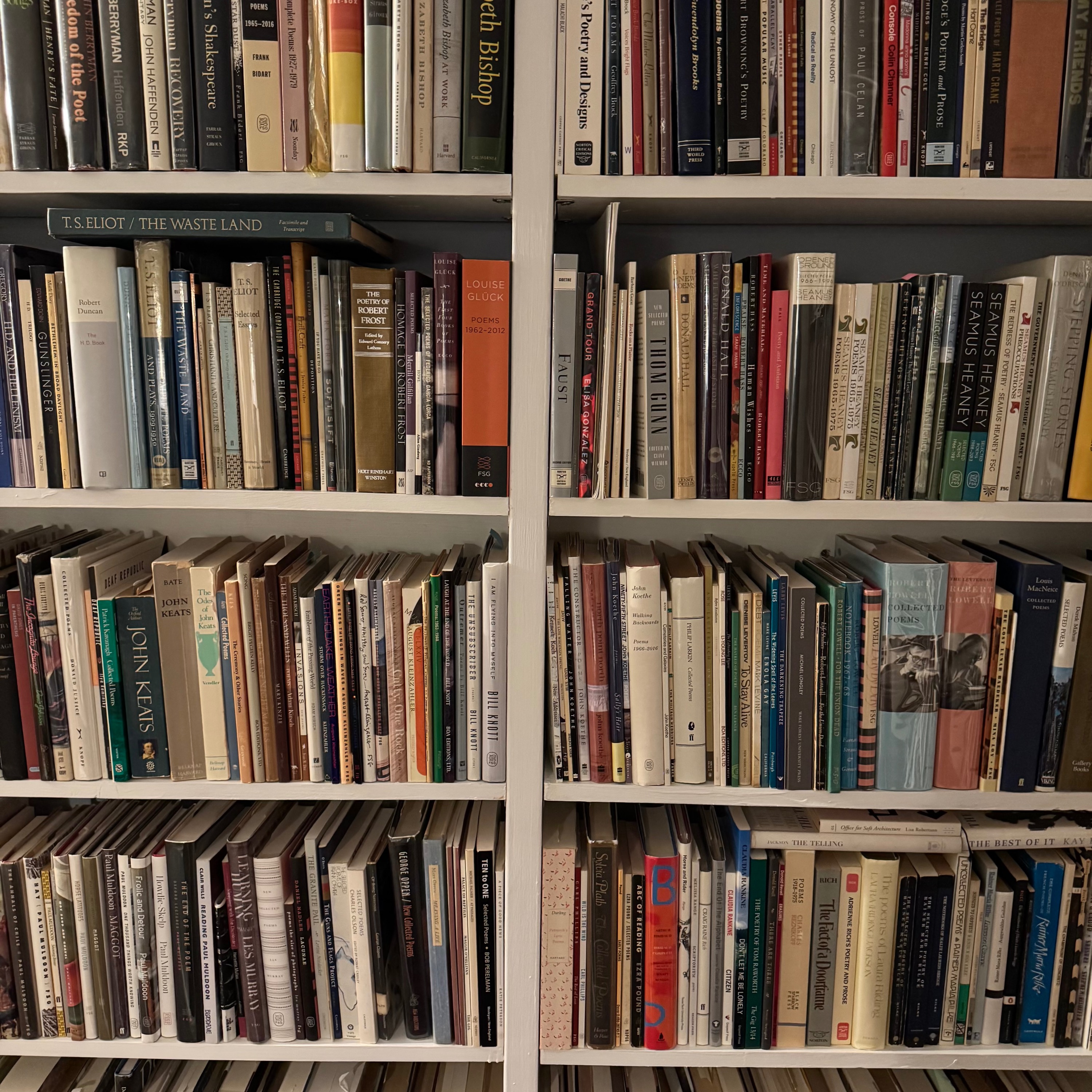
Host Andrew Osborn reads aloud from novels, stories, essays, and poems in the public domain—works of literary accomplishment published before 1930. Most episodes include parts of at least one long work read serially over a number of weeks; recent examples include Virginia Woolf's To the Lighthouse , Henry David Thoreau's The Maine Woods , and Sarah Orne Jewett's A Country Doctor . A professor of literature and poetry-journal editor, Osborn sometimes offers interpretive commentary on what he voices, but the focus is always on sharing the language of great writers. Welcome!
No dejes de visitar la web del podcast y apoyar a su creador: rss.com
¿Dónde escuchar?
Podcasts en la app Replaio Radio Muy prontoLos podcasts llegarán muy pronto a la app. Instálala ahora y sé el primero en descubrir una forma totalmente nueva de vivir los podcasts
 Instálala gratis
Android casi 10 M de descargas · valoración de 4,7+
iOS muy pronto
Episodios
H. D. Thoreau, The Maine Woods, "Chesuncook," §7; Sarah Orne Jewett, A Country Doctor, ch. 15 13.05.2026 1:03:30
In Episode 27 (2.15) we conclude "Chesuncook," the second of three essays in The Maine Woods , where Thoreau stirringly expresses how an ecological regard for the wild may promote the health of a democracy. The episode's second half is devoted to chapter 15 of Jewett's novel, in which Nan finally becomes acquainted with her aunt during an extended visit to Dunport.
H. D. Thoreau, The Maine Woods, "Chesuncook," §6; Sarah Orne Jewett, A Country Doctor, ch. 14 06.05.2026 1:00:08
In this episode, Thoreau tries to determine from several Native Americans in a Maine camp what some of the Abenaki place names mean; then, in ch. 14 of A Country Doctor , we move to Dunport and make the acquaintance of Nan's aunt, Miss Anna Prince.
H. D. Thoreau, The Maine Woods, "Chesuncook," §5; Sarah Orne Jewett, A Country Doctor, ch. 13 29.04.2026 59:01
Episode 25's substantial reading from Thoreau's "Chesuncook" includes some of the most moving prose of the essay as Thoreau moralizes about hunting and poetry; he also expresses Transcendentalist enthusiasm for "the living spirit of the [pine] tree." The episode concludes with Jewett's thirteenth chapter of A Country Doctor , "A Straight Course."
H. D. Thoreau, The Maine Woods, "Chesuncook," §4; Sarah Orne Jewett, A Country Doctor, ch. 12 22.04.2026 59:16
Episode 24 (2.12) includes only a short passage from Thoreau's second essay in The Maine Woods , "Chesuncook," to leave time for the whole of Jewett's long chapter 12.
H. D. Thoreau, The Maine Woods, "Chesuncook," §3; Sarah Orne Jewett, A Country Doctor, ch. 11 15.04.2026 1:00:00
Episode 23 offers a long passage from Thoreau's "Chesuncook," much of it concerning the tracking and hunting of moose, and the short chapter 11 of Jewett's A Country Doctor .
H. D. Thoreau, The Maine Woods, "Chesuncook," §2; Sarah Orne Jewett, A Country Doctor, ch. 10 08.04.2026 58:00
Episode 22 includes only a short passage of Thoreau's second essay from The Maine Woods so that the long tenth chapter of Jewett's A Country Doctor may be shared in full.
H. D. Thoreau, The Maine Woods, "Chesuncook," §1; Sarah Orne Jewett, A Country Doctor, ch. 9B 01.04.2026 1:00:44
With Episode 21 (2.9), we begin the second of the three essays comprising The Maine Woods, "Chesuncook," in which Thoreau navigates from Boston to Bangor, then travels by wagon to the foot of Moosehead Lake, then by canoe to its head, before porting to the Penobscot River. The episode concludes with the second half of Jewett's long ninth chapter, "At Dr. Leslie's."
H. D. Thoreau, The Maine Woods, "Ktaadn," §7; Sarah Orne Jewett, A Country Doctor, ch. 9A 25.03.2026 58:22
Episode 20 concludes the first of The Maine Woods' s three essays, "Ktaadn," then begins the 9th chapter of Jewett's A Country Doctor .
H. D. Thoreau, The Maine Woods, "Ktaadn," §6; Sarah Orne Jewett, A Country Doctor, chs. 7 & 8 25.03.2026 1:16:17
Episode 19 takes us up Mount Katahdin with Henry David Thoreau, whose essay "Ktaadn" delivers its rhetorical climax in today's reading. By extending the episode beyond its usual length, we make time for two chapters of Jewett's A Country Doctor .
H. D. Thoreau, The Maine Woods, "Ktaadn," §5; Sarah Orne Jewett, A Country Doctor, ch. 6 11.03.2026 1:00:00
Episode 18 presents more of Thoreau's long essay "Ktaadn" and chapter 6 of Jewett's A Country Doctor.
H. D. Thoreau, The Maine Woods, "Ktaadn," §4; Sarah Orne Jewett, A Country Doctor, chs. 4B & 5 04.03.2026 59:03
In Episode 17, we continue our readings from Thoreau's "Ktaadn" and Jewett's A Country Doctor .
H. D. Thoreau, The Maine Woods, "Ktaadn," §3; poems by Frederick Goddard Tuckerman; Sarah Orne Jewett, A Country Doctor, chs. 3B & 4A 25.02.2026 58:19
Episode 16 continues our reading from "Ktaadn." Thoreau's mention of poisoning wolves is the occasion for sharing a Tuckerman sonnet that addresses the topic as well as the 19th-century American poet's well-regarded pastoral ode, "The Cricket." The episode concludes with more of Jewett's A Country Doctor .
H. D. Thoreau, The Maine Woods, "Ktaadn," §2; Sarah Orne Jewett, A Country Doctor, chs. 2 & 3A 18.02.2026 59:03
Episode 15 picks up where we left off with Thoreau's trek northward toward Mr. Katahdin in The Maine Woods . Then, having so far presented only the short initial chapter of Sarah Orne Jewett's A Country Doctor , The Reading Hour forges into the story of young Nan Prince.
H. D. Thoreau, The Maine Woods, "Ktaadn," §1; Thomas Gray, "Elegy Written in a Country Churchyard"; Sarah Orne Jewett, A Country Doctor, ch. 1 11.02.2026 56:42
In episode 14 (2.2), we begin two longer works related to Maine: Henry David Thoreau's nonfictional account of his adventures in the state, The Maine Woods (1864), and the York County author Sarah Orne Jewett's novel A Country Doctor (1884). Because "Ktaadn," the opening essay of Thoreau's three-part book, quotes from Thomas Gray's "Elegy Written in a Country Churchyard," that poem is read aloud i...
H. D. Thoreau, "A Winter Walk" & two poems ("Sic Vita," "Conscience . . .") 04.02.2026 59:49
Episode 13 (or season 2, episode 1 = §2.1) introduces Henry David Thoreau's ecological prose to The Reading Hour with the essay "A Winter Walk" (1843) and serves us as a preface to the longer Thoreauvian work to come: The Maine Woods (1864). The hour concludes with two of Thoreau's poems: "Sic Vita" and "Conscience is instinct bred in the house").
V. Woolf, To the Lighthouse, Part 3, chs. 12 & 13; Emerson, "The Tragic," "The Senses and the Soul" 25.01.2026 1:02:05
Episode 12 concludes our reading of Woolf's To the Lighthouse then presents two short essays that Ralph Waldo Emerson published in The Dial between 1840 and 1844: "The Tragic" and "The Senses and the Soul.".
V. Woolf, To the Lighthouse, Part 3, chs. 8-11 19.01.2026 59:19
Episode 11 opens with interpretive remarks about Woolf's project and several of her characters' concerns in To the Lighthouse 's final part; chapters 8-11 of "The Lighthouse" are then presented.
V. Woolf, To the Lighthouse, Part 3, chs. 4-7; Dickinson poems 16.01.2026 59:17
Episode 10 departs from The Reading Hour's usual format by beginning with a few short works by the 19th-century American poet Emily Dickinson, with whom episode 9 had concluded. The Reader Hour then presents chapters 4-7 of To the Lighthouse 's third part, "The Lighthouse."
V. Woolf, To the Lighthouse, Part 3, chs. 1-3; Dickinson poems 16.01.2026 59:00
With Episode 9, we begin the third, final part of Woolf's To the Lighthouse , which is titled "The Lighthouse," and which relates the events of a day at the Ramsay summer house in the Scottish Hebrides roughly a decade after Part 1. The episode concludes with a brief introduction to Emily Dickinson and a reading of several of her poems.
V. Woolf, To the Lighthouse, Part 2 14.01.2026 52:26
Episode 8 presents the whole of To the Lighthouse 's relatively short middle section, "Time Passes," during which the novel speeds through the human events of a decade while focusing on inhuman nature's effects upon the summer house and the care required to restore human order.
V. Woolf, To the Lighthouse, Part 1, chs. 18 & 19; three lyric poems (Elton, Browne, Shakespeare) 14.01.2026 56:10
Episode 7 concludes our reading of To the Lighthouse 's first part, "The Window." Between its final two chapters, one Victorian and two early-modern lyric poems excerpted in those chapters, are present in full: Charles Isaac Elton's "The Garden Song," William Browne's "The Siren's Song," and William Shakespeare's Sonnet 98 ("From you have I been absent in the spring").
V. Woolf, To the Lighthouse, Part 1, ch. 17 14.01.2026 55:59
Episode 6 briefly explains the title of To the Lighthouse 's first of three parts, "The Window," then presents most of the novel's longest chapter, which relates Mrs. Ramsay's dinner part.
V. Woolf, To the Lighthouse, Part 1, chs. 13-16; Bergson, from "Introduction to Metaphysics"; Whitman, "Crossing Brooklyn Ferry" 14.01.2026 58:32
In Episode 5, our reading of Woolf's To the Lighthouse continues, followed by a relevant excerpt on duration from Henri Bergson's "Introduction to Metaphysics" (1904) and Walt Whitman's poem "Crossing Brooklyn Ferry."
V. Woolf, To the Lighthouse, Part 1, chs. 10-12; Bros. Grimm, "The Fisherman & His Wife" 13.01.2026 58:43
Episode 4 continues our reading from Part 1 of Virginia Woolf's To the Lighthouse and concludes with a brief introduction to the Brothers Grimm's linguistic scholarship as background for "The Fisherman & His Wife," which Mrs. Ramsay has been reading to young James.
V. Woolf, To the Lighthouse, Part 1, chs. 7-9; Tennyson, "The Charge of the Light Brigade" 13.01.2026 50:18
Episode 3 prefaces the continuation of our reading from Part 1 of Virginia Woolf's To the Lighthouse by briefly acknowledging some similarities between Woolf's family and the fictional Ramsays. Because Mr. Ramsay has been intoning a line from Tennyson's "The Charge of the Light Brigade," the episode concludes with a reading of that poem about an event in the Crimean War in its entirety.
Podcasts similares




Escucha el podcast The Reading Hour en Replaio
Radio y podcasts en una sola app - gratis y sin registro. Instálala hoy y no te pierdas el estreno
Replaio no es editor de podcasts; los nombres de los programas, las portadas y el audio pertenecen a sus autores y se distribuyen a través de canales RSS públicos