
Will Compernolle
Simply Put
A podcast from FHN Financial looking at the most important things driving fixed income markets and the macroeconomy. Every episode features experts who give unique insights on topics like the regional banking landscape, commercial real estate, or how to translate Federal Reserve policy into market strategies. Tune in to better understand what’s been moving markets lately, and what to keep an eye on in the weeks and months ahead. Listen and subscribe wherever you get your podcasts
No dejes de visitar la web del podcast y apoyar a su creador: podcast.fhnfinancial.com
Autor
Will Compernolle
Categoría
Web del podcast
Último episodio
13 de nov. de 2026
¿Dónde escuchar?
Podcasts en la app Replaio Radio Muy prontoLos podcasts llegarán muy pronto a la app. Instálala ahora y sé el primero en descubrir una forma totalmente nueva de vivir los podcasts
 Instálala gratis
Android casi 10 M de descargas · valoración de 4,7+
iOS muy pronto
Episodios
2025 Year in Review 26.12.2025 52:42
The US economy entered 2025 in a delicate balance but quickly faced several federal policy shocks. Tariffs, changes to immigration policy, and efforts to trim federal spending dominated headlines and complicated investors’ ability to identify underlying economic momentum. By the end of the year, the unemployment rate had risen to 4.6% but growth was tracking above 2%, inflation was above the Fed’s...
Tom Moerenhout on How Rare Earths Shape Trade Agreements 12.12.2025 33:02
A set of elements called “rare earths” have been at the center of many international trade negotiations this year. Crucial to producing certain industrial and consumer products, rare earths can take more than a decade to discover and are expensive to refine. China’s dominant position in the global supply of rare earths is giving it leverage as US trade policies seek to redefine the international e...
Sue Spence on US Manufacturing in 2026 28.11.2025 32:44
The ISM Manufacturing survey has shown US firms have struggled to plan long-term amid this year’s fluid tariff policy landscape. Economic uncertainty and the lingering risks of policy reversal are limiting manufacturers’ confidence in making big investment or hiring decisions. Meanwhile, AI promises to increase demand for some manufacturing sectors while revolutionizing the production of others. I...
Steve Parente on How the OBBBA Will Impact Rural Hospitals 14.11.2025 33:37
Rural hospitals utilize various forms of public support to increase healthcare availability in areas with low population density. The OBBBA pairs spending cuts to these hospitals with incentives designed to increase efficiency and minimize waste. As populations shift and federal funding decreases, state governments will have to decide how to respond. In this episode, we talk with Steve Parente, Pr...
LIVE with FHN Financial Economics 31.10.2025 52:16
FHN Financial forecasts the economy will remain resilient next year and inflation will trend towards 2%, allowing the Fed to cut rates by 75bp in 2026. The outlook could nonetheless shift from several structural economic changes. The risk of eventual tariff pass-through to consumer prices will linger in the background, AI-fueled investment has buoyed the 2025 economy without much job growth, and t...
Bill Beach on the Challenges Facing Economic Data Collection 17.10.2025 45:19
Recent revisions have cast doubt on the reliability of the government’s economic statistics. Budget cuts and job vacancies at the Bureau of Labor Statistics (BLS) have exacerbated pre-existing issues from low initial survey response rates and the difficulty of identifying economic inflection points in real-time. Striking the right balance between timeliness and precision is essential for investors...
Nell Minow on Ending Quarterly Earnings Disclosures 14.10.2025 17:22
SEC Chair Paul Atkins said he is committed to fast-tracking President Trump’s proposal to change the frequency of corporate disclosure requirements from quarterly to semi-annually. Proponents argue the reform would significantly lower compliance costs and encourage more long-term thinking, while detractors believe it would decrease vital transparency that allows for price discovery and well-functi...
Walt Schmidt on the Possibility of Another Refinance Boom 03.10.2025 27:58
The average rate for a 30-year fixed-rate mortgage fell 65bp between the beginning of June to the end of September, causing a mini refinancing boom from those who initially borrowed closer to this cycle’s peak rates. Most borrowers still have mortgages with rates well below the current market rate, however, reinforcing the “mortgage lock” that has stifled housing market churn over the last few yea...
Chris Low on the Elusive Quest for r* 19.09.2025 35:18
FOMC participants disagree about current economic conditions as well as the current stance of monetary policy. The neutral fed funds rate, often called r*, is where policy is neither restrictive nor accommodative, and helps guide Fed officials’ assessments of optimal policy in the short- and long-run. As the Fed continues to normalize policy, the bond market will contend with the uncertain destina...
Jim Cunha on the Prospect of a US Central Bank Digital Currency 05.09.2025 30:48
Countries around the world have started experimenting with central bank digital currencies, or CBDCs, to modernize their payments systems and increase accessibility to the banking system. Unlike money in a commercial bank, a CBDC in the United States would be backed by the Federal Reserve and could be transferred immediately between accounts, changing financial intermediation and how monetary poli...
Kate Judge on How the Fed Helps Prevent Liquidity Crises 22.08.2025 30:50
The Federal Reserve helps support financial system resilience by acting as the lender of last resort, providing liquidity to institutions in exchange for high quality collateral. The usage of its 13(3) emergency authority during the 2023 regional banking crisis suggests the Fed may use these powers more frequently in today’s financial system. The rising importance of non-bank institutions has also...
Joanne Hsu on How Today’s Pessimism is Different 08.08.2025 34:24
The historically strong relationship between sentiment and consumer spending has decayed over the last few years. Although households have thus far persevered through the frustration of rapid price increases and higher interest rates this cycle, the University of Michigan’s consumer sentiment survey has begun flashing new hints for a future pullback in personal consumption. In this episode, we tal...
David Jesse on the Fiscal Cliff Coming for Higher Education 25.07.2025 34:45
New policies are redefining the relationship between the federal government and higher education, curbing spending on research and threatening the revenue streams from endowments and international student tuition. Colleges and universities are looking for short-term fixes while developing longer-term plans to cut services or raise tuition fees. In this episode, we talk with David Jesse, Senior Wri...
Carola Binder on the Value of Central Bank Independence 21.07.2025 20:13
Chair Powell and the FOMC are facing heightened pressure to cut rates and account for cost overruns associated with renovations to the Fed’s headquarters. President Trump’s vocal desire to remove Powell has prompted investor concerns that monetary policy will be influenced by short-run political incentives rather than longer-run economic outcomes. In this special edition of Simply Put, we talk wit...
Rachel Snyderman on the Deficit Impacts of the OBBBA 11.07.2025 44:39
This year’s big fiscal package, officially titled the One Big Beautiful Bill Act (OBBBA), extends the TCJA’s tax cuts, increases spending on defense and immigration enforcement, significantly cuts Medicaid expenditures, and increases the debt ceiling by $5tn. The law’s budgetary impact will depend on the path of interest rates, how the economy responds to its various incentives, and whether tempor...
Ilya Somin on the Legal Basis for Tariffs 27.06.2025 25:42
The US Court of International Trade ruled last month that President Trump does not have the authority to unilaterally implement this year’s tariffs under emergency powers, throwing the president’s newest trade levies into legal limbo. As the case winds its way through the appeals process, the international trade environment hangs in the balance. In this episode, we talk with Ilya Somin, Professor...
Robert Dietz on Why There’s a Housing Shortage 13.06.2025 36:12
Regulations, snarled supply chains, and the scarring effects of the global financial crisis have all contributed to a nationwide housing shortage over the last fifteen years. As housing unaffordability continues to limit prospective homebuyers, homebuilders must now contend with federal policies that will impact housing demand, labor availability, and costs for building materials. In this episode,...
Joseph Wang on Whether SLR Reform can Strengthen the Treasury Market 29.05.2025 32:29
The Supplementary Leverage Ratio (SLR) was designed to increase banking sector resiliency after the Global Financial Crisis. Some have argued the SLR reduces Treasury market liquidity because the ratio is risk insensitive. Fed officials like Jerome Powell and Michelle Bowman have supported SLR reform, and Treasury Secretary Scott Bessent believes changes to the SLR could push Treasury yields down...
Benn Steil on Dollarization and a Potential “Mar-a-Lago Accord” 16.05.2025 36:53
The dollar has been the de facto global currency since World War II, pulling foreign investment into the US and allowing the federal government to borrow cheaply. A strong dollar also makes export-driven domestic industries less competitive, something the Trump administration is trying to offset through tariffs. A rumored “Mar-a-Lago Accord” would attempt to maintain the benefits of cheap borrowin...
Jonathan Smoke on How Tariffs are Impacting the US Auto Industry 02.05.2025 34:58
The typical automobile manufactured in North America crosses national borders at least six times before it’s ready to be sold. Tariffs are expected to increase US auto prices by thousands of dollars as companies establish new supply chains and onshore manufacturing with higher production costs. In this episode, we talk with Jonathan Smoke, Chief Economist with Cox Automotive, about the complexity...
Guy Berger on the Post-Tariff Labor Market 18.04.2025 34:31
The Fed has been able to dismiss the economic risks from deteriorating sentiment by emphasizing the steady unemployment rate and decent job growth over the last seven months. The labor market’s surprising resilience over the last few years will now be tested by tariff-induced production changes, federal workforce layoffs, cuts to federal spending, and tighter immigration enforcement. In this episo...
Amit Khandelwal on the Economic Impacts of Tariffs 07.04.2025 34:10
President Trump’s latest tariff announcements have thrown global financial markets into a frenzy and increased the uncertainty for the US economic outlook. In this special edition of Simply Put, we talk with Amit Khandelwal, Professor of Global Affairs and Economics at Yale University, about the arguments for and against tariffs, how the 2018 tariffs affected the economy, and what the impacts coul...
Emily Brock on the Muni Tax Exemption 04.04.2025 35:05
This year’s budget reconciliation bill has the potential to dramatically alter the fiscal relationship between states and the federal government. Some policymakers have proposed repealing the municipal tax exemption that has been at the heart of state financing for over a century. Others have suggested cutting federal spending by shifting the burden for certain outlays to state and local governmen...
Walt Schmidt on GSE Reform in the Mortgage Market 21.03.2025 38:26
Government Sponsored Enterprises (GSEs) like Fannie Mae and Freddie Mac have been significant actors in the housing market for nearly a century. Ever since market distress pushed Fannie and Freddie into conservatorship of the Federal Housing Finance Authority in 2008, policymakers have sought to transition the firms back into more privatized roles. Reform discussions have accelerated after the Nov...
Matt Klein on Promoting US Economic Potential and Balanced Global Trade 07.03.2025 53:37
The pandemic fiscal response supported a much faster recovery in the US than after the financial crisis, but price levels and the federal deficit surged. Households and businesses, tired of high interest rates and cumulative price increases, must now contend with a tariff regime that aims to improve US competitiveness abroad at the risk of higher consumer prices. The Fed meanwhile is trying to res...
Podcasts similares


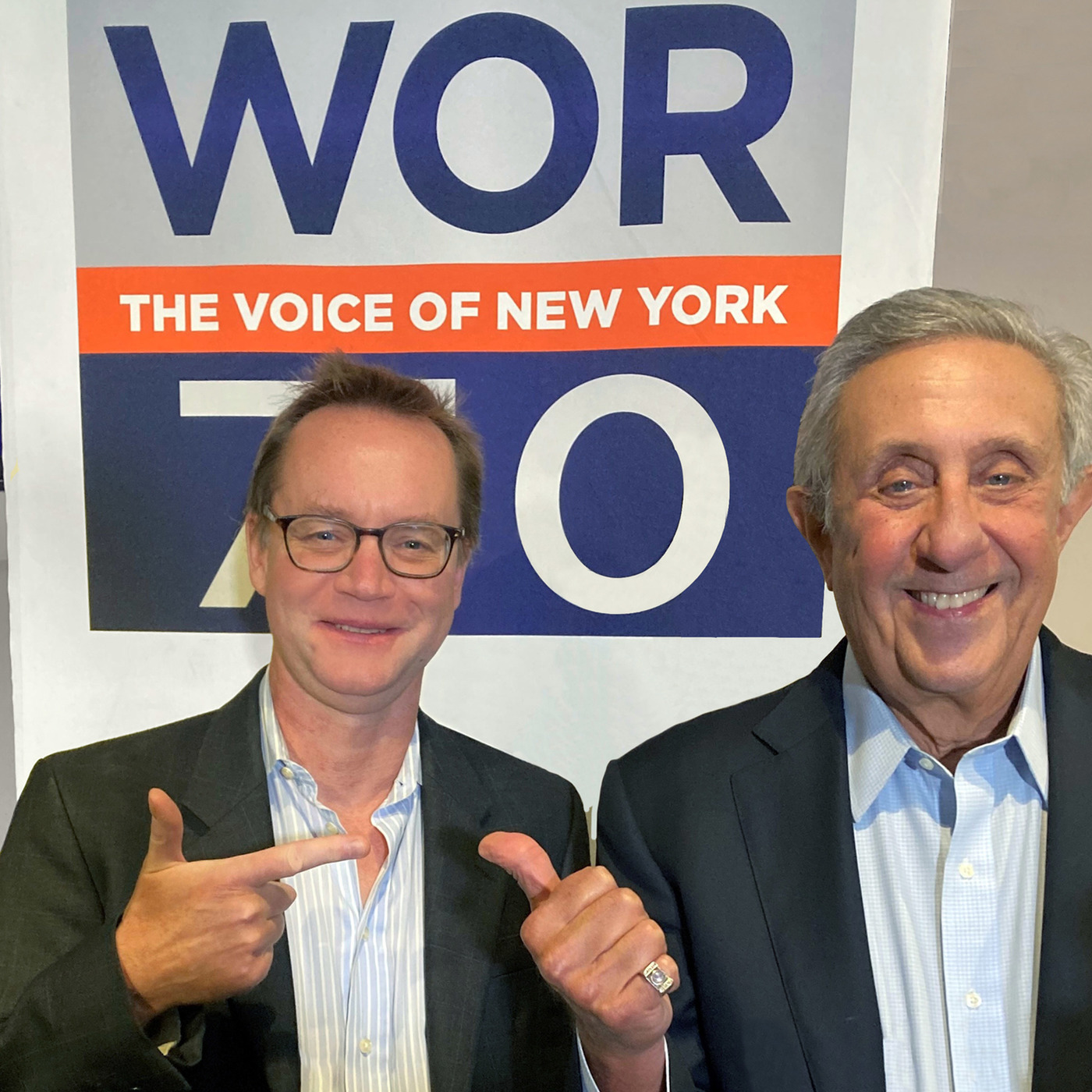




Escucha el podcast Simply Put en Replaio
Radio y podcasts en una sola app - gratis y sin registro. Instálala hoy y no te pierdas el estreno
Replaio no es editor de podcasts; los nombres de los programas, las portadas y el audio pertenecen a sus autores y se distribuyen a través de canales RSS públicos
