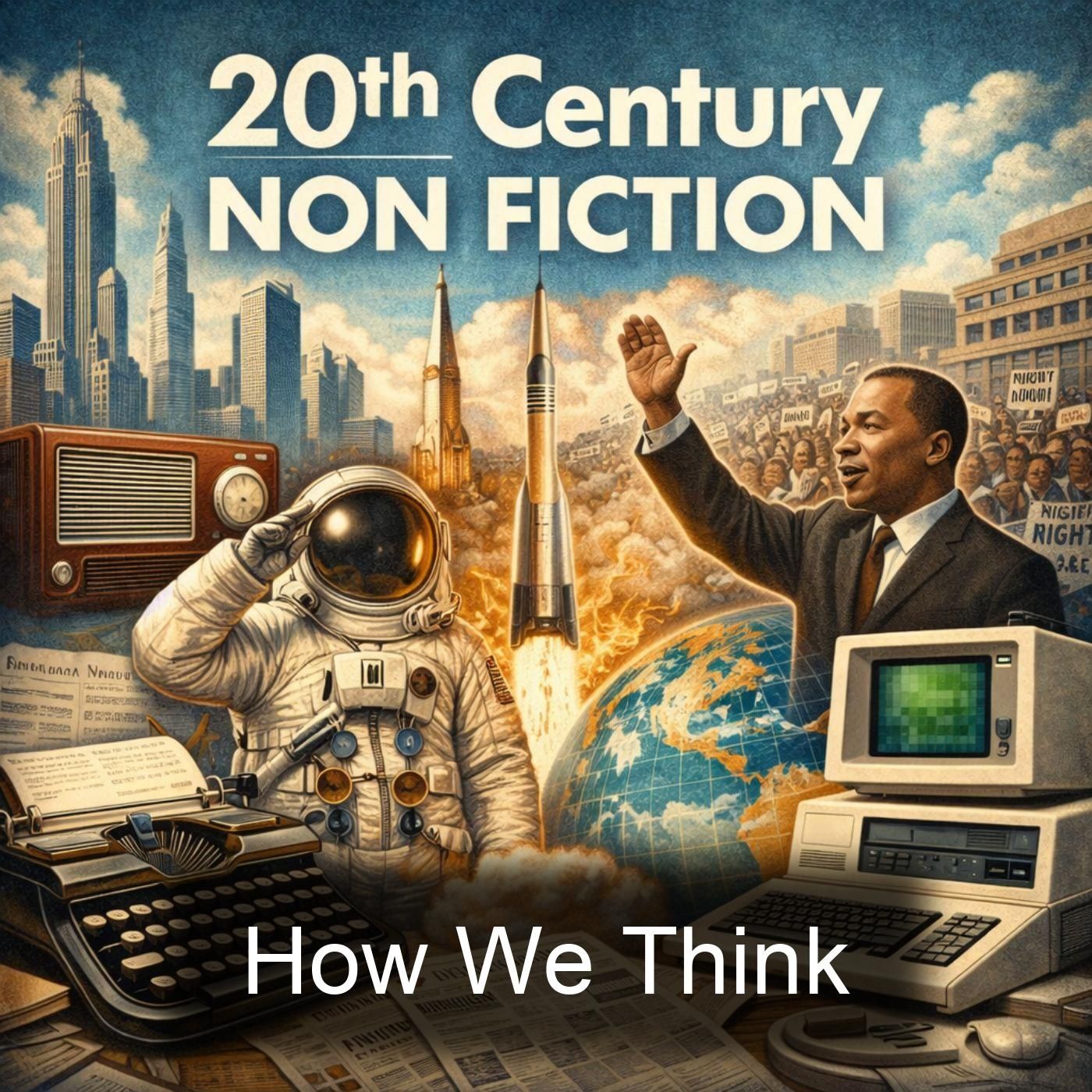
John Dewey
How We Think
In How We Think, the esteemed American education philosopher John Dewey delves into the remarkable connection between the innate curiosity of children and the mindset of scientists. He posits that the very qualities that make children naturally inquisitive—such as their endless wonder, creative imagination, and enthusiasm for experimentation—mirror the attitudes of scientific thinkers. This insightful exploration encourages us to recognize and nurture this relationship, suggesting that doing so can lead to greater personal fulfillment and reduce societal inefficiencies. Join us as we unpack De...
No dejes de visitar la web del podcast y apoyar a su creador: www.spreaker.com
Autor
John Dewey
Categoría
Web del podcast
Último episodio
24 de oct. de 2026
¿Dónde escuchar?
Podcasts en la app Replaio Radio Muy prontoLos podcasts llegarán muy pronto a la app. Instálala ahora y sé el primero en descubrir una forma totalmente nueva de vivir los podcasts
 Instálala gratis
Android casi 10 M de descargas · valoración de 4,8
iOS muy pronto
Episodios
002 - I What is Thought 25.02.2026 32:23
In How We Think, the esteemed American education philosopher John Dewey delves into the remarkable connection between the innate curiosity of children and the mindset of scientists. He posits that the very qualities that make children naturally inquisitive—such as their endless wonder, creative imagination, and enthusiasm for experimentation—mirror the attitudes of scientific thinkers. This insigh...
001 - Preface 25.02.2026 3:25
In How We Think, the esteemed American education philosopher John Dewey delves into the remarkable connection between the innate curiosity of children and the mindset of scientists. He posits that the very qualities that make children naturally inquisitive—such as their endless wonder, creative imagination, and enthusiasm for experimentation—mirror the attitudes of scientific thinkers. This insigh...
Podcasts similares







Escucha el podcast How We Think en Replaio
Radio y podcasts en una sola app - gratis y sin registro. Instálala hoy y no te pierdas el estreno
Replaio no es editor de podcasts; los nombres de los programas, las portadas y el audio pertenecen a sus autores y se distribuyen a través de canales RSS públicos