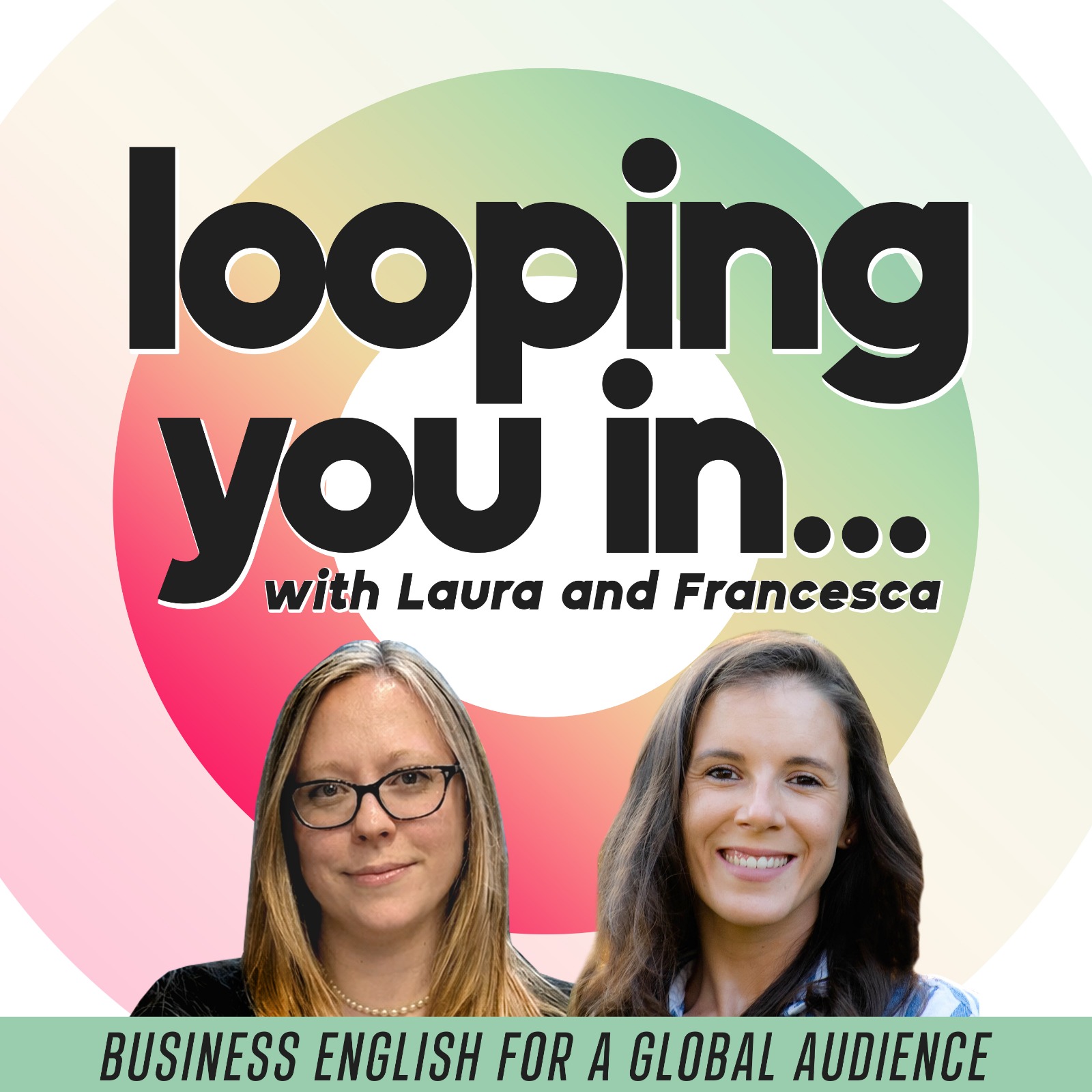
Francesca Ling & Laura Clayton
Looping You In
English at work isn’t the same as English in textbooks. This podcast explains the phrases, idioms, and unspoken rules of English-speaking offices — especially American workplaces — so non-native speakers can stop guessing and start understanding what’s really being said.
Autor
Francesca Ling & Laura Clayton
Kategorie
Podcast-Website
Neueste Folge
31. Mär 2026
Wo hören?
Podcasts in der App Replaio Radio Bald verfügbarPodcasts kommen bald in die App. Installiere sie jetzt und erlebe als Erster einen ganz neuen Blick auf Podcasts
 Kostenlos installieren
Android 5 Mio.+ Downloads · Bewertung 4,8
iOS bald
Kostenlos installieren
Android 5 Mio.+ Downloads · Bewertung 4,8
iOS bald
Folgen
Ep 3 - They Said ASAP. Was I Supposed to Panic? 31.03.2026 28:16
Mastering Workplace Acronyms: A Quick Guide to PTO, ETA, OOO, FYI, and ASAP In today’s fast-paced work environments, understanding common acronyms can significantly improve communication and reduce misunderstandings. Join us as we explore five essential workplace abbreviations—what they really mean, how to use them appropriately, and tips for non-native speakers navigating workplace jargon. Main t...
Ep 2 - Polite English, Hidden Meaning 07.03.2026 18:37
The conversation decodes three phrases commonly used in American offices: 'let's align,' 'can you walk us through that,' and 'I'll defer to you.' Each phrase carries a subtle power dynamic and can be used to influence decision-making and collaboration in meetings. The discussion explores the hidden meanings and subtext behind these phrases, emphasizing the importance of tone and context in communi...
Ep 1 - 3 English Office Idioms No One Ever Explains 07.02.2026 14:33
In this episode of 'Looping You In', hosts Francesca and Laura explore three common idioms used in business English: 'looping you in', 'read between the lines', and 'circle back'. They discuss the meanings, origins, and practical applications of these phrases in workplace communication, providing insights for intermediate to advanced English learners. The episode also includes a mini quiz to reinf...
Ähnliche Podcasts







Höre den Podcast Looping You In in Replaio
Radio und Podcasts in einer App - kostenlos und ohne Anmeldung. Installiere sie noch heute und verpasse den Start nicht
Replaio ist kein Herausgeber von Podcasts; die Namen der Sendungen, Cover und Audioinhalte gehören ihren Autoren und werden über öffentliche RSS-Feeds verbreitet