Thomas Stubbs
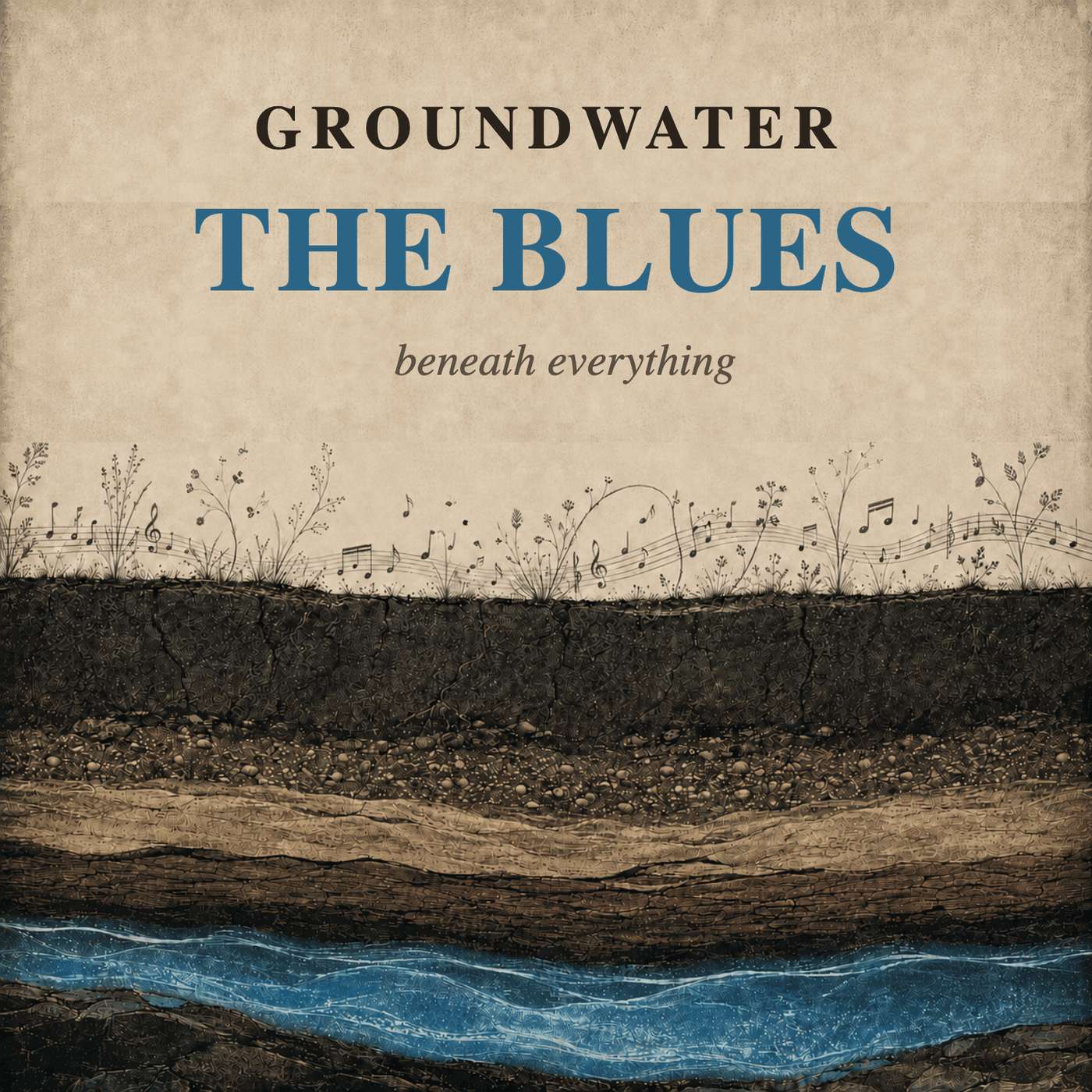
Groundwater: The Blues Beneath American Music
In 1927, the record industry split American music in two and sold it to separate audiences. We've believed the split ever since. Groundwater is a music history podcast that follows the current underneath — the blues, running from Congo Square to the South Bronx, from Robert Johnson to Aretha Franklin to hip-hop. Each episode traces a moment the industry tried to keep apart: the soul sessions at Stax and Muscle Shoals that crossed every line; Louis Armstrong working race and commerce from New Orleans to Chicago; the Great Migration carrying Muddy Waters and the Delta sound up the Illinois Centr...
Обов'язково відвідайте сайт подкасту та підтримайте його автора: groundwater.fm
Де слухати?
Подкасти в застосунку Replaio Radio Уже незабаромПодкасти незабаром з'являться в застосунку. Встановіть уже зараз і першими побачте зовсім новий погляд на подкасти
 Встановіть безкоштовно
Android майже 10 млн завантажень · рейтинг 4,8
iOS незабаром
Встановіть безкоштовно
Android майже 10 млн завантажень · рейтинг 4,8
iOS незабаром
Епізоди
Rooms Where the Walls Came Down, Part 2: Stax, Muscle Shoals, and Minton's Playhouse 22.09.2026 20:29
Muscle Shoals, Alabama, January 1967. Jerry Wexler brings Aretha Franklin, the daughter of the most famous Black preacher in America, to FAME Studios to record with four white session men she has never met, in a region where the Klan is a functioning organization. She walks in skeptical. The Swampers start playing. The skepticism ends before the first take is finished, and "I Never Loved a Man (Th...
Rooms Where the Walls Came Down Part 1: Sun Studio and Chess Records 08.09.2026 19:11
July 5, 1954. A storefront studio on Union Avenue in Memphis, a nineteen-year-old Elvis failing for hours — until he started fooling with a blues during a break and the man behind the glass stuck his head out. This episode is about that room, and the one on the South Side of Chicago where two brothers from a junk shop put the Delta through an amplifier. Description Memphis, July 5, 1954. At Sun St...
The Moondog: Alan Freed, the Payola Scandal, and the First Rock and Roll Riot 13.08.2026 17:53
On a Friday night in Cleveland in March 1952, a crowd twice the size of the building broke down the doors of the Cleveland Arena to hear Black rhythm-and-blues bands play. The Moondog Coronation Ball — often called the first rock and roll concert — was ended by the fire department before a single act finished a set. The disc jockey behind it was Alan Freed, who spent the next decade playing race r...
The Same Music: The Bristol Sessions, Hank Williams, and the Lie That Split Blues from Country 31.07.2026 27:13
In the summer of 1927, a talent scout named Ralph Peer set up a temporary recording studio on the third floor of a hat company in Bristol, Tennessee, and built the two shelves — race records and hillbilly — that still separate blues from country a century later. The split had nothing to do with the music. It had everything to do with the market. This episode takes the wall down. The Carter Family'...
We Both Speak African: Dizzy Gillespie, Miles Davis, and How Jazz Crossed the Atlantic 16.07.2026 20:21
Dizzy Gillespie meets Chano Pozo, Django Reinhardt hears Louis Armstrong, and Miles Davis records Sketches of Spain. How jazz crossed the Atlantic and came back changed. When Jelly Roll Morton talked about the "Spanish tinge" in jazz, he wasn't talking about Spain. He was talking about Cuba, and the West African rhythmic tradition that survived the Middle Passage in Havana the same way it survived...
The Country's Memory: Jimi Hendrix, Strange Fruit, and American Music at 250 02.07.2026 15:34
Jimi Hendrix played "The Star-Spangled Banner" at Woodstock in 1969 and let the war in around the melody. This year the United States turns 250. This Groundwater special steps back from the map to ask what twentieth-century American music has been for: the country's memory, the part of the record that didn't get edited. At its center is Billie Holiday's "Strange Fruit" — the song that held a mirro...
The Blues Professor, Part 2: Muddy Waters, the Mardi Gras Indians, and Where to Start with the Blues 25.06.2026 17:12
Muddy Waters, the Mardi Gras Indians, Blind Willie McTell, and the one record to start with: the second half of Thomas Stubbs's conversation with Rich Pettit, the man Atlanta knows as the Blues Professor. In Part 1 we traced the blues out of West Africa and up the East Coast. This half starts back home in New Orleans — where Rich grew up — and the city's living traditions: the second line, the jaz...
The Blues Professor, Part 1: Piedmont Blues, the Allman Brothers, and Atlanta's Living Scene 23.06.2026 22:34
Piedmont blues, the Allman Brothers, Lonnie Holley, and the long road the blues took out of West Africa: Thomas Stubbs sits down with Rich Pettit, the man Atlanta knows as the Blues Professor — part one of two. For forty years, Rich has hosted Good Morning Blues on WRFG 89.3, Atlanta's community radio station. He grew up in New Orleans and came to the blues backwards — through classic rock — until...
Groundwater Trailer: Why American Music's Genre Labels Are a Lie - A Music History Podcast 13.06.2026 1:16
A two-minute introduction to Groundwater — what the show is, why American music's genre labels are a lie, and where we're going. Start here, then follow the water.
Twelfth Street Station: The Great Migration and How New Orleans Music Reached Chicago 09.06.2026 13:40
The music didn’t ride north on riverboats. It rode the Illinois Central Railroad — out of New Orleans, up through Memphis and the Mississippi Delta into Chicago — in the luggage cars and Jim Crow coaches of the Great Migration. Episode 4 of Groundwater traces what the music became when it left the South: Louis Armstrong stepping off the train at Twelfth Street Station in 1922 with a cornet and a f...
The Drain: New Orleans Music From Professor Longhair to Katrina 26.05.2026 17:09
Professor Longhair kicked the bass of his piano to keep time. The Meters stripped the second line down to funk. Then the levees broke. New Orleans music from Longhair to Katrina Armstrong left. Bechet left. Oliver left. Morton left. For thirty years, the romantic version of the story held that New Orleans jazz had migrated north and the city was living on memory. It was wrong. The city never stopp...
Little Louis: Louis Armstrong and the Birth of Jazz 07.05.2026 15:33
The first jazz musician is a ghost — no recording of Buddy Bolden survives. This is the story of the music from Bolden through Storyville to the kid who became Louis Armstrong. What we know about him comes from the testimony of people who heard him play, filtered through decades of memory and myth. This episode traces the music from Bolden through the legalized vice district of Storyville to a ki...
Below Sea Level: How New Orleans Built American Music 07.05.2026 16:25
New Orleans should not exist — a city in a swamp, below sea level, at the mouth of a continent. It became the place that built American music: jazz, blues, R&B, funk, rock and roll. New Orleans was founded in 1718 in a swamp, below sea level, by people who needed someone standing at the mouth of the continent. Within a year, the first ship carrying enslaved people arrived. A century later, a F...
Схожі подкасти





Слухайте подкаст Groundwater: The Blues Beneath American Music у Replaio
Радіо та подкасти в одному застосунку - безкоштовно й без реєстрації. Встановіть уже сьогодні та не пропустіть запуск
Replaio не є видавцем подкастів; назви шоу, обкладинки та аудіо належать їхнім авторам і поширюються через публічні RSS-канали