Krishnamurti Foundation Trust
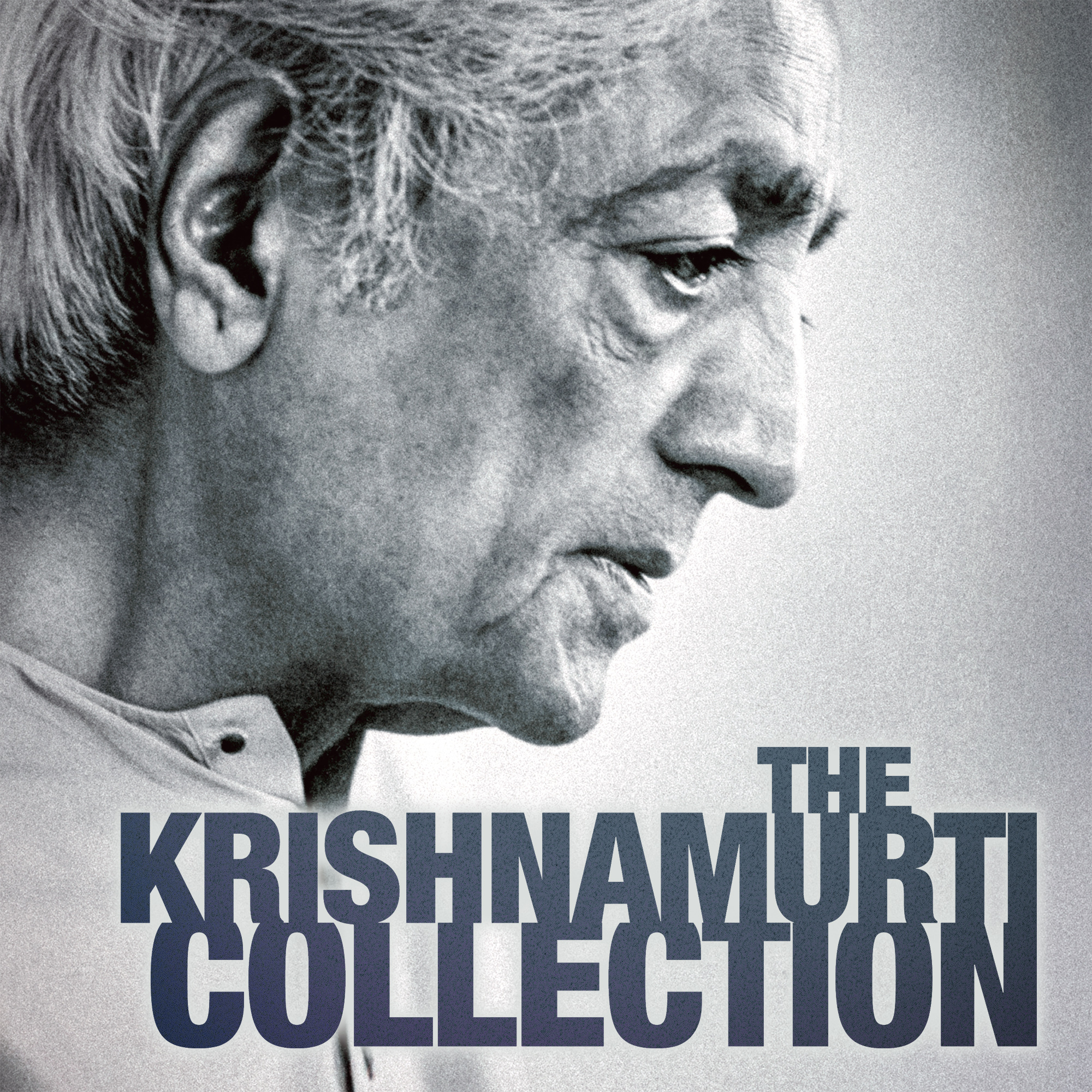
The Krishnamurti Collection
The Krishnamurti Collection is an official podcast by Krishnamurti Foundation Trust. Across this wide selection of events, from public talks to in-depth conversations, Krishnamurti explores fundamental questions of human existence: the nature of thought, fear and desire; the roots of conflict and conditioning; and whether the mind can be free – questions that touch our daily lives and relationships. Each episode of the podcast features a full-length Krishnamurti recording from the Foundation’s archives, with a new series released every week. Krishnamurti is widely regarded as one of the greate...
Vizitează neapărat site-ul podcastului și susține-i creatorul: krishnamurticollection.podbean.com
Autor
Krishnamurti Foundation Trust
Categorie
Site-ul podcastului
Cel mai nou episod
21 nov. 2026
Unde asculți?
Podcasturi în aplicație Replaio Radio În curândPodcasturile ajung în curând în aplicație. Instaleaz-o acum și fii primul care descoperă o abordare complet nouă a podcasturilor
 Instalează gratuit
Android 10 mil.+ descărcări · nota 4,7+
iOS în curând
Episoade
106 • Madras 1981/82 (1/8) • Talk 1: How Do We Psychologically Respond to the Present Condition of the World? 13.05.2026 1:12:27
Krishnamurti: When You Observe ‘What Is’, There Is No Conflict Madras 1981/82, Public Meetings 1/8: How Do We Psychologically Respond to the Present Condition of the World? If we do not observe the world carefully, we have no criteria by which to judge when we turn inwardly. Why have we given such extraordinary importance to thought? Thinking is the beginning of memory; without memory there is no...
105 • Madras 1979/80 (7/7) • Talk 6: Sorrow, Death and Meditation 13.05.2026 1:19:12
Krishnamurti: The Seed of a Million Years Madras 1979/80, Public Meetings 7/7: Sorrow, Death and Meditation How do you approach any problem, physical or psychological? What is the relationship between sorrow and passion? Sorrow indicates a state of mind in which there is pain, grief, tears, a sense of immense loneliness and isolation. Without passion you can never be free or creative. Why are we e...
104 • Madras 1979/80 (6/7) • Talk 5: Why Does the Mind Live in Concepts? 13.05.2026 1:04:39
Krishnamurti: The Seed of a Million Years Madras 1979/80, Public Meetings 6/7: Why Does the Mind Live in Concepts? Can the human mind be free of concepts? Is the making of concept an escape from action? Can you listen and not make a concept but apply? Is fear the word ‘fear’? Integrity means saying things that you actually mean. Time will not solve fear but will complicate the issue. When you list...
103 • Madras 1979/80 (5/7) • Discussion 1: Bringing Together All One’s Energy To Look at a Problem 13.05.2026 1:12:28
Krishnamurti: The Seed of a Million Years Madras 1979/80, Public Meetings 5/7: Bringing Together All One’s Energy To Look at a Problem Is our psychological pain as acute as toothache, or are we aware of it after it has taken place? Do we see the absurdity, the futility of escape? If one sees that escape does not solve the problem, what does one do with the problem? What are the implications of ana...
102 • Madras 1979/80 (4/7) • Talk 4: A Mind Living in Control, Conflict and Desire Is Never Free 13.05.2026 1:05:44
Krishnamurti: The Seed of a Million Years Madras 1979/80, Public Meetings 4/7: A Mind Living in Control, Conflict and Desire Is Never Free Our minds are chattering, thought moving from one association or desire to another, a contradiction of opposing energies. Within the mind can there ever be freedom? If not, man is everlastingly slave to the known. Is it possible to go beyond the process of time...
101 • Madras 1979/80 (3/7) • Talk 3: Where Is Security Found for the Brain? 13.05.2026 1:08:11
Krishnamurti: The Seed of a Million Years Madras 1979/80, Public Meetings 3/7: Where Is Security Found for the Brain? Why do human beings with their extraordinary brain and mind live in narrow grooves, with narrow activities, self-centred impulses and urges? There is no infinite thought, there is no complete thought. In what manner can consciousness be transformed? Our brains are trained, subjecte...
100 • Madras 1979/80 (2/7) • Talk 2: Thought Has Put Together the Whole Structure of the ‘Me’ 13.05.2026 1:01:50
Krishnamurti: The Seed of a Million Years Madras 1979/80, Public Meetings 2/7: Thought Has Put Together the Whole Structure of the ‘Me’ Our minds are the result of a thousand experiences and man has been searching for an eternity. Immortality is merely the continuity of one’s own ignorance. We are questioning the cultivation through the centuries this idea of the self, the ‘me’ that must evolve th...
99 • Madras 1979/80 (1/7) • Talk 1: The Flowering of the Seed of a Million Years 13.05.2026 1:02:23
Krishnamurti: The Seed of a Million Years Madras 1979/80, Public Meetings 1/7: The Flowering of the Seed of a Million Years If we are not capable of listening we are not capable of learning. Man since the beginning of time has asked if there is a reality, truth, something timeless that cannot be measured, and that inquiry, that seed, is still with us. Is it possible for that seed to grow and flowe...
98 • London 1969 (4/4) • Talk 4: Meditation and the Activity of Silence 13.05.2026 1:29:37
Krishnamurti: Without Freedom From the Known, the Possible Cannot Be Captured London 1969, Public Meetings 4/4: Meditation and the Activity of Silence Is truth ever to be found by seeking? Why should one have any experience at all? Light is light; it doesn’t ask for more light. The desire for more experience is an escape from the actual, from ‘what is’. Unless one lays the foundation of virtue, me...
97 • London 1969 (3/4) • Talk 3: A Way of Living in Which There Is No Division 13.05.2026 1:31:12
Krishnamurti: Without Freedom From the Known, the Possible Cannot Be Captured London 1969, Public Meetings 3/4: A Way of Living in Which There Is No Division To find a way of living with no fragmentation, one has to go deeply into what is love and death. What is the relationship between pleasure and intelligence? Is there a tomorrow psychologically? Is it possible for the mind to be free of the pa...
96 • London 1969 (2/4) • Talk 2: Can the Mind Be Free of Fear? 13.05.2026 1:33:18
Krishnamurti: Without Freedom From the Known, the Possible Cannot Be Captured London 1969, Public Meetings 2/4: Can the Mind Be Free of Fear? Can there be complete psychological freedom? Learning and freedom go together. One cannot learn about oneself unless one is free. To learn about oneself one must observe actually as one is, not according to patterns, formulas or concepts. Can the mind resolv...
95 • London 1969 (1/4) • Talk 1: Looking at Violence Without the Word 13.05.2026 1:35:11
Krishnamurti: Without Freedom From the Known, the Possible Cannot Be Captured London 1969, Public Meetings 1/4: Looking at Violence Without the Word Is it possible for the mind to be entirely free from conflict? In the understanding of conflict is the possibility of right conduct. Is the analyser different from the thing analysed? What does it mean to see and understand something or to listen to s...
94 • Gstaad 1965 (6/6) • Small Group Discussion 6: When the Mind Is Completely Quiet, How Can There Be Time? 13.05.2026 1:25:08
Krishnamurti: Thought, Stillness and Time Gstaad 1965, Small Group Discussions 6/6: When the Mind Is Completely Quiet, How Can There Be Time? What does time mean to you, as a human being? Is there such thing as existence? Quietness has come because I have understood the nature of time, function, thought and pleasure. What takes place when there is great intensity? Thought has a movement in functio...
93 • Gstaad 1965 (5/6) • Small Group Discussion 5: A Complete Stillness 13.05.2026 1:04:53
Krishnamurti: Thought, Stillness and Time Gstaad 1965, Small Group Discussions 5/6: A Complete Stillness Is there a single movement that will completely transform my whole way of life? The passion is there but the perfume doesn’t take place. What am I to do? Am I in a position of a man who for the first time is walking on a road by himself and discovering? Does one know what a complete stillness...
92 • Gstaad 1965 (4/6) • Small Group Discussion 4: From Where Do Attachment and Detachment Come? 13.05.2026 1:05:34
Krishnamurti: Thought, Stillness and Time Gstaad 1965, Small Group Discussions 4/6: From Where Do Attachment and Detachment Come? What is the relationship of the brain to the totality of the mind? Fear of not being, fear of isolation, fear of not having pleasure, fear of having no relationship, is the soil from which the stem of contradiction grows. I want to be free of this stem to see what happe...
91 • Gstaad 1965 (3/6) • Small Group Discussion 3: What Will Make Me See That Thought Breeds Frustration? 13.05.2026 1:18:13
Krishnamurti: Thought, Stillness and Time Gstaad 1965, Small Group Discussions 3/6: What Will Make Me See That Thought Breeds Frustration? What is the function of thought? Can the mind see the fact that thought will always breed frustration? Function is necessary, but function with status, position and power must breed frustration. Without frustration thought says to itself, ‘I am not seeking. I d...
90 • Gstaad 1965 (2/6) • Small Group Discussion 2: Am I Aware of the Process of Thinking? 13.05.2026 1:00:56
Krishnamurti: Thought, Stillness and Time Gstaad 1965, Small Group Discussions 2/6: Am I Aware of the Process of Thinking? Can I see that thought is destructive, except where it is essential? Why is it that we don’t see something immediately? Do you know when you are thinking? Is the thing that we call thinking, thinking at all? Do you think from the background noise when a problem arises? When th...
89 • Gstaad 1965 (1/6) • Small Group Discussion 1: Is Thought Detrimental? 13.05.2026 1:00:48
Krishnamurti: Thought, Stillness and Time Gstaad 1965, Small Group Discussions 1/6: Is Thought Detrimental? Why does one seek pleasure? Can the mind only face facts and not thought? Why have I never said, ‘Thought is poison,’ to myself? Meeting something one doesn’t know, facing something which has no answer. Acting without knowing. What is a state of mind which is silent? Time is detrimental. Are...
88 • Brockwood Park & Gstaad 1975 (12/12) • Conversation with David Bohm 12: Can the Brain Free Itself From All Self-Delusion? 13.05.2026 1:26:03
Krishnamurti: Truth, Actuality, and the Limits of Thought Brockwood Park and Gstaad 1975, Conversations with David Bohm 12/12: Can the Brain Free Itself From All Self-Delusion? Thought and the brain. Can the brain free itself from all self-delusion? Why has the self become important? Can there be only sensation, thought, and no desire? Can desire - which brings illusion, self-deception and all the...
87 • Brockwood Park & Gstaad 1975 (11/12) • Conversation with David Bohm 11: What Is Wisdom Which Is Not a Movement of Thought? 13.05.2026 1:49:52
Krishnamurti: Truth, Actuality, and the Limits of Thought Brockwood Park and Gstaad 1975, Conversations with David Bohm 11/12: What Is Wisdom Which Is Not a Movement of Thought? Wisdom, intelligence and truth. If there is attention is there choice? Why has man divided perception? What is wisdom which is not the movement of thought? What place has the man who perceives truth in this world of realit...
86 • Brockwood Park & Gstaad 1975 (10/12) • Conversation with David Bohm 10: Truth Does Not Belong to an Individual 13.05.2026 1:15:19
Krishnamurti: Truth, Actuality, and the Limits of Thought Brockwood Park and Gstaad 1975, Conversations with David Bohm 10/12: Truth Does Not Belong to an Individual Krishnamurti’s ‘process’ and his early years. Suffering. The Indian tradition says that there is a manifestation of goodness which happens very rarely. Truth does not belong to an individual. What one says is truth. But it becomes t...
85 • Brockwood Park & Gstaad 1975 (9/12) • Conversation with David Bohm 9: Is There in the Brain Anything Untouched by Culture? 13.05.2026 1:40:54
Krishnamurti: Truth, Actuality, and the Limits of Thought Brockwood Park and Gstaad 1975, Conversations with David Bohm 9/12: Is There in the Brain Anything Untouched by Culture? Can there be a total perception which completely heals the brain? What benefit has culture? Does speech come before thought? Is it possible to say something without the operation of thought? Is there in the brain anything...
84 • Brockwood Park & Gstaad 1975 (8/12) • Conversation with David Bohm 8: What Is the Substance of Thought? 13.05.2026 1:42:45
Krishnamurti: Truth, Actuality, and the Limits of Thought Brockwood Park and Gstaad 1975, Conversations with David Bohm 8/12: What Is the Substance of Thought? What is the basic reason for thought to be fragmented? What is the substance of thought? Is it a material process, a chemical process? There is a total perception, which is truth. That perception acts in the field of reality. That action is...
83 • Brockwood Park & Gstaad 1975 (7/12) • Conversation with David Bohm 7: If Thought Cannot Achieve, Why Should It Suffer? 13.05.2026 1:41:48
Krishnamurti: Truth, Actuality, and the Limits of Thought Brockwood Park and Gstaad 1975, Conversations with David Bohm 7/12: If Thought Cannot Achieve, Why Should It Suffer? How does science investigate the mysterious? If thought cannot achieve, why should it suffer? Can consciousness, which is filled with the things of thought, empty itself? Thought cannot possibly apprehend, comprehend or be aw...
82 • Brockwood Park & Gstaad 1975 (6/12) • Conversation with David Bohm 6: Perceiving Without the Perceiver 13.05.2026 2:16:58
Krishnamurti: Truth, Actuality, and the Limits of Thought Brockwood Park and Gstaad 1975, Conversations with David Bohm 6/12: Perceiving Without the Perceiver Can thought naturally cease? Perceiving without the perceiver Facing the truth of death Krishnamurti’s ‘process’ and early years. Kundalini If you can understand suffering, face it and not escape from it, that has quite a different energy. T...
Podcasturi asemănătoare







Ascultă podcastul The Krishnamurti Collection în Replaio
Radio și podcasturi într-o singură aplicație - gratuit și fără înregistrare. Instaleaz-o azi și nu rata lansarea
Replaio nu este editorul podcasturilor; numele emisiunilor, coperțile și materialul audio aparțin autorilor lor și sunt distribuite prin fluxuri RSS publice